

Quick answer
- A courtyard hotel in China is a walled compound converted into guest rooms; expect atmosphere over consistency, with thin doors and limited English.
- Rates run RMB 400 a night for a basic restored room to RMB 2,500-plus for a designer courtyard; book direct or on Chinese platforms.
- Spring and autumn suit courtyard stays best. For a first siheyuan, pick a property with at least ten rooms; confirm heating, bathrooms and quiet.
The most memorable bed in China is often not in a high-rise but behind a grey-brick wall, in a courtyard house where the rooms wrap a quiet square of stone and a single tree. In our experience, a night in a restored siheyuan beats another chain hotel every time, and the format exists far beyond Beijing. This China courtyard hotels guide explains what you are actually booking, where to find it, and how to avoid the tourist traps.
What a Courtyard Hotel Actually Is
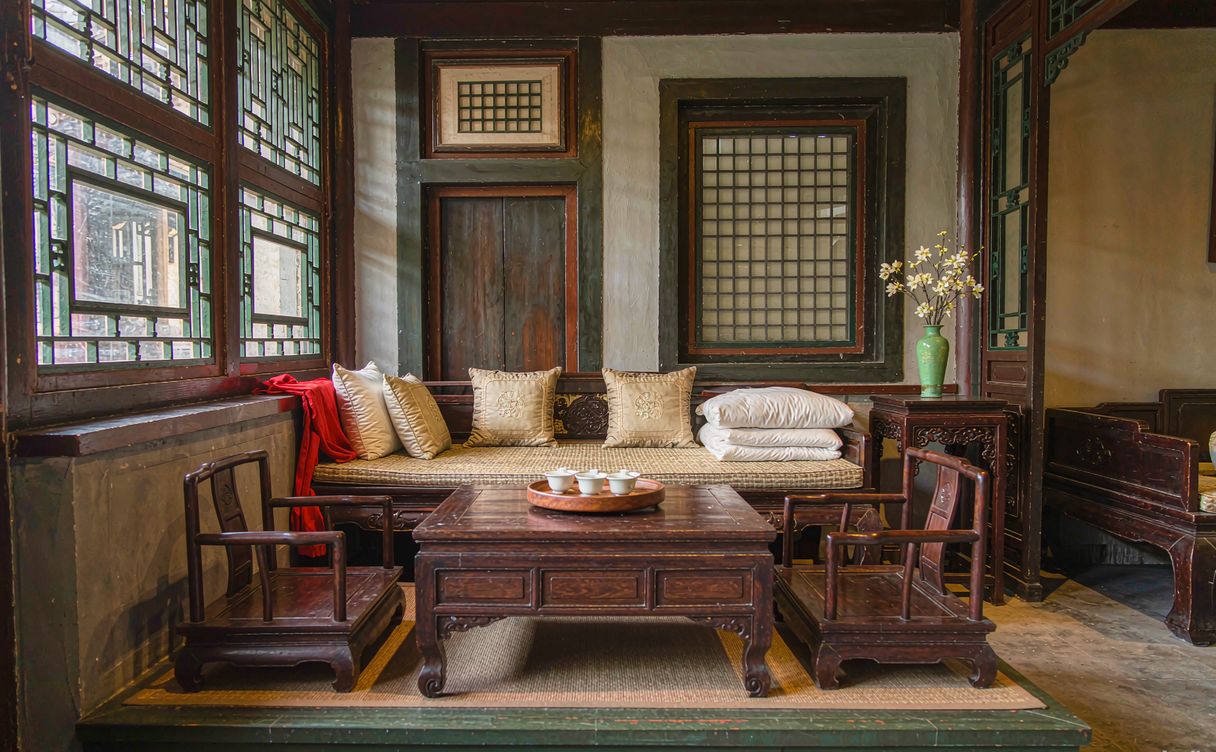
A siheyuan is a walled compound with rooms arranged on four sides around a central court, a layout that has housed Beijing families for centuries. A traditional Chinese hotel of this kind converts one or several joined courtyards into guest rooms, keeping the open sky, the wood beams, and the paper-windowed doors. The classic siheyuan form is uniquely northern, but the walled-court idea appears across China in different guises.
The appeal is not just looks. Courtyards stay cool in summer and hold warmth in winter, and the layout gives you privacy you rarely get in a tower block. We’ve put travelers in courtyard rooms where the only sound at night was the wind in the courtyard leaves — hard to believe you are inside a capital of twenty million people. The catch is that “traditional” is a marketing word, and some places are concrete boxes with a fake lattice screen.
Where to Stay in a Courtyard
Beijing is the obvious base, and our Beijing courtyard hotels guide lists vetted options inside the old hutong districts near the Bell and Drum Towers and the Lama Temple. Prices range from RMB 400 a night for a basic restored room to RMB 2,500-plus for a designer courtyard with a private soaking tub and breakfast served in your own mini-court.
Beyond the capital, the idea travels well. The Wang family courtyard in Shanxi guide covers the massive merchant compounds of Pingyao and the Wang family mansion, where you can sleep inside a Qing-dynasty fortified residence. Even resort cities have borrowed the form: our best hotels in Sanya includes a few tropical courtyard-style properties for a southern take on the walled quiet.
| City / area | Room style | Nightly rate (RMB, as of Nov 2026) | Distance to sights | Best for |
|---|---|---|---|---|
| Beijing hutongs | Restored siheyuan near the Bell and Drum Towers and the Lama Temple | 400–2,500+ (range quoted in this guide) | Alleys too narrow for cars; taxi stops at the lane mouth, then the last hundred meters on foot | First-timers; a two-night contrast stay |
| Pingyao / Wang family courtyard, Shanxi | Qing-dynasty fortified merchant residence | Not quoted in this guide — verify live rates | Sleep inside the compound itself | Families and small groups wanting the whole court |
| Sanya | Tropical courtyard-style resort rooms | Not quoted in this guide — verify live rates | Resort setting, not a hutong lane | Resort staffing with a walled-court feel |
| Wenzhou | Designed courtyard-style property | Not quoted in this guide — verify live rates | Resort setting | Courtyard atmosphere with professional service |
| Dali / Lijiang, Yunnan | Same walled-court idea in old-town inns | Not quoted in this guide — verify live rates | Not quantified in this guide | Adding a courtyard night to a Yunnan route |
The RMB 400–2,500+ range is the Beijing figure reproduced from this guide; other rows carry no source rate. As of Nov 2026 — check live prices.
For the wider category, see our China heritage hotels guide.
Booking and Prices
A courtyard hotel China stay is best booked direct or through the major Chinese platforms, where the photos are more honest than on some Western sites. Expect to pay a premium over a comparable standard room in a tower — the low room count and the labor of restoration support the price. For a first stay in a siheyuan, aim for a property with at least ten rooms; the tiny one- or two-room “courtyards” can feel like someone’s living room and lack soundproofing.
The best time to visit China matters for courtyard comfort: spring and autumn are ideal, because you can actually use the open court, while deep winter means you live indoors with the heating on. Summer is fine if the room has good cross-ventilation, which the best courtyards do by design.
| Planning figure | Range / number | Unit | Where it comes from |
|---|---|---|---|
| Basic restored courtyard room | 400 | RMB per night | Where to Stay in a Courtyard |
| Designer courtyard with private tub and breakfast | 2,500+ | RMB per night | Where to Stay in a Courtyard |
| Recommended room count for a first siheyuan | at least 10 | rooms | Booking and Prices |
| Hour after which bar-style courtyards get noisy | 9 | pm | Courtyard Stay Tips |
| Walk from the taxi drop-off to the gate | last 100 | meters | What You Gain and What You Give Up |
| Suggested first Beijing courtyard stay | 2 | nights | Matching a Courtyard to Your Trip |
Every figure above is reproduced from this guide, not from a live rate feed. As of Nov 2026; confirm with the property before you pay.
Courtyard Stay Tips
A few courtyard stay tips save disappointment. Ask which room you get — ground-floor rooms open onto the court (lovely, but less private), while corner rooms are quieter. Check whether the bathroom is en suite and modern; the most charming courtyard can still have a sad shower, and we always confirm this before booking for travelers who care. Confirm heating or AC explicitly, because heritage buildings sometimes lag on climate control.
Noise is the other issue. Thin lattice doors mean you hear the courtyard and your neighbors. We steer light sleepers toward rooms set back from the main gate, and we avoid courtyards that double as a bar after 9 pm. Read recent reviews for the phrase “quiet at night,” which tells you more than any star rating.
Matching a Courtyard to Your Trip
If this is your first China visit, start with our planning resources, which explain how a hutong stay fits a Beijing stop. A courtyard night works best as a contrast to busy sightseeing — you come home to calm rather than more stimulation. We often book travelers two nights in a Beijing courtyard and then move them to a modern hotel near the stations for an early departure, getting the experience without the luggage hassle.
The form scales up, too. Large restored compounds in Pingyao or the Wang family mansion suit families and small groups who want the whole courtyard to themselves, with meals served in the central space. That is a different, more social kind of stay than a city boutique room, and worth considering if you are traveling with children or friends.
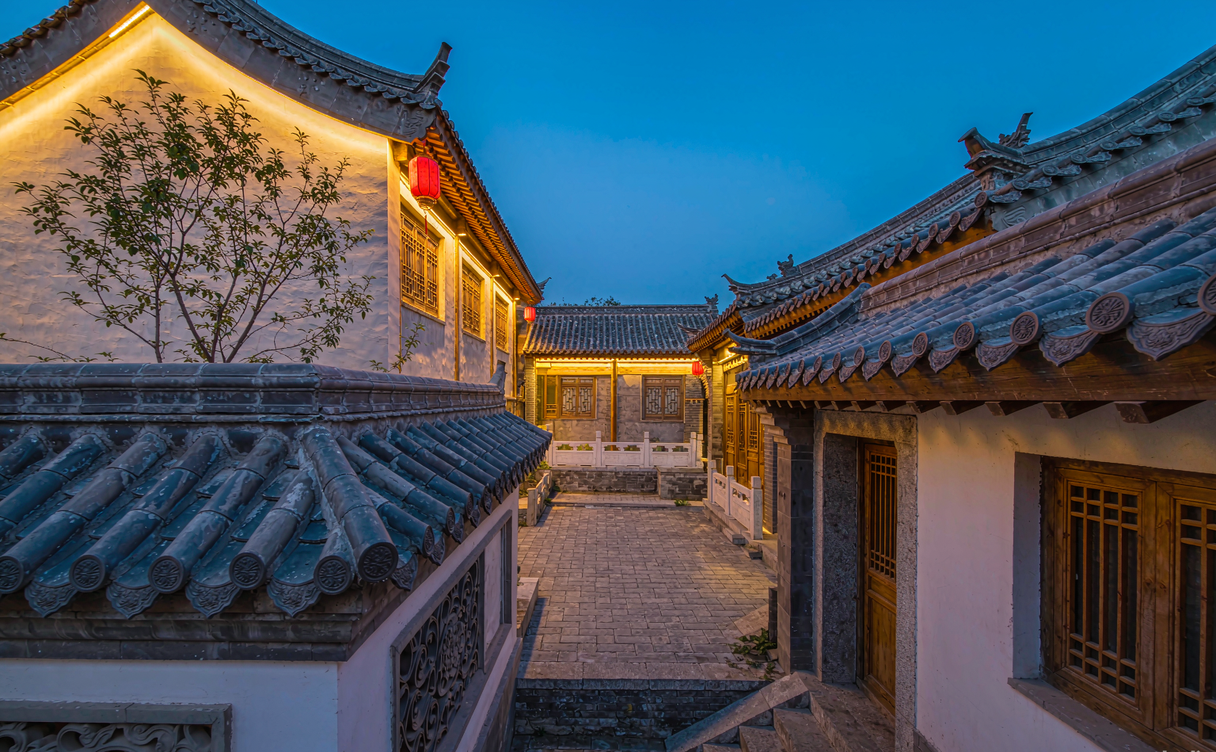
Picture the evening: you step through a red lacquer gate off a hutong lane, the street noise stops at the wall, and a single paper lantern lights the court. Your room opens onto the stone with a low chair and a thermos of tea; the front desk is a friendlier version of a home, not a lobby. In the morning a simple breakfast — congee, pickles, a steamed bun — arrives without a buffet line. That rhythm, more than any amenity, is what travelers remember, and it is why we keep sending first-timers here rather than to another glass tower.
For families, the multi-room courtyard is a winner: children get the open court as a safe play space while adults sit by the door, something no corridor hotel allows. Ask whether the property heats the court in winter, though — some only heat the rooms, and a frozen courtyard loses its charm in January. The best operators run radiant floor heating so you can still take morning tea outside with a coat on.
What You Gain and What You Give Up
The gain is atmosphere you cannot manufacture: morning light on grey tile, the smell of a wood fire in cool weather, a host who brings you tea without being asked. The trade-off is consistency. Courtyard hotels are small operations, so service varies, breakfast may be simple, and English can be limited. We set expectations clearly: this is a character stay, not a business hotel, and the charm is the point.
For travelers who want the courtyard feeling but with resort reliability, the Sanya and Wenzhou courtyard-style properties are a safe middle ground — designed spaces with professional staffing. Either way, the best courtyard hotels China offers are about the walled quiet, and once you have slept behind one, the towers feel loud.
One logistics note we always share: many hutong courtyards sit at the end of alleys too narrow for cars, so your taxi will drop you at the lane mouth and you walk the last hundred meters with your bags. Save the property’s Chinese name and a pin on your map app, because drivers rarely know the English brand. Arriving in daylight makes the first find far easier than a late-night search under a single streetlamp.
Is a courtyard hotel quieter than a regular hotel?
Usually at night, but the courtyard itself becomes the sound source. The wall blocks the street; thin lattice doors then carry voices, footsteps and wind in the tree, which is what recent reviews mean by “quiet at night.”
Compared with a tower, you trade corridor noise for a shared open square. Light sleepers should ask for a room set back from the main gate, avoid any courtyard that doubles as a bar after 9 pm, and read recent reviews instead of trusting a star rating. If you need guaranteed silence, a designed courtyard-style property in Sanya or Wenzhou is the safer middle ground.
Can foreigners book a siheyuan stay?
Yes — courtyard hotels sell to international travelers — but the practical check is registration, not the architecture. Confirm in writing at booking that the property can register a passport holder, and get that answer before you pay a deposit.
A restored compound with at least ten rooms is more likely to run a standard front-desk check-in than a one- or two-room courtyard. Keep the property’s Chinese name and a pin on your map app, and arrive in daylight. Our hotel registration guide for foreigners explains the mechanics.
Do courtyard hotels have elevators, heating and modern bathrooms?
Ask before booking. Rooms sit around a single court, with ground-floor rooms opening onto the stone and corner rooms set further back — a walk-up layout, so treat step-free access as something to confirm rather than assume.
Heating deserves the same question. Heritage buildings sometimes lag on climate control, and some properties heat only the rooms while the court freezes in January; better operators run radiant floor heating so you can take morning tea outside. Check that the bathroom is en suite and modern, and confirm cross-ventilation in summer.
Courtyard Hotel FAQs
What is a siheyuan, exactly?
A walled compound with rooms on four sides around a central court, the layout that housed Beijing families for centuries. A courtyard hotel converts that form, or a regional walled-court variation, into guest rooms. “Traditional” is a marketing word, so judge the recent photos rather than the label.
Are courtyard hotels good for families?
Yes, especially the multi-room compounds in Pingyao or at the Wang family mansion. Children get the open court as a play space while adults sit by the door, and meals can be served in the central space. Ask whether the court is heated in winter.
When is the best season for a courtyard stay?
Spring and autumn, when you can actually use the open court. Deep winter means living indoors with the heating on; summer works if the room has good cross-ventilation, which the best courtyards have by design. Confirm heating or air conditioning before arrival.
How do I find a hutong courtyard at night?
Save the property’s Chinese name and a pin on your map app, because drivers rarely know the English brand. Taxis stop at the lane mouth, leaving a walk of the last hundred meters. Arriving in daylight makes that first find much easier.
How to book a courtyard stay yourself
Start with the area, not a generic city search. A Beijing hutong near the Bell and Drum Towers is a different stay from a designed courtyard in Sanya. This is an overnight, self-guided stay, not a ticketed tour: choose your own length (this guide suggests two nights in Beijing), check what is included and whether cancellation is free, and book from RMB 400.
Compare courtyard and hutong stays by Beijing area
For a different walled-court setting, see our heritage and boutique hotels in China’s old towns guide, or choose best hotels in Beijing for a modern base near the stations.
Next step: read our how to book hotels in China as a first-timer guide before you pay a deposit.
Affiliate disclosure: some booking links on this page are affiliate links. Any commission we earn never changes our recommendations or ratings.