

Shibing Karst sits in the hills of Shibing County, in the Qiandongnan region of southeastern Guizhou, China, and it is one of the quietest UNESCO-listed landscapes we recommend. Most foreign travelers have never heard of it, yet the core — Yuntai Mountain (Yuntai Shan) — is a dramatic dolomitic limestone peak rising about 1,063 meters, its sides sheathed in primary subtropical forest and wrapped in cloud on lucky mornings. This Shibing Karst guide gathers the practical notes we give our own clients: the 2026 prices, how to reach this off-the-radar corner, and how to pair it with Guizhou’s better-known villages without overextending.
Shibing Karst was added to the South China Karst UNESCO World Heritage Site in 2014 as a prime example of subtropical karst cone-and-tower terrain built on dolomite rather than the usual limestone. The result is a cluster of rounded, forest-covered peaks with near-vertical walls, separated by deep green valleys. Yuntai Mountain is the centerpiece: a single bulky massif you climb via a stone trail to a series of viewpoints, where on clear days you look out over a sea of identical green cones stretching to the horizon. The forest itself is the other draw — intact evergreen broadleaf woodland that shelters birds and rare plants, a contrast to the more manicured parks elsewhere in the province.
In our experience Shibing rewards travelers who are tired of queue-and-selfie tourism. It is lightly developed, genuinely local, and cheap to enter, which makes it a fine counterpoint to the headline sights. You will not find cable cars or light shows here; you find a mountain path and a view, and often you find yourself sharing it with more local hikers than foreign tourists.
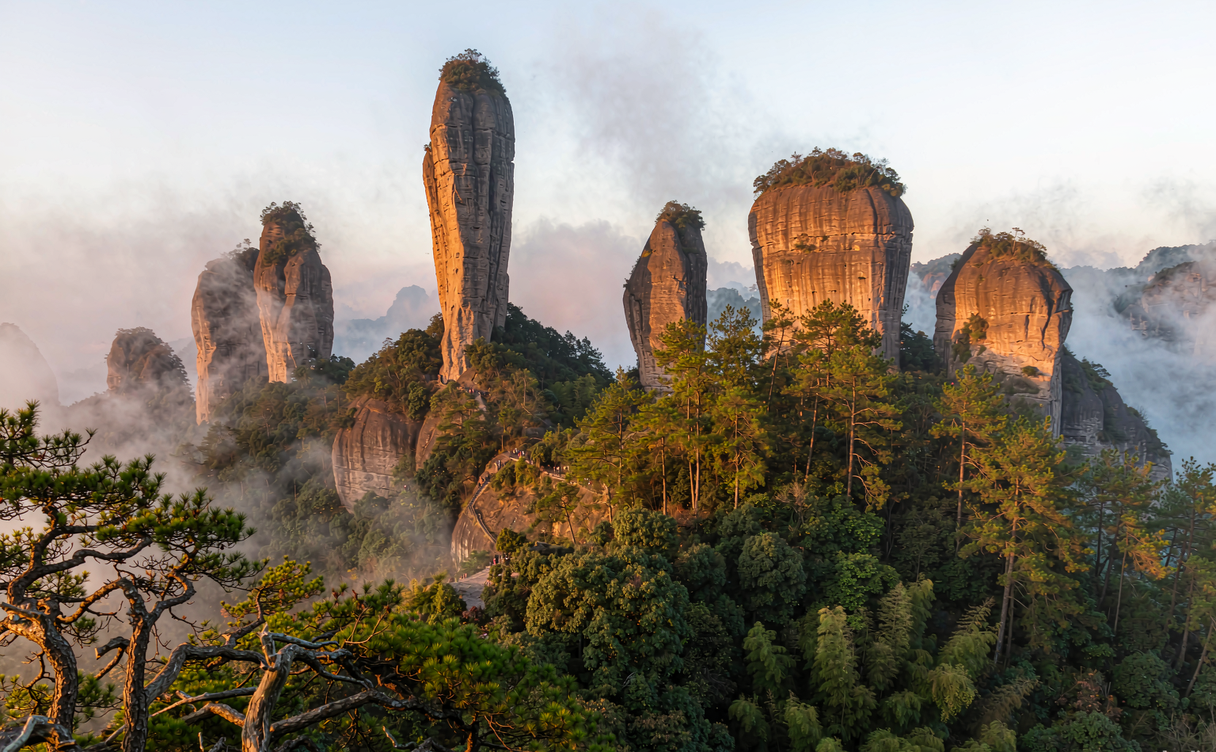
Tickets and what you’ll pay
As of the 2026 season the Yuntai Mountain entrance ticket runs about 50 to 80 RMB depending on the sub-areas you include, with a small sightseeing shuttle available for the access road at roughly 15 RMB. There is no cable car, so the price stays low and the effort stays real. Children under 1.2 meters enter free, and students with a physical ID usually get a discount on the gate ticket. The scenic area generally opens around 8:00 and the last entry is near 16:00, with the upper trail closing earlier than the gate, so plan to be climbing by mid-morning to leave time for the descent in daylight.
Because the site is lightly staffed, card payment at the gate is not always reliable. We tell clients to carry a few hundred RMB in cash as a backup, even though mobile pay works in the nearby towns. Rural cars from Shibing town likewise often prefer cash, and a little negotiation goes further when you are holding notes rather than waving a phone.
The climb is the whole point, and it is a proper walk rather than a stroll. The stone trail switchbacks up the massif through forest that shades you for most of the way, opening at the top to the cone sea viewpoint. Allow three to four hours round trip at a relaxed pace, more if you linger on the ridges for photos or birds. There are no vendors on the trail, so carry your own water and a snack; the only place to buy anything is back in Shibing town.
How to get to Shibing
The practical hub is Kaili, the capital of the Qiandongnan Miao and Dong Autonomous Prefecture, which has a high-speed rail connection to Guiyang (under an hour) and onward links across the province. From Kaili, frequent buses run to Shibing County in about 1.5 hours. From Shibing town, Yuntai Mountain is roughly 40 kilometers away; a taxi or arranged rural car covers it in about 50 minutes and costs somewhere in the 80–120 RMB range depending on negotiation.
Coming from Guiyang directly, figure on a bus or private car of around 2.5 to 3 hours to the mountain. We generally suggest an overnight in Kaili or Shibing, which also lets you sample the region’s Miao and Dong culture the same trip. The mountain is not a quick day-return from Guiyang, and forcing it usually means a rushed climb and a late drive back. For a fuller Guizhou circuit, the Guizhou Libo Xiaoqikong guide covers the province’s best-known karst water park, and the Wanfenglin Guizhou guide describes the vast karst peak forest in the south that most itineraries miss.
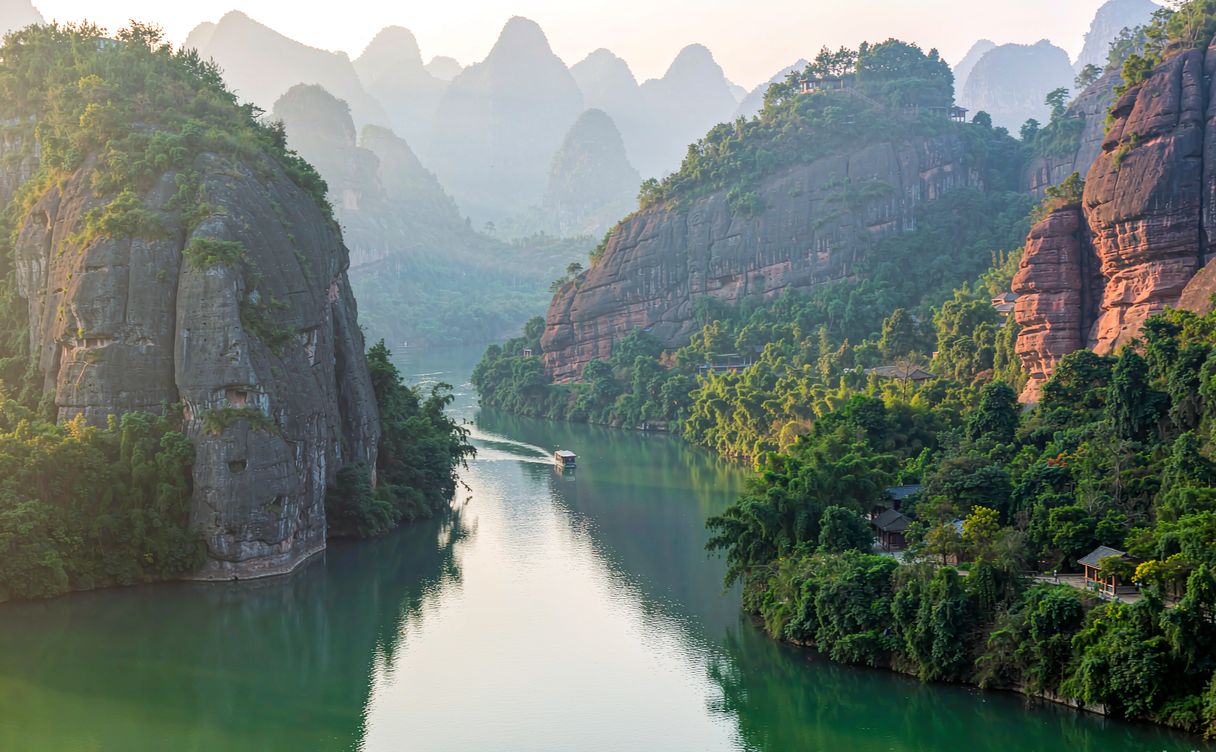
Things to do at Shibing
- Climb to the main Yuntai viewpoint. The stone trail takes roughly 1.5 to 2 hours up at a steady pace; the summit platform is where the cone sea opens up.
- Time your hike for the cloud sea. After rain, early mornings often lay a blanket of cloud over the valleys — the signature Shibing photograph.
- Walk the secondary ridges if you have energy; they are quieter and good for birding.
- Visit Shibing town’s riverside lanes in the evening for an unscripted look at a small Guizhou county, with little English and lots of local life.
Best time to visit Shibing
The best time to visit Shibing is April through June, when azaleas and other mountain blooms light up the slopes and the forest is at its greenest, and again September to November, when the air clears for the longest viewpoints. Summer brings lush scenery but also heavy afternoon rain and leeches on the lower trail, so we advise long pants and a shell. Winter is cold and sometimes foggy for days, which can erase the famous view entirely — worth knowing before you travel far. If you are coordinating a multi-province route, our best time to visit China overview helps you match Shibing’s windows with the rest of your plan.
Food and cultural pairings
Around the mountain, food is simple county cooking: sour soups, smoked pork, and fresh river fish, with meals in town running 25–50 RMB per person. The regional signature is a sour-hot broth built on fermented tomatoes and chili, the kind of dish that defines eastern Guizhou and pairs perfectly with the cool mountain air. If you want to add a village stay, the Dong settlements of the southeast of the province are among the finest preserved in China, with wooden drum towers and wind-and-rain bridges that reward an extra night on the road. Treat them as a separate stop on the same loop rather than a quick add-on, because the transfer between Shibing and the Dong heartland is measured in hours, not minutes.
Practical tips we give every client
- Start the climb early. The upper trail closes before the gate, and the morning cloud sea is the payoff.
- Wear proper hiking shoes. The stone path is uneven and slick after rain; this is not a paved promenade.
- Carry cash for the gate and rural cars, which often cannot take cards.
- Pack layers and a rain shell. Mountain weather turns fast, and the summit wind is sharp even in spring.
- Lower your expectations of signage. English is minimal; download an offline map before you lose signal.
- Don’t be surprised by local hikers. Residents treat the mountain as a weekend workout, so you may be passed by fit retirees in street clothes — a good sign the trail is safe and well maintained even if the English explanations are thin.
Shibing Karst is for travelers who like their scenery undressed. It costs little, crowds almost nobody, and delivers a view that the famous parks charge far more for. For the heritage context, the South China Karst UNESCO page includes Shibing among its inscribed component sites.