

Most foreign travelers have never heard of Lu’an (六安), and that is exactly why we send clients there. Tucked into the western foothills of the Dabie Mountains in Anhui province, this is a place of misty ridgelines, waterfall-fed peaks, and one of China’s ten famous green teas. A Lu’an travel guide should start with a confession: this is not a one-night stop. It rewards travelers who slow down for two or three days and let the mountains and the tea fields do the work.
Getting There and Getting Around
Lu’an sits about 80 km west of Hefei, the Anhui provincial capital. The simplest route is to fly into Hefei Xinqiao Airport and take a high-speed train (roughly 30 to 50 minutes, RMB 30–55) or a direct car transfer (about 1.5 hours, RMB 300–450 by rideshare). Within Lu’an, local buses reach the outskirts, but to reach Tiantangzhai comfortably you’ll want a private driver or a rented car — the mountain road climbs through switchbacks for the final 40 minutes. We typically book a driver for the day at RMB 400–600, which beats fighting rural bus schedules.
Tiantangzhai and the Dabie Ridges
The headline sight is Tiantangzhai (天堂寨), a peak straddling the Anhui–Hubei border at around 1,729 meters. The name means “Paradise Village,” and on a clear morning the cloud sea below the summit genuinely earns it. The Lu’an Dabie Mountains hike runs along well-built stone steps and boardwalks with railings, so it is manageable for reasonably fit visitors, though the full summit loop is a solid 4–6 hour effort with 1,000-plus meters of ascent. Summer brings the best waterfall flow — the Jiuying, Xinglong, and Yaotai falls are within a short walk of the cable car upper station.
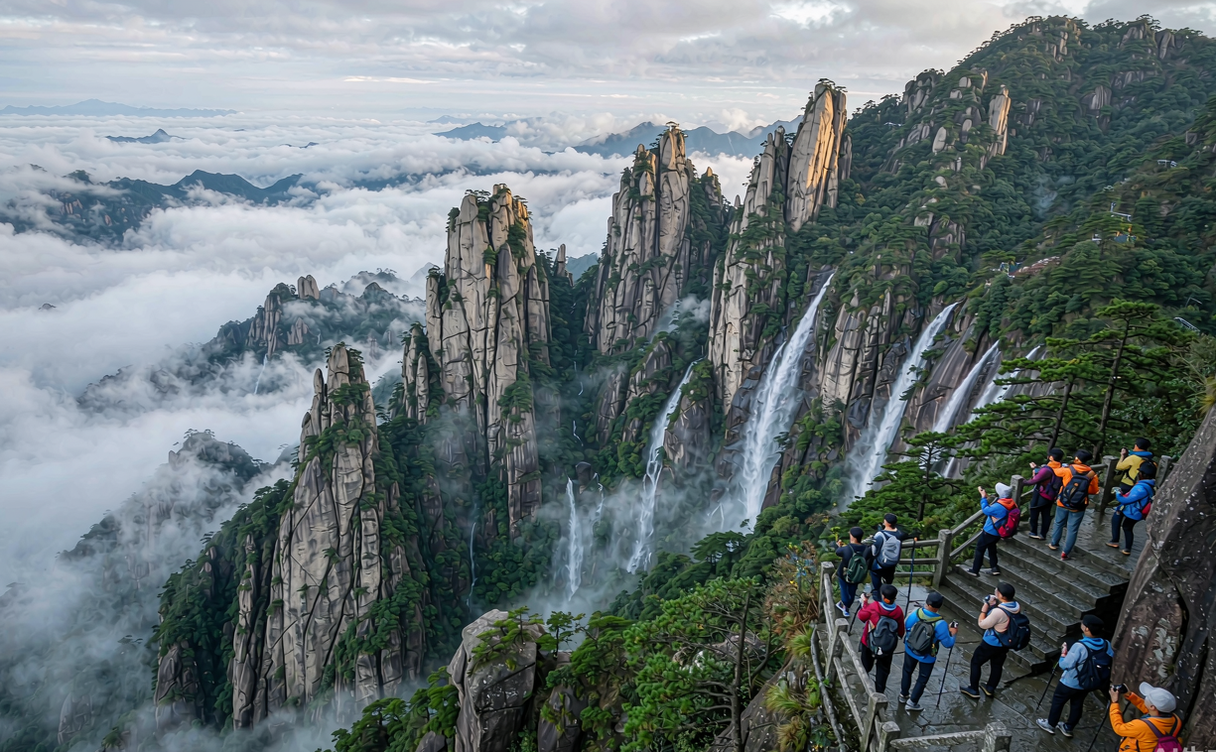
We advise buying the combined ticket (entry plus cable car) at the base; as of this year it runs about RMB 140–180 for the gate and RMB 70–100 for the cable car one way. Arrive before 9 a.m. in July and August to beat both the heat and the domestic tour buses. If you only have half a day, take the cable car up and walk down the waterfall trail — it’s the highest-value two hours in the area. For travelers who enjoy comparing ridgelines, the more famous granite peaks of Huangshan lie three hours southeast, and a Lu’an to Huangshan trip makes a natural week-long Anhui loop.
One practical note for the hike: the stone steps get slick after rain, so we send clients with proper trail shoes rather than smooth sneakers, plus a light rain shell even in shoulder season. Snack stalls at the mid-station sell instant noodles and corn for RMB 10–15, but choice thins above 1,400 meters, so carry your own water. The summit ridge can run 10–15°C cooler than the base, and October mornings dip near freezing — layer up if you’re up for sunrise. Mobile coverage is solid on the Anhui side but patchy on the Hubei-facing back trails, so download an offline map before you leave the lodge.
Tea, Countryside and Local Flavor
Lu’an is the home of Lu’an Guapian (六安瓜片), a flat-leaf green tea with no bud or stem — just the ripened leaf, pan-fired to a deep green and a toasty, almost chestnut sweetness. Unlike the delicate buds of Hangzhou’s famous Longjing, Guapian is robust enough to take a second and third infusion. You can visit family workshops in the hills around Mengshan and Dushan towns, where farmers still hand-roast over charcoal in spring (late April to May is harvest peak). A half-kilo of good loose Guapian runs RMB 200–600 depending on grade; tourist-shop tins near the mountain gate are convenient but pricier. Our Hangzhou Longjing tea village guide pairs well if you want to taste the regional contrast between Anhui and Zhejiang teas.
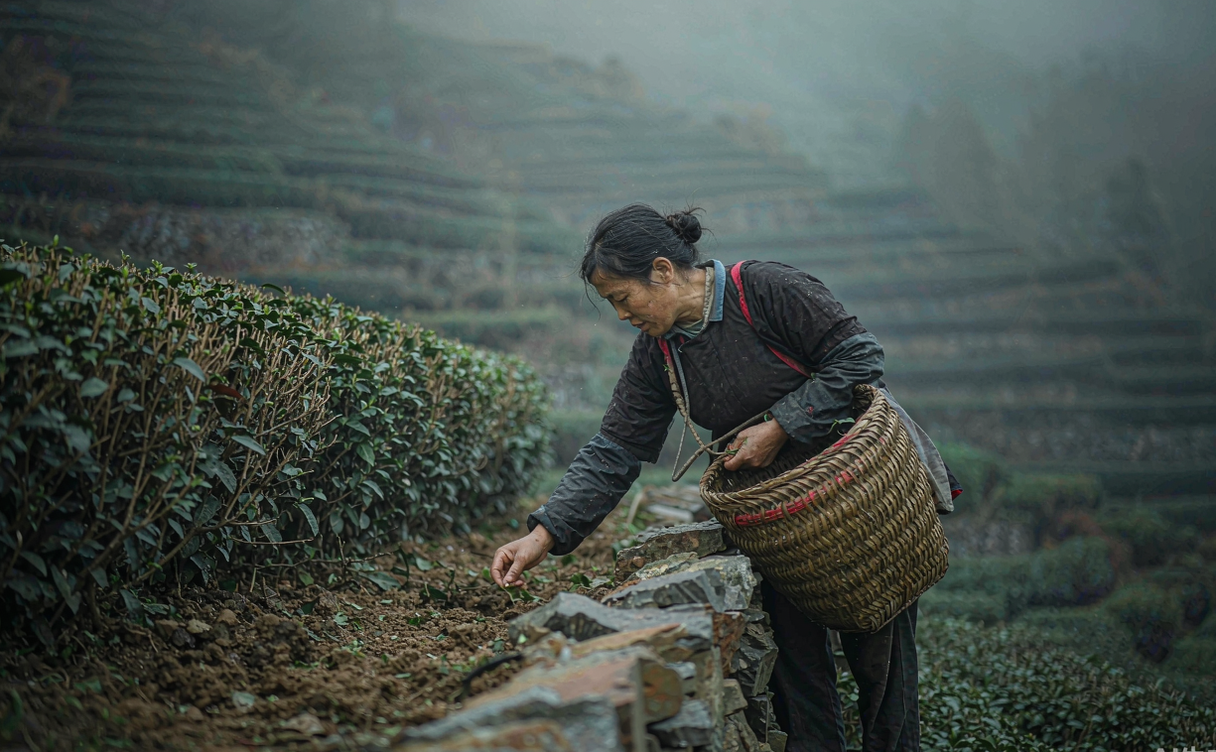
The Lu’an tea and countryside experience is best on a rented e-bike or with a driver who knows the back roads. Tiny villages of whitewashed houses with horse-head gables (the Hui-style roofline) dot the valleys, and the pace is genuinely rural. For a different kind of mountain scenery after Lu’an, our Dinghu Mountain guide in Guangdong and the Jinggang Mountain guide in Jiangxi both extend the “red hills and green tea” theme southward.
Where to Taste Tea: Mengshan and Dushan
Two names matter for tea lovers. Mengshan (磨山), west of the city, is the classic Guapian growing zone, with family workshops that let you watch the pan-firing and taste three grades side by side, often for free or a small tasting fee. Dushan (独山), to the south, has larger cooperative factories where you can buy vacuum-sealed leaves to carry home. We schedule tea visits for the morning, when the roast masters are working and the aroma is strongest; by afternoon the best batches are often gone. A good rule when buying: if the leaves look unnaturally uniform or bright green, they have been dyed or over-processed — real Guapian is a slightly uneven, grey-green leaf with a toasty smell.
Best Seasons and Crowds
Lu’an works in all four seasons but has a clear sweet spot. April to May is harvest, and the hills are at their greenest, though rain is frequent — pack a light shell. September to early November brings cool, clear hiking weather on Tiantangzhai with the fewest domestic crowds. Avoid the week of National Day (early October) and the Spring Festival rush, when mountain lodges double in price and sell out. Summer (July–August) is busy with Chinese family tourists escaping the cities; arrive early and you’ll still find quiet trails above 1,200 meters.
A Sample 3-Day Lu’an Itinerary
- Day 1: Arrive from Hefei, settle in the city, and take an evening walk along the Pi River. Dinner on baofeng fish.
- Day 2: Private driver to Tiantangzhai (1.5–2 hours). Cable car up, waterfall trail down, then overnight at a mountain lodge for sunrise.
- Day 3: Morning tea village visit in Mengshan for tasting and shopping, then return to Hefei or continue to Huangshan.
Food and Where to Stay
Lu’an’s table leans hearty and slightly spicy, typical of northern Anhui. Try the local baofeng fish (a freshwater catch steamed with fermented chili), wild mountain bamboo shoots in spring, and the smoky cured pork that appears in almost every countryside restaurant. A solid sit-down meal for two runs RMB 80–160. If you want a sweet break, our China bubble tea and milk tea guide explains the chains you’ll find in Lu’an’s small city center.
Stay options split cleanly: book a hotel in Lu’an city (comfortable, RMB 200–400 a night, good for train access) or lodge near the Tiantangzhai scenic base (RMB 300–600, lets you catch sunrise on the ridge). We usually put clients in the mountain lodges for one night and the city for the rest.
The Dabie range is geologically part of the larger system described in the Dabie Mountains reference, worth a read if you like understanding why the waterfalls and cloud seas form here.