

Here is the first thing every client needs to hear: this Suzhou (Anhui) travel guide is not about the canal city near Shanghai. That famous Suzhou is in Jiangsu. The Suzhou we’re covering sits in northern Anhui, a gritty, friendly prefecture of about 5 million people, best known for a primeval forest, a famous roasted chicken, and some of the finest Han-dynasty stone carvings in eastern China. If you’ve already done the Jiangsu highlights, this Suzhou is a rewarding detour into the real, less-polished north.
Huangzangyu: The Hidden Forest
The standout reason to come is Huangzangyu National Forest Park (皇藏峪), about 30 km south of the city center. Unlike the manicured hills farther south, this is one of the few near-virgin deciduous forests in the Huai River plain, with 1,000-year-old trees, spring-fed waterfalls, and a cool, mossy hush that surprises first-time visitors. Trails are well marked and take 2–4 hours depending on how far up you climb; the gate ticket is around RMB 50–65, and a shuttle bus inside saves the first hot kilometer for RMB 15. We send clients here in early summer when the canopy is full and the small falls are still running after the rains.
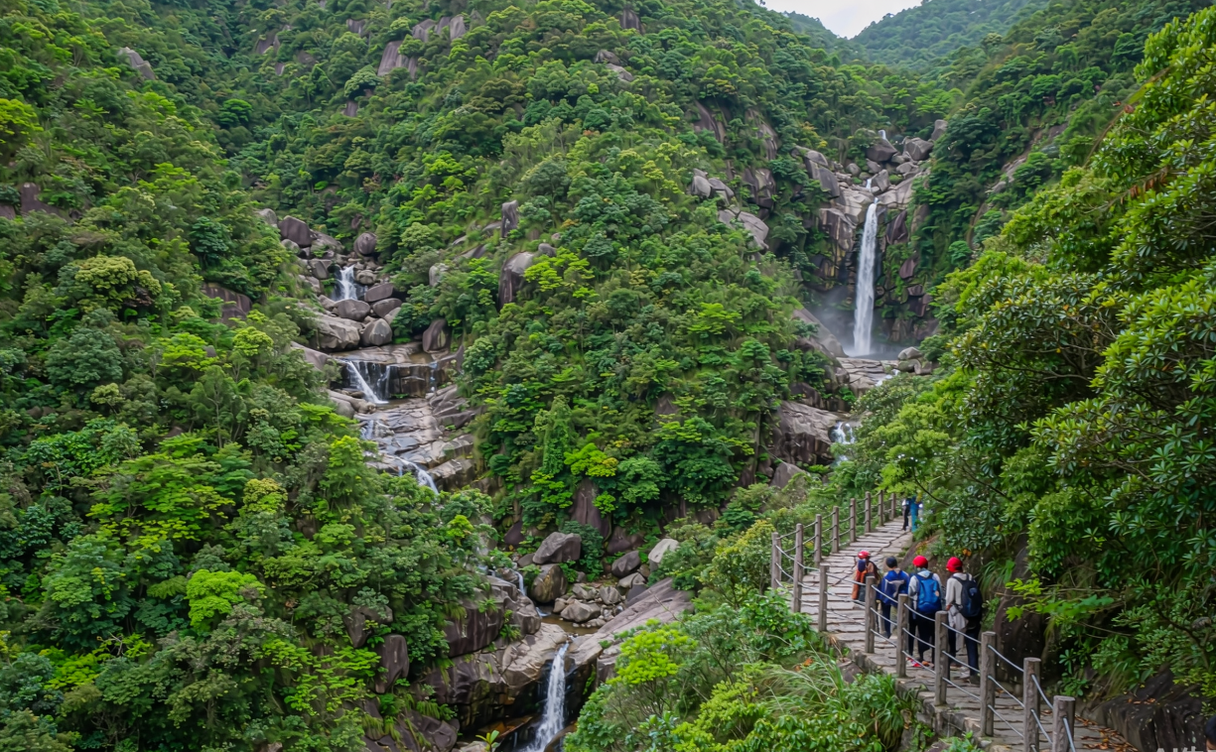
Legend ties the forest to Liu Bang, the founding emperor of the Han dynasty, who is said to have hidden here — hence the name “Imperial Storehouse Valley.” At the heart of the park sits Ruiyun Temple (瑞云寺), a working Buddhist monastery where the morning bell and the smell of incense cut through the pine air. The park gets busy on weekend mornings in spring and autumn, when Hefei families drive in; weekdays and late afternoons stay quiet. Wear sturdy shoes — the upper trails are rocky and can be muddy after rain — and bring water, since the only vendors are at the base. A full loop to the highest viewpoint is about 6 km and 2.5–3 hours; a shorter out-and-back to the first waterfall is under an hour if your time is tight. For travelers who like comparing forests across China, our Zhangjiajie National Forest Park guide covers the famous sandstone pillars far to the west, while our Dinghu Mountain guide in Guangdong and the Jinggang Mountain guide in Jiangxi offer other green escapes.
Han Culture and Stone Art
What sets this Suzhou apart is its Han heritage. The prefecture’s museums hold an outstanding collection of Han-dynasty pictorial stones (汉画像石) — carved and engraved slabs from tombs showing banquets, processions, and mythical beasts with a confidence that still reads 2,000 years later. The Suzhou Museum (the local one, not the famous Jiangsu building) displays these along with ceramics and the region’s distinctive Lingbi scholar’s rocks — the sonorous, oddly shaped stones from Lingbi county that Chinese collectors have prized since the Song dynasty.
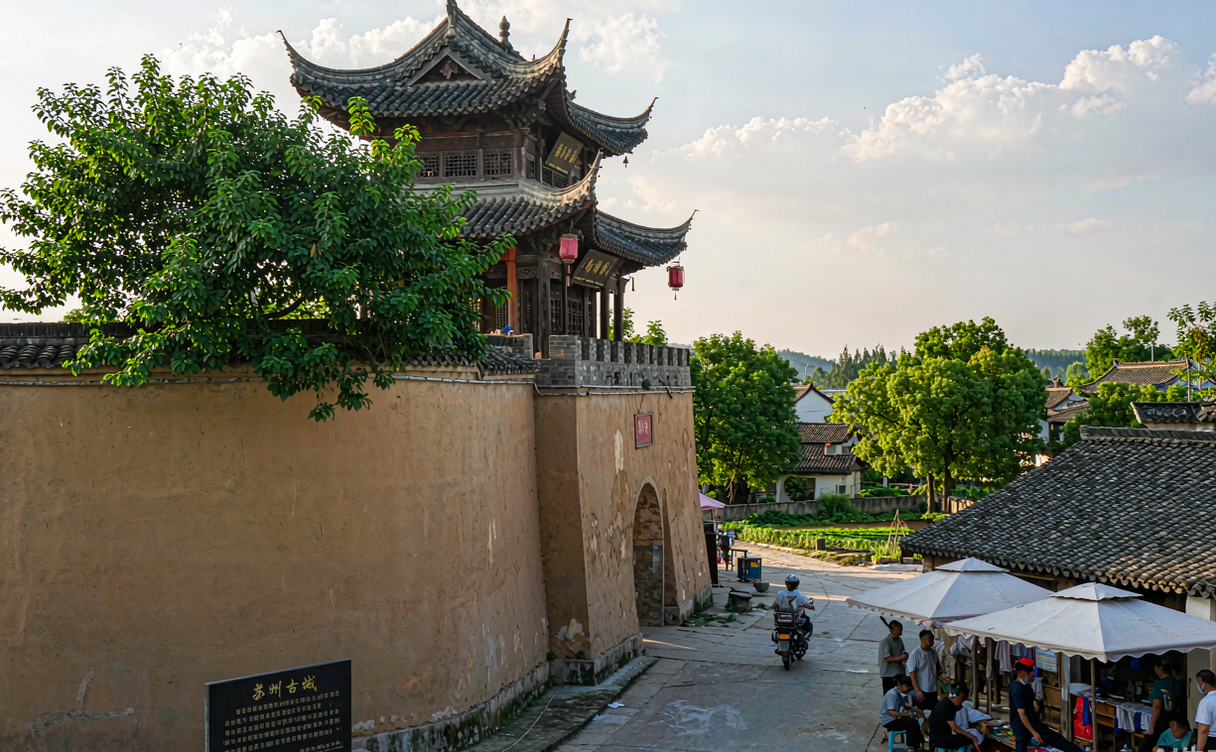
For a deeper Han fix, a Suzhou to Xuzhou trip is an easy add-on — Xuzhou, just across the provincial border in Jiangsu, holds the spectacular Han dynasty tomb complex and its terracotta army. We often pair the two cities into a two-day north-Anhui history run, then send forest-loving clients south to the Huangshan Yellow Mountain area for granite-peak scenery that contrasts the lowland woods. If your interests lean toward old towns over forests, our Shaxi ancient town guide in Yunnan shows the slow-village alternative, and our Shilin Stone Forest guide in Yunnan explains another famous use of regional stone.
Food: The Roasted Chicken Capital
Suzhou Anhui food centers on one dish: Fuliji roasted chicken (符离集烧鸡), a braised-and-roasted chicken with a glossy mahogany skin and meat that slips off the bone. It’s sold at train stations, markets, and dedicated shops for about RMB 30–50 a bird, and it travels well as a snack. Beyond that, the local table is northern-Anhui plain cooking — hand-pulled noodles, lamb skewers (this is close enough to Henan and Shandong to share the grill culture), and sour cabbage stews. A filling meal at a local joint runs RMB 40–80 per person. Buy it whole and ask the shop to quarter it; eaten at room temperature it’s even better an hour later, which makes it ideal train food for the Xuzhou leg.
Lingbi Stones and Local Markets
Suzhou prefecture is the home of Lingbi stone (灵璧石), a dense, bell-toned limestone collected as scholar’s rocks since the Song dynasty — strike a good one and it rings. The finest pieces are naturally sculpted by erosion into abstract towers and caves, and you’ll see them in the city’s parks and in the homes of locals who treat them as art. The wholesale market on the city’s edge sells smaller specimens from RMB 30 for a palm-sized stone up to thousands for a garden piece. We tell clients to buy from a shop that will wrap the stone for checked luggage, since the dense rock is heavy and awkward to carry. Around the old town, morning markets sell produce, knives, and snacks with a rough northern-Anhui bustle that the famous canal-city Suzhou lost long ago.
Logistics and Timing
The city is served by Suzhou railway station on the Beijing–Shanghai line, with frequent high-speed trains from Hefei (about 1 hour, RMB 60–90) and Xuzhou (about 40 minutes, RMB 40–70). Within the city, buses and Didi cover everything; for Huangzangyu, budget RMB 120–200 for a round-trip car since buses are infrequent. Spring (April–May) and autumn (September–October) are the comfortable windows — summers here are hot and humid, often above 34°C.
A Sample 2-Day Suzhou (Anhui) Itinerary
- Day 1: Arrive by high-speed train from Hefei or Xuzhou. Drop your bags, visit the local museum for the Han pictorial stones, then dinner on Fuliji chicken.
- Day 2: Morning driver to Huangzangyu (about 45 minutes), hike the forest and Ruiyun Temple, eat at the gate, and return for an evening market walk before your outbound train.
Where to Stay and When to Go
The city center has workaday hotels in the RMB 180–350 range that are clean and central, plus a couple of better business hotels near the station at RMB 400–600. A few newer boutique options near the old town offer stronger breakfast and English-speaking staff at RMB 500–700 if you want more comfort after a long train day. Stay central if you want walks and food; there’s no real reason to lodge at Huangzangyu unless you want a pre-dawn forest start. Timing: April–May and September–October are ideal, with cool, dry days and good light for both the stone carvings and the forest. Winters are cold but clear and nearly crowd-free — a fine time for the museums. Summers are hot and sticky; if you come then, do the forest early and the indoor Han exhibits midday.
The city’s background and administrative history are outlined on the Suzhou, Anhui reference page, useful context before you confuse it with its famous namesake.