

A Liping travel guide should open with a sound before a sight: the evening drill of a wooden drum tower, then a wall of a cappella harmony rising from a village square. Liping sits in southeast Guizhou, deep in the hills of the Qiandongnan region, and it is the closest thing China has to a living museum of Dong culture. On our last trip we counted eleven drum towers in a single valley, each one the social heart of its village, and we ate more sticky-rice parcels than we could reasonably count.
We’ve sent clients here as the cultural anchor of a Guizhou loop, and it rarely disappoints. Unlike the polished tourist towns nearer the coast, Liping’s Dong villages still plough their terraces, still sing their grand songs (dage), and still build those extraordinary wind-and-rain bridges without a single nail. If you want rural China with a pulse, this is it.
Why Liping is Guizhou’s Dong heartland
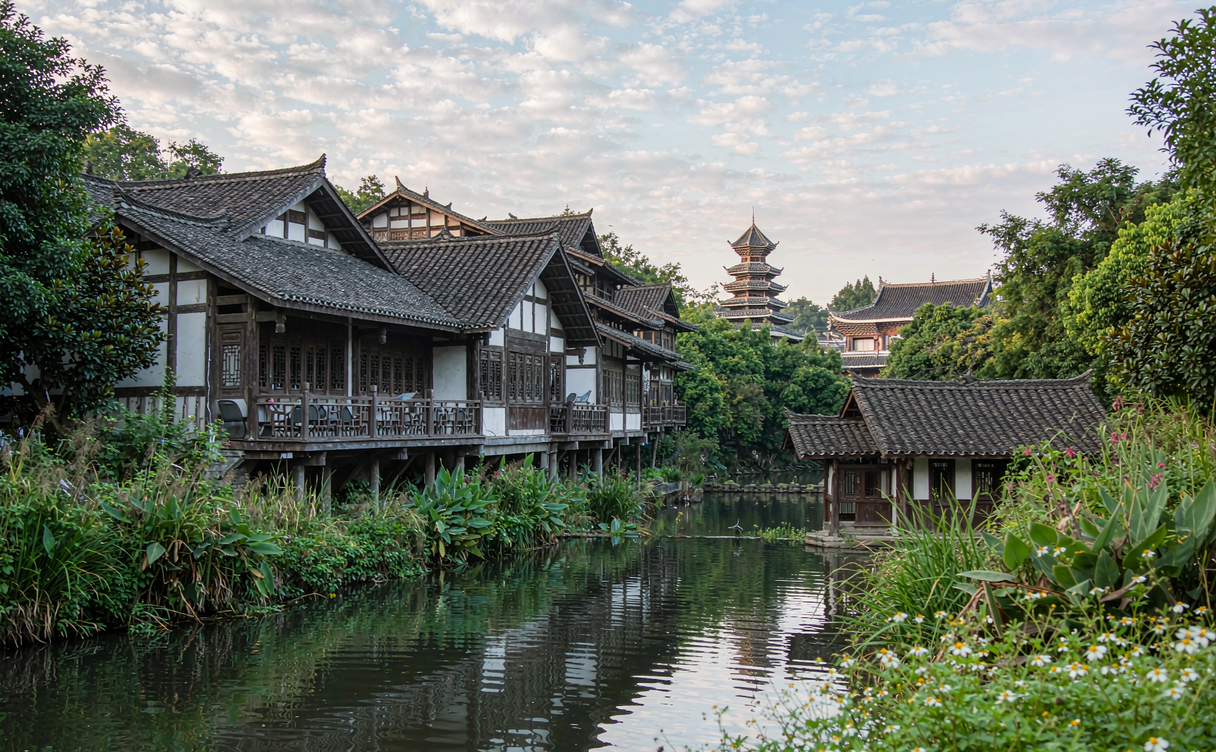
The headline name is Zhaoxing Dong Village, the largest and most famous of the lot, but Liping county holds dozens more — Tang’an, Zhanli, Huanggang, Diping — each with its own character. Zhaoxing alone has five drum towers, one for each of the village’s clans, and the sight of them lit at night against the misted hills is why people make the journey. Entry to Zhaoxing runs about 80–100 RMB, and a guesthouse inside the village costs 150–350 RMB a night, breakfast included.
Before you commit to the rail tickets, our China travel guide for first-timers walks through the payment apps, train-booking tools, and small-etiquette points that make rural Guizhou smoother than first-time visitors expect. Liping is welcoming but cash-light in the villages, so load your phone wallet before you leave the city.
Best time to visit Liping
Spring (March to May) is our favorite. The terraced fields fill with water and reflections, the rapeseed and azalea bloom on the slopes, and the villages host sowing festivals. Autumn (September to October) is the other sweet spot: the rice turns gold, harvest songs fill the squares, and the air is dry and clear. We avoid June through August, when Guizhou’s monsoon can drop a month of rain in a week and turn the mountain paths to mud, and January to February, when it is cold, damp, and quiet.
For the wider regional picture, the best time to visit China page lays out the climate bands, but Liping follows the karst-highland rhythm: mild, wet summers and cool, foggy winters. Time your Liping itinerary for a clear morning and you’ll get the postcard light.
How to get to Liping
Most travelers reach Liping by high-speed rail. The Guiyang–Guangzhou line put the region on the map: from Guiyang North it’s roughly 1.5–2 hours to Congjiang or Liping stations (second class 100–150 RMB), and connections run from Guangzhou in about 4 hours. Liping itself has a county station served by a handful of through trains; more often we route clients to Congjiang and transfer by car (about 40 minutes, 120–180 RMB).
There is also Liping Airport (LPS) with flights from Guiyang and Kunming, handy if you are short on time. From the station or airport, the villages are another 40–90 minutes by road, and that final drive — switchback after switchback through terraced valleys — is half the experience. We book the transfer in advance because local drivers at the lot rarely speak English and ride apps are spotty this far out.
If you are building a Guizhou circuit, pair Liping with our Guizhou Zhaoxing Dong village guide for deeper detail on that one settlement, and consider adding the Guizhou Libo Xiaoqikong karst lakes a few hours south for a water-and-forest counterpoint.
Things to do in Liping
Zhaoxing Dong Village. Five clan towers, a daily grand-song performance at the main square (usually 10am and 4pm, free with entry), and a warren of lanes selling embroidery and silver. Budget a full day; stay overnight to catch the unplugged evening singing.
Tang’an Dong Village. A 20-minute shuttle above Zhaoxing, Tang’an is smaller and quieter, famous for its terraced paddy outlook and a tiny eco-museum. The walk down the old path between the two villages is one of the best one-hour strolls in Guizhou.
Zhanli Village. Remote and proud of its old “one-child” custom lore, Zhanli keeps its rituals with little English explanation — which is exactly why a guide helps. A private car here from Zhaoxing runs about 200 RMB round trip.
Huanggang and Diping. Further afield, these villages stage the loudest lusheng pipe festivals in autumn. Entry is often free or a token 20 RMB; the real cost is the bumpy road.
Dong cuisine. Sour is the signature. The local sour soup (suantang) fish and sour pork are an acquired, addictive taste, and they pair with sticky purple rice. A village meal for two is 60–120 RMB, beer included. For the broader food context, our Guizhou sour soup guide explains the fermentation behind the flavor and where to try the best versions.
A sample Liping itinerary
Day 1: train to Congjiang, transfer to Zhaoxing, settle and wander. Day 2: Zhaoxing towers and grand-song show, afternoon shuttle to Tang’an. Day 3: hire a car for Zhanli and Huanggang, overnight back in Zhaoxing. Day 4: depart, or extend south toward Libo. We’ve run this as a relaxed four-day block, and clients who want more landscape add the Wanfenglin Guizhou guide “forest of ten thousand peaks” near Xingyi as a southern finale — it trades Dong villages for raw karst drama.
Getting between the villages
Liping’s sights are scattered, and public transport thins out fast once you pass Zhaoxing. We usually book a chartered car for the day — about 300–500 RMB for a driver who waits while you explore — because the alternative is piecing together rural buses that run two or three times daily and stop by noon. Motorcycle taxis fill the gaps in the valleys for 10–20 RMB a hop, but agree the price first; there are no meters and no receipts. The roads are paved but winding, and a 20-kilometer hop can take 40 minutes, so we tell clients to budget the car cost into the trip — it is the difference between seeing two villages and seeing six, and it keeps the day from collapsing around a missed bus.
Where to stay and what’s bookable today
Zhaoxing has the densest lodging — family guesthouses at 150–350 RMB, a few design hotels at 500–800 RMB. The smaller villages have only a handful of rooms, so book ahead if you want Huanggang or Zhanli. Trains sell out on holiday weekends (May Day, National Day), and Zhaoxing entry is cheaper booked online than at the gate.
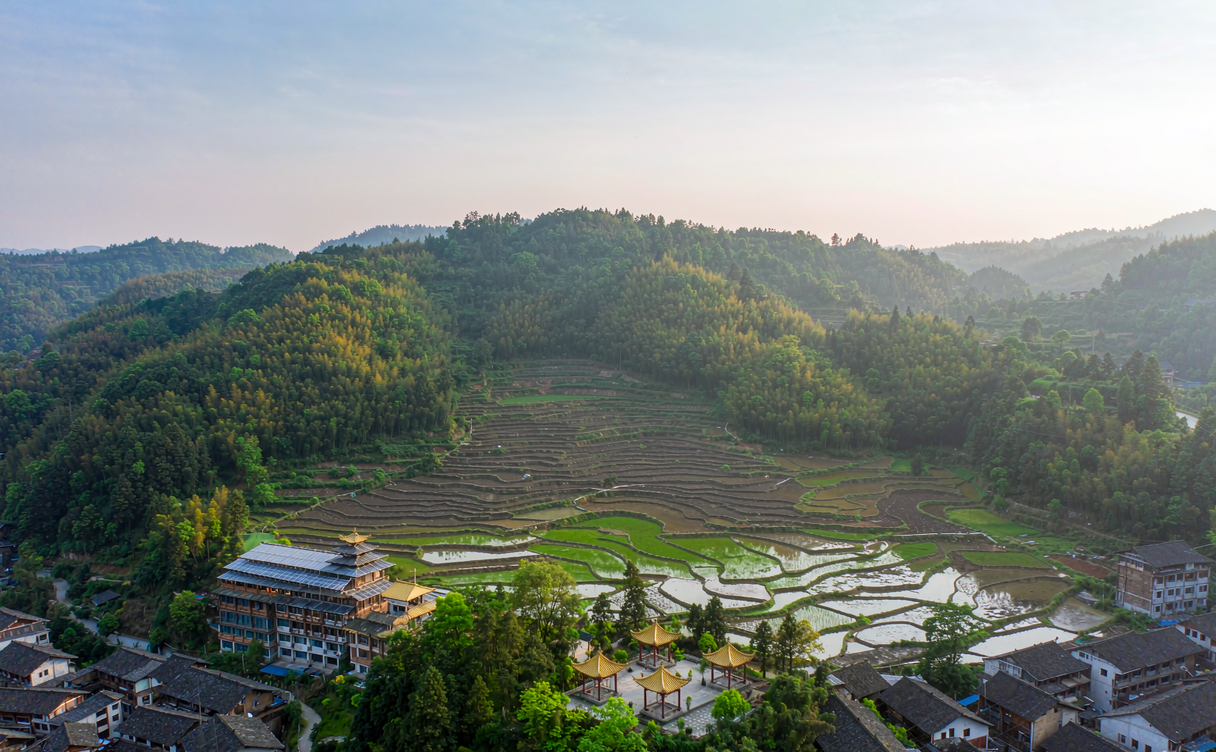
We’ve found the single best move is to stay two nights minimum. The first day you gawp at the towers; the second day, once the tour buses leave at 5pm, the village becomes itself again, and that is the Liping you came for.
Before you go / References
Liping rewards slow travel and a willing palate — bring good shoes for the terrace paths and an open mind for sour soup. For the cultural backbone, see the Dong people entry on Wikipedia, which explains the drum-tower social system and the grand-song tradition that UNESCO has recognized.