

Most visitors to Hangzhou spend their whole trip circling West Lake and never learn that, 20 km northwest, a 5,000-year-old city lies buried in the rice fields. The Liangzhu ancient city guide is essential reading for anyone who wants to understand the depth of Chinese civilization, because Liangzhu is now recognized as the earliest known regional state in the Yangtze delta — a sophisticated society that engineered dams, grew rice, and carved ritual jade centuries before the Shang dynasty. On our last trip we spent a full day here and left convinced it is the most underrated UNESCO site in eastern China, and far more moving than its modest surroundings suggest.
This is an easy half-day or full-day add-on to any Hangzhou travel guide plan. After the crowds at the West Lake Hangzhou guide spots, the quiet of the archaeological park is a relief, and the two experiences together give you both the polished imperial China everyone knows and the prehistoric roots almost no one visits.
What Liangzhu is
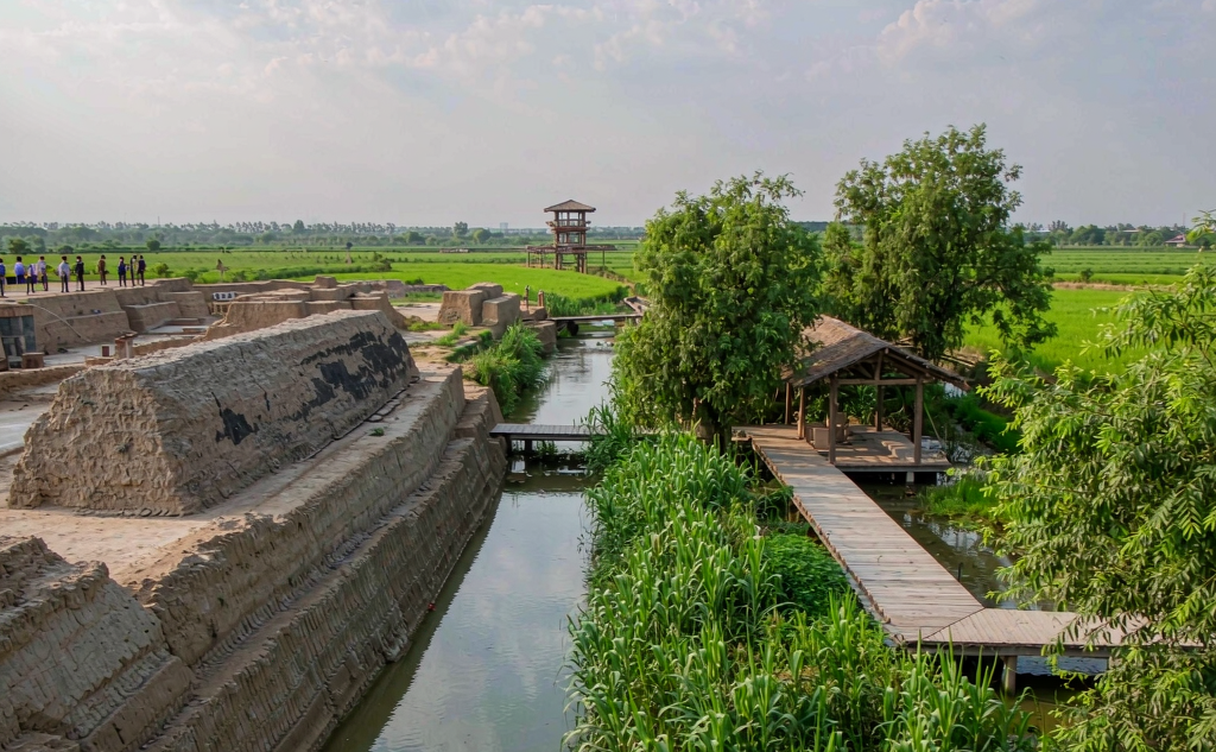
Liangzhu (3300–2300 BCE) was a walled city supported by an elaborate water-management system — thirteen dams have been identified in the hills to the northwest, forming what archaeologists call the world’s earliest known large-scale hydraulic engineering. The people made no written records we can read, but they left jade: the bi disc (round, symbolizing heaven) and the cong tube (square outside, round inside, symbolizing earth). These were not jewelry but ritual objects of power, possibly markers of rank or instruments of ceremony. The China UNESCO World Heritage guide ranks Liangzhu alongside sites like the Forbidden City for cultural significance, and the comparison is fair — both were seats of authority, just separated by four millennia.
Getting there
The practical question is how to get to Liangzhu from Hangzhou. Take Hangzhou Metro Line 2 to Liangzhu station (terminal stop), then a short taxi or the park shuttle bus — total about 50 minutes from the city center and ¥8–20. Driving takes 40 minutes in light traffic. There is no need for a tour; signage is in Chinese and English, and the site is built for independent visiting. If you are coming from Shanghai, the high-speed train to Hangzhou East plus the metro is faster than any bus, and you can store luggage at the East station lockers for the day.
Liangzhu Museum and jade
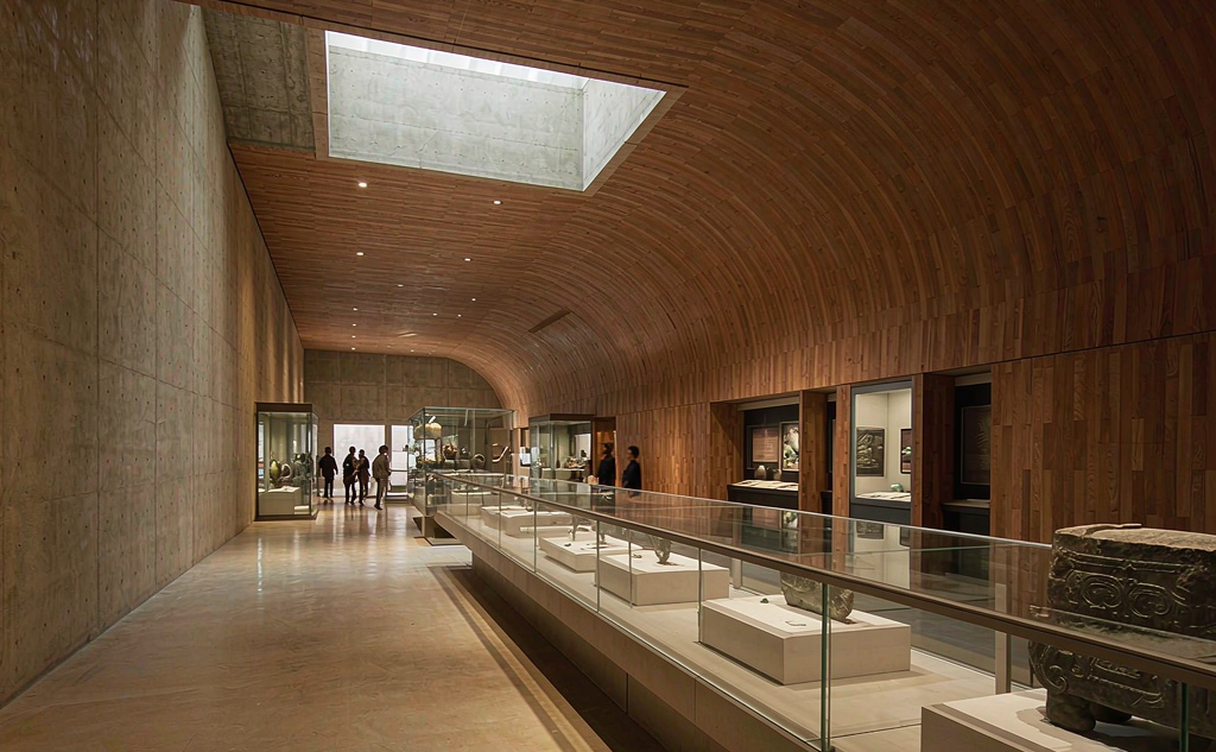
Start at the Liangzhu Museum jade artefacts collection, a low-slung building designed by David Chipperfield with a calm, tomb-like interior of concrete and filtered light. The centerpiece is the “King of Cong” — a 6.5 kg jade tube carved with a minuscule masked figure, the detail of which still puzzles engineers who wonder how Neolithic tool-makers achieved it without metal. Allow 90 minutes. Admission to the museum is free but you must reserve a slot; the China museum booking reservation guide explains how to use the real-name booking systems common at Chinese museums, and Liangzhu sells out its free slots on weekends. If you love ancient objects, the Shanghai Museum guide is the natural next stop for bronze and jade from later dynasties, letting you trace the craft forward three thousand years.
The archaeological park
Next, the Liangzhu archaeological park tickets cover the open-air site: reconstructed wooden city gates, a moat you can walk along, rice paddies planted as they would have been, and a visitor center with a 3D film that reconstructs the lost capital. Entry is about ¥60–80 including the shuttle, and an electric cart (¥20) saves your legs across the 3 km core loop. We recommend renting the audio guide (¥30) — the English commentary ties the scattered earthworks together far better than the plaques alone, and explains why the city was abandoned when the climate turned wet and the plain flooded. Allow two hours for the park itself.
UNESCO status
In 2019 the site was inscribed as the Liangzhu UNESCO world heritage site, cited as evidence of early Chinese urban civilization and its “regional state” stage, pushing the documented start of Chinese civilization back by around a thousand years. For the official description and the committee’s reasoning, the UNESCO World Heritage listing for Liangzhu is the authoritative source. Comparing notes with the Xi’an Banpo museum guide — a Yangshao-era site from the Yellow River basin — makes a fascinating study in how differently Neolithic cultures lived, one building with wood and jade, the other with pit-houses and painted pottery.
How long to spend
A common question is whether Liangzhu needs a full day or just a morning. Our answer: budget a full half-day minimum, and a full day if you are a museum person. The museum alone deserves 90 minutes, the park another two with the cart and the film, and the walk between the two (or the shuttle wait) eats another 30–45 minutes. If your Hangzhou schedule is tight, do the museum plus the core park loop and skip the far northern dam ruins, which are only for serious archaeology buffs. We often pair Liangzhu with a lazy morning at West Lake and a taxi out after lunch, which lands you at the museum around 2 pm and back in the city for dinner — a rhythm that avoids the worst of the midday sun in summer and the school groups in the morning.
If you want to go deeper, the park’s northern zone preserves the actual dam foundations among the hills, reached by a longer shuttle ride and a short walk; it is quietly spectacular for anyone interested in how a Neolithic society moved that much earth without metal tools. There is also a small handicraft court near the visitor center where you can watch a carver work a modern cong from soapstone — not the real thing, but a good way to understand why the original jade tubes took months to finish.
Best time to visit
The best time to visit Liangzhu is spring (March–May) and autumn (September–November), when the park’s paddies are green or golden and the weather is mild. Summer is hot and the open site offers little shade, so go early and carry water; winter is cold but empty, which some visitors prefer for photography without the school-group noise. The museum is climate-controlled year-round, so it works as a rainy-day option regardless of season.
Practical tips
- Book the museum slot online before you leave the hotel; walk-up entries are limited.
- Wear sun protection and comfortable shoes; the park is mostly unshaded paths.
- Combine with a morning at West Lake and an afternoon here for a full, balanced day.
- Budget ¥100–150 per person for tickets, cart, and audio guide.
- The on-site cafe does decent coffee and cold noodles if you need a break between museum and park.
Why it matters
Standing on the reconstructed gate, looking out over the flat valley the Liangzhu people drained and dammed, you realize this was a capital — not a village. That shift in scale is the reason UNESCO stepped in. For travelers tired of temple-after-temple itineraries, Liangzhu offers something rarer: the quiet origin story of a civilization, told in jade and earth rather than marble and gold.