

Jiangyin is a county-level city on the southern bank of the Yangtze, squeezed between Wuxi and the river’s mouth. Most visitors rush past on the highway or the high-speed line and never stop. That is a mistake. On our last trip we based ourselves here for four days and found a compact, prosperous river town with a real sense of place — Xu Xiake’s hometown, a working Yangtze waterfront, and a surprisingly good museum scene. This Jiangyin travel guide explains why it deserves a slot on your Yangtze Delta itinerary, and how to fit it around the bigger names nearby.
The easiest framing for a first visit is a Jiangyin day trip from Wuxi. The Wuxi travel guide covers the obvious Taihu and Lingshan stops, but Jiangyin sits just 40 km north and makes a perfect half-day or full-day extension. A Didi or bus from Wuxi takes under an hour, and you get a completely different feel: not a lake resort but a hard-working port with its own philosophers and food.
Getting there
High-speed trains from Shanghai or Nanjing stop at Jiangyin station in roughly 40–60 minutes from Wuxi or Changzhou travel guide hubs, with fares around ¥25–45. From Shanghai it is a 90-minute run for about ¥70. If you prefer road travel, the China high-speed train guide for foreigners walks through booking and ID rules, which are the same for this line. Within the city, buses are cheap (¥1–2) and Didi is everywhere; the old town and riverside are flat and bikeable if your hotel lends one.
Xu Xiake’s former residence
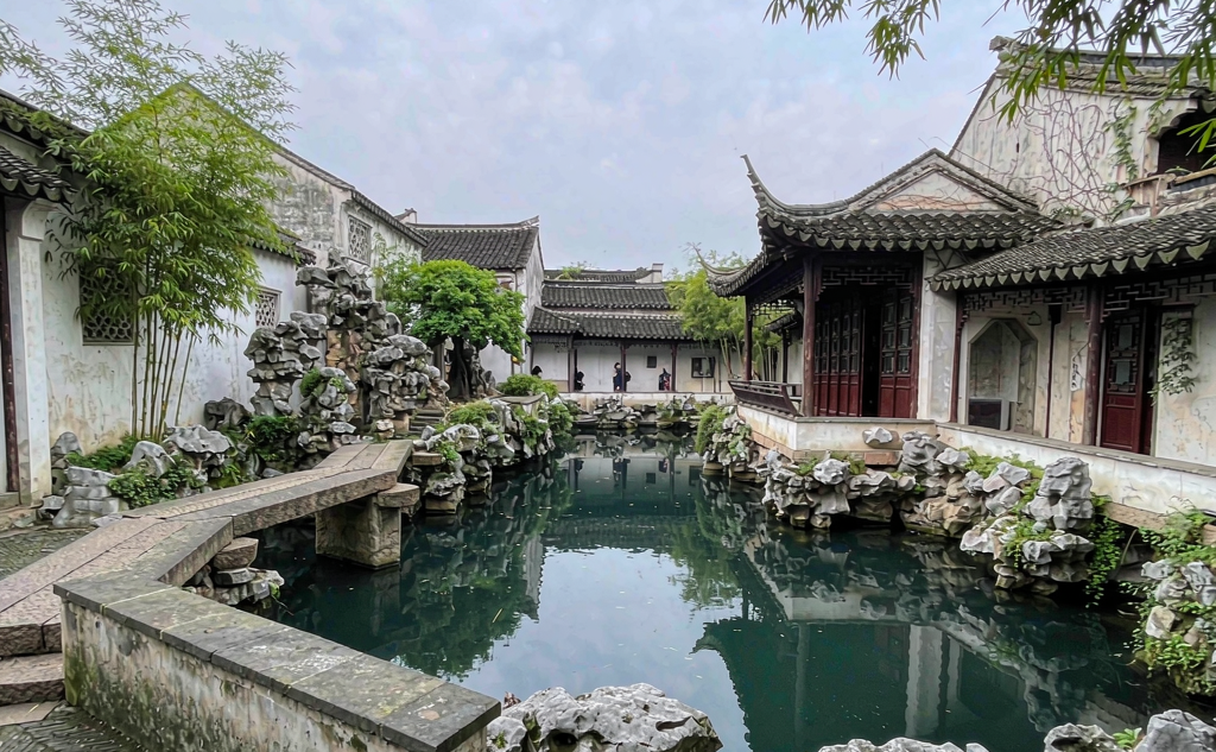
The must-see is the Xu Xiake former residence Jiangyin, in Qiting town south of the city center. Xu Xiake (1587–1641) was China’s greatest travel writer before the term existed — he spent thirty years on foot and by boat documenting mountains, caves, and rivers across the empire, and his diary is still quoted by Chinese hikers. His ancestral home is a modest Ming-dynasty courtyard with a small exhibition of his routes, original editions of his travels, and a beloved old ginkgo tree in the garden that he supposedly planted and that still drops fat golden leaves each November. Entry is about ¥20–30. We’ve sent travelers here who knew nothing of Xu and left wanting to read his journeys; the man’s restless curiosity is contagious, and the garden is a calm place to sit.
Ebizui Park and the river
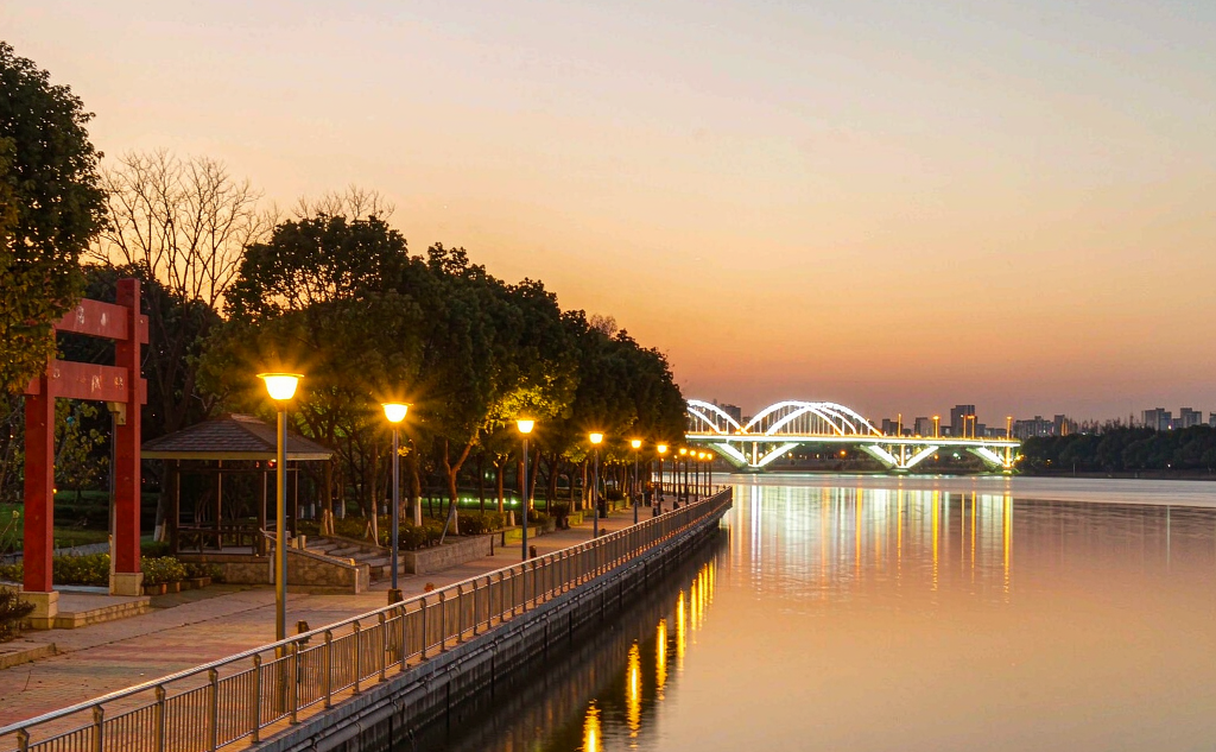
For the river itself, go to Ebizui park Yangtze view on the northern tip of the city, where the Yangtze bends and narrows. The name means “crocodile’s snout” after the shape of the spit. A long promenade runs along the water with a lighthouse, a retired river tug turned exhibit, and benches facing the tankers and barges crawling upstream toward Chongqing and Wuhan. It is free, and at golden hour the scale of the river — nearly two kilometers wide here — is humbling. Bring a jacket; the wind off the water is cold even in May, and the winter light is best for photography if you can stand the chill.
Things to do in Jiangyin
Beyond the headline sights, things to do in Jiangyin include the Jiangyin Museum (free, with a strong local-history and porcelain wing), the Huangshan Fort ruins overlooking the river where Qing and Taiping forces clashed in the 19th century, and the pedestrian Zhongshan Road for an evening stroll. Foodies should not miss the river fish — “jiangxian,” the freshness of Yangtze catch — though note that wild protected species are off the menu by law, so you’ll eat farmed or sea fish dressed in the same style. The Taihu Lake guide explains the broader freshwater-cuisine culture of the region if you want context, and the Zhenjiang travel guide adds a nearby vinegar-and-riverside pairing worth a second day.
Where to stay and eat
Jiangyin is wealthy and its hotels reflect it: the riverside Pullman and several business hotels run ¥350–600 a night, while clean budget chains like HanTing are ¥160–240. Eat at the night market near Zhongshan Road for xiaolongbao, braised pork, and the local “Maqiao” taro, a purple-skinned root steamed and mashed with scallion oil. A satisfying dinner for two is ¥100–180. For a smarter meal, the riverfront restaurants do steamed whole fish with scallion and soy for ¥80–120.
Getting around and money
Jiangyin is small enough to cross by bus, but the interesting sites are scattered, so plan transport by the half-day. The Xu Xiake residence is 12 km south of the center in Qiting; a Didi there runs ¥30–40 each way, and drivers wait at the gate if you ask. The riverfront and museum are walkable from the Renmin Road hotel cluster. For cash, bring ¥200 in small notes — the temple donation boxes, the night-market stalls, and the occasional bus-only fare need paper, and while Alipay works in most shops, foreign-card linkage is patchy outside the malls. We tell every visitor to load a transport card or bind a payment app before leaving Wuxi, because the first thing you need in Jiangyin is a way to pay for the Didi that gets you out of the station.
One more practical tip: the tourist information desk at Jiangyin station keeps free paper maps in English that mark the Xu Xiake residence and the riverfront, and the staff will write your destination in Chinese characters on a card for the driver. We’ve found that showing that handwritten slip to a Didi driver removes every communication hiccup and spares you the awkward mime of pointing at a translation app while the meter runs. The same desk sells combined bus-and-cable-car vouchers for the riverfront if you would rather not juggle separate payments at each gate.
Best time to visit
The best time to visit Jiangyin is spring (April–May) and autumn (September–November). Summers are muggy and the riverfront gets a damp heat; winters are chilly but clear, and the bare trees make the fort ruins photogenic. The plum-rain season in June can be grey for weeks, so pack a light shell if you come then. If you time a trip to late March, the riverside plum trees along the Shahe tributary bloom and the promenade at Ebizui fills with locals flying kites — a small, genuinely local scene that cruise passengers never see.
A sample day
- Morning: Train in from Wuxi, drop bags at hotel.
- Late morning: Xu Xiake residence and garden.
- Lunch: river fish on Zhongshan Road.
- Afternoon: Jiangyin Museum, then Ebizui Park for the sunset.
- Evening: riverside walk and night market.
If you want to extend, Changzhou and Zhenjiang both sit within an hour and round out a northern-Yangtze loop. We covered all three on one trip and never felt rushed, using Jiangyin as the relaxed middle night between two busier cities.
Why Xu Xiake matters
Xu’s travels are a useful lens for modern visitors; his demand to “see it myself” is the whole point of going off-script. The Wikipedia page on Xu Xiake summarizes his routes and legacy, and it is a good read on the train over. For more under-the-radar Yangtze towns, our China off the beaten path guide has the longer list, including places quieter even than Jiangyin.