

Changzhou has an image problem: guidebooks file it as “the city between Nanjing and Suzhou with the dinosaur park”. True, and it undersells the place. Within forty minutes of the centre you can stand inside an earthwork city with three concentric moats, climb a 150-metre pagoda, eat fish-head soup by a reservoir ringed by tea hills, and walk a restored lane where pinyin’s designer grew up. This Changzhou travel guide is for Shanghai–Nanjing corridor travellers who want a stop that is not Suzhou.
Content Preview
- Where Changzhou sits on the Shanghai–Nanjing line
- Best time to visit
- How to get there, with a fare table and a note on the two stations
- Qingguo Alley, Tianning Pagoda and the canal quarter
- The Yancheng earthwork ruins and the dinosaur theme park
- Tianmu Lake and the Nanshan bamboo sea
- Where to stay
- A two-day itinerary
- Food and local specialties
- Practical tips and FAQ
Where Changzhou Sits
Changzhou is a manufacturing city of around five million on the southern Jiangsu plain, halfway between Nanjing and Suzhou and an hour from Shanghai by fast train. It has sat on the Grand Canal since it was cut, and the canal — on the UNESCO World Heritage list for carrying the empire’s grain north — still runs through the middle of town.
Modern Changzhou makes solar panels, buses and batteries, but none is why you would come. What it offers is a compact walkable historic core, a good theme park with children, and the Liyang countryside to the south; cheaper, less crowded and better for families than Suzhou and Wuxi.
Best Time to Visit Changzhou
March to May. The obvious answer: 12–26°C, blossom at Hongmei Park in March, tea picking around Tianmu Lake in April, canal lanes at their best; carry an umbrella for regular rain.
Mid-June to early July. Plum rain season, three or four weeks of grey drizzle and heavy humidity. Covered lanes cope; the theme park and the lake do not.
July and August. 30–37°C with delta humidity, and peak Dinosaur Park season during school holidays — queues and heat together.
Late September to November — the best window. Dry, 15–27°C, clear, with hairy crab season across southern Jiangsu and Tianmu Lake at its best; avoid the 1–7 October holiday.
December to February. 2–9°C, damp, no central heating — rooms can feel colder than the street. Quiet and cheap, and the pagoda in low winter sun is worth cold hands.
How to Get There
Two stations, and the difference matters. Changzhou North (常州北站) is on the Beijing–Shanghai high-speed line with the fastest G trains, but sits well north of the centre in Xinbei. Changzhou Station (常州站) is downtown on the Shanghai–Nanjing intercity line with very frequent departures, far more convenient for the old town. Both are on the metro.
| From | Mode | Typical duration | Approx. cost |
|—|—|—|—|
| Shanghai Hongqiao → Changzhou | High-speed rail | 1 hr – 1 hr 15 min | ¥100–120 (US$14–17) |
| Nanjing South → Changzhou North | High-speed rail | 30–40 min | ¥65 (US$9) |
| Suzhou → Changzhou | High-speed rail | around 30 min | ¥50 (US$7) |
| Wuxi → Changzhou | High-speed rail | around 15 min | ¥25 (US$3.50) |
| Changzhou Airport (CZX) → city centre | Taxi | around 40 min | ¥80 (US$11) |
| Changzhou → China Dinosaur Park | Metro Line 1 | 25 min | ¥4 (US$0.55) |
| Changzhou → Tianmu Lake, Liyang | Rail 25 min + taxi 20 min | around 1 hr | ¥80 total (US$11) |
Metro Lines 1 and 2 cross at the downtown station and cover most needs for ¥2–5 a trip. Every rail ticket is issued against your passport number — see our China high-speed train guide for foreign travellers.
Things to Do: A Changzhou Travel Guide to the Old City
Qingguo Alley (青果巷)
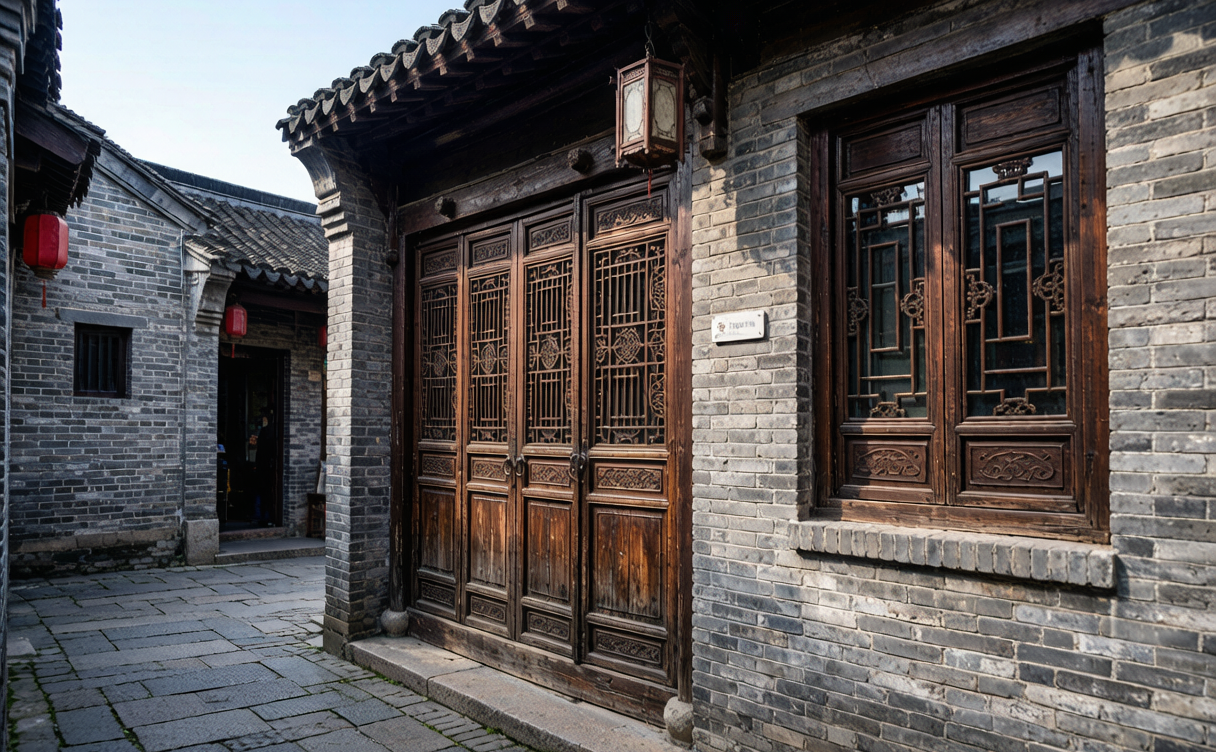
The best thing in the city centre and, unusually, free. Qingguo Alley — “green fruit lane”, after the wharves once along the canal — is a restored quarter of grey-brick Ming and Qing courtyard houses running several hundred metres beside the water, restored well from 2019: real timber, restrained infill, small museums in former residences.
The lane produced an improbable number of notable people, among them linguist Zhou Youguang, who worked on the romanisation that gives “Changzhou” rather than “Ch’ang-chou”. Go late afternoon for the lantern-lighting; teahouses, bars and canal boat rides around ¥60.
Tianning Temple and Pagoda (天宁寺)
The Tang-dynasty temple is reason enough, but the draw is the Tianning Pagoda, completed in 2007 at a little over 150 metres and routinely called the tallest in China. Unapologetically new: thirteen storeys, gilded roofs, a lift most of the way up, and a viewing gallery over the canal grid. Around ¥50–60; go for the view.
Next door, Hongmei Park (红梅公园) is free, full of retirees dancing and playing erhu by 07:00, and holds the genuinely old Song-dynasty Wenbi Pagoda.
The Yancheng Ruins (淹城遗址)
Southwest of the centre, Yancheng is an earthwork city from around the Spring and Autumn period, roughly two and a half thousand years old, built as three concentric rammed-earth rings each with its own moat — the best-preserved of its type in China. What survives is grassy embankments and water rather than buildings, so manage expectations; walking the outer ring with full moats gives a physical sense of early defensive planning no museum does. Around ¥60; the adjoining Spring and Autumn Land theme park is a separate family ticket.
China Dinosaur Park (中华恐龙园)
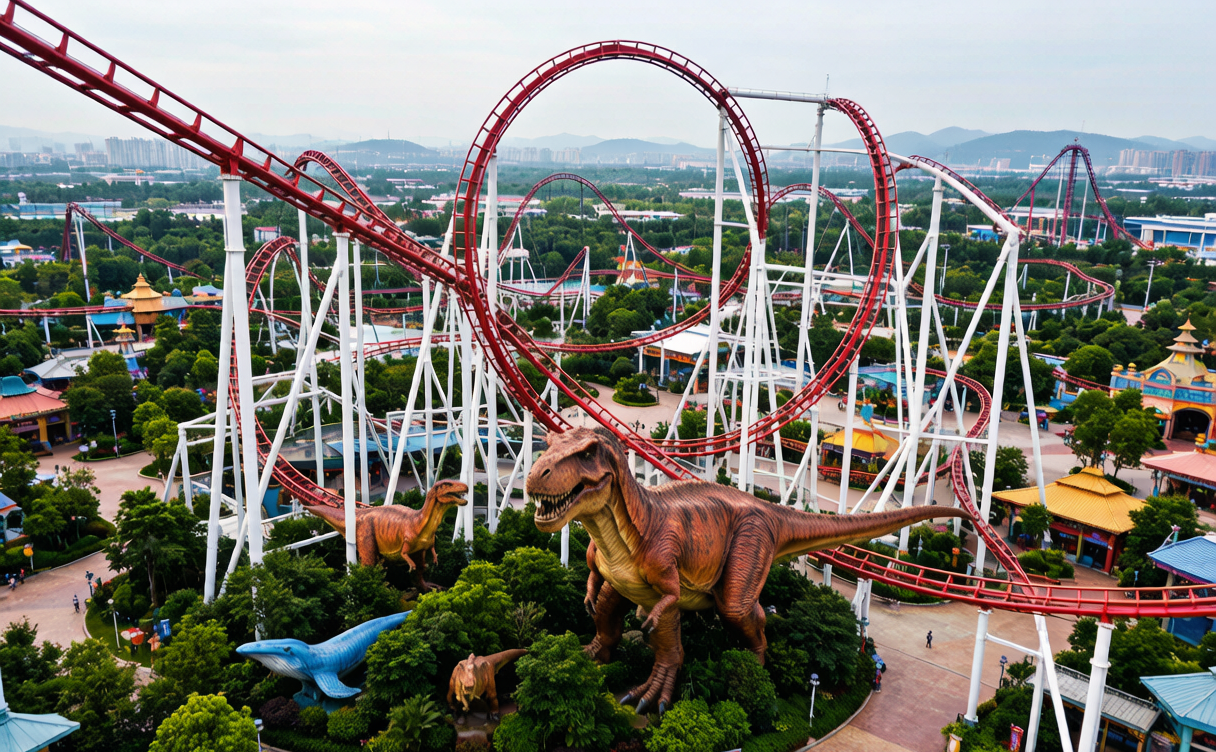
Changzhou’s biggest draw by visitor numbers, built in Xinbei around a natural history museum with real fossils, now a full theme park with roller coasters, a summer water park and evening shows. Tickets typically ¥250–280, metro at the gate. Well run and fun; weekdays outside holidays cut queues dramatically.
Dongpo Park
A small riverside park on the old city’s eastern edge marking where the Song poet Su Dongpo is said to have moored. Free, quiet, a twenty-minute canal walk from Qingguo Alley.
Day Trip: Tianmu Lake and Nanshan Bamboo Sea
An hour south in Liyang the landscape changes completely: Tianmu Lake (天目湖) is a large reservoir ringed by forested hills and tea terraces, with boat trips to wooded islands, hot spring resorts and lakeside restaurants. Entry around ¥80–110 depending on section and whether the boat is included.
The lake’s other claim is culinary: Tianmu Lake fish-head soup (天目湖砂锅鱼头汤) — bighead carp head simmered in a clay pot until the broth turns opaque and milky, with nothing but lake water, ginger and a little pork fat — is genuinely worth the trip. Expect ¥150–250 for a pot feeding three or four.
Twenty minutes further, the Nanshan Bamboo Sea (南山竹海) is a valley of moso bamboo with a cable car and boardwalk climb to a ridge temple, around ¥100 plus lift fees. With the lake it makes a full day; hire a car with driver for about ¥500 rather than buses.
Where to Stay
Budget — ¥120–240 (US$17–34). Chain hotels around Changzhou Station and Wujin; ¥160 gets a clean modern double, well under Suzhou or Nanjing prices.
Mid-range — ¥300–600 (US$42–84). Business hotels around Yanling Road and Nandajie, plus small guesthouses near Qingguo Alley — the area I would choose, walkable to the lane, pagoda and food streets.
Splurge — ¥800–2,000 (US$112–280). International-brand hotels in Xinbei near the theme park, several with dinosaur-themed family suites, and hot spring resorts on the Tianmu Lake shore.
Confirm your hotel registers foreign passports. Larger chains always do; small guesthouses often cannot.
Sample Itinerary: Two Days
Day 1 — the old city
- 08:30 Hongmei Park, morning dancers and Wenbi Pagoda
- 09:30 Tianning Temple and up the pagoda for the view
- 12:00 crab soup dumplings and silver-thread noodles
- 14:00 metro to the Yancheng Ruins; walk the outer moat ring
- 17:00 Qingguo Alley into the evening; canal boat, then dinner in the lane
Day 2 — pick one
- Families: a full day at China Dinosaur Park, arriving at opening
- Everyone else: 08:30 train to Liyang; Tianmu Lake, fish-head soup at noon, Nanshan Bamboo Sea after, back by 18:00
- 19:30 evening train on to Nanjing or Shanghai
Spend a third day on the water towns east of here — our Tongli water town guide has the pick of them.
Food and Local Specialties
Changzhou food belongs to the Huaiyang tradition: freshwater fish, careful knife work, light sweetness in the braises.
- Crab-roe soup dumplings (加蟹小笼包). The city’s signature: steamed buns of pork and crab roe in a soup jelly that liquefies as it cooks. Use the straw-and-spoon method or lose the broth. Around ¥30 a basket at the old Nandajie shops.
- Changzhou sesame cake (常州大麻糕). Flat, layered, sesame-crusted bread from a barrel oven, sweet or savoury. ¥4, the standard breakfast.
- Silver-thread noodles (银丝面). Very fine white noodles in clear broth, simply topped, ¥12–20 a bowl.
- Tianmu Lake fish-head soup. The definitive regional dish, best eaten at the lake not in town.
- Changzhou dried radish (常州萝卜干). Salted, faintly sweet strips eaten with congee. The standard souvenir, vacuum-packed at every station.
- Hairy crab. October and November, from the lakes east of the city, below Shanghai prices.
Practical Tips
- Two stations. Check whether your ticket says Changzhou (常州) or Changzhou North (常州北); North is faster from Beijing and Nanjing but 25 minutes further from the old town.
- Payment. Alipay and WeChat Pay accept foreign Visa and Mastercard and cover the metro, taxis, tickets and street food. Keep ¥200 in notes for small stalls.
- Reservations. Book Dinosaur Park online in summer and at weekends; most sites sell at the gate, though many prefer a free WeChat mini-program booking. Bring your passport — your ID for museum entry and tickets.
- Metro first. Lines 1 and 2 reach the station, the theme park, the pagoda area and Yancheng, signage bilingual. Use them before taxis, and save addresses in Chinese characters.
- Timing the theme park. Arrive at opening, do the big coasters first, spend midday heat in the museum halls; evening tickets are cheaper and far less crowded.
- Onward links. Nanjing is half an hour west — our Nanjing travel guide covers the city walls and the Ming tombs.
FAQ
Is Changzhou worth visiting?
For a day or two, yes — particularly with children, or if you have done Suzhou and Nanjing and want somewhere less crowded. Qingguo Alley, the Yancheng earthworks and the Liyang countryside are all genuinely good. Not a first Jiangsu stop, but a rewarding second or third.
How many days should I spend?
One full day covers the old city. Two lets you add the theme park or Tianmu Lake. Three for both.
How do I get to Changzhou from Shanghai?
High-speed trains from Shanghai Hongqiao take an hour to an hour and fifteen minutes for roughly ¥100–120, several times an hour. Book on 12306 with your passport number and use downtown Changzhou Station rather than Changzhou North if the old city is your target.
Is China Dinosaur Park worth the ticket?
With children five to fifteen, yes — one of the better-run domestic theme parks, with real fossils alongside the rides. Adults without children can skip it.
Is Changzhou good for a stopover between Nanjing and Suzhou?
Almost purpose-built for one. Both stations have left luggage, Qingguo Alley and Tianning Pagoda are twenty minutes by metro, and five or six hours covers the highlights. Expect translation apps — Changzhou gets few international visitors, and only the metro and larger hotels handle English.
Written by Karl · Updated August 6, 2026