

We started steering travelers to Jixi (绩溪) because it is the one place where you can still read the whole Huizhou merchant story in the buildings, not just in a museum. Jixi is a county in southeastern Anhui, wedged against the Zhejiang border, and it was the ancestral home of the Huizhou (徽州) merchant clans who once bankrolled half of imperial China. The county is small, hilly, and quiet, but it holds Longchuan, one of the best-preserved Huizhou villages in the province, plus the old merchant trail over the mountains to Hangzhou. This Jixi Anhui travel guide comes from an April 2025 visit, with the trains, tickets, and village walks we actually did, written for travelers who want Huizhou architecture without the coach-tour noise of the bigger ancient towns.
How to get to Jixi
The easy news is that Jixi has its own high-speed station, Jixi North (绩溪北站), and it is on the line that links Huangshan to Hangzhou and Hefei. From Huangshan Tunxi it is a quick 30 to 45 minutes (second class RMB 30 to 45), which makes Jixi an effortless half-day spin-off from a Yellow Mountain trip. From Hefei the ride is about 2 hours (RMB 130 to 160), and from Hangzhou roughly 1.5 to 2 hours (RMB 90 to 120). Our Huangshan Yellow Mountain guide explains why pairing the two works, because Jixi is the cultural counterweight to the summit: temples and halls instead of cliffs.
For the booking mechanics, the China high-speed train guide for foreigners covers the app and ID steps, and I used it to grab a Jixi North seat the morning of travel with no trouble. If you fly into Anhui’s capital first, the Hefei travel guide is the natural entry point, and from there Jixi is a relaxed rail hop southeast. Inside the county, DiDi and the county buses reach the villages; Longchuan is about 15 kilometers from the station, a RMB 40 to 60 DiDi or a local bus (RMB 8 to 12) that runs every half hour. In our experience, staying in the county town and doing Longchuan as a morning trip is simpler than sleeping in the village, though the village guesthouses are lovely if you want dawn light on the tiles.
Best time to visit Jixi
The best time to visit Jixi is spring (April to May) and autumn (September to November). Spring brings green terraces and blooming rape fields around the villages, and the light after a rain is exactly the soft, misty look people expect from Huizhou ink paintings. Autumn is dry and clear, good for the mountain trail and the harvest markets. Avoid the June plum-rain season if you can: the Huizhou hills turn soggy, the ancient lanes get slick, and the Hui-Hang trail is muddy. Winter is cold but atmospheric, with thin crowds and occasional snow on the horse-head walls (马头墙).
Our best time to visit China guide sets the national windows if you are stacking Jixi with Jiangsu or Zhejiang, and it put us in April, when the village was green and the tourist buses were still thin. If you want more ideas for where to point the trip, best things to do in China is a useful scan before you lock dates.
Longchuan Village: the headline stop
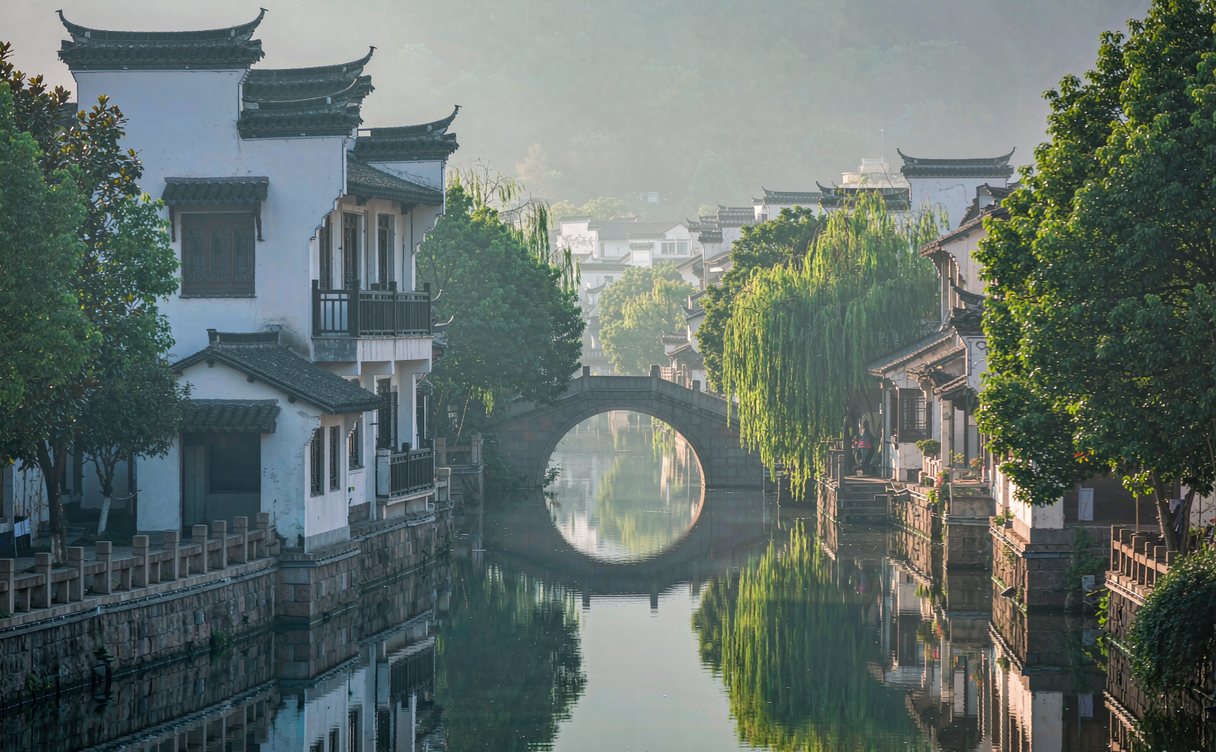
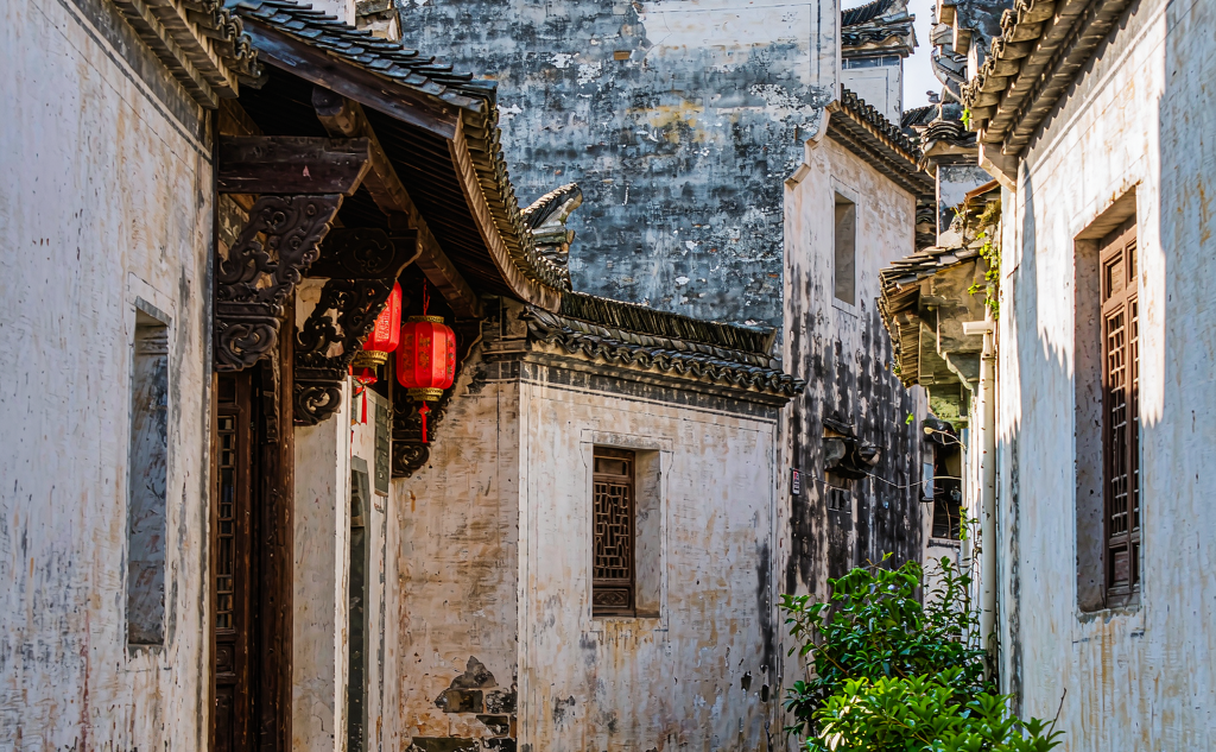
Longchuan village Jixi is the reason most people come, and it earns the reputation. The village is shaped like a boat, laid out along a clear stream with a water street of Hui-style houses whose white walls and dark horse-head gables step down to the water. The centerpiece is the Hu Family Ancestral Hall (胡氏宗祠), a Ming-dynasty wood structure often called the “First Hall of the Southeast” for its carved beams — the latticework and the figurative panels are the finest Huizhou carving I have seen outside a museum, and they are original, not restored props. Entry to the Longchuan scenic area was RMB 75 in 2025, and the hall is inside that ticket.
Right outside the hall stands the Yishi Shangshu Memorial Archway (奕世尚书坊), a stone paifang from the Ming era carved with the names of two Hu scholars who passed the top imperial exams. Walk the water street slowly; the best photos are from the small stone bridge where the reflection doubles the gables. We have sent travelers here who expected twenty minutes and stayed two hours, because the village is lived-in — old women still wash vegetables in the stream, and a teahouse by the bridge serves local green for RMB 10 a cup. The Jixi Huizhou architecture reads best in the morning before the coaches arrive around 10:00, so aim to be through the gate by 08:30.
More things to do in Jixi
Beyond Longchuan, things to do in Jixi spread along the old merchant routes. The Huizhou–Hangzhou Ancient Trail (徽杭古道) starts near the village of Fuling, about 30 minutes from the county town, and it is the stone path the Huizhou merchants walked over the ridge to Hangzhou to trade tea, timber, and salt. You can hike a section in 2 to 4 hours (free or RMB 30 to 50 at the managed entrance) without committing to the full two-day crossing; the path is well stepped but climbs steadily, so bring water and decent shoes. We did the lower half and turned back at the first teahouse, which was enough to feel the trade route without the climb.
Zhangshan Grand Canyon (障山大 canyon) is a greener, wetter walk with waterfalls and a narrow gorge, ticket around RMB 60, good on a hot day when the village is baking. Closer in, the county town itself has the 543-lane old quarter and the former residence of Hu Shih (胡适), the scholar and diplomat, which is a modest, moving stop for anyone interested in modern Chinese letters — entry was RMB 20 to 30 in 2025. For a wider list of similar places, our best ancient towns in China guide ranks Jixi against the famous names so you can decide how many old towns your trip needs.
Where to eat and stay
Jixi food is the heart of Huizhou cuisine, and it is salty, savory, and built around braising and curing. The dish to order is Hu Shih’s one-pot (胡适一品锅), a layered casserole of pork, chicken, fish balls, and dried vegetables simmered at the table — a full pot for two was RMB 98 to 138 at a county restaurant, and it is the kind of meal that justifies the trip. Also try jixi stir-fried noodles (绩溪炒面), dried-bamboo shoots with bacon (笋干烧肉), and the local 挞粿, a stuffed griddle cake sold at breakfast stalls for RMB 4 to 8. The market by the bus station is where locals buy the cured meats and the mountain fungus you will smell cooking all over town.
Stay is easy and cheap. A clean county-town hotel was RMB 140 to 260 a night in 2025, and a village guesthouse in Longchuan ran RMB 180 to 320 with a riverside room. We booked on Ctrip and paid with Alipay; the smallest teahouses and stalls take WeChat only, so keep both apps live. Our China travel guide for first-timers has the payment and SIM notes that make a county-town evening smooth, because you will be scanning codes more than handling cash.
A practical Jixi itinerary
Here is the two-day plan we used. Day one: train to Jixi North, drop bags in town, afternoon walk of the old quarter and Hu Shih residence. Day two: morning at Longchuan (gate by 08:30), late-morning on the Huizhou–Hangzhou trail, back for a one-pot dinner. One full day covers Longchuan plus the town if you are tight; add the trail and you want the second night. Spend was about RMB 700 to 1,000 a person excluding the intercity train, which is gentle for a heritage stop.
The Huizhou region and its merchant culture are explained in background at Wikipedia’s Huizhou region page if you want the clan and trade history before you read the carved beams — it made the ancestor hall mean a lot more when I stood inside it.
Pairing Jixi with the mountain? Sleep in the county town and hit Longchuan before 09:00, then ride the same-day train on to Huangshan while the light is still good.
Getting around and final tips
Inside Jixi, DiDi covers the town and the main villages, but the trailheads need a hired car (RMB 200 to 300 a day) or the county bus. Carry small cash for the teahouses on the ancient trail, download offline maps because signal drops in the gorges, and wear shoes with grip — the water-street stones are slick after rain. Jixi rewards a slow pace: read the carvings, drink the green tea, and let the merchant story sink in. It is the calmest deep-dive into Huizhou culture we know of in Anhui.
Want the real Huizhou, not the stage-set version? Spend the morning in Longchuan with a local guide who can translate the hall carvings, then walk the merchant trail yourself.
If you are building an Anhui route, Jixi sits neatly between the capital and the peaks, and our China travel guide for first-timers ties the train hops together so the whole loop reads as one trip.
Planning a longer Anhui journey? Explore our other China guides to link Jixi, Huangshan, and the river cities into one smooth route before you book.