

Most foreign visitors fly past Hefei. It is the capital of Anhui, a provincial city that rarely makes a tourist shortlist, which is exactly why the food scene here is worth a detour. Hefei is the gateway to one of China’s eight great regional cuisines, and the local table tells you more about Anhui than any museum. This Hefei food guide covers what to order, where the dishes come from, and how to eat well without a phrasebook.
Start with the big picture in our Hefei travel guide, which explains why this inland city became the province’s hub and what else is worth your time between meals.
What Anhui cuisine actually is
Anhui cuisine, or Hui cai, is the least famous of China’s eight regional styles, and that is a shame. It is a mountain-and-river cooking tradition built on two things: the produce of the Huangshan foothills and the slow braising techniques of the Huizhou merchants who grew rich shipping tea and timber across the empire.
The flavor profile is savory and earthy rather than fiery. Cooks rely on smoking, curing, and long braises, not chili oil. You will see a lot of river fish, free-range chicken, bamboo shoots, and mushrooms foraged from pine forests. The signature technique is hong shao — red braising in soy, wine, and rock sugar until the sauce turns glossy and the meat lifts off the bone. If you only understand one idea before you arrive, make it that: Anhui food is about depth from patience, not heat from peppers.
Our wider Anhui Hui cuisine guide goes deeper into the regional sub-styles, but Hefei is the easiest place to taste them in one trip because the city pulls cooks and ingredients from every corner of the province.
Li Hongzhang hotchpotch
The one dish every Hefei restaurant will name-drop is Li Hongzhang hotchpotch, or Li Hongzhang da zha hui. The story goes that the Qing-dynasty statesman Li Hongzhang, a local son, hosted foreign guests and threw every premium ingredient in the pantry into one pot when the kitchen ran out of individual courses. True or not, the dish stuck.
What lands in front of you is a rich broth loaded with sea cucumber, squid, chicken, ham, tofu, and seasonal vegetables, simmered until the flavors meld. It is served in a clay pot that keeps bubbling at the table. The taste is mild, comforting, and faintly coastal-meets-inland — a fair metaphor for Anhui itself, which bridges the Yangtze and the hills. Order it for two or more; a single portion is rarely worth it, and the experience is the shared pot.
Everyday Hefei plates
Beyond the famous hotchpotch, the local menu rewards curiosity. Wuhu smoked duck shows up often — cured and smoked over tea leaves, then braised, with a skin that is dark, sweet, and faintly bitter. Hao xian — small river shrimp flash-fried with touch of ginger — taste like the water they came from. And the cold plates of preserved bamboo shoot and wood-ear mushroom are the kind of side you keep picking at.
One dish to seek out is huangshan shi er, the famousHuangshan stone fungus, usually braised with chicken. It looks unremarkable but carries a deep, almost smoky umami. Ask your hotel to recommend a Hui cai restaurant rather than wandering in blind; the difference between a tourist trap and a real kitchen is enormous here.
For travelers building a whole trip around eating, our China food tour guide maps out how Anhui fits with neighboring Jiangsu and Zhejiang food regions.
Street eats and breakfast
Hefei breakfasts are the best value in the city. Hunt down a stall selling zheng jiao — steamed dumplings — or the local version of dou jiang, soy milk served hot with you tiao, the fried dough sticks you tear and dip. In the morning markets near the old city, you will also find lu bo bing, a flaky green-onion pancake cooked on a griddle, eaten standing up with a paper napkin.
The city’s snack culture leans mild. Unlike Sichuan or Hunan, Anhui street food rarely burns your mouth, which makes it a good introduction to Chinese street eating if you are spice-shy. Look for vendors selling roasted sweet potatoes in winter and cold noodles tossed with sesame paste in summer.
Night markets and where to go
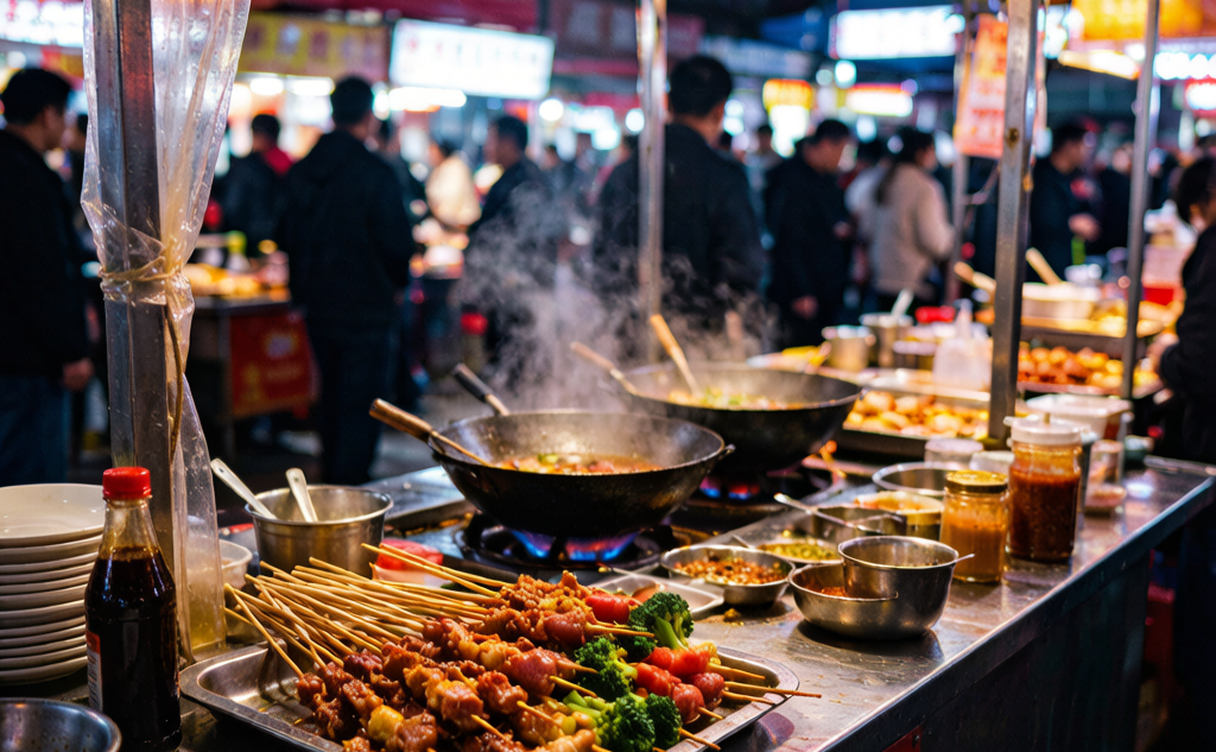
When the sun drops, Hefei’s night markets take over. The best known cluster is around the pedestrian streets near Liberation Square and the university district, where students keep prices honest and turnover fast. You will find skewers of grilled fish, stinky tofu (milder here than in Changsha), and heaping bowls of porridge topped with pickles.
Our China night markets guide has the etiquette and safety notes — bring small cash, watch what locals order, and don’t be afraid to point. Hefei’s markets are friendly and low-pressure compared with the mega-markets of bigger cities, which makes them ideal for a first night-market experience.
Drinks and sweets
Anhui is tea country — the province grows the famous Keemun (Qimen) black tea and Huangshan maofeng green. In Hefei, a pot of local tea is cheap and everywhere, and it pairs naturally with the savory braises. For something cold, look for suan mei tang, a sour plum drink sold from carts in summer that cuts through the richness of a heavy Hui cai meal.
Desserts are not a strong suit of Anhui cuisine, but you will find sweet red bean soups and the occasional sesame candy. Treat sweets as a footnote, not a destination.
Timing your visit around food
Anhui eating has seasons. Spring brings tender bamboo shoots and fresh tea; autumn is the time for fat river fish and the new rice; winter is braise season, when the clay pots come out and the smoked meats shine. Our best time to visit China article covers the national picture, but for Hefei specifically, autumn is the sweet spot — comfortable weather and the deepest menu.
Practical tips for eating in Hefei
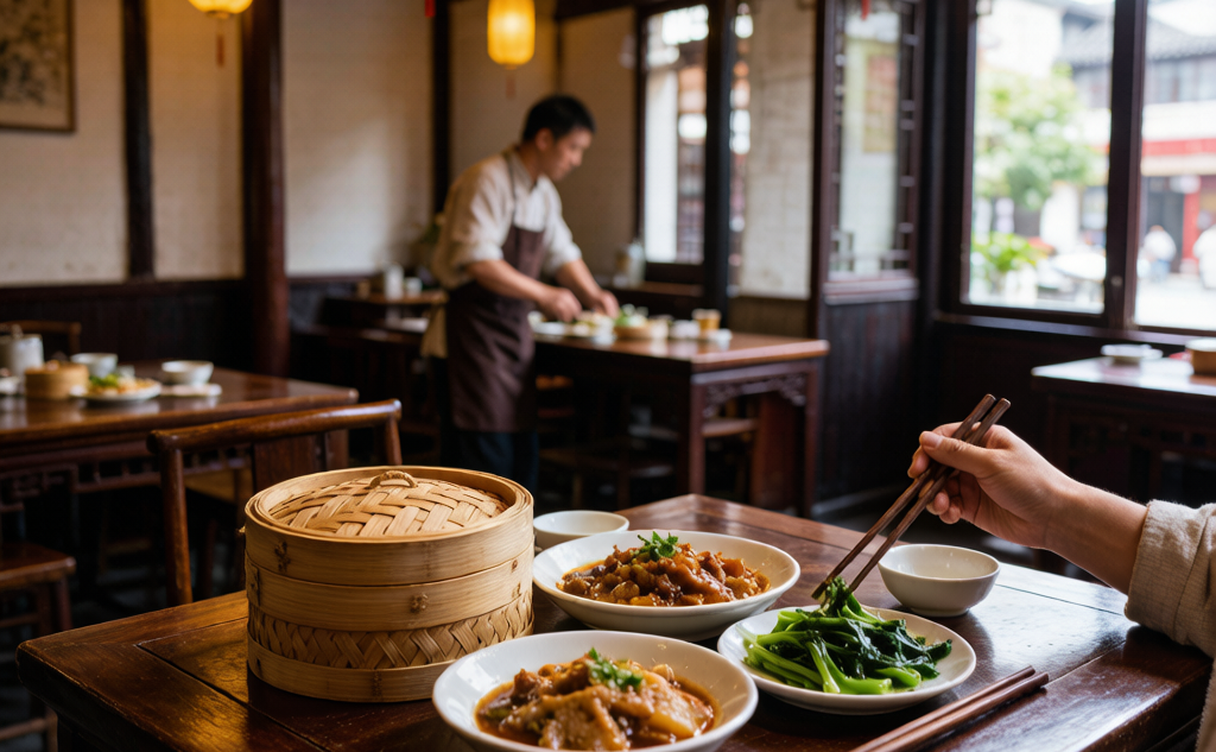
Menus are often bilingual in the bigger restaurants but rarely at stalls, so a translation app with camera mode is your friend. Hui cai portions are generous; order one dish fewer than you think and add if needed. Tipping is not expected. And if a restaurant is empty at noon, walk on — Hefei eats follow the crowds, and a full room is the only review you need.
For background on the cuisine’s philosophy and a longer list of dishes, the Anhui Provincial Department of Culture and Tourism publishes an English overview of regional food at https://ah.english.anhuinews.com, a useful read before you go.
The short version
Hefei will not wow you with skyline or spectacle, but sit down to a clay pot of Li Hongzhang hotchpotch, a plate of smoked duck, and a pot of Keemun, and the city makes its case quietly. The Hefei food guide to remember is this: lean into Hui cai’s braises, keep your eyes open at the morning markets, and let the night markets be your cheap, cheerful dinner.