

Hangzhou has charmed travelers for more than a thousand years, and its food is every bit as memorable as its misty hills and calm water. If you are searching for the best restaurants near West Lake Hangzhou, you are in the right place: this guide walks you through the dishes that define the city, the neighborhoods worth exploring, and the tables that serve them best. West Lake cuisine is a branch of Zhejiang cooking known for subtle sweetness, fresh river fish, and a gentle hand with seasoning, and the city around the lake is the easiest place in China to taste it at its source.
What Makes West Lake Cuisine Special
The cooking of Hangzhou sits at the heart of Zhejiang province, one of China’s eight great regional traditions. Compared with the fire of Sichuan or the salt of the north, Hangzhou food feels restrained and elegant. Chefs prize the natural flavor of each ingredient, then lift it with a little sugar, rice wine, and vinegar. The result is food that tastes clean rather than heavy, which is exactly what you want after a long morning walking beside the water.
Because the city hugs a freshwater lake and meets the Qiantang River, fish and shrimp arrive at the kitchen within hours of leaving the water. Bamboo shoots, lotus root, and seasonal greens grow in the surrounding hills. Tea is not just a drink here; it is a seasoning, a garnish, and a reason to travel. When you sit down at good Hangzhou restaurants, you are tasting a landscape as much as a menu.
If you want to extend your trip beyond the city, our Suzhou Anhui travel guide covers two neighboring regions whose cuisines pair beautifully with a Hangzhou itinerary.
Hangzhou Local Food to Try
Before naming specific restaurants, it helps to know the plate in front of you. The list below covers the dishes you should look for on almost every serious Hangzhou menu.
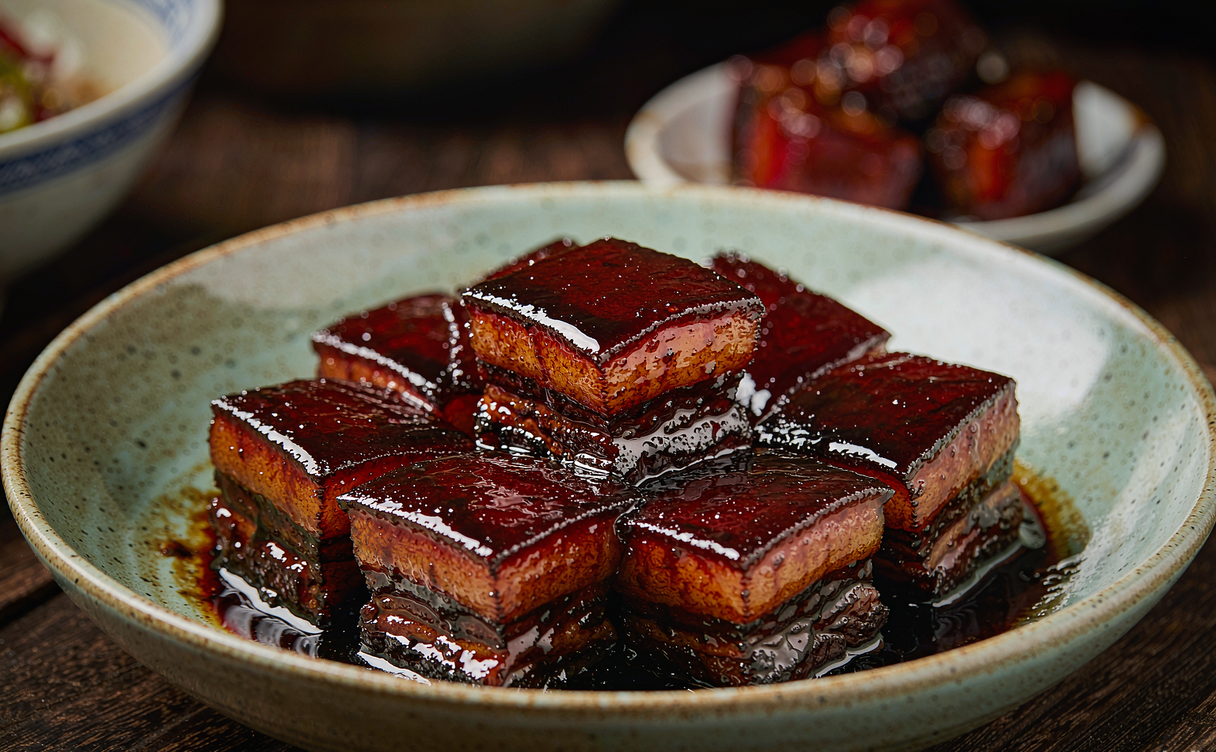
Dongpo pork is the city’s most famous braise: a square of pork belly slow-cooked until the fat turns translucent and the meat melts on the tongue. It is named for the Song dynasty poet Su Dongpo, who is said to have refined the recipe. The sauce is sweet, dark, and glossy, and a single piece is enough to understand why the dish has lasted eight centuries.
Longjing shrimp pairs the lake’s sweet freshwater shrimp with the young leaves of Longjing, the green tea grown in the hills west of the city. The tea lends a faint bitterness and a floral note that keeps the dish from feeling rich. This is Hangzhou fine dining Longjing shrimp at its most refined, and many top kitchens treat it as a signature.
Beggar’s chicken is a whole bird wrapped in clay and lotus leaves, then baked until the shell is cracked open at the table. Inside, the meat is impossibly tender and infused with the aroma of the leaves. West Lake fish in vinegar gravy is another classic: a carp poached and dressed with a sweet-sour sauce that brightens the mild flesh.
Do not overlook the small plates. Hangzhou local food to try also includes drunken chicken cured in rice wine, braised bamboo shoots, and sweet-sour lotus root stuffed with sticky rice. For a lighter bite, steamed seasonal greens with a little oil and garlic let the produce speak for itself.
Where to Eat Dongpo Pork Hangzhou
The dish is everywhere, but quality varies wildly. For a reliable, classic version, look for long-established restaurants with open kitchens and steady local crowds rather than the flashiest storefront near the tourist gates. A good Dongpo pork should hold its square shape, glisten, and part easily with a spoon. If the sauce tastes only of sugar, the kitchen has cut a corner.
Mid-range banquet houses around the lake serve competent versions alongside the full West Lake repertoire, and they are a comfortable choice for first-time visitors. For something more atmospheric, seek out older dining rooms tucked into garden courtyards where you can hear the lake through the windows. Prices are reasonable for the quality, and portions are built for sharing.
If you want to pair your meal with history, our Hangzhou Hefang Street guide points you to the old quarter where snacks, teahouses, and heritage restaurants sit side by side.
Hangzhou Fine Dining Longjing Shrimp
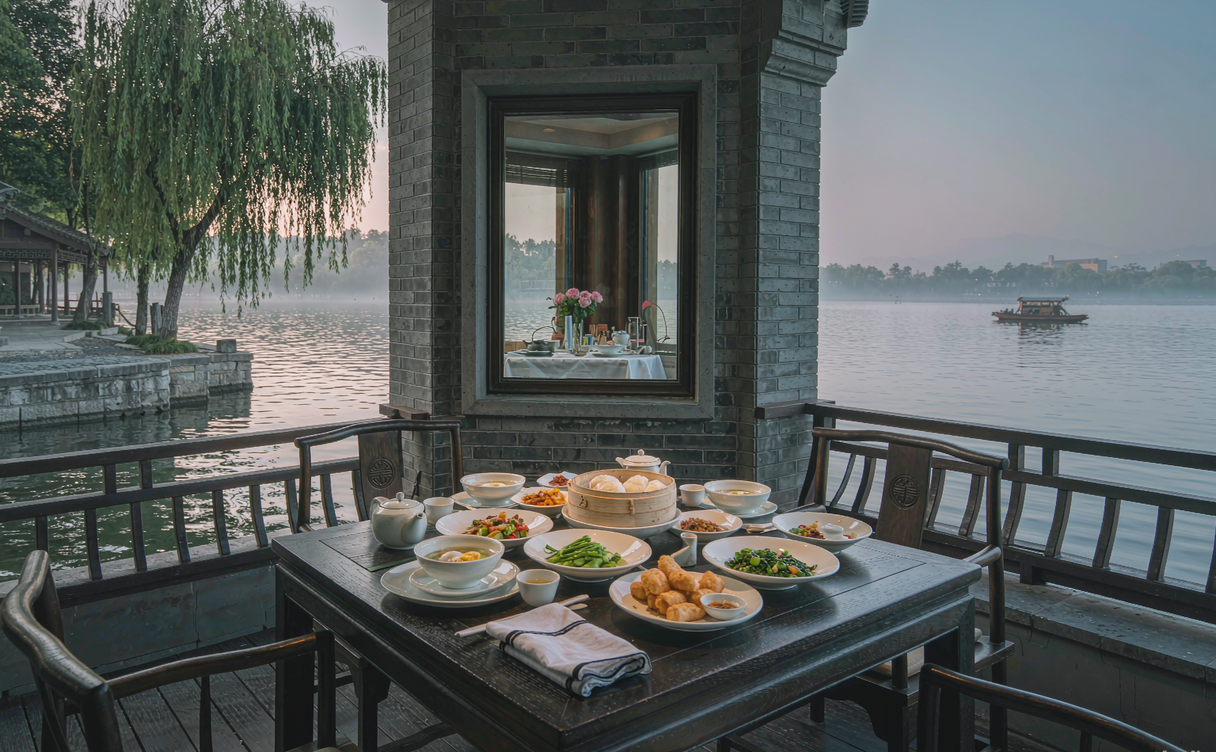
For a special evening, the city’s upscale restaurants take West Lake ingredients and present them with modern technique. Longjing shrimp is the dish to order when you want to see a kitchen at its best. At this level, the shrimp are poached for seconds rather than minutes, the tea is added at the precise moment, and the plate arrives barely warm, sweet, and fragrant.
Fine dining in Hangzhou is not about ostentation. The best rooms are quiet, with large windows onto the water or the hills, and the service is unhurried. Expect set menus that change with the season, because the cooking philosophy here is to follow what the lake and fields offer each month. A spring menu leans on shoots and early tea; an autumn menu might feature fat river crab and chestnut.
These restaurants are not cheap, but they are where the region’s cuisine is preserved and pushed forward at once. Reserve ahead, especially on weekends, and ask the staff to build a tasting sequence around the lake classics.
Hangzhou Cheap Eats Guide
You do not need a large budget to eat well. A good Hangzhou cheap eats guide starts with the noodle shops and breakfast stalls that locals rely on every day. Cong you bing, the crisp scallion pancake, costs almost nothing and makes a perfect street snack. Wonton soups, rice cakes, and sticky dumplings fill the same role.
Look for small restaurants where the menu is short and the turnover is fast. University neighborhoods and the streets behind the main tourist corridors offer the best value. A full meal of several shared plates can cost less than a single cocktail at a hotel bar, and the food is often more authentic. Tea, by the way, is usually cheap or free, so drink freely.
Night markets are another budget friend. They gather vendors selling grilled fish, skewers, and sweet lotus root, and they make an easy, low-pressure way to sample many things in one walk. Go with an empty stomach and a friend to share.
Vegetarian Restaurants Hangzhou
The city has a deep Buddhist food tradition thanks to nearby temples, and that makes it an unexpectedly strong destination for plant-based eating. Vegetarian restaurants Hangzhou visitors find range from temple cafeterias serving simple, nourishing bowls to creative kitchens that mimic meat dishes using tofu, mushroom, and gluten.
Many temple-adjacent eateries follow a no-onion, no-garlic philosophy, producing clean flavors that suit the lakeside mood. Even non-vegetarians should try a proper vegetarian banquet at least once; the mock-duck made from soy skin and the mushroom “pork belly” are genuinely clever. These meals also tend to be lighter, a welcome break if you have been working through rich braises all week.
For travelers combining faith, nature, and food, our Tiantai Mountain Zhejiang guide introduces a mountain region with a similarly strong vegetarian heritage just a few hours south.
Neighborhoods and How to Plan
The area immediately around West Lake is the obvious base, but it is also the priciest. The old streets of the city center, the canal districts, and the university belt each offer their own dining character. If you stay near the water, you can wander out after dinner and walk the lit causeways; if you stay in the center, you get better everyday food and lower prices.
Either way, build your meals around the classics rather than chasing novelty. Order Dongpo pork, Longjing shrimp, West Lake fish, and a plate of seasonal vegetables, then add one thing you have never tried. That formula works in a ten-dollar noodle shop and a hundred-dollar dining room alike.
When you want a change of scenery, the canal town of Suzhou is a short train ride north, and our Suzhou Pingjiang Road guide maps a street lined with snack stalls and teahouses. Farther afield, our Slender West Lake Yangzhou guide covers another lake city with its own celebrated table.
For background on the region’s food culture and its place in Chinese cuisine, see the overview of Hangzhou on Wikipedia.
Practical Tips for Dining Out
A few habits make eating in Hangzhou smoother. First, share. Menus are designed for groups ordering many plates, and solo travelers should pick two or three small dishes rather than one large one. Second, watch the tea. Longjing is the local pride, and a pot of the good stuff is worth the small premium over the house blend.
Third, timing matters. Locals eat early, so a seven-thirty dinner can mean a wait at popular spots, while a six o’clock seating is calm. Finally, do not fear the empty-looking restaurant if locals are inside; in China, a full room of neighbors is the only review you really need.
Planning a Hangzhou trip? Stay by the lake with our hotels near West Lake Hangzhou guide.
A Final Word
The best Hangzhou restaurants are not always the most famous. They are the ones where the shrimp is fresh, the pork is patient, and the window looks out on something green. Start with the classics, follow the locals, and let the season lead your menu. Whether you spend your budget on a quiet fine-dining room or a string of street stalls, the city will feed you well.
Eat slowly, walk the lake after, and you will understand why travelers have been writing love letters to this place for a thousand years. The food is only part of it, but it is a delicious part, and it is waiting at the next table.
Want more Zhejiang travel ideas? Read our Suzhou Anhui travel guide for regional routes beyond the lake.
Quick Reference List
To recap, keep this short list in mind as you plan your meals. The best restaurants near West Lake Hangzhou balance location with quality, so weigh both. Try the local food to try staples first, then explore. Order Dongpo pork at a trusted old house, splurge on Longjing shrimp at a fine room, eat cheap at noodle shops, and save one evening for vegetarian temples.
Hangzhou rewards curiosity. Step off the main path, follow your nose, and the city’s tables will take care of the rest.
Considering a side trip? Our Hangzhou Hefang Street guide shows where to eat and wander in the old town.