

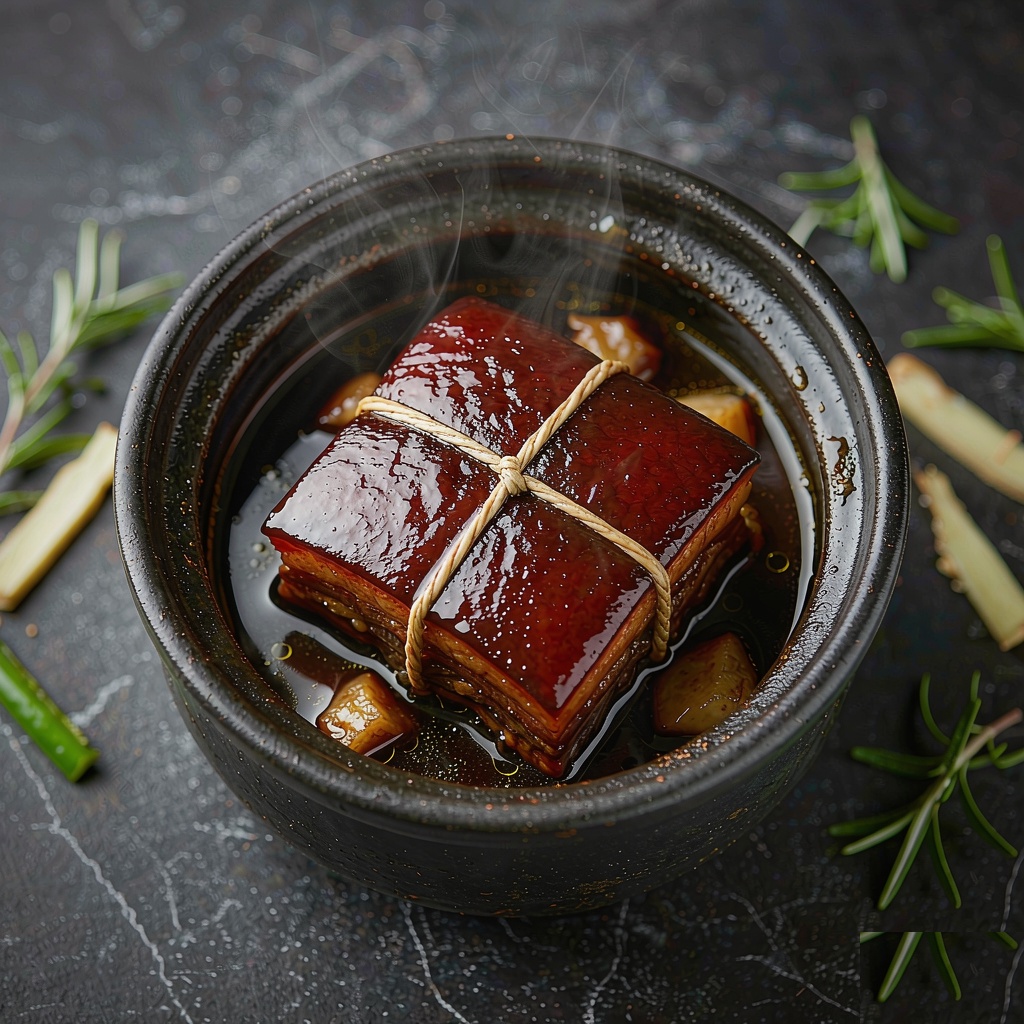
The moment that tells you it worked is not the smell, and it is not the colour. It is when you lift the tied block of pork out of the pot with two spoons, set it on a plate, and the whole cube wobbles like a water balloon that has been taught some manners. Cut the string and the meat slumps very slightly around the knife. If it holds a sharp corner like a brownie, you have braised it too hard, and you will know it before anyone at the table says a word.
Dongpo pork is one of the very few Chinese dishes where the technique is simple and the discipline is not. Four ingredients do almost all the work. The hard part is leaving the pot alone for two and a half hours.
What Dongpo Pork Actually Is — and Why It Is Not “Just Braised Pork”
东坡肉, or Dongpo Rou, is a single square block of skin-on pork belly, braised whole rather than diced, and usually tied so it keeps its shape. The cut is thick — often a 5cm cube — and it is served as one piece per person, not spooned over rice like a stew. Everything about it is deliberate: the shape, the tie, the slow cook, and the almost total absence of water in the braising liquid.
The name belongs to Su Dongpo, the Song dynasty poet, official and legendary enthusiastic eater who served as governor of Hangzhou. The most repeated story credits him with a recipe for slow-cooked pork that he is said to have scribbled while overseeing the dredging of West Lake, and the dish is still the signature of that city’s table. Whether or not the poem-to-pot chain of events happened exactly as told, the dish has been local property for roughly nine hundred years, which is a long time for a recipe to survive on merit alone.
It is worth separating it in your head from other famous pork belly dishes, because visitors lump them together and then wonder why they taste so different. Twice-cooked pork is sliced thin and stir-fried fast. Red-braised pork, the home cook’s standby, is cubed small and cooked in about an hour. Dongpo pork is the slow, whole, ceremonious cousin: same animal, entirely different philosophy.
Taste, Texture, and the Part That Surprises People
The first impression is sweetness, but not dessert sweetness — a rounded, savoury caramel that comes from rock sugar melting into soy and, crucially, into wine. Then the Shaoxing wine arrives: a deep, faintly nutty, almost mushroom-like aroma that people who expect “Chinese pork” rarely anticipate. The dish is not spicy at all. There is no chilli, no Sichuan pepper, no heat of any kind. If you have been eating your way through Chengdu and Chongqing, this is the opposite pole of the country’s cooking.
Texture is where Dongpo pork either earns its reputation or loses it. A good piece is soft enough to part under a spoon, yet still layered — you can see and feel the alternating bands of fat and lean that the butcher worked hard to give you. The fat should have turned translucent and buttery, giving up its greasiness to the long cook, and the sauce should cling rather than pool and run.
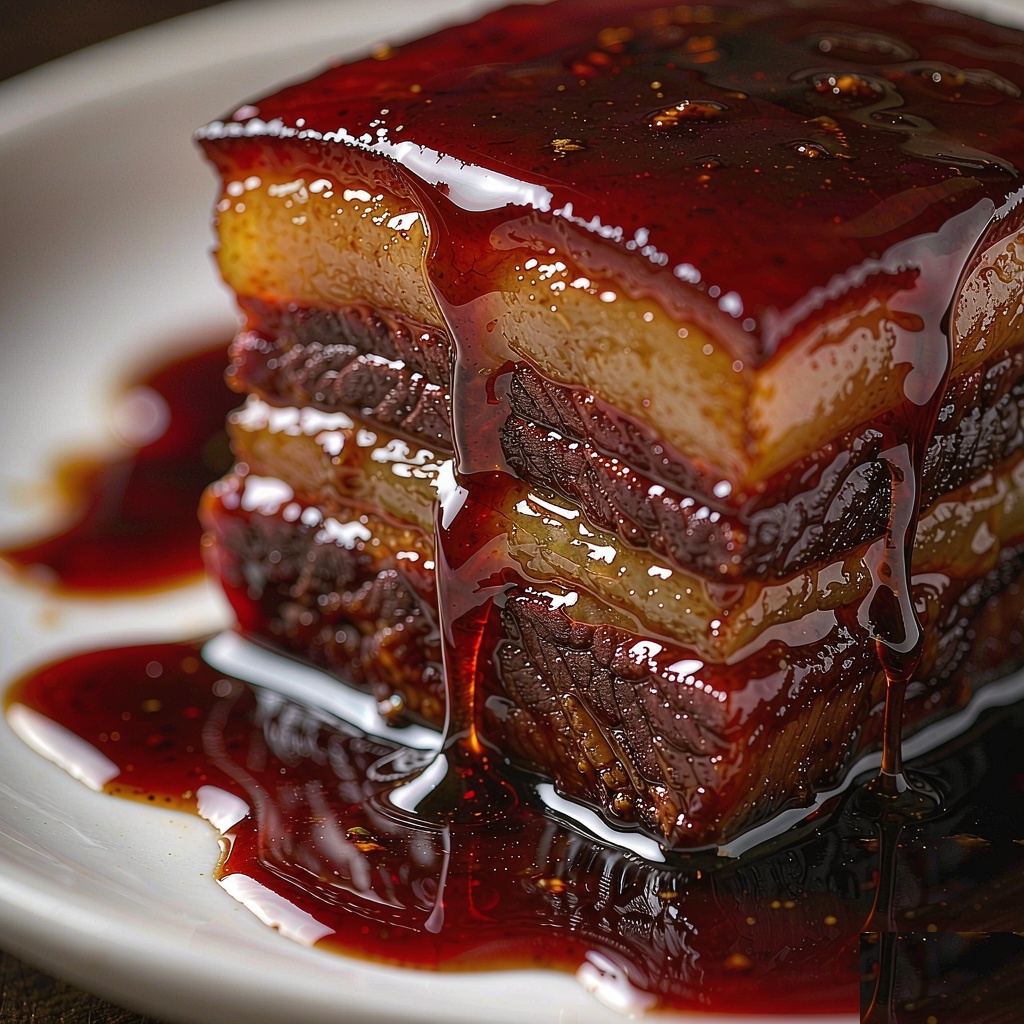
Many first-timers expect a heavy, cloying mouthful and are surprised by how light the finish is. That lightness is the whole point of the wine and the very long, very gentle braise. It is also why the dish is dangerous: it does not feel like the rich food it is, until the third piece.
The Short Ingredient List, and the Ratios That Actually Matter
You can cook this with a shopping list short enough to hold in your head. For four people, as a shared centrepiece:
- 1 kg skin-on pork belly, in one thick slab, ideally with five distinct layers
- 500 ml Shaoxing wine — a good drinking-grade one, not the salted “cooking wine” sold for frying
- 80 ml light soy sauce for salt and body, plus 40 ml dark soy sauce for the mahogany colour
- 80 g rock sugar (yellow lump sugar), or 60 g of regular sugar if that is what you have
- 50 g ginger, sliced thick and lightly smashed
- 6–8 spring onions, cut into finger-length batons, for lining the pot
- 2 star anise and, optionally, one small piece of dried orange peel — both are traditional, neither is mandatory
- Water or light stock, only enough to bring the liquid up to the sides of the pork, never over the top
- Kitchen string, for tying
The ratio that separates a real Dongpo pork from a decent braise is the wine-to-water one. The braising liquid should be mostly Shaoxing wine, with water used only to top it up to the pork’s waistline. If you dilute it with stock until the block is submerged, you have made a fine stew and lost the dish.
Choosing the Belly Before You Touch the Stove
Ask the butcher for a slab that is thick and even, with the skin on and a clear alternation of fat and lean. Five bands — skin, fat, lean, fat, lean — is the ideal. A piece with a thin top layer of fat will dry out at the bottom and turn flabby on top, and no amount of sugar will hide it.
At home, square the slab into blocks roughly 5cm across. Tie each block with string in a cross, or run a loop around it twice and knot firmly. The string is not decorative: without it, a two-and-a-half-hour braise will let the layers fan apart and the skin slip off, and you will serve something that looks tired. It also makes lifting the pieces out of the pot possible without a slotted spoon and a prayer.
Cooking It, Step by Step
Once you have the pieces tied, the rest is mostly patience. Four steps, done in order.
- Step 1 — Blanch. Put the tied blocks skin-side down in a pot of cold water, bring it slowly to a bare simmer and hold for five minutes. Skim the grey foam off the surface, then lift the pork out and rinse each piece under warm water. Wipe the pot. This step is what keeps the finished sauce clean instead of cloudy.
- Step 2 — Build the base. Lay the spring onion batons and sliced ginger across the bottom of a heavy pot with a tight lid. Stand the pork pieces on top, skin facing up, in a single layer with a little room between them. Scatter over the star anise and the orange peel, if using.
- Step 3 — Add liquid and sugar, then braise low. Pour in the Shaoxing wine, the light and dark soy, and the rock sugar. Add only enough water to reach the sides of the pork, leaving the top of each block exposed. Bring to a boil, then immediately drop to the lowest possible simmer, cover, and cook for 2 to 2.5 hours. Do not stir. Do not lift the lid more than once or twice to check the liquid level.
- Step 4 — Steam-finish and reduce the sauce. After the long braise, move the pork, skin-side up, into a heatproof bowl and steam it for 30 minutes. While it steams, strain the braising liquid into a small pan and reduce it over medium heat until it coats the back of a spoon and turns syrupy. Pour this over the pork just before serving. The steam step is what gives the fat its glassy, trembling finish; skip it and the dish still tastes good, but it will not look like the photograph you came for.
Where Home Cooks Usually Slip Up
The most common failure is temperature, not ingredients. A rolling boil for two hours will shrink the meat, tighten the fat and leave you with something chewy. The liquid should barely tremble — a lazy bubble every second or so. If your smallest burner is still too hot, use a heat diffuser or a folded tea towel under the pot.
The second mistake is fiddling. Every stir breaks the layers and clouds the sauce. Settle the pieces once in Step 2 and then leave them alone; the pot does the work.
The third is impatience with the lid. Lifting it to taste lets the aromatic wine steam escape, and that steam is doing at least half of the flavouring. Trust the timing and open it at the end.
Finally, resist the urge to add water “just in case”. The braise should reduce, not simmer in a bath. If you find the liquid getting low at the 90-minute mark, add a splash of hot water down the side of the pot — never cold, and never over the pork.
Who This Dish Suits — and Who Should Order Something Else
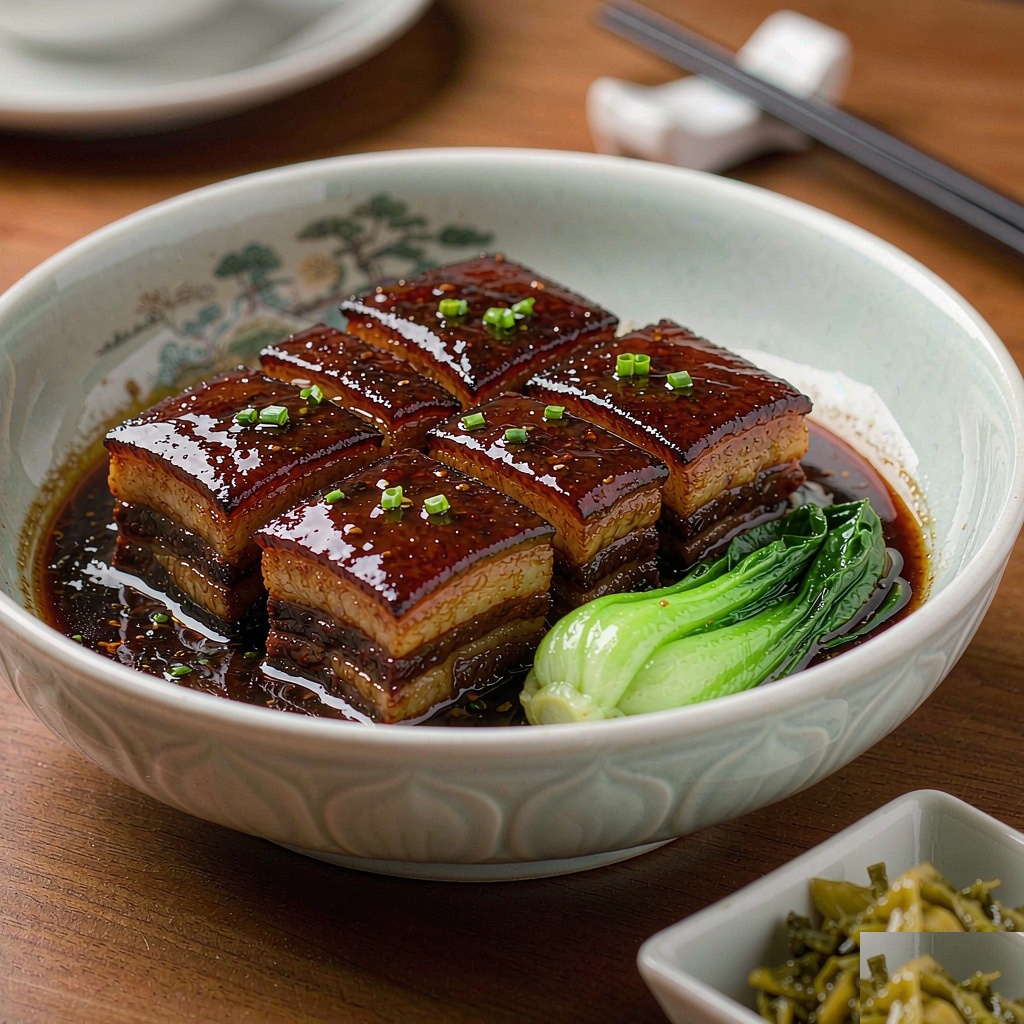
Dongpo pork is a cold-weather, celebration-table dish. It suits anyone who likes rich, slow-cooked meat and is happy to eat a small portion and stop; it is also a natural centrepiece for a shared Chinese meal where a single impressive dish carries the table. It pairs well with plain steamed rice, a sharp pickled vegetable, and a plain green tea to cut the fat.
It does not suit everyone, and it is worth being honest about that. The dish is pork and always will be, so it is off the table for Muslim and Jewish diners, and for anyone eating halal. It is also very high in fat and cholesterol — a genuinely indulgent plate rather than a lean one — so anyone managing heart health, gallbladder issues or a strict low-fat diet should treat it as an occasional treat at most. Vegetarians and vegans should look instead to the many braised mushroom and gluten dishes that copy the same technique without the pork. And if you simply do not enjoy soft fat, no technique in the world will convert you; order the twice-cooked pork instead and enjoy your meal.
For travellers, one practical note: because the dish is heavy and slow, it is usually served at lunch or dinner as part of a multi-course meal rather than as street food. Look for it on the menu of a proper restaurant, not a noodle stall.
How the Dish Changes as You Move Through the Region
The version most visitors meet is the Hangzhou original — wine-forward, deeply coloured, one tall tied block per person, glossy and almost syrupy. If you plan your trip around eating, it is worth building a day of the city’s classics around it: the local places worth your appetite are best found by wandering the old streets rather than the lakefront hotels, and a good overview of where to eat in Hangzhou beyond the postcard view will save you a wasted dinner.
Step slightly west to Shaoxing and the braise takes on more wine still, sometimes with a spoonful of fermented rice or a little red yeast, which pushes the colour toward a deeper crimson and the aroma toward something closer to a good aged rice wine. If you want to understand the liquid that makes this dish possible, it helps to know a little about Shaoxing and its wine-soaked table, where the same drink shows up in almost everything.
In Shanghai, the dish leans sweeter and glossier, often cut into smaller pieces and braised with more soy and less wine — the benbang style of that city. Push further into the wider region and you meet the gentler, less sweet approach of the Huaiyang cooking of the neighbouring Yangtze cities, where restraint with sugar and a lighter sauce are the house rules, and where a cook would raise an eyebrow at the amount of rock sugar a Hangzhou kitchen uses without blinking. Taken together, these variations are a neat illustration of how Zhejiang cooking as a whole has absorbed and reshaped a single dish across a few hundred kilometres.
Two ordering notes for travel. In restaurants the dish is frequently listed in English as “Braised Pork Belly” or “Dongpo Pork” and priced per piece, so a table of four might order two pieces rather than four; ask. And because it is braised in advance, some kitchens hold it lukewarm for hours, which flattens the texture — if the meat arrives rubbery, that is a service problem, not a recipe problem.
What makes Dongpo pork worth cooking at home, rather than only eating out, is that it is one of the rare dishes where a careful amateur can genuinely match a restaurant. There is no wok fire to fake, no knife work to train for, no timing that has to happen in ninety seconds. You need a good piece of belly, a bottle of proper Shaoxing wine, a heavy pot with a lid that closes, and the willingness to walk away from the stove for two hours. Do that once and the wobble at the end — the whole block settling under your spoon — is a reward you will chase again the following winter.