

A Shandan grassland guide only really clicks once you understand the contradiction at its heart: this is a strip of green high meadow squeezed between the yellow deserts of the Hexi Corridor and the snow line of the Qilian Mountains. Shandan sits in central Gansu, a couple of hours northwest of Zhangye, and its grassland is not the endless steppe of the north but a band of cool, flower-speckled pasture fed by meltwater running off the mountains to the south. For two thousand years this was horse country — the place where Chinese armies bred the warhorses that held the corridor open — and the ranches are still working today. What follows is the briefing I give travelers: how the grassland fits together, where to ride and camp, which trails to walk, and exactly how to get to Shandan from Zhangye without losing a day.
Geography explains almost everything here. The county lies on the northern foot of the Qilian range, where the mountains drop away into the gravel plains of the corridor. The grassland itself sits between roughly 2,500 and 3,300 meters, cool and short even in summer, and it is kept green by a string of springs and streams that never fully dry. That altitude is why the meadow feels like a different climate from Zhangye city, only 60 to 70 kilometers away but a world lower and drier. If you are building a wider Gansu loop, our Qilian Mountains guide explains the range that feeds every meadow in this corner of the province, and it pairs naturally with a few days on the Shandan grass.
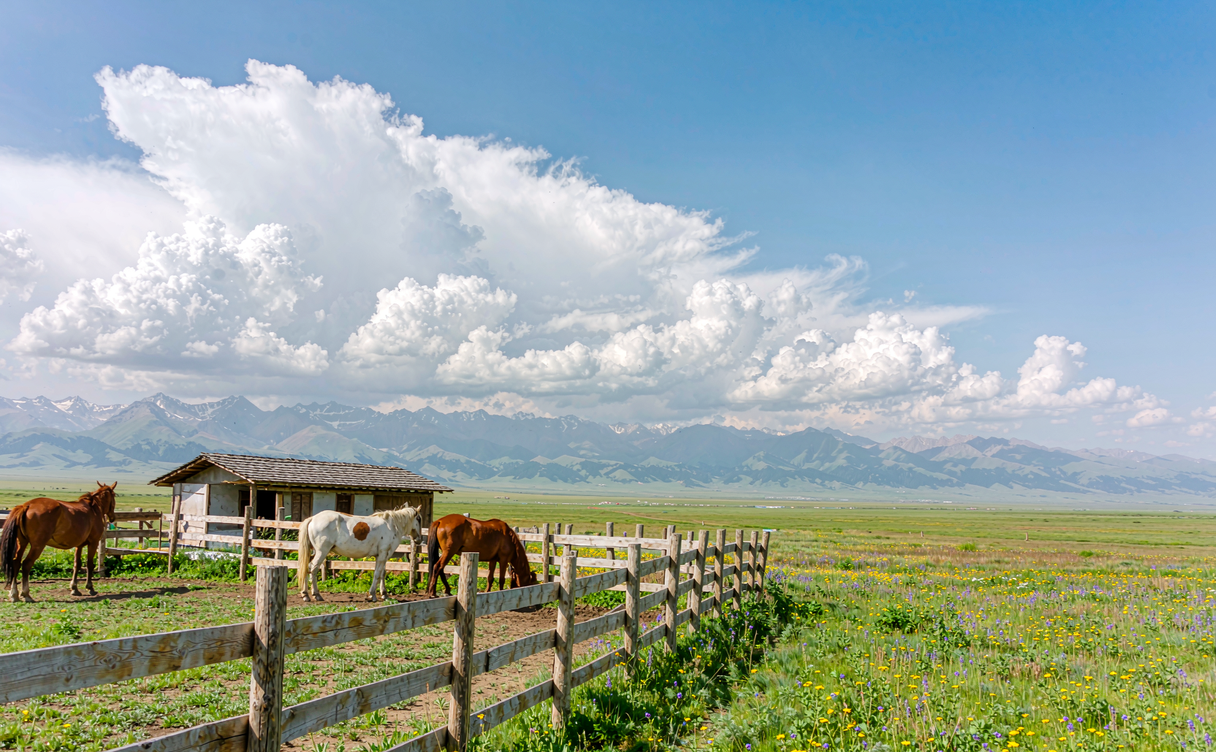
The Shandan Horse Ranch: The Oldest Stud Farm in China
The centerpiece of any visit is the Shandan Military Horse Ranch, often described as the oldest continuously operating horse ranch in the world. It was established under the Han dynasty more than two thousand years ago to breed cavalry horses, and the same rolling pastures above the town of Damaying are still home to thousands of animals today. Visitors do not come for monuments; they come to watch bands of horses drift across the grass, to ride a sure-footed local mount along the ridgelines, and to stand where the corral fences meet the first slopes of the Qilian. The ranch is large, and the best grass is up near the higher pastures, so plan to spend a full morning rather than a quick stop.
The horses here are a sturdy mountain breed, smaller than the thoroughbreds of the flatlands but calm and well suited to beginners. Several outfits inside the ranch offer short rides and longer guided loops, and prices are negotiable in the off-season. Morning is the time to be on the grass: the light is soft, the herds are out, and the air smells of wet earth and wild herb. Photography is easy because the animals are used to people, but keep a respectful distance from the foals and never ride onto a closed pasture without asking. The working life of the ranch is the whole point, so treat it as a living landscape rather than a theme park.
Shandan Horse Ranch Grassland Camping
For travelers who want to stay out under the sky, Shandan horse ranch grassland camping is the move. The higher meadows around the ranch clear out after the day-trippers leave, and on a calm night the grass turns into one of the darkest, quietest campsites in Gansu. Several guesthouses and tented camps operate inside or just beyond the ranch boundary from late spring through early autumn; they supply yurts, simple beds, and hot food, and some will rent you a tent if you would rather pitch your own. The trade-off is altitude and cold — even in July the temperature drops sharply after dark, so pack a real sleeping bag and a windproof layer.
Camping here is also the best way to catch the Milky Way, because the corridor’s dry air and lack of city light make for clean, deep skies. Our China stargazing dark sky guide lists the Shandan meadows among the province’s stronger sites, and the combination of horse country by day and a bright galactic band by night is hard to beat. Bring a headlamp, charge your camera batteries, and ask the camp host about fire rules before lighting anything — the grass is dry for much of the year.
Sleep one night on the meadow instead of driving back to Zhangye, and the grassland will show you a sky the city never can.
Shandan Grassland Hiking Trails
The Shandan grassland hiking trails are short, gentle, and gloriously uncrowded compared with the famous Danxia landforms closer to Zhangye. Most routes follow old herder paths that climb from the ranch up toward the tree line and the first snow-fed streams of the Qilian. A popular half-day walk runs from the lower corrals to a viewpoint above the meadow where you can see the whole pasture fan out beneath the peaks; it is a steady climb but never technical, and a fit walker covers it in two to three hours round trip. Longer trails continue toward the higher summer pastures, where herders still move their animals, but those need a local guide because the paths fade and the weather turns fast.
What makes the walking special is the variety packed into a small vertical band. In a single morning you can pass from dry scrub at the ranch gate, through thick grass dotted with flowers, and up into the cold, bright air where the mountain begins. Wear proper boots — the meadows are deceptively boggy near the streams — and start early so you are off the high ground before afternoon storms build. The trails are free to walk, so budget for a guide and a packed lunch rather than an entrance fee.
Lace up and walk the lower trail before noon, when the light on the meadow is soft and the herds are still out.
Shandan Grassland Flowers in July
If there is one month to time a visit, it is high summer, because the Shandan grassland flowers July turn the meadow into a quilt of yellow, blue, and white. The bloom follows the meltwater up the slope: low buttercups and gentians open first in early July, then the higher pastures flush purple with aconite and vetches toward the end of the month. This is also when the grass is at its greenest and the herds are fat and lively, so the photographs almost take themselves. Accommodation fills up in July and August, so book the ranch guesthouses or camps at least a couple of weeks ahead.
The flowers are part of why the best time to visit Shandan grassland depends on what you want. July and August give the blooms, the warmest days, and the fullest ranch activity, but also the most visitors and the highest prices. June and September are the quiet shoulder months: still green, far emptier, and cold only at night. May and October can be raw and brown, with snow possible on the high slopes, but they suit travelers who want the meadow to themselves. Winter closes much of the high grass under snow and is best avoided unless you are specifically after a frozen, silent landscape.
How to Get to Shandan from Zhangye
The question every visitor asks is how to get to Shandan from Zhangye, and the good news is that it is straightforward. The two towns are linked by the G30 Lianyungang–Khorgas expressway and by a regular rail line, so most people base themselves in Zhangye and make Shandan a day trip or an overnight. The fastest option is a hired car or ride-hail, which covers the 60 to 70 kilometers in about an hour to ninety minutes depending on where in the county you are headed; the grassland and the horse ranch lie northwest of the county seat, so confirm the drop-off point when you book. Trains from Zhangye to Shandan station run several times a day and are cheap, but they leave you in the town itself, still a taxi ride from the meadow.
Long-distance buses also link the Zhangye west bus station with Shandan county seat at frequent intervals, and local taxis reach the ranch from there in roughly half an hour. If you are arriving from farther afield, fly or take the high-speed train to Zhangye, then continue by road. For travelers coming up the corridor from the east, our Lanzhou travel guide covers the rail and air links that feed the route, while the Wuwei travel guide and the Jinchang travel guide sit neatly on a continued westward loop toward the grassland and beyond.
Practical Notes for the Grassland
A few practical points make the difference between a good day and a cold, uncomfortable one. The altitude means strong sun and quick weather changes, so bring sunscreen, a hat, and a windproof jacket even when Zhangye feels hot. Mornings on the meadow are magical but cold, and afternoons can bring sudden rain or hail, so layer up and keep a dry bag for your camera. Cash is handy at the smaller ranch stalls, though mobile payment works at the main guesthouses. Food on the grass is simple, so eat a solid meal before heading up if you are picky.
The history behind the landscape is worth a read before you go. The Shandan horse pastures were tied to the Han-era effort to secure the Hexi Corridor, and the broader story of the corridor and its mountains is well summarized on the Wikipedia page for the Qilian Mountains, which explains how the range’s snowmelt makes this green band possible at all. Knowing that the horses beneath you are the descendants of a two-thousand-year breeding line changes how you look at the herd.
Pair the meadow with the Zhangye Danxia and the Qilian foothills, and you will have seen the corridor at its greenest and its most dramatic.
A Sensible One- or Two-Day Plan
One day is enough to ride the ranch and walk a short trail, but two days lets the place breathe. Day one: travel up from Zhangye in the morning and ride at the horse ranch. Day two, if you stay: hike higher toward the summer pastures at first light and catch the flowers if it is July. The grassland also slots into a longer Gansu route toward Jiayuguan and Dunhuang. For a broader frame, the best things to do in China roundup is where most travelers start shaping the wider trip.
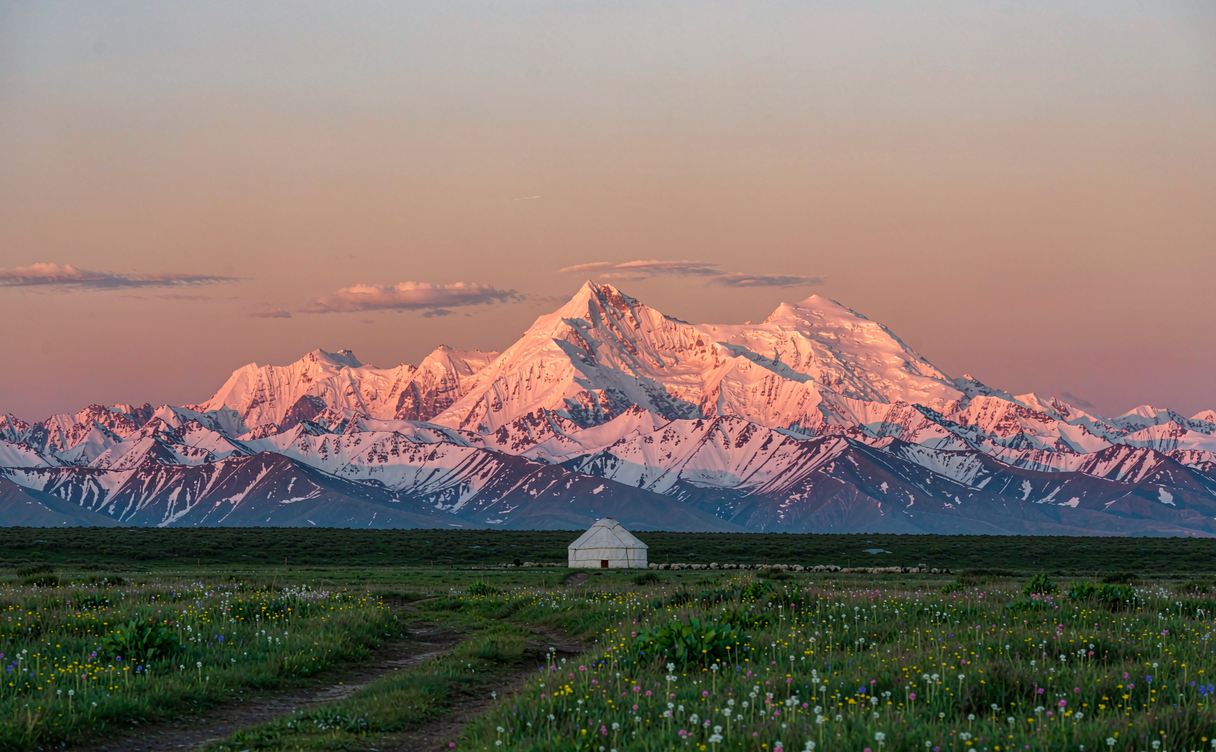
Shandan is not a headline destination in the way the Danxia or the Mogao caves are, and that is exactly its appeal. It is a working highland pasture, a living piece of horse-breeding history, and a cool green pause in the middle of one of the driest corridors on earth. Come for the ride, stay for the silence, and leave with the particular memory of horses moving across grass beneath snow peaks — a picture most visitors to Gansu never expect to find.