

The Qilian Mountains rise where Gansu and Qinghai meet, a long wall of snow capped peaks and green alpine valleys that splits the Hexi Corridor from the Tibetan plateau. A Qilian Mountains travel plan is built around one simple idea: drive the mountain roads and let the landscape change from desert foothills to flower filled meadows to glaciers in a single day. Few foreign visitors make it here, yet the route between Xining and Zhangye is one of the most beautiful drives in northwest China.
The range is not a single crest but a broad system of parallel ridges and basins, which is why the scenery shifts so quickly. Glaciers sit above four thousand meters, while the valleys drop to grassy floors at half that height. This vertical variety packs deserts, meadows, and snow into a compact area that you can cross in a day of driving. For photographers the payoff is constant, because every turn reveals a new combination of color and scale.
The name Qilian comes from a Mongolian word meaning sky, and on a clear morning the highest ridges really do look like they hold up the heavens. The range feeds the rivers that made the Silk Road possible, and its pastures still support Tibetan and Mongol herders who move yaks and sheep through the valleys with the seasons. Our Xining travel guide is the usual starting point, since most trips begin in the Qinghai capital and climb north into the hills.
The classic Qilian Mountain road trip follows the G227 highway from Xining up past Menyuan and the town of Qilian, then over the pass to Zhangye. The stretch between Menyuan and Qilian is the heart of the experience: open grassland dotted with white tents, distant blue glaciers, and a road that winds along the river. Allow a full day and stop often, because the viewpoints come one after another. Continuing to Zhangye, the Qilian to Zhangye leg drops you out of the mountains onto the Corridor plain, where the painted hills of our Zhangye Danxia rainbow mountains guide wait a short drive away.
Break the drive with a stop at the Menyuan grasslands, where wooden walkways let you step into the flower fields without trampling them, and at the small roadside monasteries where herders pause to pray. The pass between Qilian and Zhangye is the dramatic high point, often still capped with snow in early summer, and there are pullouts where you can walk a few steps onto the tundra. Give yourself permission to linger, because the best of the Qilian Mountain road trip is unplanned.
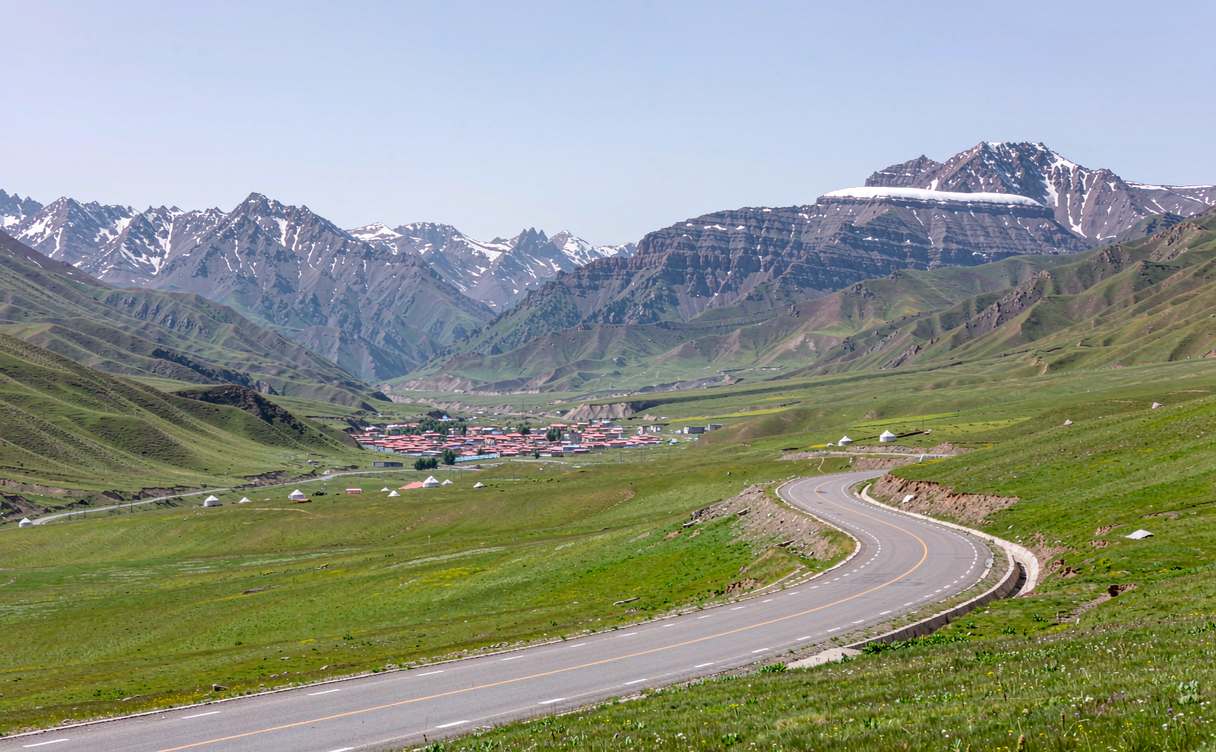
The town of Qilian, also called Babao, is the base for exploring the range. Just outside it, Zhuo’er Mountain is the one sight nobody should skip. A paved path and shuttle bus take you to a ridge where red and yellow rock formations meet rolling green pastures, with the white peaks of the main range as a backdrop. It is an easy walk rather than a climb, and the late afternoon light turns the whole scene luminous. Budget two to three hours, and bring a layer, because the wind on the ridge is cold even in summer.
The path along the top is wide and well maintained, suitable for most fitness levels, and benches appear at the best overlooks. Mornings tend to be clearer than afternoons, when clouds build over the peaks, so an early start gives sharper photographs. Local vendors at the base sell dried yak meat and hot milk tea, a useful warm up before the ridge wind hits.
Things to do in Qilian Mountains go well beyond the viewpoints. You can visit A’rou Tibetan Monastery, a quiet working temple in a valley of prayer flags, or arrange a few hours with a herding family to watch cheese making and try butter tea. The meadows near the town are perfect for a slow Qilian Mountains hiking afternoon, following the river or the treeline without needing technical gear. In July the fields around Menyuan explode with yellow rape flowers, a sea of color backed by snow, and that single month draws most of the region’s visitors.
For a deeper stay, ask your guesthouse about multi day Qilian Mountains hiking routes that climb toward the glacial valleys, usually with a local guide and pack horses. These are not technical climbs, but they do demand warm gear and a respectful pace at altitude. Even a half day walk above the tree line rewards you with views back over the Corridor and a real sense of the range’s scale.
The Qinghai Lake area lies a few hours south and makes a natural add on. Our Qinghai Lake travel guide covers the loop road, the bird island season, and the Tibetan towns along the shore, all of which share the same mountain air and open sky.
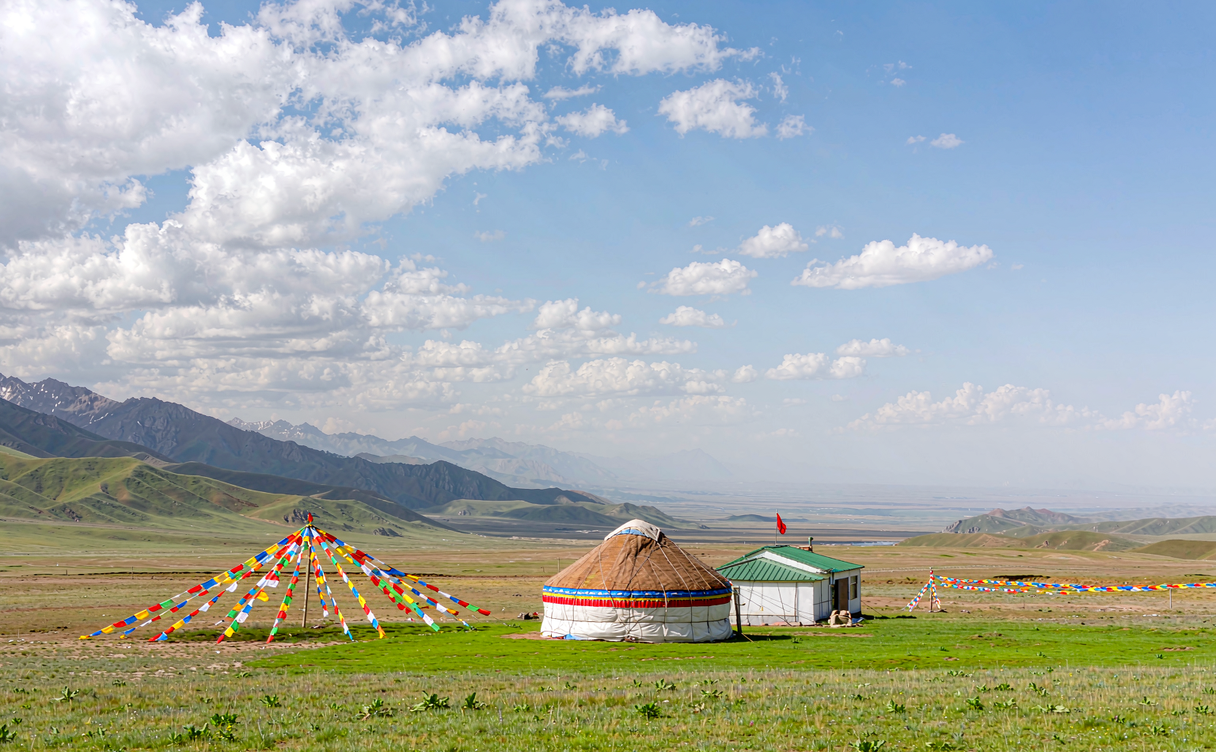
The best time to visit Qilian is from June to early September, when the grassland is at its greenest and the passes are clear of snow. July is the showstopper for the Menyuan flowers, though it is also the busiest. August brings warm days and cool nights ideal for camping. September and early October trade flowers for autumn gold and far fewer vehicles, but nights get close to freezing. From November to April the high roads can close after snow, so check conditions before you set out.
Pack for two seasons regardless of month. A sun hat and light shirt for the valleys, plus a fleece and windproof jacket for the passes, will keep you comfortable through a single day’s swing in temperature. Sunscreen and lip balm matter at this altitude, and a reusable bottle helps you stay hydrated on the thin air of the climbs.
A realistic Qilian Mountains travel itinerary runs three to four days. Spend one day driving Xining to Qilian with stops at Menyuan, one full day on Zhuo’er Mountain and a monastery or meadow walk, and a third day crossing to Zhangye. If you have more time, add a night near Qinghai Lake or a second hiking day in the upper valleys.
Getting around is easiest with a private car or a rental, since buses between the small towns are infrequent and stop early. The roads are in good condition but the passes are high, so take the altitude slowly and keep the tank full. A driver who knows the flower timing and the best roadside meadows is worth the extra cost.
For the geography and ecology of the range, the Wikipedia page on the Qilian Mountains is a solid primer on the glaciers, rivers, and protected areas.
Where to stay ranges from Qilian town hotels to family run grassland tents where you sleep to the sound of the river. Meals mix Qinghai and Tibetan styles: hand pulled noodles, yak meat stew, barley cakes, and sweet milk tea. In the towns you will also find halal noodle shops and the familiar lamb skewers of the north.
Book the grassland tents ahead in July and August, because they fill with domestic travelers during the flower season. A night under the stars, with no light pollution, is its own reward after a day on the passes.
A Qilian Mountains travel memory that stays with people is the silence. Stand on a meadow at dusk, with the peaks going pink and no engine sound anywhere, and the scale of the place settles in. Bring warm clothes, a good camera, and a flexible schedule, because the weather here writes the day’s plan.