

Mount Gongga, known to locals as Minya Konka, rises to 7,556 meters and is the highest summit in Sichuan, a towering pyramid of ice that dominates the eastern edge of the Tibetan plateau. A Mount Gongga travel plan is really a plan to stand beneath that wall of rock and snow, watch the first light hit the summit, and maybe walk a trail where few foreigners ever set foot. The peak is sacred to Tibetan communities, and the surrounding valleys blend high mountain drama with quiet monastery life.
The summit sits at the heart of the Daxue Shan, the Great Snow Mountains, a chain that catches the moist air rising from the Sichuan basin and turns it into the heavy snows that feed the glaciers. Because the peak rises more than five kilometers above the valley floor, the vertical relief here is among the greatest on Earth, which is part of what makes the view so overwhelming. Tibetan pilgrims have walked these circuits for centuries, and you will meet herders who still consider the mountain a living deity.
Most trips begin in Chengdu, the Sichuan capital and the region’s transport hub. The Gongga to Chengdu drive follows the G318 highway west through Ya’an and up onto the plateau, a journey of about five to six hours to the Kangding area at the mountain’s eastern foot. Our Chengdu travel guide covers where to eat and sleep before you leave the lowlands, and how to arrange a driver for the climb in altitude.
The gateway town is Kangding, the Tibetan influenced county seat where you stock up on supplies and feel the altitude begin. From Kangding, the east slope leads to Hailuogou, a glacier park with a cable car that carries you close to the icefall, while the west slope road climbs to the high passes that frame the summit. Our Kangding travel guide details the town’s monasteries, hot springs, and the onward routes into the range.
Choose your slope by what you want. The east slope, reached through Hailuogou, is comfortable and family friendly, with cable cars and boardwalks that put the ice within easy reach. The west slope is wilder and quieter, favored by photographers and trekkers who do not mind rough roads and basic lodges in exchange for uninterrupted views of the north face. Many visitors do both, spending a day on each side to see how different the mountain looks from east and west.
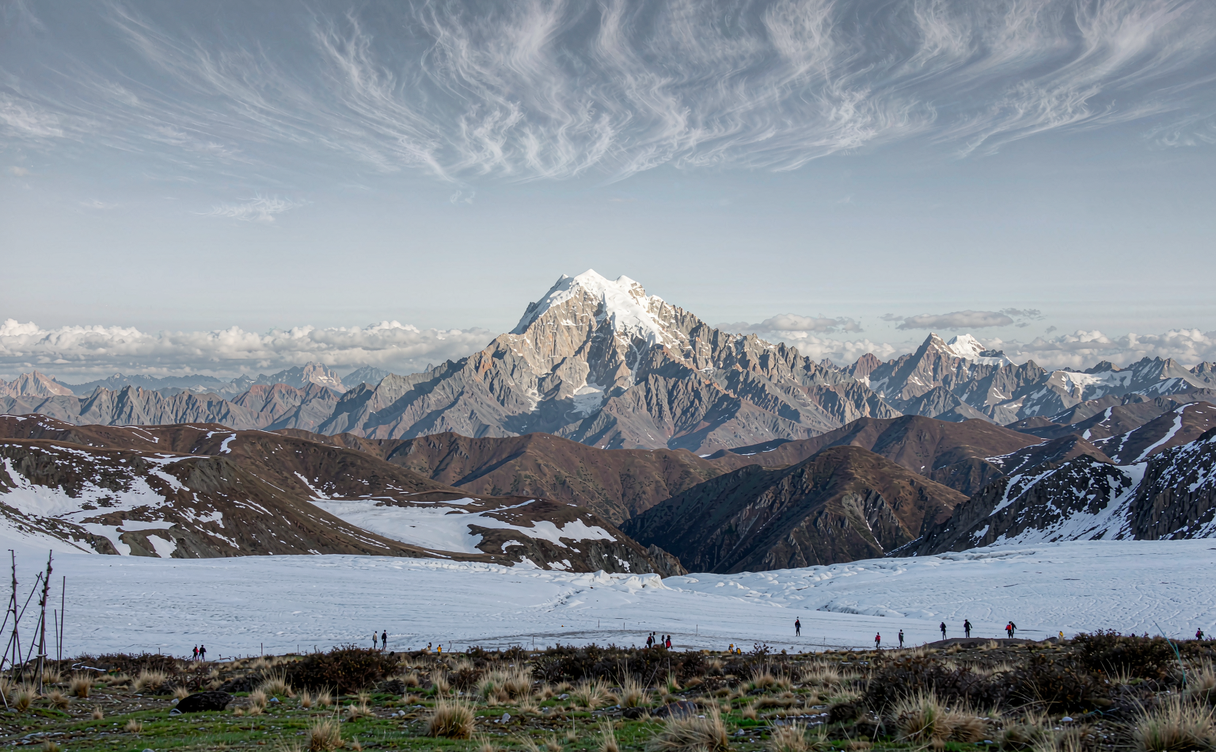
The single best experience is the Gongga viewpoint hike to Zimei Pass. A rough road leaves the village of Shangmuju and climbs to a 4,500 meter saddle where the whole north face of Minya Konka fills the horizon. Most visitors arrive before dawn, shivering in the dark, and then watch the summit turn from grey to gold as the sun clears the ridge. It is a short walk from the parking to the viewpoint, but the air is thin, so go slowly. On a clear autumn morning the sight is worth every cold minute.
The light show lasts only minutes but changes constantly. First the summit catches a pink glow, then the whole face ignites gold, and finally the valleys below brighten as the sun clears the rim. A tripod helps, because the cold drains camera batteries fast, and a telephoto lens compresses the peak against the nearer ridges. Stay until the color fades, then retreat to the village for hot tea before the wind picks up.
Things to do at Mount Gongga divide into glacier, pass, and trail. The Hailuogou glacier on the east slope is the easiest ice to reach: a shuttle bus and cable car deliver you to a viewing platform above a frozen waterfall of blue ice, with hot springs waiting back at the base. The west slope suits trekkers, and a classic Mount Gongga trekking route runs from Yajia village over several days to Zimei, camping beside turquoise glacial lakes and high meadows. Even non trekkers can sample this with a day walk from Laoka to the first viewpoint.
The Gongga glacier system is vast, feeding rivers that run all the way to the Yangtze, and the upper valleys hold a dozen named ice tongues. Closer to Kangding, the Tagong grassland and its golden roofed monastery make a gentle day trip, with yaks grazing in front of snow peaks and prayer flags snapping in the wind.
Back near Kangding, the hot springs are more than a comfort. The mineral pools sit at roughly 3,200 meters, steaming against the cold air, and a long soak after a pass day eases the altitude ache. Several are housed in simple resorts with private rooms, so you can make a night of it rather than rushing back to town.
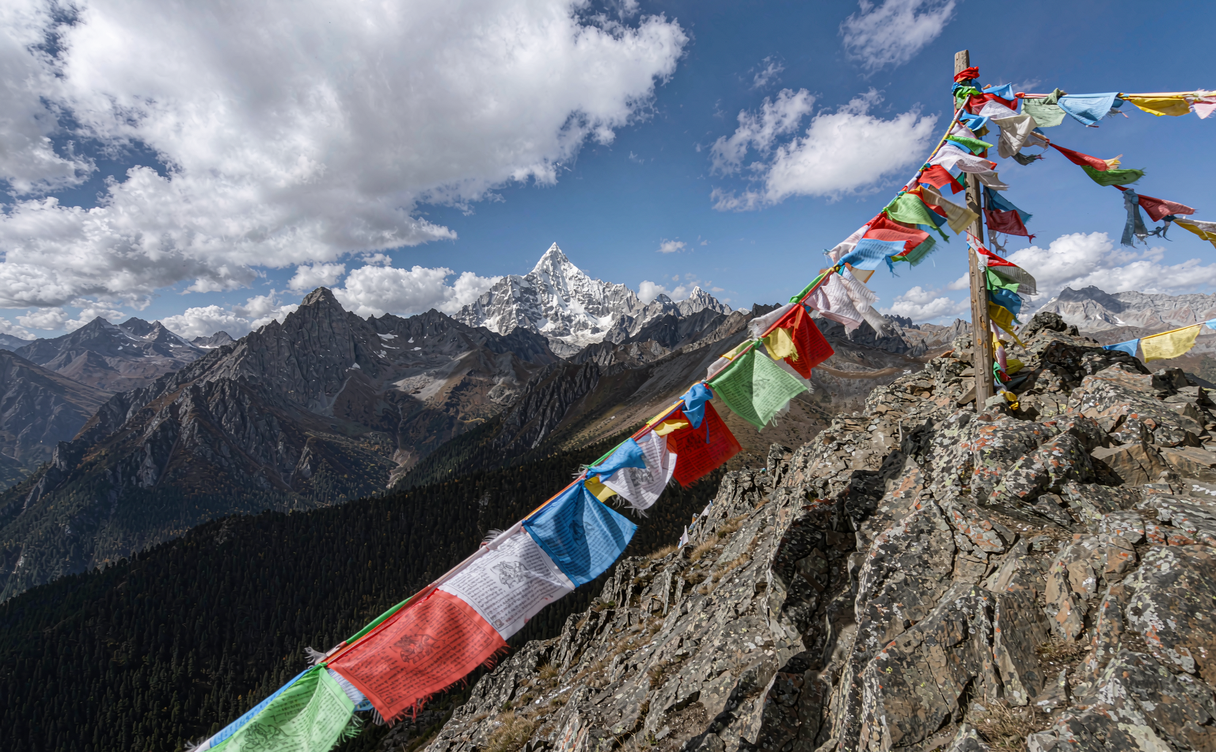
The glaciers here are unusually low for such a high range, descending into forested valleys that are themselves a recognized biosphere, rich with monkeys, pheasants, and rhododendron. That mix of ice, forest, and wildlife in one short climb is rare, and it explains why the park draws both scientists and sightseers. A morning at the icefall, followed by an afternoon in the hot springs, makes an ideal pairing.
The best time to visit Gongga is October and November, when the monsoon has gone, the skies are clear, and the forests turn gold. April and May are the next best window, with fresh green and fewer crowds. June through August is the rainy season, and clouds often hide the summit for days, so avoid those months if the view is your goal. Winter is crisp and clear but bitterly cold, with passes that can ice over.
Whatever the season, pack for cold and altitude. A down jacket, gloves, and a warm hat belong in your daypack even in late spring, and sunglasses protect against glacier glare. Move slowly above 3,500 meters, drink plenty of water, and consider a night in Kangding before climbing higher, because a gentle ascent is the best defense against sickness on the mountain.
A realistic Mount Gongga travel itinerary runs three to five days. Give one day to reach Kangding and acclimatize, one to the Hailuogou glacier, and one or two to the west slope passes and a short trek. If you plan a multi day Mount Gongga trekking circuit, add at least four more days and a licensed guide, because the routes are remote and weather can turn fast.
Getting around means a private car or a tour, because public transport does not reach the high passes. The roads are paved but narrow and switchbacked, and altitude sickness is a real risk above 3,500 meters, so build rest days and hydrate. Drivers from Kangding know the viewpoint timing and the condition of the west slope track, which can be impassable after rain.
For the mountain’s statistics and climbing history, the Wikipedia page on Gongga Shan is a useful reference before you go.
Where to stay ranges from Kangding’s comfortable hotels to the basic guesthouses at the glacier and on the west slope. Meals mix Sichuan heat with Tibetan comfort: yak meat hotpot, momos, and butter tea to warm up after a pass. The hot springs near Kangding and at Hailuogou are the perfect reward for a cold viewpoint morning.
A Mount Gongga travel memory worth chasing is the moment the clouds lift and the full north face appears, sudden and enormous. Be patient, dress for cold, and let the mountain set the schedule, because the summit shows itself only on its own terms.