

Haba Snow Mountain rises to 5,396 meters on the northwestern edge of Yunnan, a glaciated pyramid that looms directly above the roaring Yangtze of Tiger Leaping Gorge. A Haba Snow Mountain travel plan usually has two halves: the famous Haba trekking route to the summit, and the quieter pleasure of the villages, hot springs, and viewpoints scattered around its base. For fit hikers it is one of the most accessible 5,000 meter peaks in China, which is exactly why it has earned a reputation as the trekker’s mountain.
The massif belongs to the Hengduan range, the series of north south ranges that splinter the southeastern edge of the plateau, and its glaciers feed streams that drop straight into the Yangtze. The villages around its base are home to the Nakhi and Yi peoples, whose terraced fields and timber houses give the lower slopes a lived in, gentle character that contrasts with the harsh summit. That mix of culture and high ice is the mountain’s particular charm.
The mountain sits in a compact corner of Yunnan between Lijiang and Shangri-La, and the gorge at its foot is one of the deepest river gorges on Earth. Most people arrive after walking part of the Tiger Leaping Gorge trek, then look up at the snow and decide to climb it. Our Tiger Leaping Gorge trek guide explains the classic hiking route and where to sleep along the trail.
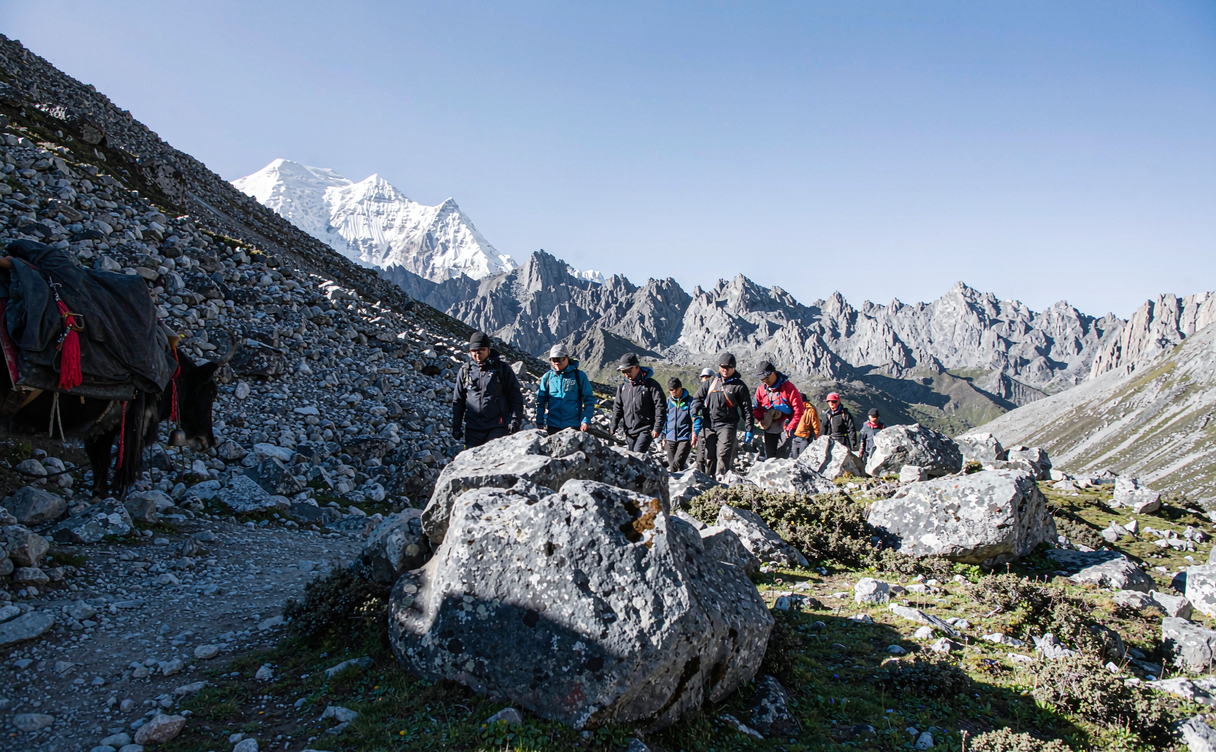
The climb itself begins in Haba village, a Nakhi and Yi settlement at about 2,600 meters where most expeditions stage. From there a long day on foot or horseback gains the base camp at roughly 4,100 meters, crossing flower meadows and a rocky moraine. The summit push leaves camp in the small hours, using headlamps and crampons to cross the glacier before dawn, so you reach the top as the sun lights the Yangtze far below. A Haba Snow Mountain climb is not a casual walk: the altitude, cold, and ice demand a guide, proper boots, and a real level of fitness, but it asks less technical skill than most peaks its height.
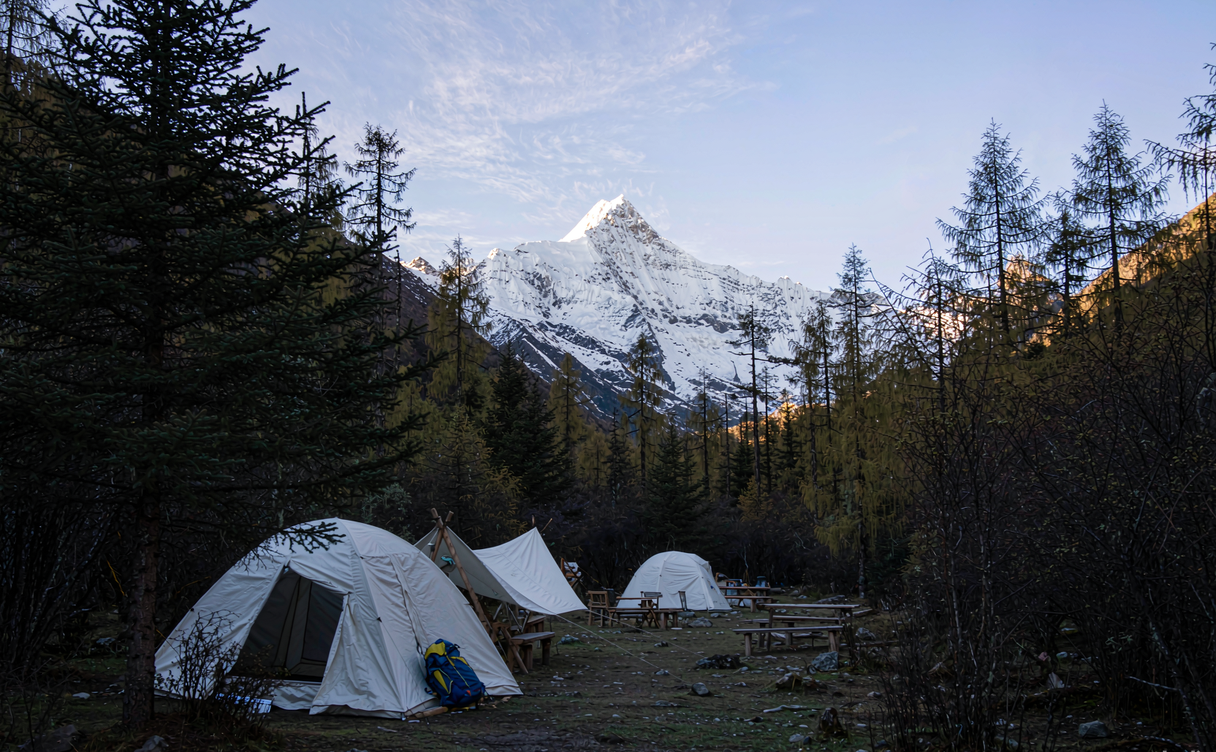
Base camp is a simple cluster of stone huts and tents, and the afternoon there is for resting, eating, and checking gear while the guides assess the snow. The night summit push is the hard part: several hours of steady climbing by headlamp, with the air thinning and the temperature dropping, until you crest the top as the first light touches the horizon. Most people spend only minutes at the summit before heading down, and the whole descent to the village can take the rest of the day.
Things to do at Haba Snow Mountain go beyond the summit. Spend a rest day in Haba village learning about Nakhi culture, or soak in the nearby hot springs after the descent. The Haba Snow Mountain viewpoint from the Tiger Leaping Gorge high trail is superb and needs no climbing at all: from the gorge rim you look straight up the north face, a wall of ice and rock that changes color through the day. Baishuitai, the terraced calcium pools an hour south, makes an easy half day trip with its white stepped pools and clear water.
Haba village itself rewards a slow morning. Women weave and smoke meat on the balconies, old men play cards in the sun, and the surrounding fields step down the valley in tidy terraces. A short walk above the village reaches a ridge with a clear view of the north face, a good Haba Snow Mountain viewpoint for anyone not attempting the climb. The hot springs a short drive away are basic but welcome, with steam rising into the cold air as you soak off the trail dust.
The region ties neatly into a wider Yunnan loop. Our Shangri-La Yunnan travel guide covers the Tibetan town to the north, with monasteries and high grasslands, while our China hiking treks guide lays out the gear and acclimatization needed for routes like this one.
The best time to visit Haba is spring and autumn. April to May brings clear mornings and blooming rhododendrons on the lower slopes, while September through November is the most stable window, with dry air and the sharpest views. Avoid June to August, when the summer monsoon brings rain, leeches, and clouds that hide the peak, and avoid deep winter, when the glacier is dangerous and the village guesthouses may close. Book your guide a week or two ahead in October, the busiest month.
Prepare for the climb with a few practical steps. Spend a night or two above 2,000 meters before you start, train with cardio for the weeks before, and pack layers for temperatures that swing from mild to freezing between village and summit. The permit is arranged through your guide, so you do not handle it yourself, but carry your passport, because it is checked at the trailhead. Good boots and a warm glove system matter more than fancy gear.
A realistic Haba Snow Mountain travel itinerary runs three to four days. Arrive in Haba village, rest and acclimatize, climb to base camp on day two, summit on day three, and descend to the hot springs on day four. Add a day for the Tiger Leaping Gorge walk or Baishuitai if your schedule allows. Because the Haba to Shangri-La drive is only two to three hours along the G214, many people continue north rather than backtrack to Lijiang.
Getting to and around Haba is straightforward by Yunnan standards. Buses and shared cars run from Lijiang and Shangri-La to the village, and a private car gives the most flexibility for early starts. The climb is guided by local outfits in Haba village, who supply crampons, ice axes, and the mandatory permit handling. Agree on the full price beforehand, including porters and the base camp stay, because extras add up on the mountain.
On the descent, pace yourself and watch the loose scree below base camp, where a twisted ankle is the most common injury. Most outfits return you to the village by early afternoon, leaving time to celebrate and sort photos before the hot springs. If the weather turns during your climb, trust the guide’s call to turn back; the mountain will be there, and a safe summit is better than a forced one.
For the scale of the gorge itself, the Wikipedia page on Tiger Leaping Gorge gives useful background on its depth and the river that carved it.
Where to stay in Haba village ranges from simple family guesthouses to slightly plusher trekker lodges, all used to early departures and muddy boots. Food is hearty mountain fare: nakhi goat hotpot, wild mushrooms in season, and plates of pickled vegetables to keep your strength up. In Shangri-La and Lijiang you will find more choice, from Tibetan momos to the famous crossing the bridge rice noodles.
Reserve the better lodges ahead in autumn, when the village fills with climbers chasing clear skies. A hot shower and a solid bed the night before base camp makes the early start far easier.
A Haba Snow Mountain travel memory that stays with climbers is the moment on the glacier at first light, with the whole gorge laid out below and no sound but crampons on ice. Train before you come, respect the altitude, and let the guide set the pace, and the summit is a realistic reward.