

I first rolled into Shangri-La (香格里拉) on an overnight bus from Lijiang, groggy and slightly breathless, and the first thing that hit me wasn’t the altitude — it was the smell of burning juniper and butter tea drifting out of a side alley. This is a Himalayan-foothills town sitting at around 3,200 meters in Diqing Tibetan Autonomous Prefecture, Yunnan, China. It’s the kind of place that earns its name: snow-dusted peaks on the horizon, a gold-roofed monastery glowing above the roofs, and a high, thin light that makes everything feel a little unreal. If you’re building a Yunnan loop, this is the far-western anchor — and the one that feels most like the roof of the world without crossing into the Tibet Autonomous Region.
Below is the practical, first-hand guide I wish I’d had: how to get there, what to actually see, how to handle the altitude, and what to pack. I’ve kept the Tibetan culture in Yunnan, China framing honest — Shangri-La is firmly in Yunnan, not the Tibet Autonomous Region, even though the language, food, and faith here are unmistakably Tibetan.
How to Get There
Most foreign travelers reach Shangri-La from one of two directions, and the right choice depends on your route and your tolerance for mountain roads.
From Lijiang (most popular): The bus takes roughly 3.5–4.5 hours and climbs steadily from 2,400m to 3,200m. It’s a beautiful, stomach-churning ride past the Yangtze’s first bend and the highlands above Tiger Leaping Gorge. I did this once in a cramped minibus and once on a bigger coach — take the bigger coach if you can. There’s also a scenic railway now linking Lijiang and Shangri-La, which removes most of the nausea and lets you watch the plateau open up through the window.
From Kunming: It’s about 600 km and a long haul by road, so I’d only do it if you’re not already in the north of the province. Flying is far saner.
By air: Diqing Shangri-La Airport (DIG) has direct flights from Kunming, Chengdu, and Lhasa, with seasonal links from a few other hubs. The landing alone is worth it — you drop between ridgelines toward a runway that feels impossibly high. Book the window seat. If you’re starting your China trip cold, my overall primer at china-travel-guide-for-first-timers covers visas, payments, and SIM cards before you fly.
A note on sequencing: I recommend doing Kunming and Dali first, then Lijiang, then Shangri-La, climbing in altitude gradually. It’s gentler on the body and lets the landscape build from green lake country to raw plateau.
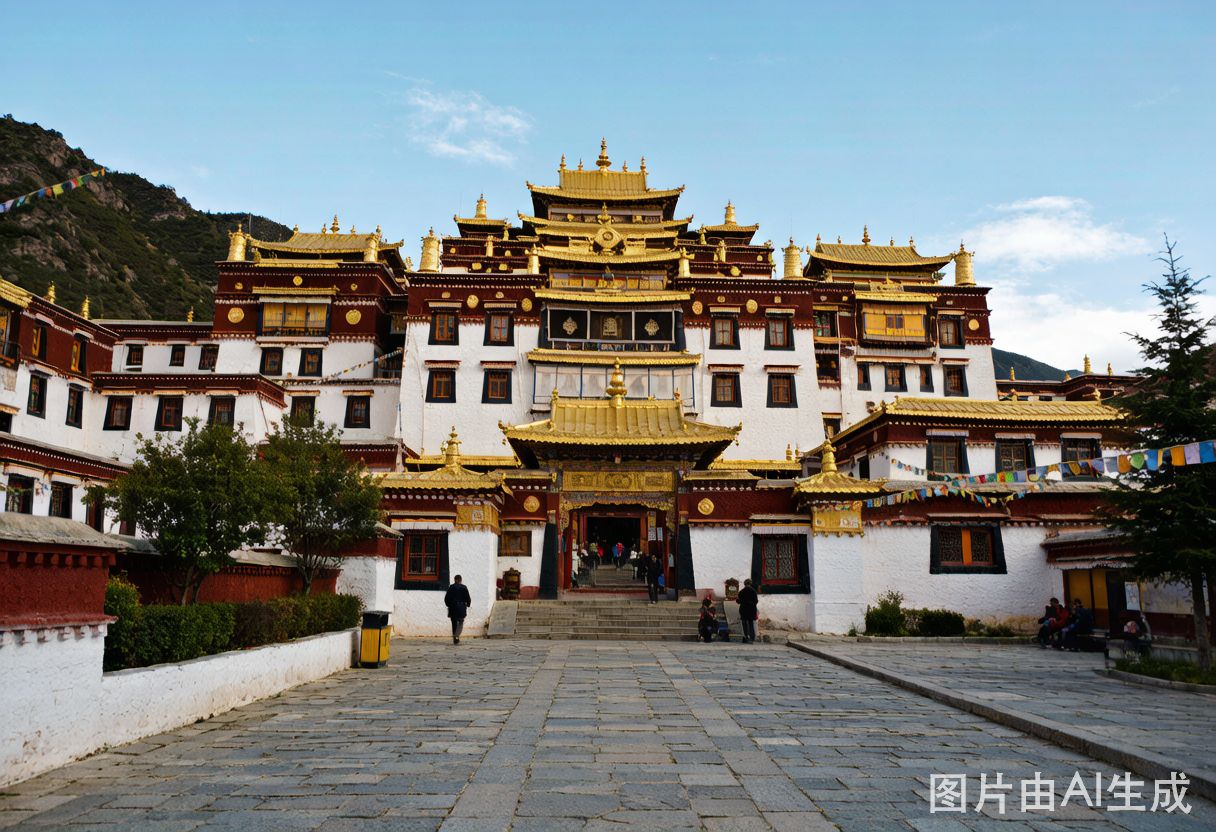
Songzanlin Monastery (松赞林寺)
This is the headline sight, and rightly so. Often called the “little Potala Palace,” Songzanlin is the largest Tibetan Buddhist monastery in Yunnan, China, and it’s still a working institution with hundreds of monks. The walk up the stone steps to the main assembly hall leaves you a little winded at this elevation — that’s normal, not a problem.
Inside, the halls are dim, smoky with incense, and crammed with statuary and murals in lapis and gold. I spent an hour just watching the light move across the butter-lamp alcoves. Practical tips from experience: arrive when it opens to beat the tour buses, dress so your shoulders and knees are covered, and don’t photograph monks without a nod of permission. The circumambulation path (kora) around the hill behind the monastery is free, quiet, and gives you the best wide-shot of the whole complex — that’s where I took my favorite photo of the trip.
Pudacuo National Park (普达措)
If Songzanlin is the cultural heart, Pudacuo is the lungs. This plateau national park strings together two alpine lakes — Shudu Lake and Bita Lake — linked by boardwalks and a shuttle-bus route through spruce forest, marsh, and pasture where yaks graze. At 3,500m+ on the high loops, the air is thin and the views are enormous.
I’d budget a half day. The full boardwalk at Shudu is an easy, flat walk; the Bita Lake section is longer and the altitude makes it feel harder than it looks. Go slow. The park is seasonal — in autumn the grasses turn copper and the reflections are absurdly photogenic; in early summer the meadows flood with wildflowers. Whichever you catch, bring layers, because the wind off the water is cold even in July.
The Old Town and Tibetan Culture
Shangri-La’s old town (Gucheng) burned badly in a 2014 fire and has been rebuilt, so manage expectations: it’s tidy and a touch touristy, but the bones are real. The central prayer wheel (a giant, gilded, man-powered mandala) is worth a spin at dusk when locals come to walk the kora. Side streets lead to thangka workshops, Tibetan bakery cafés selling sweet tsampa biscuits, and hot-pot joints serving yak meat and wild mushroom broth.
For the culture, don’t just look — participate. I joined a family-style dinner one night with a travel companion’s local contact: butter tea (an acquired, salty warmth), dried curd, and a low table piled with momos. Tibetan culture in Yunnan, China has its own regional flavor, shaped by centuries of trade between the plateau and the lowland Han towns, and that blend is part of what makes Diqing distinct from the Tibet Autonomous Region just over the mountains.
If you want to extend the Tibetan thread, our lhasa-tibet-travel-guide covers the capital of the Tibet Autonomous Region, Tibet, China — a different permit-and-altitude game entirely, but a natural next step for serious highlands travelers.
Altitude: The Part You Can’t Skip
Shangri-La sits at ~3,200m, and Pudacuo pushes past 3,500m. Altitude sickness is the single most common thing that ruins this trip, and it’s the one risk you can actually plan around.
My rules, learned the hard way on a previous plateau trip:
- Climb gradually. If you can, spend a night or two in Lijiang (2,400m) before ascending. Your body thanks you.
- Hydrate like it’s a job. The air is dry; you lose water fast. I carried a 1L bottle and refilled constantly.
- Go easy on day one. No running to the bus, no big hikes immediately. Walk like you’ve got somewhere to be but no urgency to get there.
- Skip the alcohol for the first 48 hours. That “warming” yak-butter liquor hits twice as hard up here.
- Know the warning signs. A mild headache is normal. A pounding headache with nausea, breathlessness at rest, or trouble sleeping is not — descend and get help.
Most people acclimatize fine with a slow arrival and a rest day. I treat the first afternoon as a write-off: wander the old town slowly, eat well, sleep early.
Best Season to Visit
Shangri-La has a short, intense tourist window and a long, cold off-season.
- Spring (April–May): Wildflowers, clearer roads, fewer crowds. My favorite shoulder season.
- Summer (June–August): Greenest and mildest by day, but it’s also the rainy season — afternoon storms, occasional landslides on mountain roads, and the occasional socked-in peak. Still good if you don’t mind clouds.
- Autumn (September–October): The poster season. Blue skies, golden grasslands, crisp air. Book accommodation early; this is when domestic tourists flood in for National Day in early October.
- Winter (November–March): Brutally cold, some guesthouses and the high sections of Pudacuo can close, but you’ll have the place nearly to yourself and the snow on the peaks is spectacular.
Planning a wider Yunnan circuit? Pair Shangri-La with Dali’s lake-and-old-town scene using our [dali-yunnan-travel-guide](https://www.chinatravelplaces.com/dali-yunnan-travel-guide/) before you head west into the highlands.
What to Pack
The plateau laughs at “average” temperatures. You can get sun, wind, and a hailstorm in one afternoon, so pack for layers and extremes:
- A real windproof jacket — not just a fleece. The wind at the lakes is the coldest thing up here.
- Sunglasses and high-SPF sunscreen. UV at 3,200m+ is no joke; I burned my lips in an hour.
- Sturdy walking shoes — boardwalks are fine but the kora paths and town stones are uneven.
- A refillable water bottle and lip balm (the dryness is relentless).
- A power bank — cold drains phone batteries fast, and you’ll be photographing everything.
- Some cash (small bills) for monastery donations, village stalls, and the occasional off-grid guesthouse; our kunming-travel-guide has more on money logistics across Yunnan.
- Altitude meds if your doctor recommends them, plus any personal medication — there’s no pharmacy worth the name once you’re up in the smaller villages.
Coming from Lijiang? Read our [lijiang-old-town-travel-guide](https://www.chinatravelplaces.com/lijiang-old-town-travel-guide/) to plan the climb west — it’s the natural launch pad for the bus or train up to Shangri-La.
A Note on Nearby Plateau Lakes
If Pudacuo whets your appetite for high-altitude lakes, the famous travertine pools and turquoise waters of Jiuzhaigou in neighboring Sichuan are the obvious next stop — though that’s a separate province and a longer journey. Our jiuzhaigou-travel-guide lays out the logistics if you want to chain the two plateau parks into one trip.
Getting Around Town and Staying Safe
Shangri-La itself is compact and walkable. Taxis are cheap and the drivers are used to foreigners; have your destination written in Chinese characters on your phone to show them. For Pudacuo and Songzanlin, organized shuttles and tours from the town bus station are easiest, though ride apps work for the monastery. The main real risk is the altitude and the mountain roads, not crime — standard china-travel-safety-tips apply, but up here your own body is the thing to watch.
Final Word
Shangri-La rewards the prepared. Give it two or three nights, arrive slowly, respect the altitude, and the town opens up: a gold monastery at dawn, a silent lake at noon, prayer flags snapping in the wind at dusk. It’s Tibetan culture in Yunnan, China at its most cinematic, and for me it remains the high point — literally — of any Yunnan journey.
For background on the region’s plateau ecology and protected areas, the IUCN (International Union for Conservation of Nature) maintains an accessible overview of how Yunnan’s mountain ecosystems are classified and conserved: https://www.iucn.org/.
Ready to lock in the route? Start with our [china-travel-guide-for-first-timers](https://www.chinatravelplaces.com/china-travel-guide-for-first-timers/) for visas, payments, and SIM cards, then build Kunming → Dali → Lijiang → Shangri-La from west to higher.