

Namcha Barwa travel rewards those who make the long journey to the eastern Himalaya with one of the most dramatic mountain scenes in Asia. At 7,782 meters, Namcha Barwa rises straight out of the Yarlung Tsangpo great bend, the deepest river canyon on the planet. The mountain is sacred in Tibetan Buddhism, and for much of the year it stays hidden behind cloud and drizzle. When the summit finally clears, usually in the dry winter months, the sight stops visitors in their tracks.
The peak sits in Nyingchi Prefecture in Tibet, China, near the border with India. Most travelers reach it from Lhasa, either by air to Nyingchi Mainling Airport or by the scenic road and rail route through the Brahmaputra valley. Because the region sits at lower elevation than central Tibet, China, the air feels easier to breathe, and the landscapes shift from pine forest to alpine meadow to bare granite wall within a few hours of driving. The name itself carries weight: Namcha Barwa means “the spear pointing at the sky” in the local language, a fitting description for a pyramid of rock that dwarfs everything around it.
The Yarlung Tsangpo great bend is the single feature that makes this place special. The river, known downstream as the Brahmaputra, runs east across the plateau until it hits the massif and makes a near U-turn around the mountain, dropping through a gorge more than 5,000 meters deep. Stand at a viewpoint on a clear morning and you see the silver ribbon of water far below, with the summit glowing above it. This is also a world-class spot for geologists and photographers, and the surrounding valleys hold some of the richest temperate forest left in the Himalaya. The gorge marks the start of the river’s long run toward the plains of South Asia, and the contrast between the roaring water and the silent snow peak is the photo most travelers came to take.
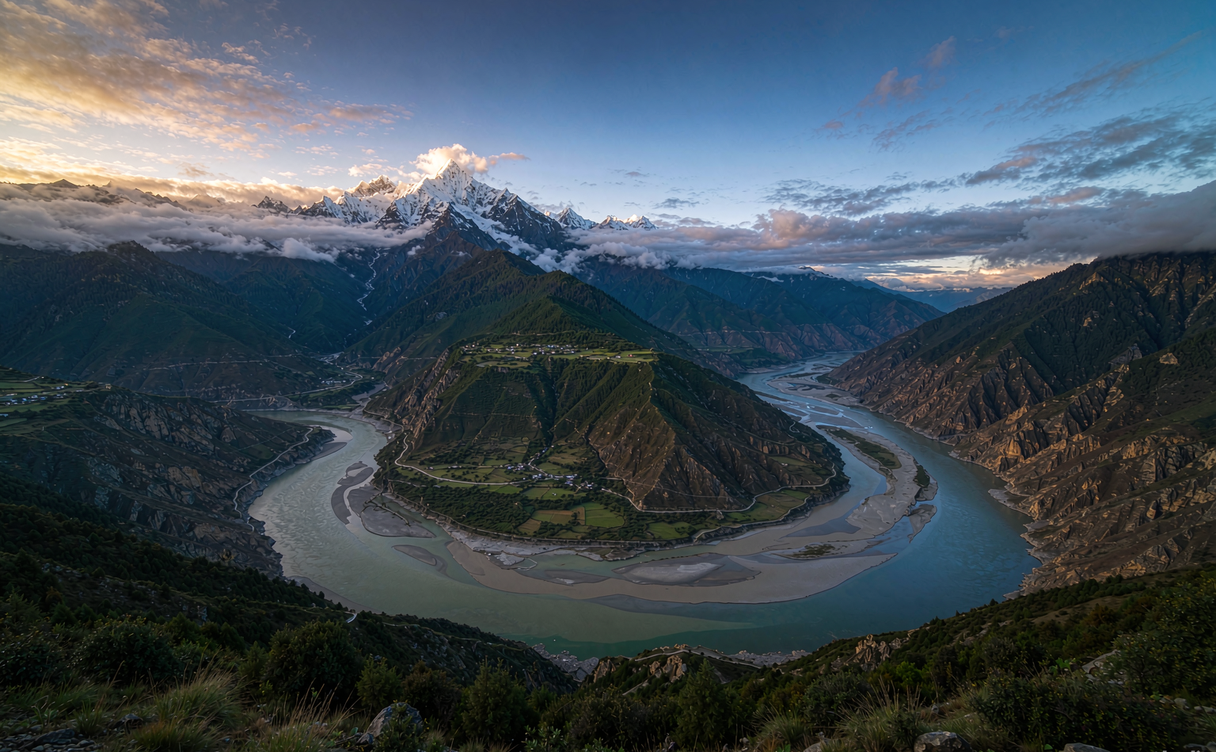
Best time to visit Namcha Barwa
The best time to visit Namcha Barwa is from late October to early April, the dry season when skies are clearest. October and November are especially good: the autumn air is crisp, the forests turn gold, and the chance of seeing the full summit is the highest of the year. Winter is cold but dazzlingly clear, with far fewer tourists and a stillness that suits the sacred setting. From June to August the summer monsoon brings heavy cloud and rain, and the peak is hidden most days. Spring, in March and April, brings peach blossom to the valleys around Nyingchi, a famous local spectacle that frames the snow mountain with pink and draws domestic visitors in large numbers.
Getting there from Lhasa
Most itineraries begin in Lhasa. The road from Lhasa to Nyingchi follows the Nyang River and climbs over Mila Pass before dropping into a warmer, greener landscape. A quicker option is the flight from Lhasa Gonggar Airport to Nyingchi Mainling, about 40 minutes, with mountain views on a clear day. From Nyingchi town it is roughly two hours by car to the Namcha Barwa viewing areas near Pai and the Yarlung Tsangpo Canyon scenic zone. Allow at least two nights in the area if you want a real chance at a clear view, because weather can block the summit for days at a time.
Foreign visitors need a Tibet, China Travel Permit in addition to a Chinese visa, and independent travel is not permitted; you must join a licensed tour with a local guide. Plan this paperwork a month ahead, because permits are issued through registered agencies rather than at the border. Nyingchi is one of the more relaxing places to acclimatize because of its lower altitude, which makes a Namcha Barwa trip a good first stop before heading higher into the plateau. Spend a day in Nyingchi town to adjust, drink plenty of water, and avoid heavy exertion on the first afternoon.
For a broader look at the region, our Lhasa travel guide covers permits, flights, and the overland route, while the Yarlung Tsangpo Canyon page details the gorge viewpoints and the Pai village area. Both are useful for building the logistics around this remote corner of the east.
The best viewpoints
The classic Namcha Barwa viewpoint is the Sosong village platform on the south bank of the Yarlung Tsangpo, inside the canyon scenic area. Arrive before sunrise and you may watch the first light catch the summit. Another favorite is the Sejila Mountain pass on the road between Nyingchi and Pai, where a pulling-off point gives a wide panorama of the whole massif. On the north side, the villages around Pai and the hot-spring town of Drok Sagmaling offer quieter angles and fewer crowds, plus the chance to soak after a cold morning of waiting for the clouds to lift.
Photographers often spend two mornings at different viewpoints to improve their odds. When the mountain is clear it is breathtaking; when it is not, the forests, monasteries, and riverside trails still reward the trip. The peach-blossom season turns the usual viewpoint loops into flower-framed drives that are worth the visit on their own, and the orchards around Nyingchi are among the most photographed in the region during late March.
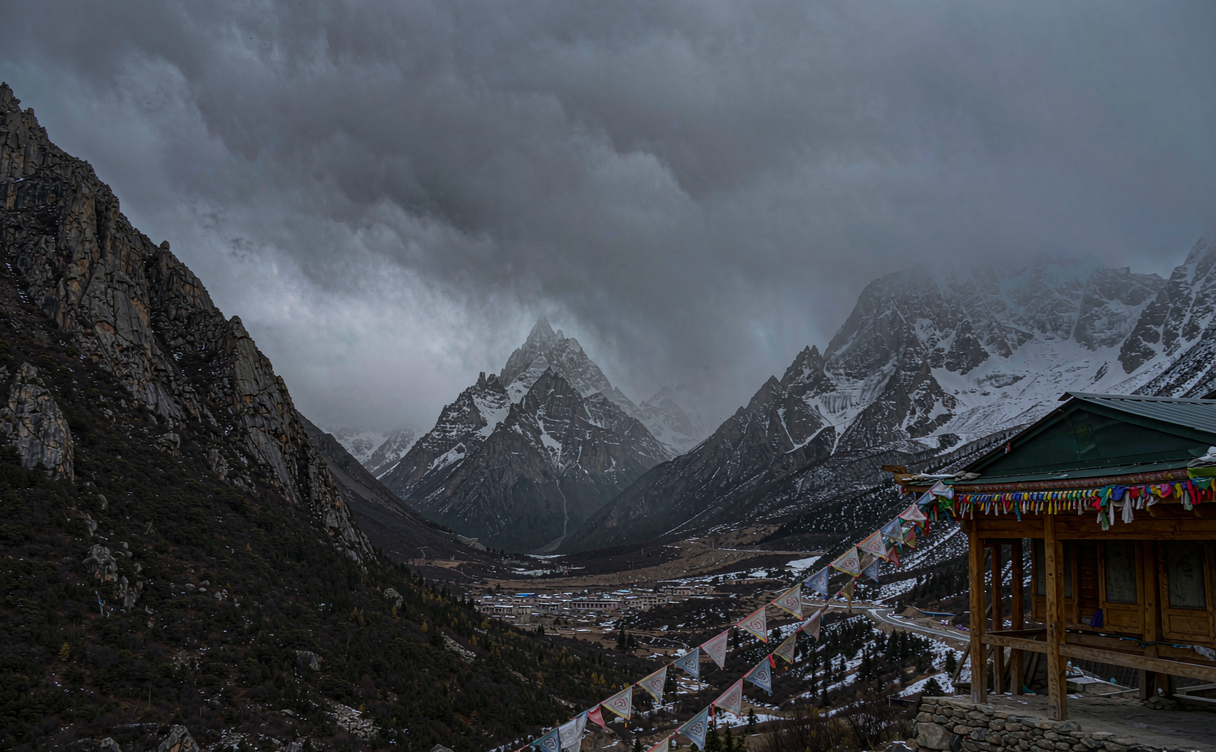
Things to do at Namcha Barwa
Things to do at Namcha Barwa go well beyond the lookout. The Yarlung Tsangpo Canyon has marked walking paths along the river, and the nearby Namcha Barwa trek routes range from easy riverside strolls to multi-day hiking toward the mountain’s southern flank. The hot springs at Drok Sagmaling are a perfect reward after a day of walking, with the snow peak sometimes visible from the steaming pools. Local guides can arrange homestays in Pai, where families serve butter tea and show you the small monasteries that dot the valley.
In Nyingchi town you can visit the Bunri sacred mountain, the Lulang forest meadow with its yak-meat hotpot, and the smaller Basum Tso, a turquoise lake ringed by peaks about two hours away. Food in the area leans Tibetan and Sichuanese. Try momos, thenthuk noodle soup, and butter tea in the village guesthouses, and order the local river fish where available. Accommodation runs from basic guesthouses in Pai to comfortable hotels in Nyingchi town; book ahead during the October peak and the spring blossom weeks, when rooms fill quickly and prices rise.
According to Wikipedia, Namcha Barwa is the highest peak in the eastern Himalaya and one of the world’s most prominent mountains, which explains why cloud-covered views are the norm rather than the exception. The lower elevation of the Nyingchi valleys makes this one of the kinder high-altitude introductions available, and the combination of deep canyon, sacred peak, and blooming valleys is hard to match anywhere else in the country.
Planning your trip
Give the mountain at least two full days, carry layers for fast weather changes, and bring a permit-ready itinerary. The roads are good but long, so a private car with a driver is the most comfortable way to move between viewpoints. Cash is useful in small villages where card readers are rare, and a basic phrase list in Chinese helps at roadside eateries. Most importantly, accept that the mountain may not show itself; the valleys, hot springs, and forests are the consolation prize, and they are considerable.
A Namcha Barwa trip works best as part of a wider eastern loop. Many travelers combine the canyon with the high lakes and the overland drive back to Lhasa, adding a few days in the warmer Nyingchi valleys before tackling higher passes. The towns are small, the pace is gentler than the classic central rush, and the scenery changes hour by hour as you climb.
Whether you come for the summit, the trek, or the peach blossom, Namcha Barwa travel leaves a lasting impression. Build in buffer days for weather, travel with a licensed operator, and you will come home with photos and stories that few visitors manage to capture.