

Most travelers who plan a trip to Guangxi rush straight to the karst peaks and the famous cruise boats, but a short hop north of Guilin sits one of the cleverest pieces of ancient engineering in the entire country. This is the Lingqu canal, a waterway dug more than two thousand years ago that still channels water between two completely different river systems. If you want to understand how imperial China moved armies, grain, and culture across its southern frontier, there is no better single place to stand and look.
The canal was commissioned in 214 BC during the Qin dynasty, when the first emperor was pushing his armies south to consolidate the newly taken territories of the Lingnan region. The problem was simple but brutal: the Xiang River flows north into the Yangtze, while the Li River flows south toward the Pearl River delta. Between them rose a low ridge of hills near the town of Xing’an. Drag a fleet overland and you lose your boats. So the engineers did something remarkable: they cut a channel straight through the divide and used the natural slope to siphon water from one basin into the other. The result was a continuous inland route from the central plains all the way to the southern coast.
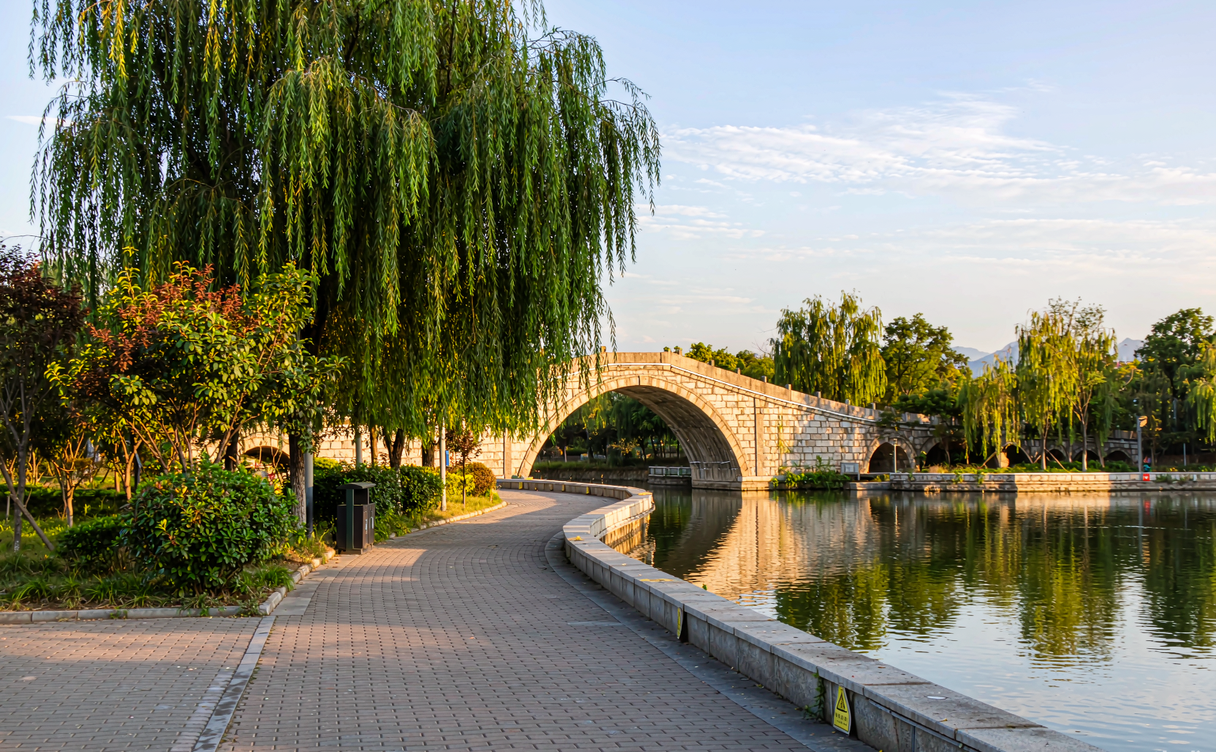
What makes this Lingqu canal guide worth reading is that the site is not a museum piece behind glass. You walk along living water. Locals still do laundry on the stone steps, old men fish from the low bridges, and the willows lean so far over the canal that in summer the surface disappears under green. It is peaceful in a way that the big ticket attractions rarely manage.
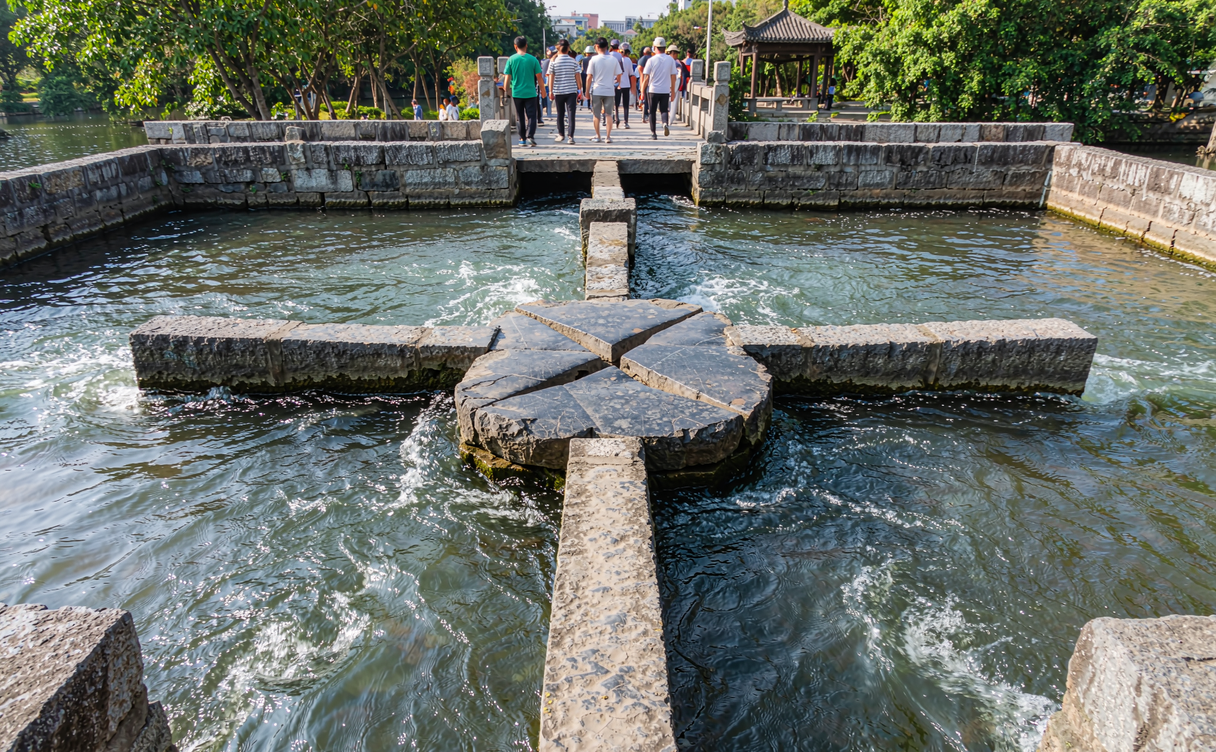
The genius of the place is something called the divided water technology. At the head of the canal sits a triangular stone weir, known locally as the “split stone” or “old nifty trick.” It looks humble, almost like a pile of rocks, but its angle and height were calculated so that roughly seventy percent of the Xiang’s water is sent north back down its own course and thirty percent is drawn south into the Lingqu canal. That ratio keeps the canal navigable without starving the original river. Standing on the weir, you can watch the current split with your own eyes, and it is genuinely one of those moments where two millennia of engineering feel immediate and physical. The Lingqu canal divided water technology is the reason the whole system worked, and why it survived when so many other ancient canals silted up and vanished.
Getting there is easier than you might think. The town of Xing’an sits about 65 kilometers north of Guilin, and the canal runs right through its center. The most common way to arrive is by bus from Guilin’s bus station, which takes roughly an hour and drops you a short taxi ride from the entrance. If you are driving, the highway is smooth and well signed. Trains also stop at Xing’an North, though you will still need a short hop to the old town. For the purpose of this Lingqu canal guide, the simplest plan is to base yourself in Guilin for a few days, explore the city and the river, and make Xing’an a relaxed half-day or full-day side trip. Knowing how to get to Lingqu canal from Guilin is mostly a matter of picking a morning bus and leaving the afternoon open, because once you are there the pace slows to a stroll.
The entrance fee is modest, especially compared with the region’s headline sights. Current Lingqu canal Xing’an tickets usually run to a small combined price that covers the canal walk and the attached water town area, with a small discount for students and seniors. Prices change, so confirm at the gate or through your hotel, but budget a modest per-person amount and you will not be surprised. The site opens early and closes at dusk, which means a late afternoon visit gives you soft light on the water and far fewer tour groups than midday.
[CTA]Plan your trip with our custom China itineraries and let us handle the logistics.[/CTA]
Once inside, the best way to experience the canal is on foot. The Lingqu canal walking route and split stone form the backbone of any visit: you start near the divided-water weir, follow the shaded northern arm past the small bridges and the Ming and Qing era residences, then loop back along the southern channel where the water runs slower and the cafes begin. The full loop is only a couple of kilometers, so it is an easy walk even in the heat, and there is no pressure to hurry. Bring comfortable shoes, because the stone paths are uneven in places and the old town’s lanes are cobbled.
Along the way you will pass the Three Generals’ Temple, built to honor the officers who oversaw the canal’s construction, and a string of modest museums that explain the lock-free design. There were no mechanical gates here. Instead the canal relied on a series of gentle gradients and the natural split of the weir to manage water levels. It is a reminder that “smart infrastructure” is not a modern invention. The Qin engineers solved a continental logistics problem with rock, slope, and patience.
If your appetite for ancient waterways is whetted, it is worth linking this stop to the wider region. The canal sits neatly between the drama of the Li River to the south and the quieter corners of the province to the north and west. A good Guilin travel guide will help you balance the famous sights with the slower ones, and our Li River guide explains the very river system the canal feeds into. For travelers who like to keep going off the main trail, the China off the beaten path guide points to exactly this kind of underrated site, and our roundup of the best things to do in China puts the canal in the context of a longer trip.
Timing matters more than people expect. The best time to visit Lingqu canal is spring and autumn, when the weather is mild and the surrounding fields are green or golden. April and May bring lush vegetation and comfortable temperatures, while October and November offer clear skies and the start of the harvest season. Summer is workable but hot and humid, and the midday sun on the open water can be relentless; if you go then, aim for early morning or late afternoon. Winter is quiet and cold but beautifully empty, and the bare willows give the canal a stark, ink-painting feel that photographers love.
One practical note for history lovers: the canal is recognized as part of China’s cultural heritage and is frequently discussed in the context of early hydraulic engineering. For a deeper, authoritative look at its construction and historical significance, the background provided by UNESCO’s heritage resources is a worthwhile read before you go, since it frames the canal alongside other great works of the ancient world. You can explore the broader context of protected waterways and engineering heritage through UNESCO’s official site.
Food around the canal is simple and satisfying. Xing’an is known for river fish cooked with pickled vegetables, handmade rice noodles served in a clear broth, and the usual Guangxi love of fragrant, slightly sour flavors. The streets just outside the entrance fill with small stalls in the evening, and a bowl of noodles after your walk is the right kind of reward. Unlike the tourist restaurants in bigger cities, the places here tend to be run by families who have lived beside the water for generations.
For those building a longer Guangxi itinerary, the province has more than karst and canals. Our Yulin Guangxi travel guide covers a different slice of the region to the south, and if you are willing to travel farther, the Baise travel guide opens up the borderlands and the red-scenery canyons of the west. Pairing Xing’an with one or two of these stops turns a single canal visit into a real sense of how varied Guangxi actually is.
[CTA]Let our local team design a Guangxi route that fits the canal, the river, and your own pace.[/CTA]
To sum up the practical side of this Lingqu canal guide: give yourself at least half a day, arrive by morning bus from Guilin, buy your tickets at the gate, and walk the loop slowly. Do not rush the split stone, because that unassuming wedge of rock is the whole story. And do not skip the old town afterward, when the lanterns come on and the water reflects them in long, wobbling lines.
The Lingqu canal is not the loudest attraction in China, and it will never trend the way a mountain or a mega-city does. But for travelers who like to understand a place rather than just photograph it, it is close to perfect. You leave knowing exactly how a 2,200 year old waterway still moves water between two rivers, and you leave with the particular calm that only comes from standing beside slow, ancient, purposeful water.
[CTA]Get in touch and we will build a tailored China itinerary around the sights that interest you most.[/CTA]