

When travelers think of Guangxi, the image is usually Guilin’s misty peaks or Yangshuo’s rivers. Baise, far to the west of the region, offers a wilder, less-polished version of that beauty — deep karst gorges, emerald rivers, and terraced hillsides worked by the Zhuang, China’s largest ethnic minority. It is also a place of revolutionary memory, where a famous uprising shaped modern Chinese history. A Baise travel guide is for travelers who want Guangxi’s scenery without the tour buses, plus a genuine encounter with rural minority culture.
How to Get to Baise
Baise sits in western Guangxi, bordering Yunnan and Guizhou. The fastest approach is by air to Nanning, the regional capital, then a high-speed train west; our Nanning travel guide is the usual gateway. From Nanning, Baise is roughly two to three hours by rail. The city also connects by train to Liuzhou and, with a transfer, to the famous karst heartland covered in our Guilin and Yangshuo travel guide. If you are new to Chinese rail, our China high-speed train guide for foreigners walks through the booking process. First-timers should also read our China travel guide for first-timers before the trip.
Baise’s station is a short ride from the city center. Within the region, getting to the canyons usually means a local bus or a hired car, since the headline sights are spread across the countryside rather than clustered downtown.
Getting Around Baise
Inside the city, ride-hailing and taxis handle short trips easily, and the central hotels, markets, and memorials are close together. The real challenge is reaching the canyons and villages, which sit an hour or more into the hills. Buses run to the main scenic areas on rural timetables, while hiring a car with a driver for the day gives you the freedom to combine Tongling Canyon, Detian, and a Zhuang village without racing the clock. Book transport the evening before, carry snacks and water, and treat the countryside drives as part of the scenery rather than a chore.
Things to Do in Baise
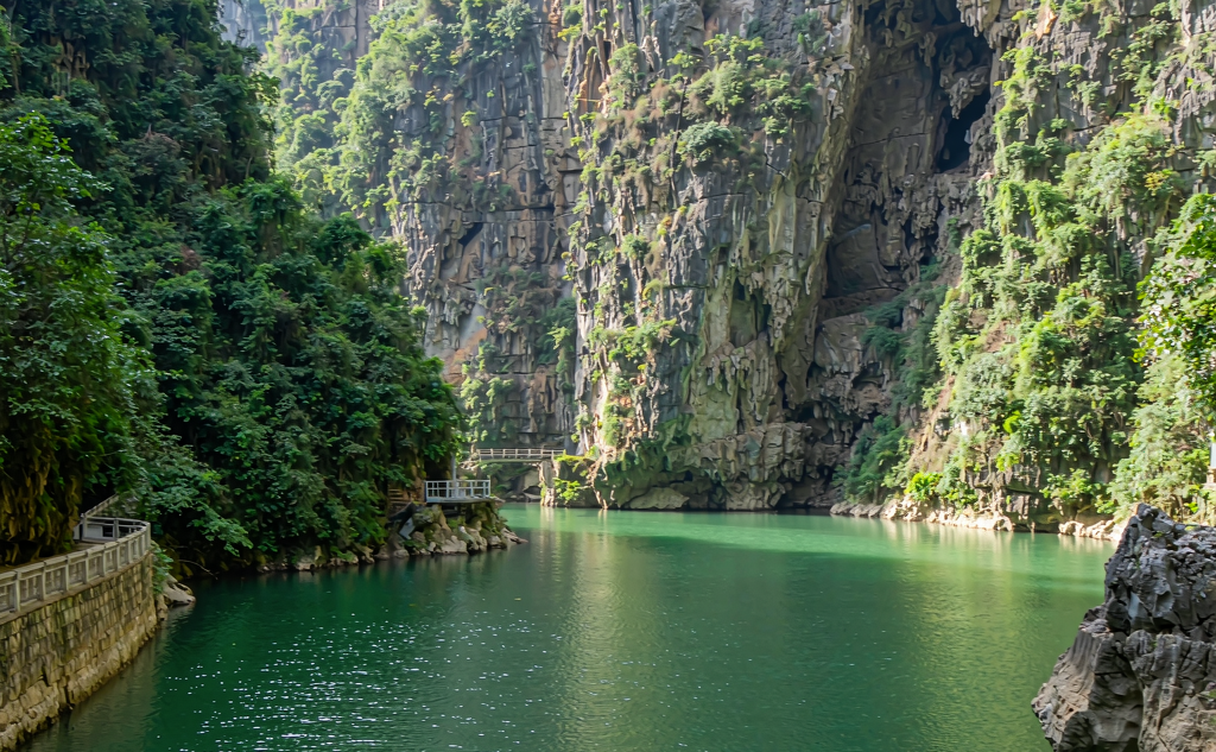
The Baise karst canyon (Tongling Grand Canyon). The region’s signature sight: a fissure in the earth where vertical limestone walls drop hundreds of meters to a hidden waterfall and a jade-green pool. Wooden walkways let you descend into the cool, misty interior. It is spectacular and, crucially, far less crowded than the marquee gorges elsewhere in China.
Detian Transnational Waterfall. Just north of Baise, near the border with Vietnam, this wide multi-tiered waterfall is one of Asia’s largest. Our Detian Waterfall guide has the practical details on reaching it and the boat rides that approach the falls. Pairing Detian with the Baise canyons makes for a memorable western-Guangxi loop.
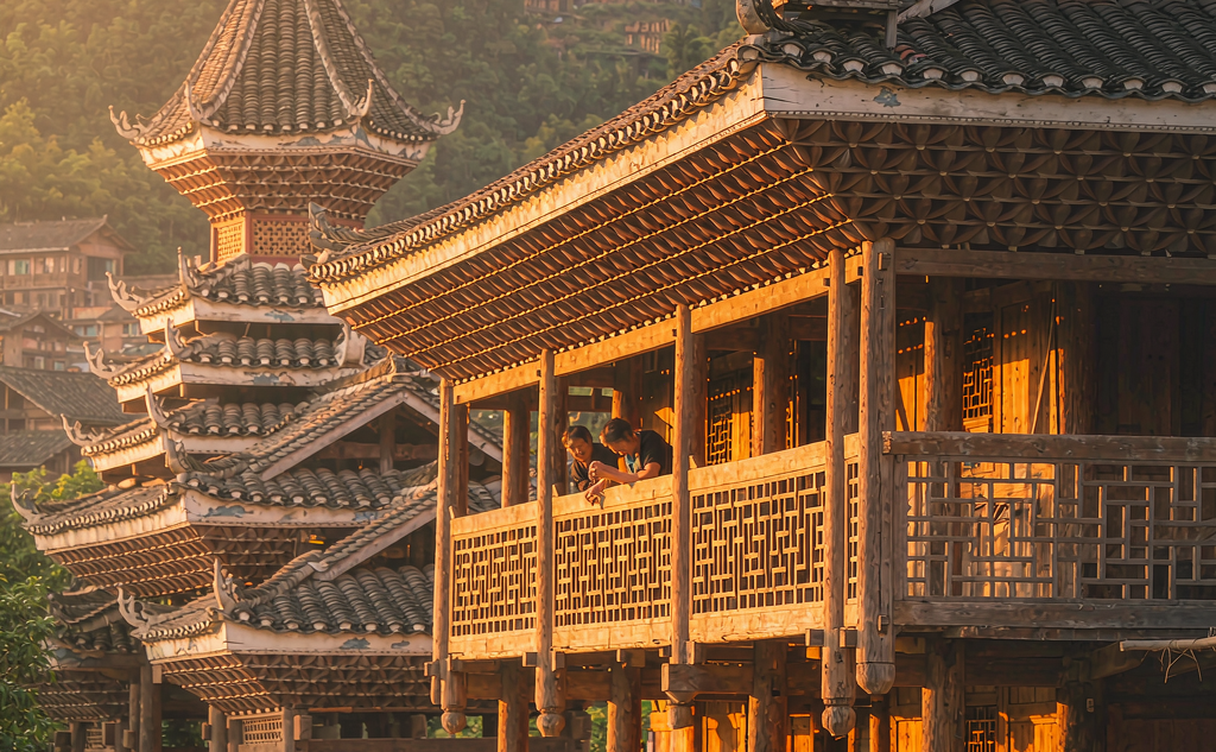
Zhuang villages and terraces. The Baise Zhuang culture is visible in the stilted wooden houses, embroidered dress, and the rhythm of rice farming on steep terraces. Visiting a village respectfully — asking before photographing people, buying local crafts, and accepting a shared meal if offered — turns a scenic stop into a human one. The heritage of the Zhuang people is described on the Zhuang people Wikipedia page.
The Baise Uprising Memorial. For history-minded travelers, the city’s revolutionary sites commemorate the 1929 uprising and the founding of a short-lived soviet. The exhibits are mostly in Chinese, but the architecture and the square give a sense of the city’s place in the national story.
Rivers and caves. Like everywhere in Guangxi, the limestone hides cave systems and slow rivers ideal for a boat ride or a quiet afternoon.
Baise Zhuang Culture: A Closer Look
The Zhuang have farmed these hills for millennia, and their traditions — polyphonic folk songs, batik dyeing, and a cuisine built on sticky rice, sour vegetables, and river fish — remain living practices rather than museum pieces. Festivals such as the “Sanyuesan” song fair bring the countryside alive with color and music, though dates follow the lunar calendar, so check ahead. Traveling here respectfully means listening more than performing, and the rewards are conversations you will not have in the big cities.
For a broader regional food and culture frame, our guides to Guilin, Yangshuo, and Liuzhou show how Zhuang and Han influences mingle across Guangxi.
Best Time to Visit Baise
The best time to visit Baise is spring and autumn. Spring brings green terraces and comfortable hiking; autumn offers clear skies, harvest scenes, and the best light for the canyon walls. Summers are hot and can be rainy, though the gorges stay cool inside. Winters are mild compared with the north but can be grey. Because Baise is rural, weather matters more than in the cities — plan outdoor canyon days around a forecast you actually trust.
A Western-Guangxi Loop
Baise works best as the wild western anchor of a Guangxi circuit. A sensible four-day shape starts in Nanning, slides west by rail to Baise, and spends day two at Tongling Canyon and a Zhuang village. Day three pushes north to Detian Waterfall for the boat ride to the foot of the falls, then lingers in a riverside county town. Return via Nanning or, if time allows, swing east toward the karst heartland around Guilin and Yangshuo for the classic mist-and-river scenery that made the region famous. Keeping the canyons and the waterfall on separate mornings avoids the rural-bus crunch and leaves room for unplanned stops at roadside fruit stalls and rice-wine makers.
What to Buy and Eat More
Zhuang craft stalls sell hand-batiked cloth, embroidered satchels, and silver ornaments made by village smiths; buying directly from a maker supports the family and gets you a fairer price than any city shop. At the table, look beyond the five-colored rice to sour-bamboo shoot hotpot, roasted river crayfish in season, and sticky rice steamed inside woven leaves. A bottle of local rice wine makes a pungent souvenir, though you should pack it in checked luggage and check your home rules on alcohol before you fly.
Where to Stay and How Long
Baise works as a two- to three-night base if you want to explore the canyons, a waterfall, and a village or two. The city itself has mid-range hotels; for the deepest scenery, some travelers stay in nearby county towns. Three days lets you do Tongling Canyon, Detian, and a Zhuang village without rushing. Add a night if you want to linger in the countryside.
Food in Baise
Baise eating is Guangxi rural: sticky rice cooked in bamboo, sour-leaf hotpot, grilled river fish, and the five-colored sticky rice that appears at Zhuang celebrations. Roadside stalls and small restaurants are the real deal — cheap, fresh, and unpretentious. If you enjoy the regional flavors, our Liuzhou travel guide introduces the famous river-snail noodles of the north, a pungent contrast to Baise’s gentler table.
Practical Tips for Visitors
Baise rewards preparation more than most stops on this list. English is rare outside the city hotels, so download offline maps and a translation app before you leave the capital. The canyons involve stair descents into humid, cool interiors, so wear sturdy shoes and bring a light layer even in summer. Mobile payment rules here too, and some village stalls take only cash, so carry a mix of both.
Transport to the outlying sights is the main planning challenge. Buses run to the main scenic areas, but schedules are rural and infrequent, so hiring a car with a driver for a day is often the smoothest way to combine the canyon, the waterfall, and a village. If you visit a Zhuang community, ask before photographing people, buy crafts directly from makers, and accept food offers graciously — these small courtesies turn a drive-by into a genuine meeting.
Why Baise Is Worth the Detour
Baise asks for more effort than Guilin, and that is the whole appeal. The canyons are raw, the villages are real, and the sense of discovery is intact. For travelers who have already seen China’s greatest hits, western Guangxi is where the country opens up again.