

Chuzhou is the kind of Chinese city that lives in a famous essay rather than on a postcard. Nearly a thousand years ago the statesman and writer Ouyang Xiu served here and, in a celebrated piece of prose, described his fondness for the local hills and a pavilion where he drank with friends — “the drunkard’s spirit is not in the wine,” he wrote, “but in the mountains and streams.” That essay, still memorized by Chinese schoolchildren, put Chuzhou on the cultural map. Today the city rewards visitors with forested peaks, a revered pavilion, and an easy escape from the nearby megacity of Nanjing. A Chuzhou travel guide is a walk into classical literature made landscape.
How to Get to Chuzhou
Chuzhou’s great advantage is proximity. It sits on the high-speed line between Nanjing and Hefei, with the former barely 20 to 40 minutes away by train. Many visitors base in Nanjing using our Nanjing travel guide and make Chuzhou a half-day or full-day outing. From Hefei, the Anhui capital, trains run in well under an hour — see the Hefei travel guide for onward links. Our China high-speed train guide for foreigners explains the booking steps if the system is new to you.
Chuzhou has two stations; Chuzhou Station serves the high-speed line and sits a short taxi ride from Langya Mountain. Local buses and ride-hailing reach the scenic areas cheaply, and the mountain trails begin close to the entrance.
Getting Around Chuzhou
Chuzhou is compact and visitor-friendly. From Chuzhou Station a taxi or ride-hailing car reaches Langya Mountain in minutes, and the scenic area’s paths are walkable once you arrive. City buses connect the station to the old quarter but show routes in Chinese only, so DiDi is the easier bet for most foreigners. If you are day-tripping from Nanjing, the same train-plus-taxi pattern works in reverse, and you can store luggage at either station if you travel light. Shared bikes are handy for the flat riverside stretches in town, and the moat loop makes a pleasant evening ride. Wear good shoes, because the mountain involves real walking on uneven stone.
Things to Do in Chuzhou
Langya Mountain (Langya Shan). The city’s green crown, this forested ridge offers shaded paths, springs, and cliff views that match Ouyang Xiu’s descriptions. It is a gentle mountain rather than a summit challenge, ideal for a relaxed hike. Our China hiking and treks guide has tips for walking trails across the country if you want to extend the theme.
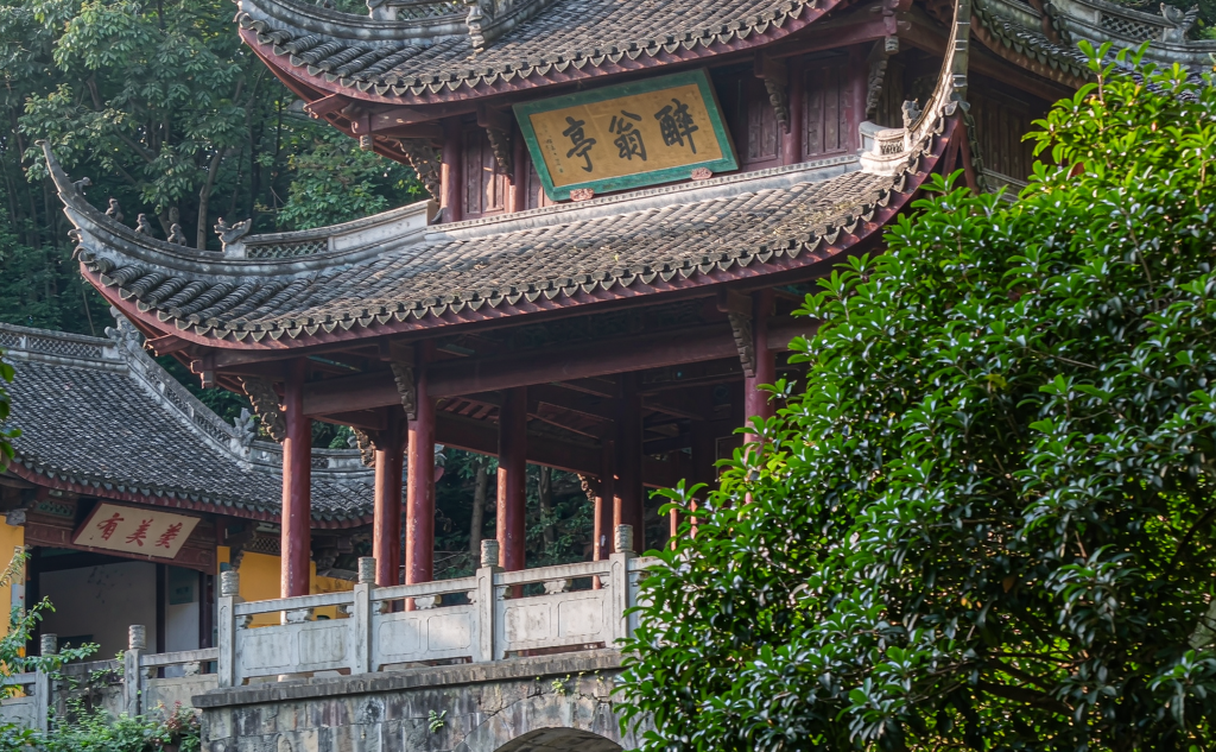
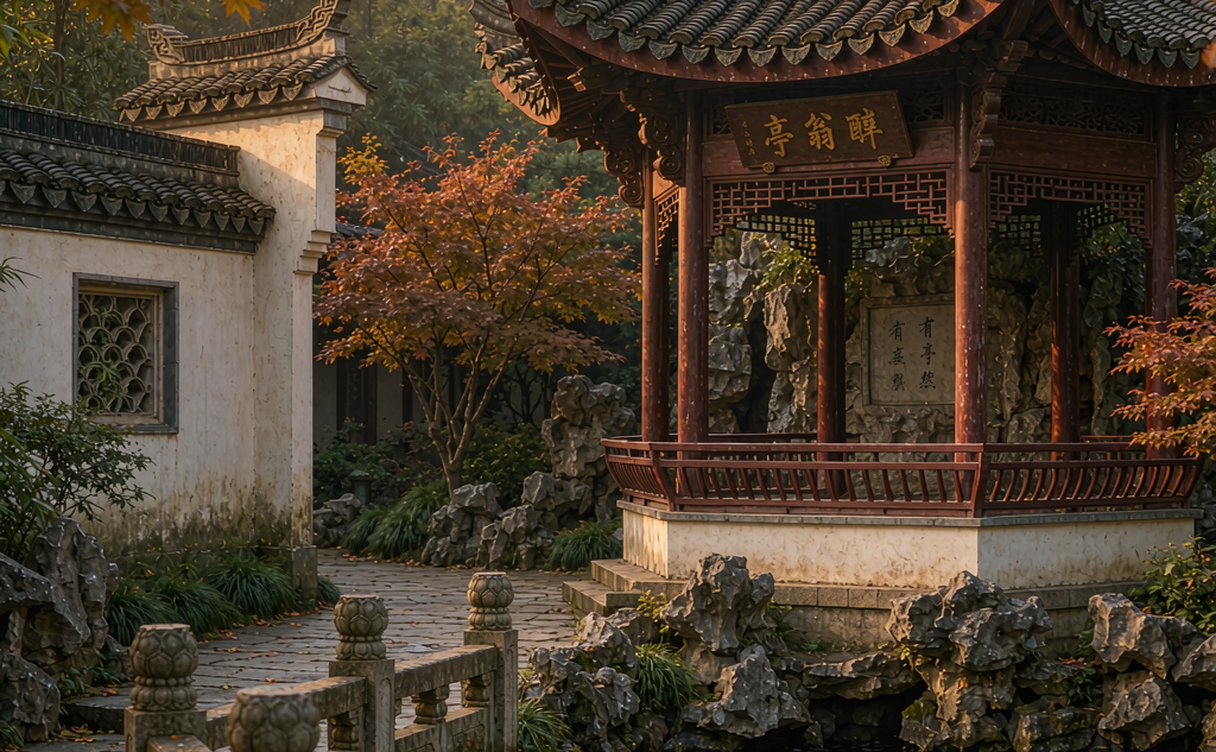
The Chuzhou Zuiweng Pavilion (Drunkard’s Pavilion). The spiritual center of any visit. Rebuilt and maintained through the centuries, the pavilion sits among trees near a stream, exactly as the essay describes. Plaques and stone inscriptions quote the original text, so even non-readers can feel the literary weight. The story of the author is told on the Ouyang Xiu Wikipedia page.
Langya Temple. A working Buddhist monastery further up the mountain, with halls, a pagoda, and quiet courtyards. The walk up passes rock formations and a clear mountain spring said to be exceptionally sweet.
The city moat and old quarter. Back in town, Chuzhou keeps a restored moat and a few old lanes where you can watch daily life and sample street food away from the tourist core.
Nearby ancient towns. The region around Chuzhou holds several preserved water towns and villages. Our best ancient towns in China guide lists options worth combining if you have extra days.
Best Time to Visit Chuzhou
The best time to visit Chuzhou is spring and autumn, when Langya Mountain is lush or golden and the hiking is comfortable. Spring brings fresh green and blooming shrubs; autumn paints the woods in red and amber and is the most photogenic season at the pavilion. Summers are warm and occasionally rainy, while winters are cold but can be beautifully still after snow. Because Chuzhou is so close to Nanjing, you can easily time your visit around good weather windows there too.
Food and Local Life
Chuzhou cooking sits on the Anhui–Jiangsu border, so it blends hearty northern Anhui flavors with the lighter touches of the lower Yangtze. Look for river fish, free-range chicken braised with local herbs, and a range of pickled and preserved vegetables that define Anhui’s famously savory “huicai” style. Street snacks — pan-fried buns, sesame cakes, and sweet soy drinks — are cheap and plentiful near the old quarter.
A practical tip: many smaller eateries are cash-friendly and have no English menu, so a translation app and the courage to point at neighboring tables’ bowls will serve you well.
Langya Mountain in Detail
The walk up Langya is the heart of any Chuzhou visit, and it rewards a slow pace. From the entrance gate a paved path climbs gently through mixed forest, crossing a small stone bridge over a spring that locals call Sweet Spring for its clear, cool taste. About twenty minutes up you reach the Zuiweng Pavilion, set among trees beside a stream exactly as Ouyang Xiu described it; arrive before ten to have the plaques and inscriptions largely to yourself. Continuing past the pavilion, the path steepens toward Langya Temple, a working monastery where the morning bell and the smell of incense mark the hour better than any clock. A side loop leads to a watching-terrace with a long view over the Anhui plain, a good spot to rest before the descent.
Side Trips and Combos
Because Chuzhou sits between Nanjing and Hefei, it pairs naturally with bigger stops. From Nanjing you can ride the high-speed line in, hike Langya, and be back for dinner by the Confucius Temple lanterns along the Qinhuai River. Travelers with an extra day might add the nearby water towns and the Ming tomb precincts that ring the old capital. If you are building a longer Anhui route, link Chuzhou with the provincial capital and then push south toward the mountains, using the rail network as your spine and the literary hills as your reward.
Where to Stay and How Long
Most visitors treat Chuzhou as a day trip from Nanjing or a one-night stop. If you stay, choose a hotel near the station or the mountain entrance. One full day covers Langya Mountain, the pavilion, the temple, and a relaxed dinner; add a second if you want to explore the surrounding ancient towns.
A Suggested Day Plan
Arrive by morning train from Nanjing, taxi to Langya Mountain, and hike up through the woods to the Zuiweng Pavilion and Langya Temple. Lunch in the foothill area, then descend to the old quarter and moat before an early-evening train back. If time allows, end the day with a riverside dinner in the city, where the moat reflects the lanterns and the pace finally slows. The whole loop is low-stress and deeply atmospheric.
What to Read Before You Go
You do not need to be a scholar to enjoy Chuzhou, but a little context transforms the visit. Ouyang Xiu’s essay “The Drunkard’s Pavilion” is short and widely translated; reading it before you stand at the pavilion turns a pretty hillside into a 1,000-year-old conversation about nature, friendship, and retirement from politics. The piece is famous in Chinese letters precisely because it finds profundity in an ordinary afternoon — wine, a stream, the company of villagers. Knowing that backstory, the pavilion stops being a photo stop and becomes a place to sit, which is exactly what Ouyang Xiu intended.
Practical Tips for Visitors
Chuzhou is easy, but a few notes help. English is minimal, so keep a translation app and your hotel’s Chinese address saved. The mountain involves moderate walking on stone paths that get slippery after rain, so wear grippy shoes. Entrance to Langya Mountain and the pavilion is bundled into one ticket; buy it at the base and keep it handy for checks. Mobile payment is standard, so set up Alipay or WeChat Pay before you travel, and carry some cash for tiny stalls. If you are day-tripping from Nanjing, book the return train early on holidays, when seats fill fast.