

I landed in Chongqing in late March 2025 and based myself within a ten-minute walk of Jiefangbei, because I wanted to feel the city’s center before I went hunting its famous staircases and fog. Jiefangbei is the name both of a slim stone monument and of the dense downtown that grows around it, a grid of malls, hotpot steam, and elevated walkways stacked over a river-valley metropolis that builds upward because it has nowhere else to go. This Chongqing Jiefangbei guide comes from four nights in the quarter, the metro lines I rode, and the prices I actually paid, and it is written for first-timers who want the center as a launch pad rather than a checkbox.
How to reach Jiefangbei
Jiefangbei sits in Yuzhong District, the thumb of land between the Jialing and Yangtze rivers, and the cleanest way in is Metro Line 1 or Line 6 to Xiaoshizi (小什字) station, a five-minute walk from the monument. Single fares ran RMB 2 to 4, and our China metro and subway guide walked me through buying a Chongqing transit card and reading the color-coded lines, which I needed because the interchange at Chaotianmen is a maze. From Chongqing North Railway Station a Line 3 plus transfer took about 35 minutes; from Jiangbei airport budget RMB 50 to 70 by metro or RMB 90 by DiDi.
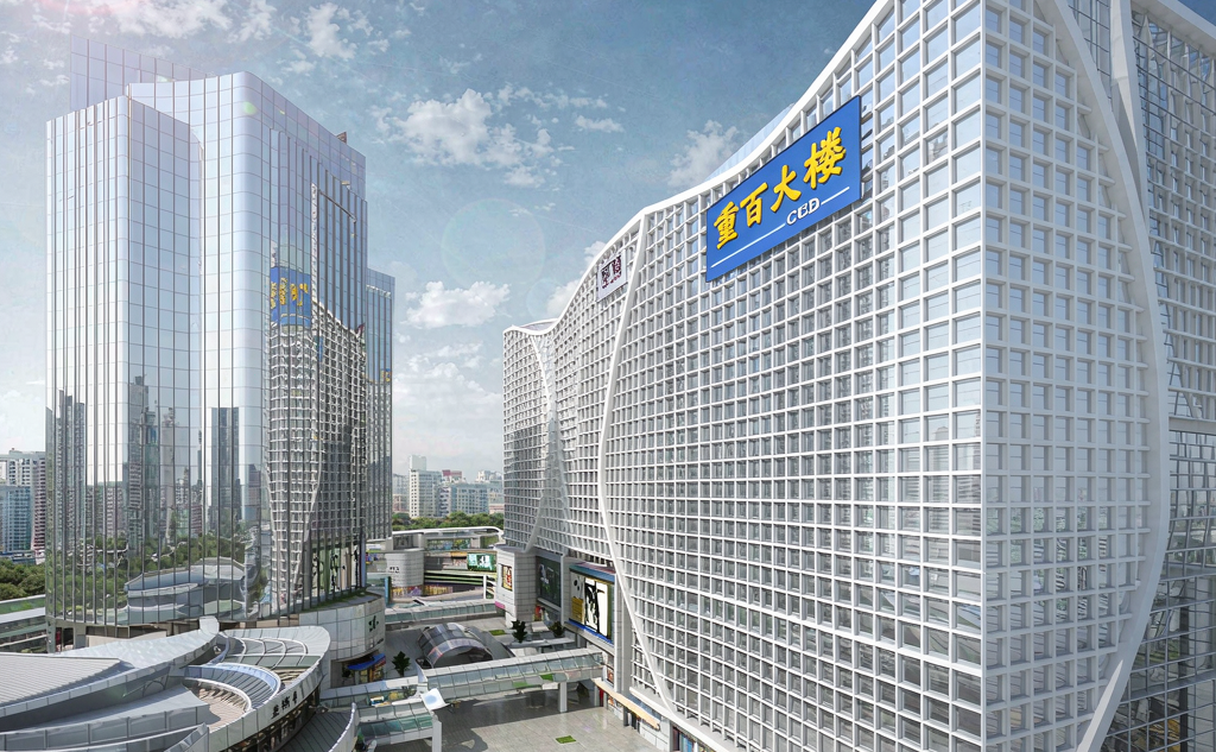
The Chongqing travel guide lays out the wider rail and hotel map; I chose a Jiefangbei hotel at RMB 320 to 520 a night so the monument was a stroll, not a commute. Downtown here means vertical: the monument plaza connects to three underground shopping levels and two elevated skywalks, and getting lost is part of the fun.
What the monument is
The Jiefangbei Liberation Monument began life in 1940 as a wooden “Spirit of Victory” pillar, was rebuilt in stone in 1947, and was renamed after 1949 to mark liberation. It is only about 27 meters tall, slim and white, and it is the rare wartime monument that also became a shopping district’s name. I circled it at every hour; by day it is a photo stop for tour groups, by night it is a neon-lit meeting point where the city gathers. As a piece of Chongqing downtown history it is modest in size but huge in meaning, and the plaque at its base explains the rename in plain terms.
For the wider context of how this river junction became a mega-city, see Chongqing on Wikipedia before you go, because the monument makes more sense once you know the wartime-capital backstory.
Things to do around Jiefangbei
The obvious free pleasure is the walk. I traced the pedestrian streets north to the Pacific Department Store and south to the river-facing terraces, stopping at the 80-meter-tall Hongya Cave replica viewpoints that peek above the rooftops. Paid fun includes the high observation decks: the World Financial Centre sky deck ticket was RMB 100 in 2025 and gave a 360-degree read of the valleys. For things to do Jiefangbei kept me busy for a full day: the Chongqing Planning Exhibition Hall (RMB 30) maps the whole crazy topography, and the People’s Liberation Monument square at night is a show in itself.
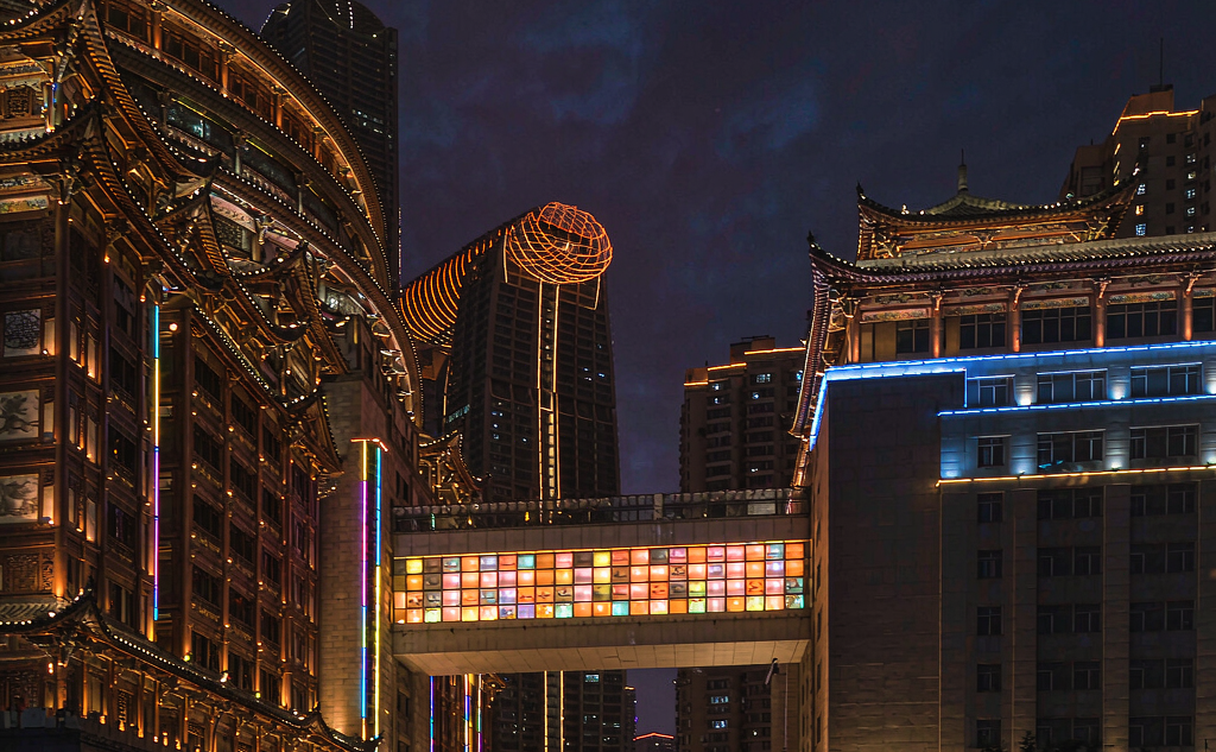
A short walk or one metro stop east brings you to Chongqing Hongyadong, the stilt-house complex that lights up like a fairy tale after dark; I went twice, once for photos and once for dinner. If you want older stone rather than neon, the Chongqing Ciqikou old town guide covers the riverside Ming-era lanes a metro ride west, and I paired it with a Jiefangbei morning for the full old-and-new contrast.
Shopping and the malls
Chongqing shopping around Jiefangbei is serious. The metro-level malls run three deep, with local brands and global chains side by side, and I picked up a Chongqing-print tee for RMB 59 and a bag of choke-pepper for RMB 25. The underground Pacific and the ground-level department stores are air-conditioned relief in the humid spring, and the pedestrian streets above are where the city’s youth parade on weekends. Bargaining is light here compared with tourist markets; prices are tagged, and I found the experience closer to a European high street than a bazaar.
For the evening food hunt, the China night markets guide explains how to read a Chongqing street-food row, because the stalls ringing Jiefangbei after 8 p.m. are where I ate cheapest and best: a skewer of grilled squid for RMB 6, a bowl of 小面 noodles for RMB 10, and a cup of 冰粉 sweet jelly for RMB 8.
The monument plaza also doubles as a staging point for the rest of the city. From here I caught the early river ferry (RMB 5) across to Nanbin Road for a skyline photo back at the tower, and the same plaza is where the airport shuttle buses and the late DiDi drivers loiter, so learning its corners saved me time on all three of my exit days. If your legs tire, the escalator at the north end of the pedestrian street is the easiest way back up to the metro without facing the stairs in the heat.
Eating the center: hotpot and noodles
You cannot write a Chongqing Jiefangbei guide without the hotpot. I ate at a mid-range spot two blocks off the plaza and paid RMB 110 per person for a nine-grid beef tallow pot with offal, greens, and a beer; the Chongqing hotpot guide lists the broth strengths and dipping rules I wished I had read first, because “medium spicy” here still made me sweat. The morning 小面 breakfast noodle ran RMB 8 to 12 at a hole-in-the-wall by my hotel, and that daily bowl became my ritual.
How to visit Jiefangbei on a food budget is simple: skip the monument-view restaurants, walk two streets back, and let the steam lead you. The center rewards the curious eater far more than the careful planner, and the best bowl I had was from a stall with no English sign and a queue of locals.
A practical downtown plan
I built my days as center-out. Morning: monument, planning hall, and a 小面 breakfast. Afternoon: one big sight (Hongyadong or a river cable car, RMB 30 one way). Evening: dinner in the quarter, then the lit streets and a riverfront walk. The Yangtze cable car from near Jiefangbei gave me the classic cross-river shot for RMB 30, and the riverfront steps below the monument were my quiet escape from the mall noise.
I spent roughly RMB 400 a day in the center counting food and one paid deck, not counting the hotel. Wear real walking shoes; the hills and stairs between levels are no joke, and the humidity in March already had me peeling by noon. The monument is your compass: every local knows it, so “near Jiefangbei” gets you home in a DiDi when the metro closes.
Chongqing Jiefangbei is loud, vertical, and a little overwhelming, and that is exactly why I keep sending people to it first. It is the city’s dial turned to max: hotpot steam, mall light, and a slim white monument that remembers harder times. Spend two nights at its feet, learn the metro, and the rest of mountainous Chongqing suddenly makes sense, which is the best thing any city center can do for a traveler.