

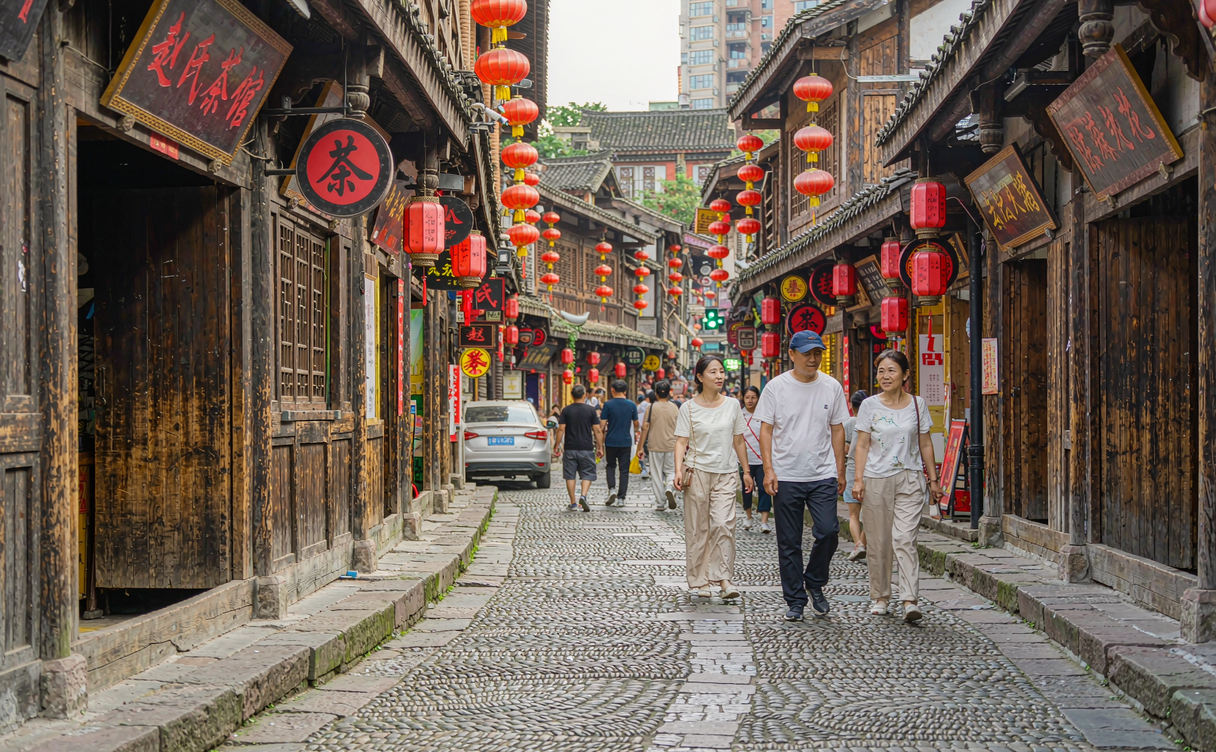
Tucked into the western edge of Chongqing, where the Jialing River bends past the city, lies a maze of stone lanes, timber shops, and teahouses that has survived for more than a thousand years. This is Ciqikou Ancient Town, one of the best preserved examples of a Chongqing old town and a living window into the river-port culture that built this sprawling metropolis. While Chongqing is famous today for its futuristic monorail and neon skyline, a walk through Ciqikou slows everything down. Here the past is not behind glass; it is in the steam of a teahouse, the clatter of a mahjong tile, and the smell of sizzling street snacks.
If you are planning a trip, this Ciqikou Ancient Town guide will help you understand its history, plan your route, and make the most of your visit. It sits comfortably within a half-day trip and pairs well with the rest of your Chongqing and Sichuan itinerary.
A Brief History of the Old Port
Ciqikou began life during the Song Dynasty as a modest riverside settlement. Its name, which translates loosely to “porcelain port,” reflects its original role: the town sat near kilns that produced fine porcelain, and the Jialing River carried those wares downstream to the Yangtze and far beyond. For centuries the wharves here bustled with merchants, boatmen, and scholars. The waterway was the highway of its age, and Ciqikou was a crucial stop.
The town we walk today was largely shaped during the Ming and Qing dynasties. The narrow lanes, the sloping tiled roofs, and the carved wooden facades all date from that era. What makes Ciqikou special is that it was never abandoned. Unlike many historic sites that became museums, people kept living, trading, and celebrating here. That continuity is why a Ciqikou travel tips list always starts with the same advice: come for the buildings, but stay for the atmosphere.
During the Second World War, when Chongqing served as the wartime capital, Ciqikou offered relative shelter and became a gathering place for artists and intellectuals. Their footprints are still honored in small museums and former residences tucked along the side alleys.
How to Get to Ciqikou
The good news for visitors is that the old town is remarkably easy to reach. The most reliable method is the Chongqing metro. Take Line 1 to Ciqikou Station, and you will exit a short walk from the main entrance. The ride from the city center takes roughly forty minutes, costs only a few yuan, and spares you the city’s notorious traffic.
If you prefer a taxi or ride-hailing app, simply enter “Ciqikou Ancient Town” as your destination. Drivers know it well. Keep in mind that the approach roads can clog on weekends and holidays, so build in extra time. A scenic alternative is to combine your visit with a riverfront stroll along the Jialing, though that works best in cooler months.
For those who want to understand how to get to Ciqikou without stress, the simple answer is the metro. It runs frequently, is inexpensive, and drops you right at the gate. Once inside, the town is entirely pedestrian, so comfortable shoes are the only transport you need.
Best Time to Visit Ciqikou
Timing shapes the experience more than almost anything else. The best time to visit Ciqikou is on a weekday morning, ideally in spring or autumn. Chongqing’s summers are famously hot and humid, while winters are damp and gray, so the shoulder seasons offer the most pleasant walking weather.
Mornings are calm. The teahouses are opening, the bakers are pulling the first batches of mahua (a sweet fried dough), and the light slants through the alleys in a way photographers love. By midday on a weekend, the main street can feel shoulder-to-shoulder. That is not necessarily bad if you enjoy lively markets, but travelers seeking quiet should plan around it.
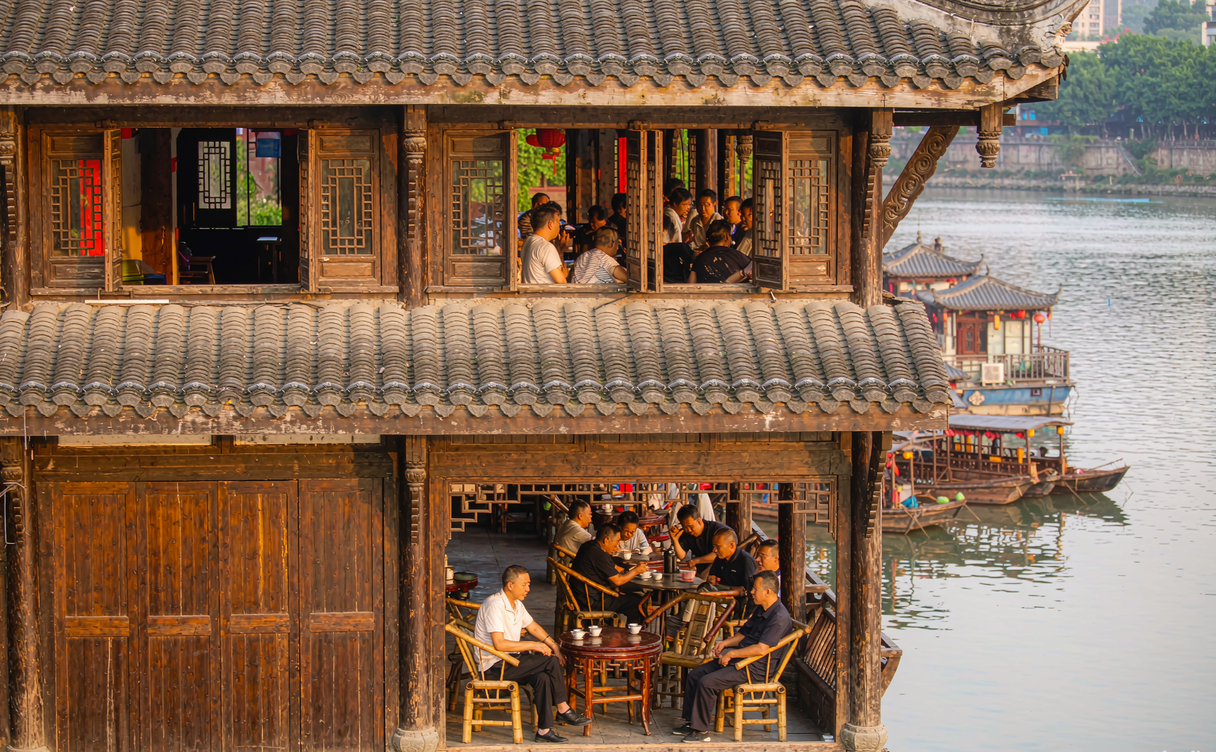
Evenings bring a different mood. Lanterns glow over the water, and the riverside bars and teahouses fill with locals. A late afternoon visit that lingers into dusk gives you both the calm of day and the charm of night in a single trip.
What to See and Do
The heart of Ciqikou is its single main street, which branches into a dozen smaller lanes. Do not rush straight through. The side alleys hide the town’s real character: tiny workshops, calligraphy studios, and courtyards where elders play cards.
Start at the central thoroughfare and work outward. Look for the old stage where traditional opera is sometimes performed, and the small temples where locals light incense. The Baolun Temple, set on the hillside, rewards a short climb with a quieter view over the rooftops and river.
Food is a major draw. Ciqikou is known for its snacks: sesame candy, spicy tofu, grilled fish, and the aforementioned mahua. Many shops offer free samples, so grazing your way through is part of the fun. For a proper break, settle into a riverside teahouse, order a pot of jasmine tea, and watch the water move. This slow ritual is the soul of the place.
Ciqikou vs Hongyadong
Many first-time visitors confuse the two most famous old-style spots in Chongqing. The honest comparison of Ciqikou vs Hongyadong comes down to authenticity and scale. Hongyadong is a dramatic stilt-house complex built against a cliff in the city center. It is spectacular, photogenic, and largely a modern reconstruction styled after traditional architecture.
Ciqikou, by contrast, is a genuine historic town with roots going back centuries. It is larger, quieter in pockets, and far more rooted in everyday local life. Hongyadong is a single dramatic viewpoint best enjoyed at night; Ciqikou is a place to wander for hours. If your schedule allows only one, choose based on your interest: nightlife spectacle favors Hongyadong, cultural depth favors Ciqikou. Most travelers happily do both.
Ciqikou Travel Tips
A few practical pointers will smooth your visit. Wear comfortable walking shoes; the lanes are uneven stone. Bring cash as well as a payment app, since some small vendors still prefer notes. Arrive hungry, because the snack trail is endless. Pace yourself and drift off the main street early, where the crowds thin and the real town emerges.
Photography is welcome, but ask before snapping portraits of locals. The town is free to enter, which makes it an easy, low-risk addition to any Chongqing plan. If you want a guided context, local tours often combine Ciqikou with nearby river viewpoints and the Three Gorges Museum in the city center.
For travelers using Chongqing as a base, pairing the town with a side trip to Sichuan is natural. You can read more about regional planning in our best hotels in Chongqing guide, which covers where to stay before heading out to the surrounds.
Pairing Ciqikou with Chengdu
Chongqing and Chengdu sit a couple of hours apart by high-speed train, making a combined trip very practical. After soaking up the river-port history of Ciqikou, many visitors continue to Chengdu for pandas, poetry, and famously fiery food.
If that route appeals, our Chengdu food guide explains the dishes you should not miss, while the Chengdu hotpot guide prepares you for the city’s signature broth. Culture lovers can visit the Chengdu Dufu Cottage, the restored home of a great Tang poet, and families often enjoy the Chengdu Dujiangyan Panda Base. When it is time to sleep, the best hotels in Chengdu roundup helps you pick a neighborhood.
Ciqikou makes a perfect gentle introduction to the region’s layered history before the bigger cities and their headline sights.
Planning Your Visit
Ciqikou rewards a loose plan. Give yourself at least three hours, though a leisurely half day is better. Combine it with a riverside walk, a teahouse rest, and a snack crawl, and you will leave with a real feel for how Chongqing grew from a port into a megacity.
For official background on Chongqing’s cultural sites and tourism, the city’s information is summarized by Travel China Guide at Travel China Guide: Chongqing, a useful reference when checking opening details and seasonal events.
Whether you are a history buff, a foodie, or simply someone who enjoys getting lost in old lanes, Ciqikou Ancient Town delivers. It is proof that the most memorable parts of a modern Chinese city are often its oldest streets.
Planning your Chongqing stay? Our best hotels in Chongqing guide helps you pick the right base for your old-town adventures.
Want to add Sichuan to your trip? Our Chengdu food guide maps out the dishes worth crossing the province for.
Ready to meet the pandas? The Chengdu Dujiangyan Panda Base is an easy add-on after your Ciqikou visit.