

Chongqing is a city built on hills where the Yangtze and Jialing rivers meet, and its hotels are famous for vertical lobbies, rooftop pools, and windows that frame the fog and the bridges. This guide to the best hotels in Chongqing compares riverfront towers, mountain-view stays, and practical neighborhood advice for every budget. Whether you arrive for the spicy food, the wartime history, or the surreal metro that passes through buildings, where you stay shapes the whole trip.
Content Preview
Below you will find the best time to visit, detailed advice on how to reach Chongqing by air and high-speed rail, and a neighborhood-by-neighborhood look at where to stay in Chongqing. We compare luxury hotels in Chongqing with comfortable budget hotels in Chongqing, share essential Chongqing hotel tips, and help you decide on the best area to stay in Chongqing for your travel style. A two-day sample itinerary ties the recommendations together, and the FAQ answers the questions first-time visitors ask most.
Best Time to Visit Chongqing
The most comfortable months are spring, from March to May, and autumn, from September to November, when temperatures are mild and the famous Chongqing fog lifts enough to reveal the river valleys. Summer is hot and humid, often above 35 degrees, though the city’s air-conditioned malls and night-cruise boats make it bearable. Winter is cool and damp but rarely freezing, and hotel rates dip outside the holiday weeks. If you want the glowing skyline at its best, visit after dark in late autumn, when the humidity keeps the lights soft and the Hongyadong stilt houses glow against the water. The spring flower shows in the riverside parks are another good reason to time a trip around April.
Month by month, March and April are best for mild walks between the viewpoints, May warms toward summer, September and October bring the clearest skies and the most comfortable evenings, and November is the sweet spot for photography without the summer haze. Winter offers the lowest rates and the fewest crowds, while the July and August holiday period is busy and hot, so plan pool time and indoor attractions then. Pack light breathable clothing in summer and a warm layer in winter, because the hills trap both humidity and chill in ways that surprise first-time visitors.
How to Get There
Chongqing is a major aviation and rail hub in southwest China, with an international airport connected to the center by metro line 3 and airport buses. High-speed trains link Chongqing to Chengdu in about 75 minutes, making a combined Sichuan Chongqing route very easy to plan. From the main railway stations, taxis and metro reach the riverside districts in 20 to 50 minutes depending on the hills and the traffic. For a deeper planning resource, see our Chongqing travel guide, which covers stations, tickets, and suggested day trips.
Where to Stay in Chongqing
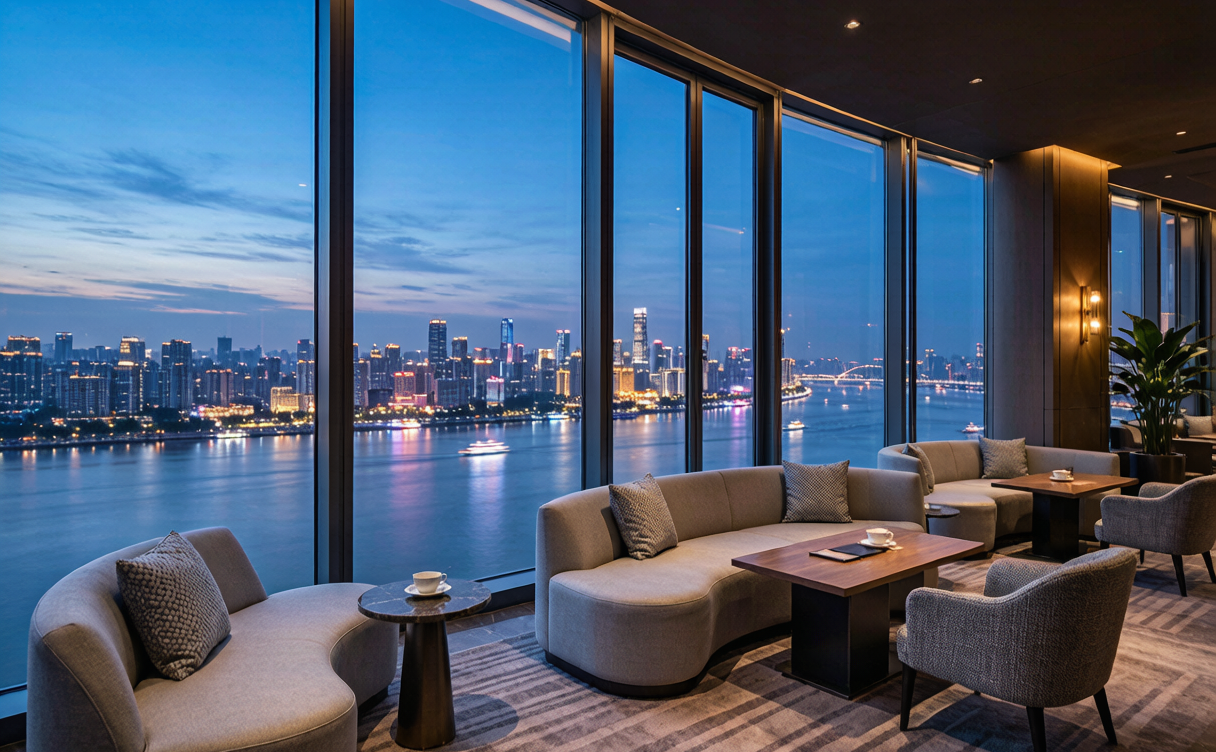
Choosing the best area to stay in Chongqing depends on the views you want. The Jiefangbei and Chaotianmen area, near the confluence of the two rivers, is ideal for first-timers who want skyscraper hotels, shopping, and easy access to the Hongyadong lit stilts. The Nan’an side across the river offers quieter high-rises with panoramic windows toward the lit skyline, while the Ciqikou old town area suits travelers who prefer a walkable historic lane close to a metro stop.
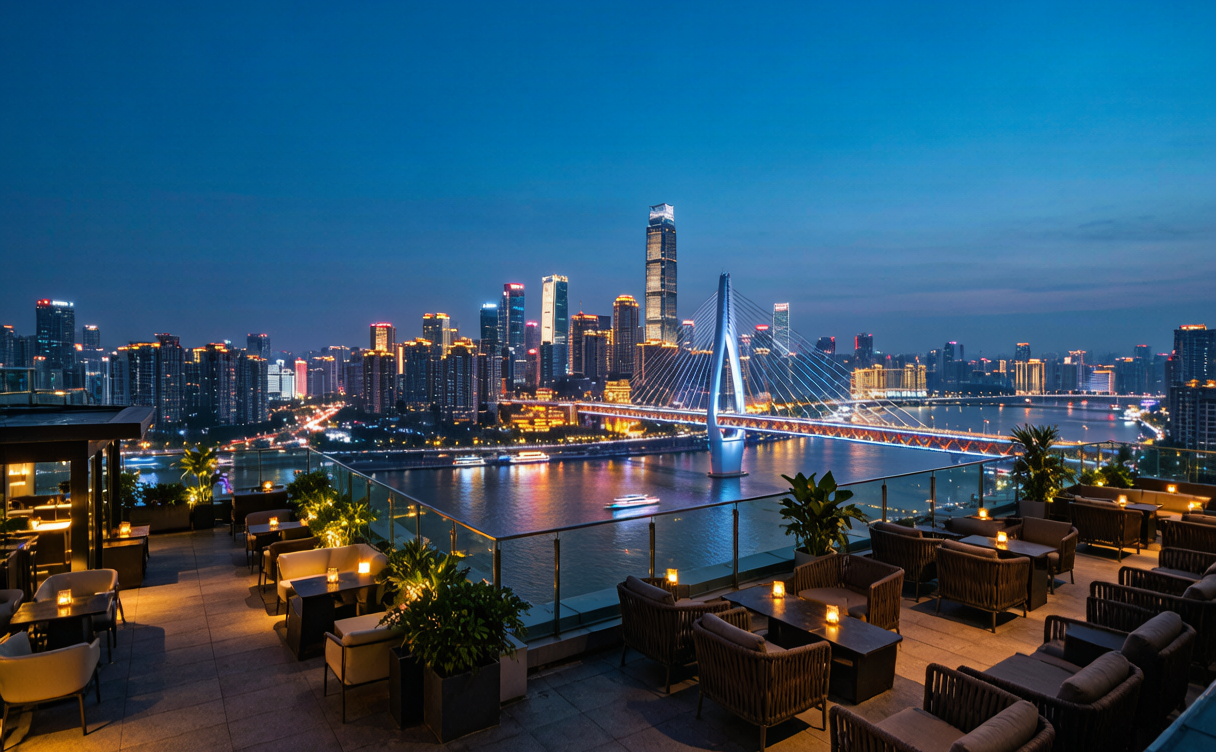
For travelers who want indulgence, luxury hotels in Chongqing occupy landmark towers with rooftop bars, infinity pools, and club lounges that look straight down the Yangtze. On the other end of the spectrum, budget hotels in Chongqing cluster near the railway stations and university districts, offering clean, compact rooms from well-known Chinese chains at a fraction of the price of the landmark towers. Mid-range travelers will find riverside boutique hotels and apartment-style stays that capture the vertical-city feel without the premium nightly rate, which is a sensible choice for longer stays.
A few Chongqing hotel tips worth remembering will save you money and stress. Ask for a high floor, because the lower levels can be noisy from the streets and the hills block river views. Confirm whether the hotel sits near a metro station, since Chongqing’s topography makes walking longer than it looks on a map, and pack light if you plan to use the famously steep stairways. For a wider regional plan, our Chengdu travel guide and Guiyang travel guide pair well with a Chongqing base. The city’s dramatic setting is summarized well by the China Highlights Chongqing guide, which maps the districts and the river crossings.
As a rough guide, landmark riverfront suites start at high-season rates that rival international luxury brands, while a clean budget room near the station can be a modest nightly sum that leaves plenty for hot pot and cable cars. Book through both major international platforms and Chinese apps, and save a screenshot of your confirmation, because some hillside properties use phone-only check-in that can confuse arrivals. Expect small bathrooms in older towers and excellent gyms in the new ones, and ask about the club lounge if you want evening snacks with a skyline view without booking a second restaurant.
Sample Itinerary
Day 1: Check in to a riverside tower in the morning, then ride the metro to Ciqikou old town for tea and snacks along the lane. In the evening, walk to Hongyadong for the lit stilts and take a night cruise on the Jialing river to see the skyline from the water.
Day 2: Visit the Three Gorges Museum and the People’s Liberation Monument, ride the cable car across the Yangtze, and finish with hot pot near your hotel. If you have a third day, take the high-speed train to Chengdu for pandas and Sichuan cuisine before returning to the hills.
Getting around is easier than the hills suggest once you trust the metro, which links the stations, the old town, and the riverfront without the traffic. Taxis are cheap for short hops, but build in extra time because the road network folds over itself in three dimensions and a straight-line map distance can mean a long drive. Many hotels offer a river-view walking map at check-in, and the night cruise kiosks near Chaotianmen sell combined boat-and-dinner packages that remove the planning from an evening on the water.
Frequently Asked Questions
Is Chongqing worth staying overnight, or just a stop on the way to Chengdu?
Staying at least two nights is strongly recommended. The skyline, the night cruises, and the mountain-light views are the city’s signature experience that a quick transfer misses entirely.
Are the luxury hotels in Chongqing expensive?
They range widely. Landmark riverfront towers command premium rates, but many mid-range hotels adopt the vertical-city design at moderate prices, so our Chongqing hotel tips above help you choose within your budget.
What is the best area to stay in Chongqing for first-time visitors?
The Jiefangbei and Chaotianmen area, near the river confluence and the Hongyadong stilts, is the most convenient base for a first visit and the easiest place to reach the main sights.
When should I book to get the best hotels in Chongqing at a fair price?
Reserve one to two months ahead for spring and autumn, and avoid the October holiday week if you want lower rates and open availability across the riverfront towers.
This article was last reviewed and updated on August 21, 2026, by the chinatravelplaces.com editorial team.