

Buy a ¥6,000 jade bracelet in Shanghai and roughly ¥540 of that is refundable when you fly home — if you asked for the right piece of paper at the till. The China tax refund for tourists scheme has been running since 2015, has been expanded steadily, and by 2026 covers every province and a growing list of city-centre shops offering the money back on the spot. It is also the single most commonly missed money-saver in Chinese travel, because almost nobody tells you about it at the point of sale.
This guide covers who qualifies, the exact counter-by-counter routine, what you actually receive after fees, and what to do when a refund is refused.
How the Scheme Works
China levies value-added tax on goods, generally at 13% for most retail items. Departing overseas visitors can reclaim part of that on qualifying purchases taken out of the country unused.
The headline figures to plan around:
- Refund rate: 11% of the tax-inclusive price on standard-rate goods
- Agency handling fee: 2% of that price, deducted automatically
- Net refund you receive: approximately 9% of what you paid
- Minimum spend for China tax refund claims: ¥500 (about US$70) in a single shop on a single day, on one invoice
- Departure deadline: goods must leave China within 90 days of purchase
- Cash payout cap: raised in recent policy rounds — cash above the limit is paid to a card or wallet instead
On a ¥6,000 purchase, that means roughly ¥540 back, or about US$75. On ¥20,000 of shopping, around ¥1,800 — US$250. The China tax refund rate 2026 visitors encounter has been adjusted several times since 2024 as the scheme widened, so treat these as planning figures and verify the current official rules before a large purchase.
Not everything qualifies. Excluded categories typically include goods already subject to a separate export refund, items you have consumed or used in China, and anything on the prohibited-export list. Food eaten, hotel bills, restaurant meals and services are not refundable — this is a goods scheme only.
Who Qualifies
You are eligible if you are a foreign passport holder, or a resident of Hong Kong, China, Macau, China, who has stayed in mainland China for fewer than 183 consecutive days at the time of purchase. You must depart from a designated exit port — all major international airports qualify, as do a growing number of land and sea ports.
Two constraints catch people. First, the buyer’s name on the tax refund form must match the passport used at departure; you cannot claim on a friend’s receipt. Second, the goods must physically be with you, unused and in original packaging, at the point of departure. If you post your purchases home instead, you forfeit the refund entirely — so decide between mailing that tea set and claiming the tax back, because you cannot do both.
How to Fill a China Tax Refund Form in the Shop
This is where the process succeeds or fails. The airport counter can only process what the shop gave you.
Step 1 — Find a participating store. Look for the blue-and-white “Tax Free” or 退税商店 decal at the entrance or till. Department stores, brand boutiques, silk and jade specialists, electronics chains and duty-listed pharmacies in major cities are widely enrolled. Smaller independent shops and markets usually are not.
Step 2 — Ask before you pay. Say “退税” (tuì shuì) or “tax refund” at the counter. Some stores process refunds at a separate service desk on another floor, and they will not retro-fit a form after the transaction closes.
Step 3 — Hand over your passport. The original, not a photocopy and not a photo on your phone. Staff scan the biodata page and your entry stamp.
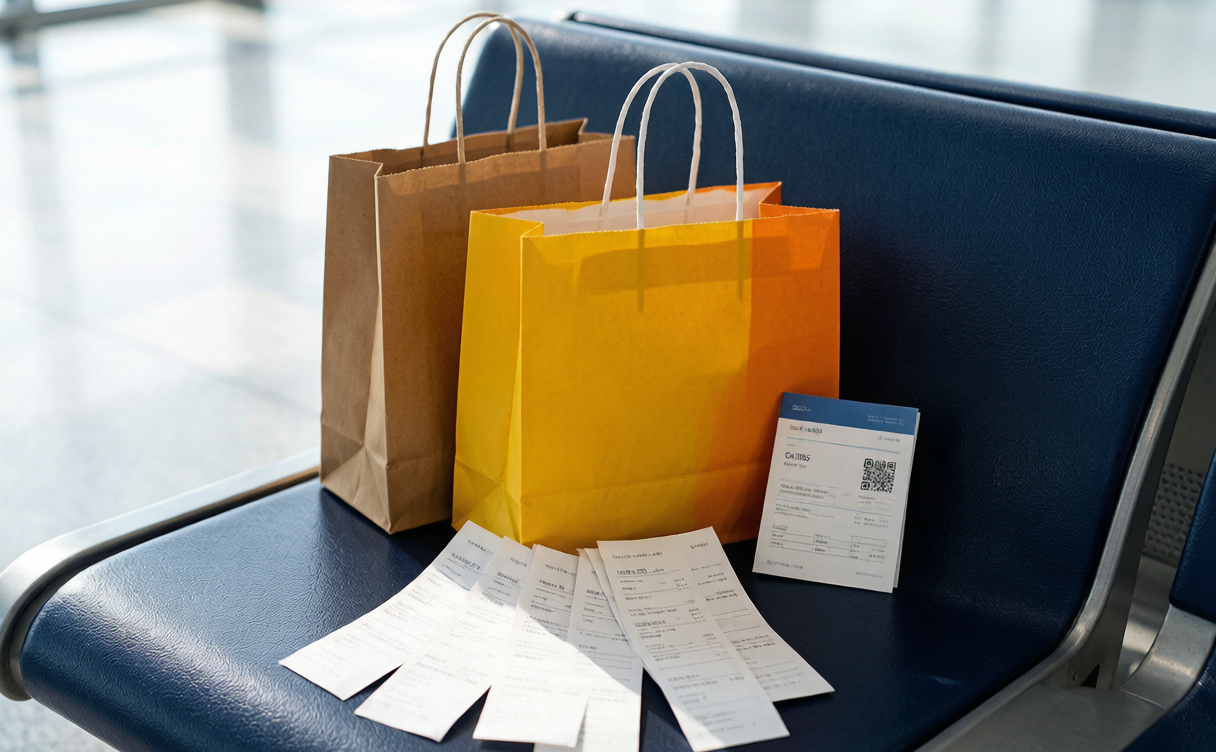
Step 4 — Check the form before you leave the counter. You should receive a Tax Refund Application Form plus the official VAT invoice (发票, fāpiào) and the sales receipt. Verify: passport number, full name spelled exactly as printed, purchase date, item description, and the amount. A single transposed digit is the most common reason refunds are rejected.
Step 5 — Keep everything together. Staple the form, invoice and receipt, and put them somewhere you will not repack. You need all three at the airport.
Instant Refund in the Store
The bigger change of recent years is the instant tax refund China shops now operate (即买即退), piloted in Beijing and Shanghai and then rolled out nationwide. Instead of waiting until departure, you get the money at the till.
How it works: you complete the purchase, present your passport, and the store issues the refund immediately — in cash or to your card. In exchange, you give a credit card pre-authorisation as a guarantee, typically for the refund amount. You then have a fixed window (commonly around 20 to 25 days, and you must depart within the standard 90-day rule) to present the goods and the paperwork at the departure port. Validate correctly and the hold is released. Fail to validate, and the guaranteed amount is charged to your card.
Instant refund is excellent if you are buying early in the trip and want the cash to spend. It is a bad idea if there is any chance you will use the item, gift it, or ship it home. Note that the pre-authorisation requires an international credit card that supports holds — debit cards are often declined. Setting up mobile payments before you travel makes the whole shopping experience simpler; our guide to Alipay and WeChat Pay for foreigners covers binding an overseas card, and if you still want a cash buffer, do you need cash in China has the current answer.
At the Airport: The Departure Routine
Allow an extra 60 to 90 minutes on top of your normal check-in buffer. This is not optional at Beijing, Shanghai or Guangzhou during peak season.
| Step | Where | What happens |
|—|—|—|
| 1. Customs verification | Before check-in, landside | Officer inspects goods, stamps the refund form |
| 2. Check in | Airline counter | Bag the goods only after the stamp |
| 3. Security and immigration | As normal | — |
| 4. Refund counter | Airside, after immigration | Submit stamped form, receive payment |
The order matters enormously. Customs verification happens before you check your luggage, because the officer may ask to see the physical goods. If you check the bag first, you cannot produce them, and the form will not be stamped. Find the 退税 / Tax Refund customs desk in the departure hall — at large airports it sits near the check-in islands and is signposted in English.
At the China VAT refund departure airport counter, which sits airside after immigration, hand over the stamped form, invoice, passport and boarding pass. Payment options are cash in renminbi (subject to the cap), credit card refund, or transfer to a mobile wallet. Card and wallet refunds typically land within 7 to 15 working days; cash is immediate but capped.

When You’re Refused, and How to Fix It
“The form has an error.” Minor spelling issues are sometimes accepted at the officer’s discretion; wrong passport numbers usually are not. If you are still in the city, return to the shop — they can reissue. At the airport, it is generally too late.
“You’ve used the item.” Worn shoes, opened cosmetics and unsealed electronics can all be rejected. Leave tags and seals intact until you are home.
“You’re past 90 days.” No remedy. Track your purchase dates if you are on a long trip.
“The counter is closed.” Refund desks at smaller airports keep limited hours and may close overnight. On a 6am departure, check the previous evening. Some ports allow you to post the stamped form for a later card refund — ask at the customs desk.
“You didn’t spend enough.” The ¥500 threshold applies per shop, per day, per invoice. Consolidate purchases in one store on one visit rather than spreading them out.
If the refund is denied at the counter, ask for the reason in writing and the contact details of the refund agency. Claims can occasionally be resolved afterwards by correspondence, but the odds are poor.
Common Pitfalls Checklist
- Checking your luggage before getting the customs stamp
- Leaving your passport in the hotel safe on a shopping day
- Buying at three shops in the same mall and missing the ¥500 threshold at each
- Opening packaging “just to look” on the flight day
- Assuming markets and small independents participate
- Arriving with 90 minutes to spare at an airport in July
Budget-wise, treat the refund as a bonus rather than a discount you can count on — our China daily travel budget breakdown assumes you pay the sticker price, while the China luxury travel guide is where the purchases large enough to make the paperwork worthwhile tend to happen. If you are planning a serious shopping trip, read what to buy in China first, and check the current thresholds and eligible port list on the State Taxation Administration website, since the details have moved more than once.
For everything else that surprises first-time visitors — payments, apps, etiquette and paperwork — start with our list of things to know before visiting China.