

China protects its wild places on a scale most visitors have no idea about: well over a thousand designated nature reserves on the mainland, and since 2021 a parallel system of national parks. Together they hold a large share of the surviving snow leopards, red pandas, cranes, and giant pandas. This China nature reserves guide is the overview we hand to readers who want the wild side of the country but do not know where to start — the best sites sit from sea level to 5,000 metres, and one trip rarely covers two of them well.
We have advised on wildlife itineraries in the panda mountains of Sichuan, the plateau of Qinghai, the reed beds of the Jiangsu coast, and the taiga of the far northeast. What follows is a shortlist with the numbers that matter: altitude, distance, season, and what a day out costs.
The system, briefly
Two layers matter to a visitor. Nature reserves (自然保护区) are the older, more numerous layer — more than a thousand at national and provincial level, covering roughly 15% of the country’s land area. National parks (国家公园) are the newer layer, created from 2021 with five pilot sites: Sanjiangyuan, the Giant Panda sanctuaries, Northeast Tiger and Leopard, Hainan Tropical Rainforest, and Pudacuo.
A reserve usually has one gated entrance and a local tour operation; a national park spans several counties with more entry roads. Neither is a zoo with enclosures — almost everything here is wild animals in wild terrain, which is why some sites are harder than others.
Hoh Xil and the high plateau: the best wildlife reserve in China
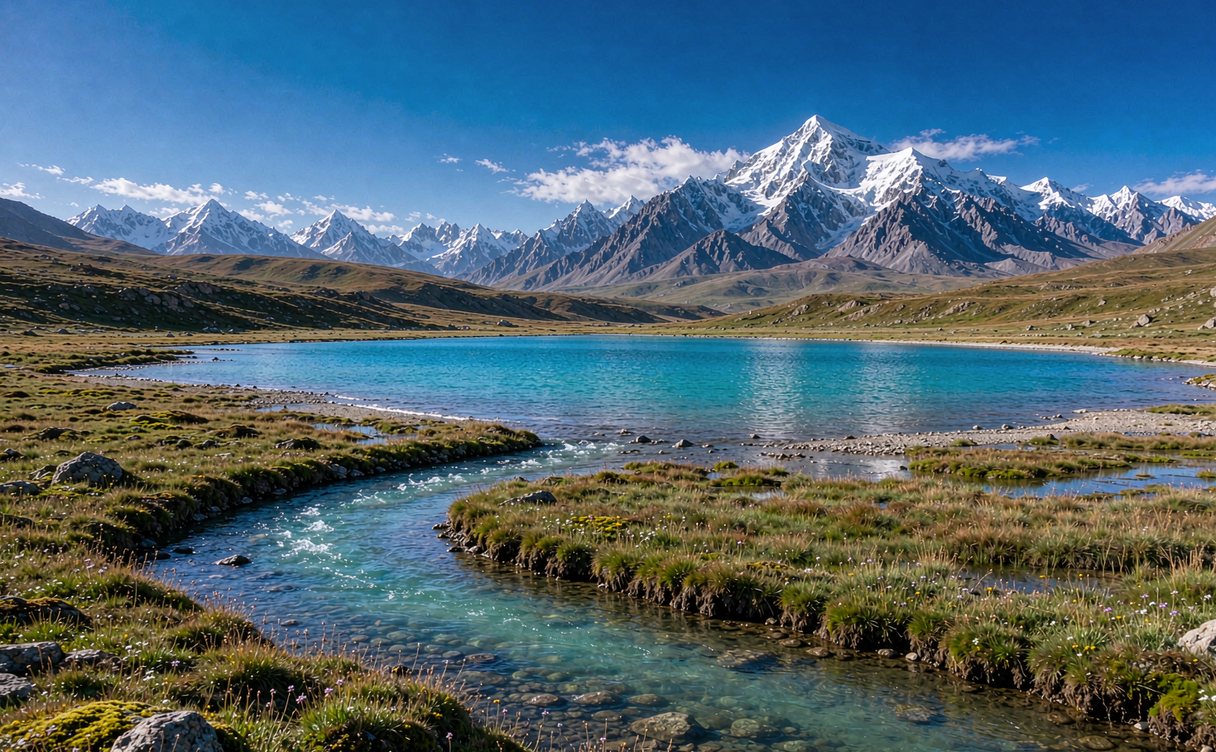
If you can only go to one, go to Hoh Xil (可可西里) in Qinghai, China — roughly 33,000 square kilometres above 4,600 m, and the closest thing the country has to a genuine wilderness. The nearest permanent settlement for hundreds of kilometres is a railway maintenance station.
The animals are habituated to vehicles but not to people: Tibetan wild asses, Mongolian gazelles, Tibetan foxes, wolves, and — if you are patient — a snow leopard on a scree slope above the road. We have seen one, at 5,100 m, at 07:20 in October. That took four days and about 2,000 kilometres of driving. A hard place, with a proportionate payoff.
Getting in requires a permit arranged in advance through a Qinghai operator; the checkpoints on the 青藏公路 are real and nobody enters independently. Most travellers combine it with the Golmud–Lhasa rail leg, which crosses the reserve’s southern edge. Our China high-speed train guide for foreigners explains the booking window, which now runs to several days rather than hours.
The giant panda reserves
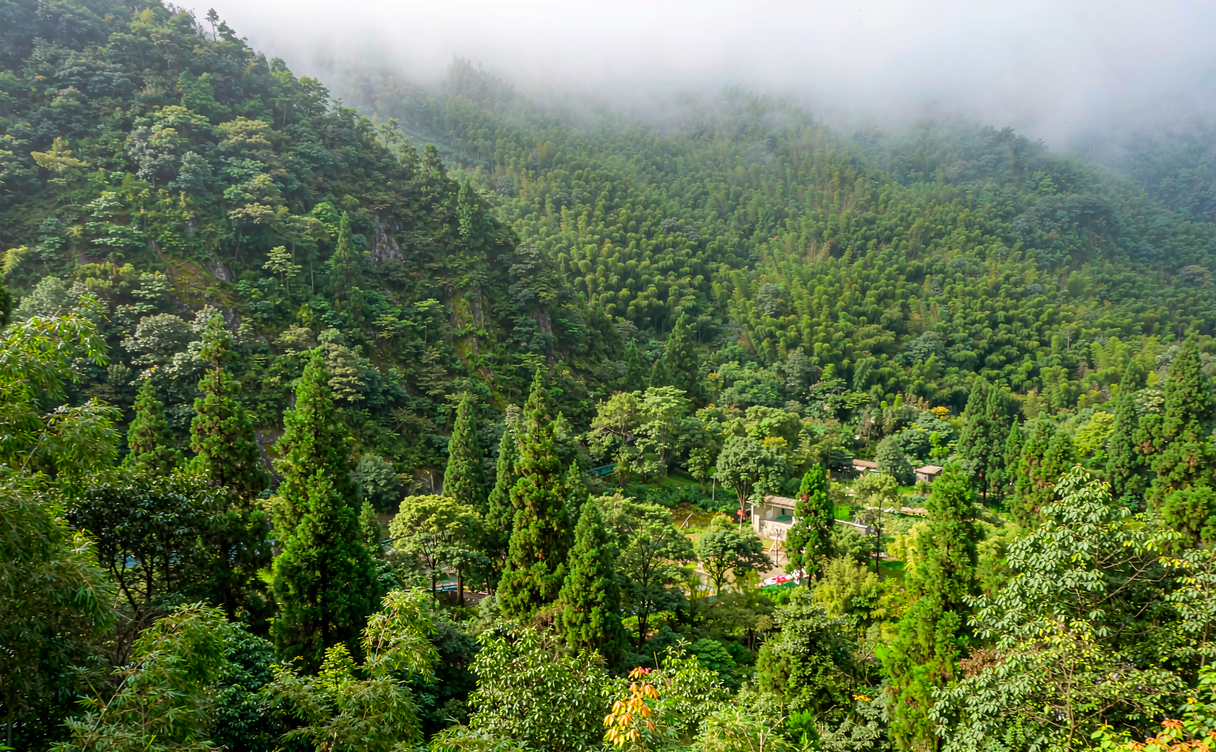
China’s panda reserves are the easiest high-value wildlife trip in the country, and they are concentrated in Sichuan, Gansu, and Shaanxi. The UNESCO-inscribed Sichuan Giant Panda Sanctuaries link seven reserves — Wolong, Baihe, Wanglang, and others — with more than 70% of the world’s wild pandas living inside them.
The distinction between wild and captive matters. At Wolong (卧龙), 130 km west of Chengdu at 1,300–2,100 m, you are in the mountains with a breeding centre at the valley bottom and real panda habitat on the ridges above. At Baihe (白河) in northern Sichuan you climb to viewing platforms above the treeline. The Chengdu research centres are excellent but they are showcases; we send readers there for a half-day, then out to the mountains the next morning.
Our China panda tour guide covers the individual centres, the ticket prices, and the honest odds of a sighting.
Sanjiangyuan: where the three rivers begin
North of Hoh Xil sits Sanjiangyuan (三江源), the headwater region of the Yangtze, Yellow, and Lancang (Mekong) rivers, and a national park pilot since 2021. It works well as a self-drive loop from Xining or Golmud: source markers at 4,500 m, the Yellow River’s first bend, and altitude moors with black-necked cranes and Tibetan chamois.
We like it in September, when the grass has turned gold and the lakes are full — expect −5 to −12°C after dark. October is windier; July and August bring waterbirds but the roads fill with freight and camping traffic.
Cranes and coast: Yancheng, Poyang, and the migratory route
Every autumn the East Asian–Australasian flyway funnels birds through China’s eastern coast and lakes, and the reserves built for them are the best places in the country for binocular work.
Yancheng (盐城) on the Jiangsu coast is the standout: 2,300 square kilometres of tidal mudflat, reed bed, and salt marsh holding the largest wintering population of red-crowned cranes (several hundred, November to March) and a free-roaming herd of Père David’s deer (milu) reintroduced to Dafeng after the species went extinct in the wild. There is no fence; you watch from a track along the dike.
Poyang Lake in Jiangxi wintering the endangered Siberian crane, and the Yellow River delta in Shandong — a site of real international standing in May and June — complete the picture.
For the full season-by-season list, our China birdwatching guide has the detail. One tip: sleep in Yancheng town, not at the gate, and be on the platform before sunrise.
The northeast: tigers, leopards, and birch forest
Northeast Tiger and Leopard National Park (东北虎豹国家公园) straddles the border of Jilin and Heilongjiang, in China, about 240 km east of Jilin City. It covers roughly 14,600 square kilometres of mixed broadleaf and conifer forest — slightly smaller than Scotland — with an estimated 50-plus wild Amur tigers and around 60 Amur leopards. That is a meaningful share of the world’s remaining population of both cats.
Seeing one is genuinely difficult and we would not promise it. What you get is the Manchurian taiga in deep snow and the chance of a track in fresh powder near a road cut. Go in February, when the snow makes tracks readable, and treat the visit as landscape rather than safari.
Southern and southwestern equivalents
Three more that deserve a slot if your route allows:
- Pudacuo National Park in Shangri-La, Yunnan, at 3,500 m: peat lakes, alpine meadows, and black-necked cranes in winter. The highest national park in the country and the easiest plateau park to reach from Kunming.
- Gaoligong Mountain in Yunnan’s west: cloud forest, hornbills, and a mammal list past 200 species. The rare Gaoligong panda and the black snub-nosed monkey live in the canopy, and a boardwalk threads through the wood — unusual, and rather wonderful.
- Shennongjia in Hubei: 1,700 rare plant species, golden snub-nosed monkeys, and the only forest in central China that survived the ice ages intact.
What a reserve day actually costs
Roughly, per person, in normal seasons:
- Gate tickets: ¥30–¥180, with the big panda and park sites at ¥60–¥180.
- Shuttle bus inside: ¥20–¥90, and on some sites it is the only way to reach the trailhead.
- Guides: ¥150–¥400 for a half day; essential on the plateau, optional elsewhere.
- Transport: a chartered vehicle with driver runs ¥700–¥1,200 a day in Qinghai; a Chengdu car with driver is ¥450–¥700.
- Accommodation at the gate: ¥150–¥600.
A three-day Hoh Xil or Sanjiangyuan run from Golmud lands at ¥2,200–¥3,500 per person including the vehicle, the permit, beds, and two meals a day. Not a bargain, and we do not pretend it is — but a fraction of the equivalent safari in Africa, on terrain unlike anything on that continent.
Split a plateau trip across two reserves — Sanjiangyuan first to let you adjust at 3,500 m, then Hoh Xil — rather than trying to compress both into four days and arrive at altitude exhausted.
Best months, by region
- Plateau (Hoh Xil, Sanjiangyuan): August–October. July is wet and cold at night; winter closes the passes.
- Panda mountains (Sichuan, Gansu): March–May and September–November. Summers are hot and queue-heavy.
- Coastal wetlands (Yancheng, Poyang, Shandong): November–March for cranes, April–June for breeding migrants.
- Northeast forest: January–February for snow, late September for colour.
- Southern cloud forest: year-round; go in the dry window of January–March or November.
For a national overview of the calendar, our best time to visit China guide works through the trade-offs province by province.
How to behave in a protected area
Four rules, and they are not optional. Stay on the road or the boardwalk — the tracks you can see are grazing land or fragile peat. No drone at almost any of these sites; several are officially no-fly and the rangers will seize it. Never feed an animal; on the plateau, a vehicle that stops and stays stopped is normal wolf behaviour. And take your rubbish out, literally — we have picked up more plastic on the Qinghai plateau than on any mountain trail we know.
Getting there, and who should not go
Most reserves are reached through a city: Xining and Golmud for the plateau, Chengdu for the panda mountains, Yancheng and Nanchang for the wetlands, Jilin for the northeast. The train is your planning unit, not the reserve.
We would not send anyone over 75, or anyone with heart or lung conditions, into a 4,600 m reserve without a medical opinion. Hoh Xil and Sanjiangyuan are genuinely high — you will be short of breath walking on flat ground on day one. Everyone else should go slowly for the first 24 hours and skip any climb on arrival day.
Finally, if you are building a longer route, our China national parks guide takes the park system in detail, and the encyclopaedia entry on Hoh Xil is the best short background on why a place with no roads and no towns still matters to half of Asia’s water supply.
Where to see nature in China without a guide
Not every site needs an operator. Pudacuo, Shennongjia, several Sichuan panda reserves, and most Yunnan cloud-forest reserves are reachable on public transport with a hired car at the far end, and you can walk inside them the same afternoon you arrive. That is the sensible entry point if you want nature in China without a plateau permit.
Start with one accessible reserve — the Sichuan panda mountains or Pudacuo in Yunnan — and add the plateau only if that first trip leaves you wanting more solitude than the crowds allow.
Final thoughts
China’s protected areas are not the wild frontiers of a century ago, and some flagship sites are more managed than the brochures suggest. What they still hold is extraordinary: the last snow leopards of the Qinghai plateau, the last wild Amur tigers, the world’s panda strongholds. Go in the right month and take the second day rather than the first. The wildest places are better the morning after everyone leaves.
Book the permit and the vehicle before you book the flight — the plateau reserves close their windows fast in October, and the operators in Golmud and Xining run out of four-wheel-drives weeks ahead of the season’s end.