

The first time we sent clients to sleep in a yaodong, they expected a damp, windowless hole in a hill. They got a bright, arched room with a kang heated from the kitchen stove, a basket of just-picked apples on the table, and a silence so deep they texted us at midnight to say they had never slept so well. This cave dwelling stays guide comes from that booking and the handful we have arranged across the Loess Plateau since.
The yaodong are homes cut into the loess cliffs of Shaanxi, China and the wider plateau — cliff caves, sunken-courtyard “pit houses,” and free-standing earthen arches. People have lived in them for thousands of years because the earth holds a steady temperature: cool in summer, warm in winter, and cheap to heat. Around 10 million people still call some form of yaodong home. If you are routing through the region, our Xi’an travel guide is where most trips begin.
The loess itself is the secret. Wind-blown silt from the distant highlands has piled meters deep across the plateau over millennia, and it cuts cleanly when wet and sets hard when dry — perfect for digging. A well-made cave holds around 15°C all year, which is why heating bills are tiny and summers need no fan. The trade is light: a single arched window, so rooms feel snug rather than bright.
Where the best cave stays are
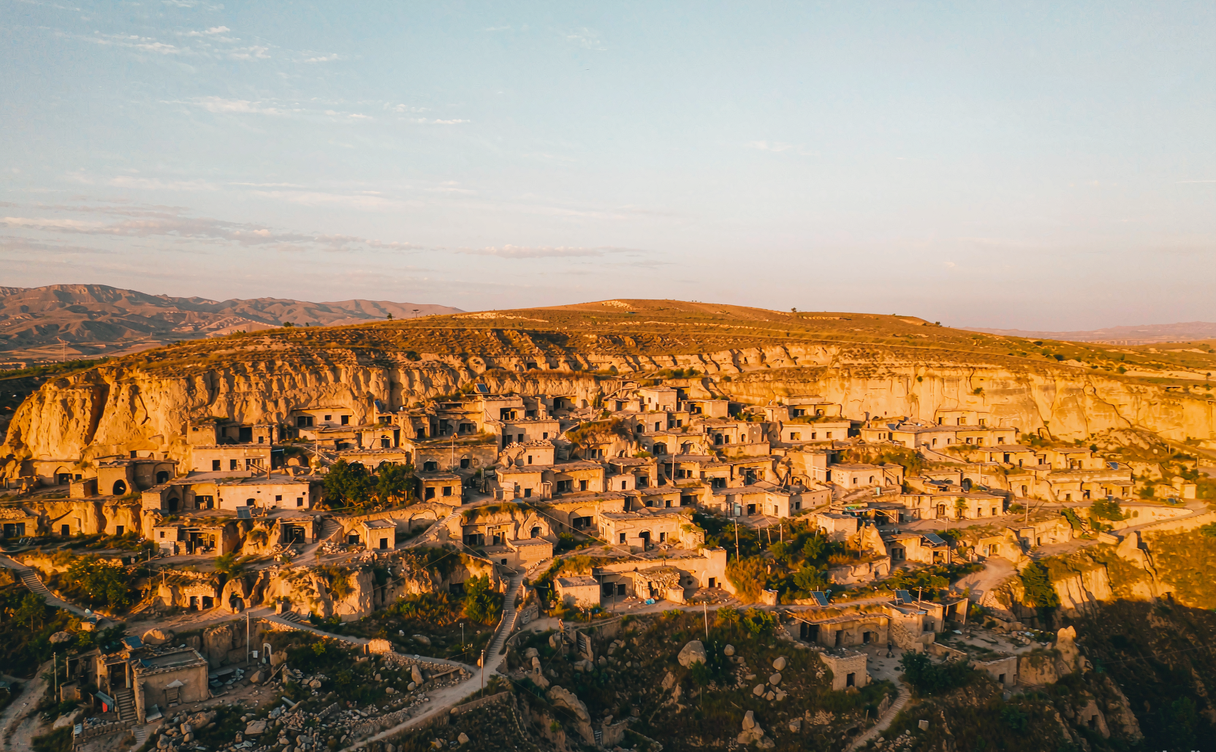
The classic cluster is around Yan’an and the smaller counties of northern Shaanxi, where whole villages are dug into the yellow hills. Around the town of Yan’an itself you will find both original family caves and restored ones built for visitors; the Yan’an travel guide points to the villages that still cook for guests rather than just pose for photos. Farther east, near the Yellow River gorge at Hukou, a few cave courtyards take overnight visitors and put you within an hour of the falls. Two forms dominate. Cliff caves are dug straight into a hillside; sunken courtyards, called dixia siheyuan, are dug into flat ground so you walk down steps into a hidden square of rooms. The sunken kind are the more striking stay — you stand in a field, see nothing, descend, and find a whole household beneath your feet. A few near Yan’an let guests sleep in the pit house itself.
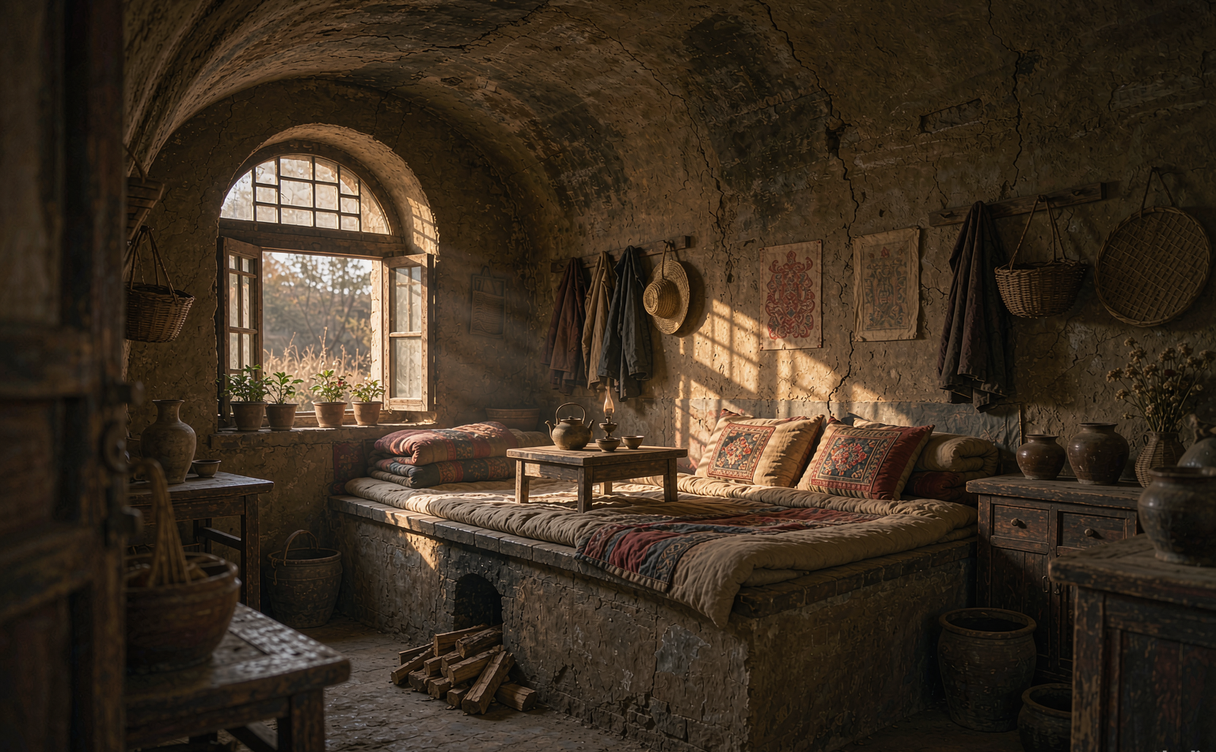
A genuine Shaanxi cave house stay means a room in a compound shared with the host family, an arched ceiling you can touch if you stand on the kang, and a courtyard where the hens wander. The restored ones near Yan’an add private bathrooms and glass doors, but the atmosphere is the same: you are living in the hillside, not looking at it. Some hosts keep a second, newer wing with tiled floors and a real bathroom for guests who want the cave feel without the squat toilet; ask when you book if that matters. Either way the courtyard is where the stay happens — morning tea in the sun, smoke from the stove, and the slow business of plateau life moving around you.
What sleeping in a yaodong is actually like
The centerpiece is the kang, a brick platform along one wall warmed by flue gases from the stove. In winter it is the only heat source and it is glorious; in summer the family simply stops lighting the fire and the room stays naturally cool. Bedding is thick quilts, and the host tucks you in like a child. A night with dinner and breakfast in a family cave runs RMB 120–260 for a double, depending on how restored it is.
The Loess cave dwelling experience overlaps with farm life in the best way: you help carry water, you eat the apples and millet the family grew, and you learn why the plateau’s food tastes the way it does. On our last trip the host’s father demonstrated making hu la tang, the peppery noodle soup of the north, in a wok set into the same stove that heated our bed. It is the kind of farm-stay moment no hotel delivers. The morning routine is worth the early rise. The host fires the stove at dawn, the kang warms from the far end, and breakfast appears as steam from the same wok that heated our bed. Children troop past on the way to school and nod at the foreign guest like you are part of the furniture. It is the most ordinary, and most memorable, welcome we book.
Ask the host to light the kang an hour before bed in cold months — a warm cave at midnight is the whole point of the stay.
Food, seasons, and getting there
Meals are hearty northern fare: millet porridge, steamed buns, hand-pulled noodles, and the sweet, dense apples the Loess Plateau is famous for. A family dinner is RMB 40–70 a head and breakfast of congee and eggs is RMB 15–25. Spring and autumn are the comfortable seasons; summer is warm but the caves stay cool, and winter is cold outside yet cozy within, with the kang doing the work.
Most travelers reach the cave villages from Xi’an by car or bus, a drive of three to five hours into the northern hills, or by train toward Yan’an and a short transfer after. Pair the caves with a couple of days in an old town — our China ancient town stays guide suggests which nearby walled towns pair best with a plateau loop. The plateau’s pantry is its own draw. Beyond apples and millet, the north is famous for its vinegar, its glassy sweet potatoes, and the date syrup that goes into festival cakes. A host who likes you will send you off with a sack of dried dates and a jar of chili paste; both travel well and taste of the trip for weeks.
Prices, comfort, and honest caveats
Rates for a simple cave hotel Shaanxi room run RMB 150–350 a night, more in the polished visitor centers near Yan’an. For that you get a story, a host, and a temperature you cannot buy in a concrete block. Compare it with a heritage-hotel pick and the cave wins on character every time, though it loses on Wi-Fi and lift access.
Be honest about the trade-offs. Some older caves smell faintly of earth and smoke, the toilets may be squat and shared, and English is rare — bring a translation app. Earplugs are optional; the hills are quiet. Cash is essential in the small villages. Get the timing right and the hills reward you. Late September brings the harvest haze and the warmest light on the yellow cliffs; April brings blossom and muddy lanes. Either way, build in a slow morning — the best part of a cave stay is standing at the threshold with a bowl of millet porridge, watching the sun clear the loess.
Go with a driver who knows the family caves, not the tour-bus ones — the difference shows up the moment dinner is served.
Why a China cave homestay is worth the detour
The real draw of a China cave homestay is the chance to live, for one night, the way a third of the plateau’s people still do. You sleep in the ground, eat from the ground, and wake to a silence that has no equivalent in a city. For the background on how these homes are built and why they last, the entry at Yaodong on Wikipedia is a clear, useful reference.
Sleep in yaodong cave homes once and the phrase “hole in the wall” will never mean the same thing again. It is the most grounded — literally — night we book on the northern route, and the one clients describe longest afterward.