

We have booked Fenghuang for everyone from honeymooners to a photography group chasing the blue hour, and the single piece of advice that never changes is this: stay inside the ancient town, on the river, and accept that the best rooms come with a wooden balcony three meters above the Tuojiang. This Fenghuang hotel guide is the short version of what we tell every client before they book.
Fenghuang, in western Hunan, is a Ming- and Qing-era town of stilted wooden houses (diaojiaolou) leaning over a green river, with lantern bridges and a hillside of lit rooftops at night. It is compact, walkable, and loud with tour groups by day but magical at dawn. Start with our Fenghuang ancient town guide to see the layout before you pick a side of the river.
Fenghuang means “phoenix,” and the name fits the hillside of lit rooftops at night. The town grew as a Ming-era garrison and a Miao and Tujia market town, and its wooden lanes have changed little in three centuries. The river is the reason it exists — a trading route that carried silver, tea, and travelers — and still the reason people come. Our clients who skip the core and walk the upper river path find the older, quieter Fenghuang. The town is small enough to cross on foot in twenty minutes, which is why location beats star rating — anywhere walkable is a good base, and anywhere you need a car for is missing the point.
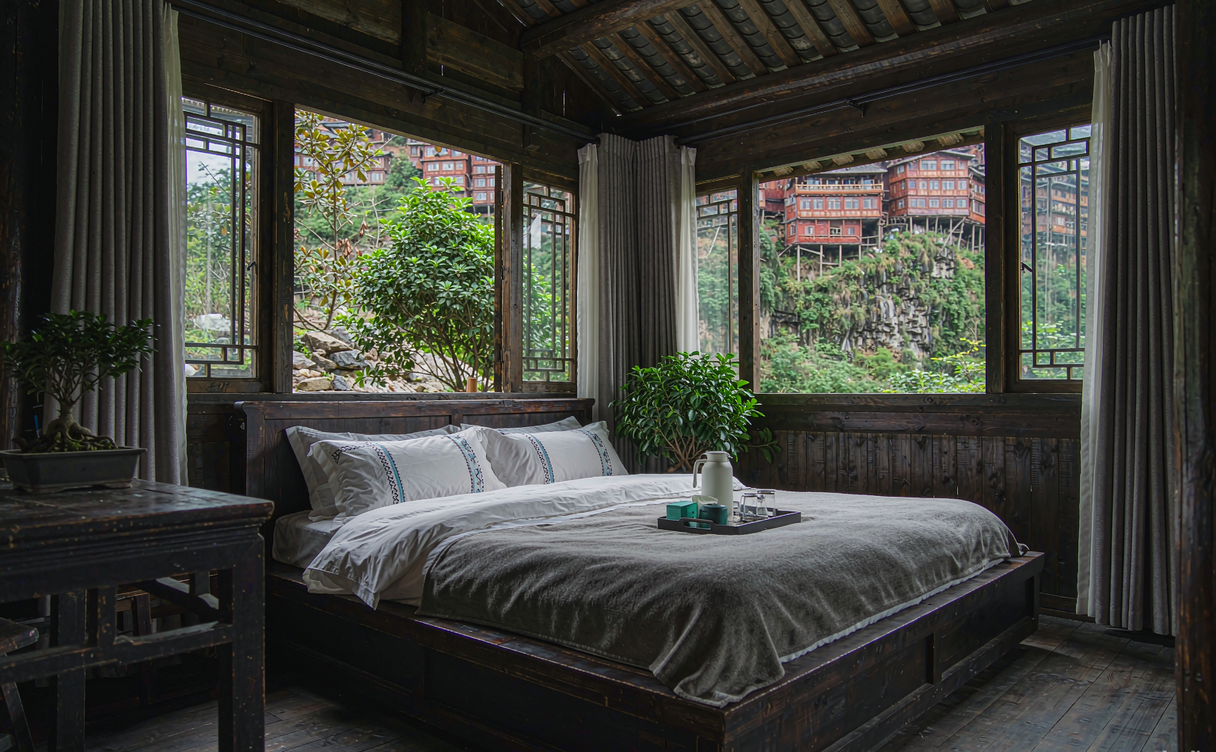
Where to stay in Fenghuang: which bank, which bridge
The river splits the old town. The north bank, near the Hongqiao covered bridge, is the lively heart — bars, the night market, and the easiest access to the lit-up skyline. The south bank is quieter, with more boutique inns and a better chance of a peaceful balcony. On our last trip we put a family on the south bank and they watched cormorant fishermen from their window while the north side roared with music; both are “riverside,” but the feel is different.
For a where to stay in Fenghuang decision, distance from the core matters more than the star rating. A “five-star” building fifteen minutes’ walk from the river misses the point; a simple Fenghuang riverside inn with a balcony on the water is the stay people remember. Inside the walls, cars cannot enter, so factor in a five-minute walk with your bags from the drop-off point. The bridges matter more than the maps suggest. The older covered bridge and the stepping stones at the north end are the photo spots; the new road bridge is where the coaches arrive. We tell clients to stay within a five-minute walk of the central bridge but off the main bar strip, which keeps you close to the action and able to sleep through it. A riverfront room above a teahouse is the sweet spot.
Budget bands and what you get
At the low end, family-run wooden inns run RMB 180–350 a night for a clean double with a shared or basic private bathroom and a river glimpsed between eaves. Mid-range Fenghuang ancient town hotels — renovated diaojiaolou with private bath, AC, and a proper balcony — sit at RMB 400–800. At the top, a handful of design-led Fenghuang boutique stay properties and the one international-brand hotel on the edge of town run RMB 900–1,800, trading some of the old-town intimacy for polish and a pool.
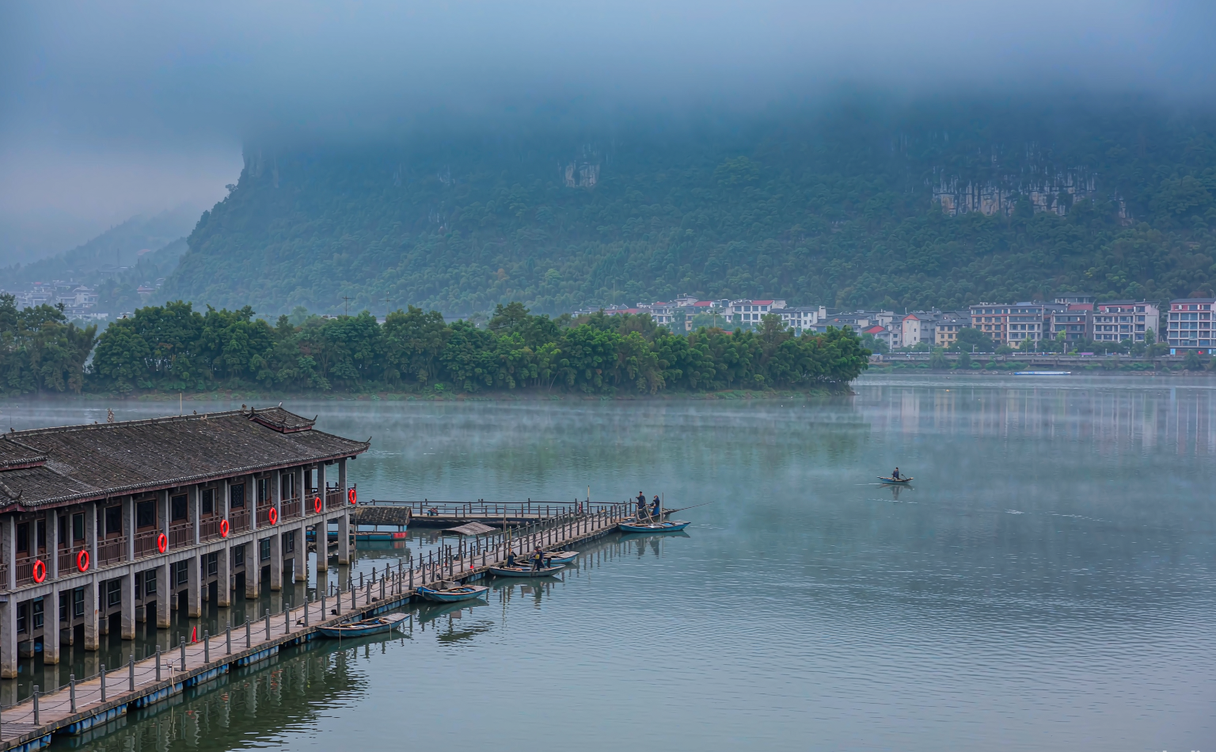
Breakfast is rarely included at the small inns; budget RMB 20–40 for congee, rice noodles, and fried bread at a riverside stall. The famous Fenghuang rice noodles alone are worth waking early for. The town rewards slow mornings. By eight the tour groups arrive; by seven the mist sits on the water and the only sound is a boatman’s oar. Guests in riverfront rooms see this from bed, which is the single biggest argument for paying more for the view. The lantern makers along the west lane open early too, and a custom lantern runs RMB 30–80 if you want a souvenir that actually lights.
Book a room with a private balcony on the south bank if you want photos and quiet; take the north bank only if you came for the nightlife.
Our picks by traveler type
For first-timers we like a mid-range renovated inn on the south bank with a guaranteed river view — you get the wooden character without the hostel chaos. For couples, a Fenghuang boutique stay with a soaking tub by the window is the splurge that pays off. For families, the international hotel just outside the walls gives cribs, elevators, and quiet, at the cost of a ten-minute walk in. Budget travelers do fine in the small inns if they pack light — the walk from the drop-off with roller bags is miserable on the cobbles. We route those clients to a place two minutes from the gate rather than one “on the river” twenty minutes in. The gain in daily comfort beats the small loss of view. Shoulder-season rates, in March and late October, are the sweet spot: cheaper than peak, warmer than winter, and quiet enough to hear the river. We book most first-timers then.
If you are building a Hunan loop, pair Fenghuang with the peaks to the north — our best hotels in Zhangjiajie guide lists where to sleep near the Avatar mountains, and the two towns make an easy week together by train.
Seasons, booking, and honest caveats
Spring and autumn are best: mild, less crowded, and the river is full. Summer is hot and peak domestic-tourist season; winter is cold but the town empties and rates drop by a third. The lantern-light reflections are best on a still, misty evening, which autumn delivers most often.
Booking from abroad needs care. Many of the charming wooden inns list only on Chinese platforms, and some will not take foreign passports without a licensed front desk. Our China hotel booking foreigners guide walks through which properties are foreigner-friendly and how to confirm. Bring cash for the small places, and confirm the balcony view in writing — “river view” sometimes means “river visible from the corridor.” One practical note: the ancient town charges no fee to wander, but several courtyards and the river boats are ticketed. Buy the through-ticket only if you plan to see the former homes and the hilltop temple; casual strollers can skip it. The evening light show on the water is free and, frankly, better than the paid version.
Confirm your passport can be registered at the inn before you pay — a wooden beauty with no foreigner license is a booking you cannot use.
How Fenghuang compares with the karst towns
Travelers often ask us to choose between Fenghuang and the Guangxi river towns. The Guilin Yangshuo travel guide covers the karst alternative: bigger landscape, bigger river, more cycling. Fenghuang wins on intimacy and history; Yangshuo wins on scenery and activity. For the town’s background and preservation status, the entry at Fenghuang Ancient Town on Wikipedia is a useful reference. For a longer Hunan trip, Fenghuang pairs naturally with Zhangjiajie to the north and the Miao villages to the west, where you can sleep in a stilt house and eat sour fish. Three towns, three very different sleeps, one easy loop by train and car. We have run this as a week for families and it rarely fails to land.
The best hotels in Fenghuang are not the most expensive ones. They are the ones where you open the wooden shutters, the river is ten feet below, and the town is still asleep. Get that room and the rest of your plan takes care of itself.