A Chenzhou travel guide usually opens with a photograph that looks too perfect to be real: a still lake at dawn, wrapped in a low band of mist, with a lone fishing boat drifting through it. That is Dongjiang Lake, in Chenzhou, a city in southern Hunan tucked between the mountains that divide Guangdong from the Yangtze. Chenzhou is not yet on the foreign tourist trail, but it has quietly become one of the best low-effort landscape stops in the south — a place where you can watch the famous mist, soak in a hot spring, and hike through raw karst peaks, all within a short drive of the high-speed station. Few foreign visitors have heard of it, and that is exactly the appeal.
Why Chenzhou is worth the stop
Most visitors to Hunan never leave Changsha, and those who do usually head to Zhangjiajie. Chenzhou offers something different: accessible nature without the crowds and the cable-car queues. The city sits where the Nanling mountains begin to rise, so the scenery is green, layered, and full of water — lakes, rivers, waterfalls, and springs. It is also warm enough for much of the year that a winter hot-spring trip is genuinely pleasant, which is rare in mountainous China.
For the wider regional picture, our Changsha travel guide covers the provincial capital and its food scene, while our Hengyang travel guide explains the city just north that many trains pass through on the way here. Chenzhou also works as a gentle introduction to China’s south for travellers who find the big cities overwhelming — the pace is slow, the scenery does the heavy lifting, and you can base yourself in one hotel and take day trips out.
Best time to visit Dongjiang Lake
The best time to visit Dongjiang Lake is from April to October, when the water is warm enough that the famous morning mist forms reliably. The mist is a temperature effect: cold surface water meets warmer air at dawn, producing a low fog that hugs the lake until the sun burns it off, usually by nine. Go in deep winter and you may get mist too, but the boat trips and the surrounding hikes are colder and quieter.
The classic shot is taken between roughly 5:30 and 8:00 am, before the wind picks up. For a country-wide view of when to travel, our best time to visit China guide explains the south’s humid rhythm and how to plan around it.
Things to do in Chenzhou
The honest list of things to do in Chenzhou is built around water and stone:
- Dongjiang Lake and the mist — the headline experience; arrive before dawn for the boat-and-fog scene, then take a lake cruise once the mist lifts.
- Gaoyiling Danxia landforms — red sandstone peaks and ridges with a raw, almost lunar look, great for a half-day hike.
- Mangshan National Forest Park — cable cars, cliff walks, and the “vertical tram” up a sheer face for the bold.
- Chenzhou Hot Springs (Rucheng) — a cluster of spring resorts an hour south, good for an evening soak.
- Bailang scenic area — quieter lake and island walks for when the main lake is busy.
These are the genuine things to do in Chenzhou, and three days lets you do the lake properly, hike one peak, and still have an evening in the springs.
Dongjiang Lake morning mist, in practice
A Dongjiang Lake morning mist visit is mostly about timing and patience. Stay the night in a lakeside hotel so you can walk to the viewing piers at first light rather than commuting in. The boats that make the iconic photo are working fishing boats, and local operators run short mist cruises for visitors; agree the price before boarding. Bring a jacket even in summer — the lake at 6 am is cold and damp.
Photographers should expect company at the famous piers, but the lake is long and you can walk to a quieter stretch in ten minutes. Our China photography tour guide has more on capturing water-and-mist scenes like this across the country, and on the gear that makes the difference in low light. Once the mist burns off, take the longer lake cruise to the dam and the small islands, where the water turns a deep green and the hills close in; it is a calmer, warmer counterpart to the cold dawn and a good way to fill the late morning before lunch.
Chenzhou hot springs
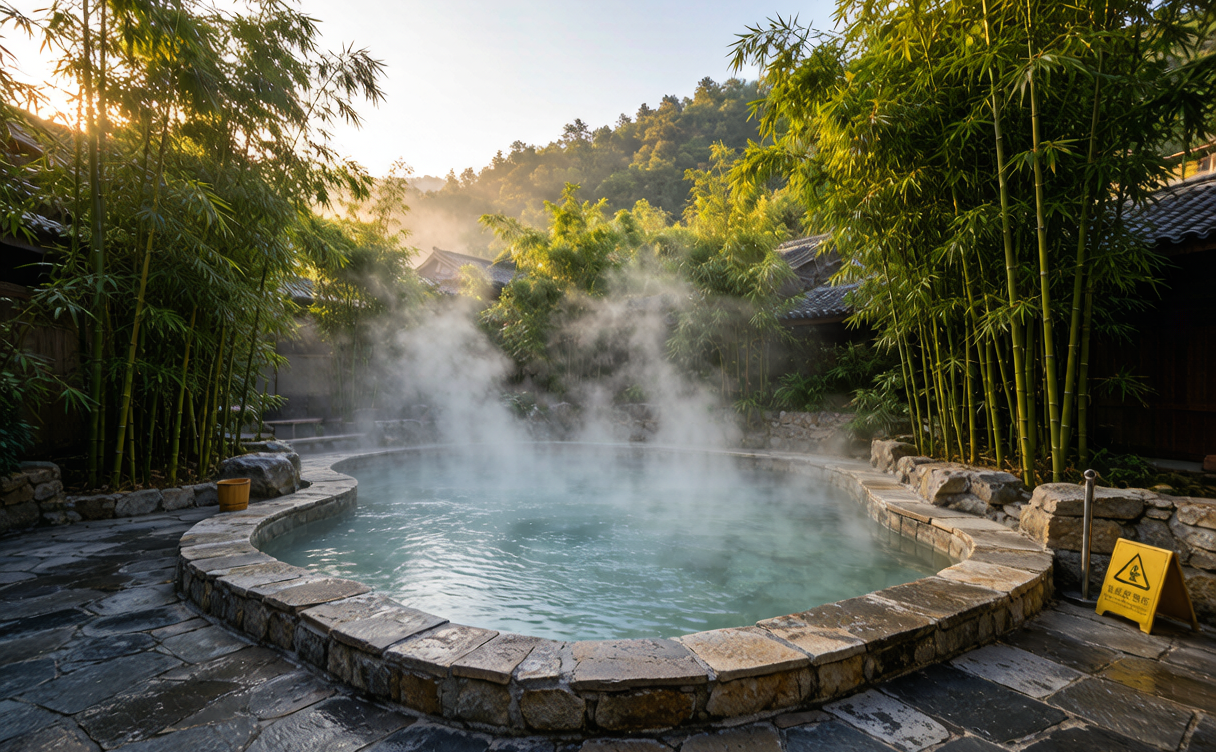
The Chenzhou hot springs, centred on Rucheng county to the south, are the city’s second act. Several resorts sit over genuine geothermal sources, with outdoor pools ringed by hills — the kind of place you soak at dusk, then sleep well. They range from large hotels with dozens of themed pools to smaller guesthouses; all are easy to reach by car or a short bus from the county town.
Soaking here pairs naturally with a day on the lake, and it is the reason many visitors come in cooler months. Etiquette is the usual Chinese spa style: shower before entering the pools, keep swimwear on in mixed areas, and leave electronics in the locker. The outdoor pools are best at dusk or after rain, when the hills steam and the light goes soft. For a broader soak, our China hot springs resorts guide compares Chenzhou’s springs with other famous bathing regions across the country.
How to get to Chenzhou by train
The how to get to Chenzhou by train question is easy: the city has a high-speed station on the Beijing–Hong Kong line, with frequent services from Changsha (about 90 minutes) and Guangzhou (around two hours). From the station, the lake is a 40-minute drive, so most visitors book a car or use Didi for the hop. The trains are modern and the booking is straightforward with a passport.
For food on the move, our Hunan cuisine guide explains the chilli-forward cooking you will meet in Chenzhou — fierier than most foreign palates expect, but worth the adventure. Carrying a phrase card or a translation app helps, since the spice level is rarely marked for visitors. One practical tip: ask for “weixian” (mild) if you are unsure, because the local Hunan heat builds slowly and a careless order can derail the next day’s hikes.
Practical notes for foreign visitors
Chenzhou is friendly but lightly touristed by international standards, so expect limited English and bring cash as a backup at small spring resorts. Lakeside hotels book out on weekends and holidays, so reserve ahead if you want to be at the mist for sunrise. The official tourism information is available through the Ministry of Culture and Tourism of China (https://www.mct.gov.cn/), which lists licensed resorts and seasonal notes for Hunan. Wear proper shoes for the Danxia hikes — the red rock is loose and the ridges have exposure in places. Mobile payment through Alipay or WeChat covers most tickets and meals, but foreign cards can be awkward to link, so keep some cash and a working translation app for the smaller stalls.