

Most visitors to Xi’an spend their time on the city wall and the Terracotta Army and never learn that, just north of the railway station, there is a vast park built over the ruins of the largest palace complex the world had seen in its day. Daming Palace was the political heart of the Tang dynasty — the seat from which emperors like Xuanzong ruled, and the stage for the cosmopolitan glory that “Chang’an” still evokes. We’ve walked travelers through the site and watched the scale finally register: this isn’t a building you tour, it’s a landscape you read.
This Daming Palace guide covers what the palace was, what’s left to see, how to visit, when to go, and how to pair it with the rest of Xi’an.
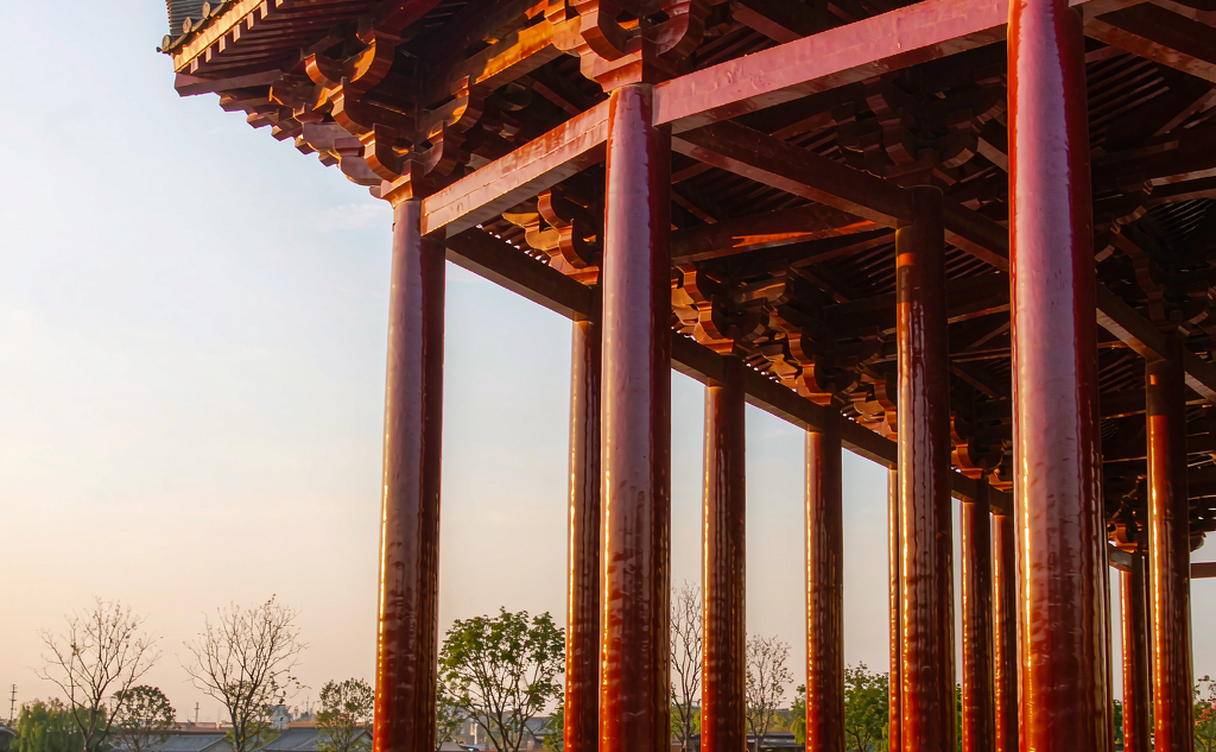
What Daming Palace Was
Daming Palace (大明宫, “Palace of Great Brilliance”) was begun in 634 AD, early in the Tang dynasty, on the northeastern edge of Chang’an, the Tang capital. It started as a retreat for the aging Emperor Taizong’s father and grew into the empire’s main imperial residence under Emperor Gaozong, who moved the court here from the old Taiji Palace. For more than two centuries it was the center of Tang power — audiences, banquets, foreign embassies, and the daily machinery of a dynasty that stretched its influence deep into Central Asia.
The complex was enormous: records describe a walled enclosure of several square kilometers, with major halls like Hanyuan, Xuanzheng, and Linde arranged along a central axis. Hanyuan Hall, at the southern entrance, was where grand state ceremonies and New Year audiences took place, with envoys from across Asia lined up below.
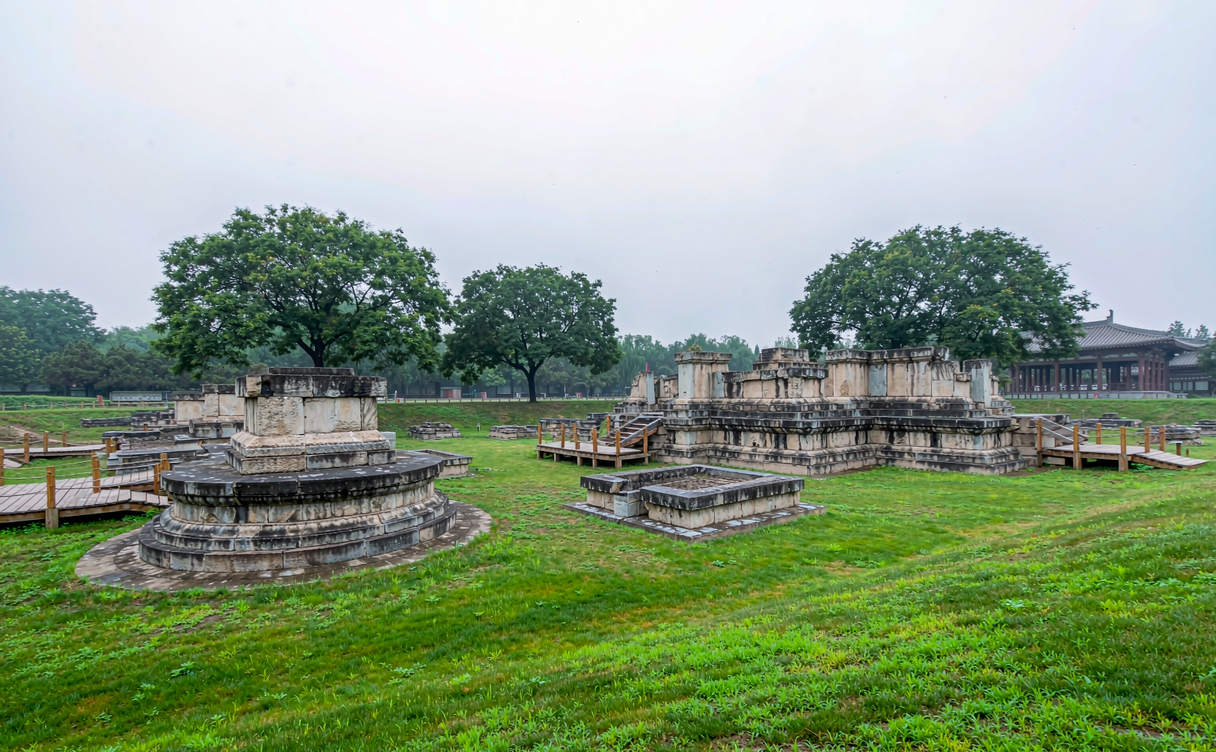
The palace met a violent end. In 904 AD, as the Tang collapsed, the warlord Zhu Quanzhong demolished Chang’an and hauled the timber away, leaving the palaces as ruined foundations. What survives today is the ground plan — rammed-earth platforms, buried wall lines, and the memory of a scale that still shapes the park.
In our experience, the visit clicks once you stop looking for walls and start reading the footprints. The site museum and the reconstructions do the rest.
Things to Do at Daming Palace
- Walk the central axis. From Danfeng Gate (the southerly restored gate) north toward the Hanyuan Hall foundations, you follow the same processional line Tang officials once walked. The raised earthen platform of Hanyuan Hall is the centerpiece — stand on it and look south to grasp the ceremonial drama.
- Visit the Site Museum. The on-site museum holds artifacts recovered from the grounds and explains the palace’s layout with models and panels. Budget at least 45 minutes.
- See Linde Hall. The foundations of this smaller hall, used for banquets and meetings, are well marked and give a sense of the residential scale beyond the state ceremonies.
- Catch the introductory film. A short documentary shown at the visitor center sets the historical scene before you walk; we recommend it as the first stop.
- Rent a bike or cart. The park is huge. Cycling the perimeter paths is a good way to cover ground if the weather’s fine.
For a different slice of Xi’an’s deep past, our Xi’an Banpo Museum guide covers a Neolithic village that predates the Tang by millennia.
How to Get to Daming Palace
The ruins park sits just north of Xi’an’s old city wall, near the railway station, so it’s central and reachable:
- Metro. Xi’an Metro Line 4 stops at Daminggong Xi (Daming Palace West), and Line 2 has nearby stops; both put you at the park edge within a short walk.
- Bus. Numerous city buses run along the walls and past the gates; ask your hotel for the line matching your start point.
- Taxi or ride-hail. From the Bell Tower or the station, a ride is cheap and quick — usually under ¥20 and 15 minutes in light traffic.
- On foot. If you’re already at the city wall’s north gate, the walk north is feasible and shows you the modern city wrapping the old site.
Most travelers base in the Xi’an travel guide core and make Daming Palace a half-day, often paired with the wall or the station-area museums.
Best Time to Visit
Xi’an has hot summers and cold, dry winters, so season shapes the day. The best time to visit Daming Palace is spring (April–May) and autumn (September–October), when temperatures sit in a comfortable range and the open park is pleasant to walk. Summer is workable but can be fiercely hot midday — go early. Winter is cold but uncrowded, and the bare trees make the ruin lines clearer.
Because the site is mostly open ground, mornings and late afternoons are kinder than midday sun. For season planning across the country, our best time to visit China overview helps you weigh Xi’an against other stops. The best things to do in China lists regularly place the Tang ruins high for history-minded travelers.
Tickets and Practicalities
The park operates a free public green space plus a paid core zone covering the main ruins and museum. Expect the ruins-and-museum combination to run roughly ¥60–120 depending on season and any bundled experiences (the film and certain exhibits may be priced separately). Hours are typically daytime, roughly 8:30 a.m. to 6 p.m. in summer and a bit shorter in winter — confirm before you go, as times shift.
An audio guide or a hired on-site explainer is worth the outlay here more than at almost any other Xi’an sight, because without the narration the foundations are just earth and gravel. We’ve seen visitors skip the guide and leave confused; those who take it tend to stay twice as long. Budget for it the way you would for a museum ticket, not as an optional extra.
Wear sun protection and comfortable shoes; the distances are real and shade is limited. Carry water. If you’re arriving by rail, our China high-speed train guide for foreigners explains reaching Xi’an, and our China travel guide for first-timers covers the broader arrival basics.
Start at the visitor center film before walking the ruins — fifteen minutes of context turns a flat field into a palace in your head.
Pairing It With Xi’an’s Other Sites
Daming Palace is best read alongside the rest of Tang and older Xi’an. A natural plan: morning at the Xi’an city wall and Muslim Quarter, afternoon at Daming Palace for the Tang peak, and a separate day for the Terracotta Army east of the city. The contrast — a living walled city, a ruined imperial landscape, and a buried army — gives you three different windows onto the same long story.
Save Daming Palace for a cooler part of the day and pair it with the nearby wall; together they frame the old city far better than either alone.
Why the Ruins Are Worth the Trip
It’s fair to ask whether a field of foundations competes with Xi’an’s headline sights. In our experience it does, precisely because it’s not a reconstruction-ahead-of-history theme park — it’s the actual ground where Tang emperors stood, marked honestly. Stand on Hanyuan Hall’s platform at the quiet end of the day and the scale does the talking.
Daming Palace is also a component of the UNESCO-listed Silk Roads serial property; for the official background, see the UNESCO Silk Roads World Heritage page.
When Xi’an’s Tang story has hooked you, browse the rest of our China destination guides for the next chapter — from Silk Road routes to old towns and river cruises, there’s always more to plan.