

Dunhuang gets the caves. Jiayuguan gets the fortified Pass. Guazhou gets the traffic. Tucked about 18 kilometres northeast of Guazhou town in Gansu, China, and roughly 100 kilometres east of Dunhuang, Suoyang is the ruin most travellers drive straight past on their way somewhere more famous — and it remains our favourite stop on this stretch of the Hexi Corridor.
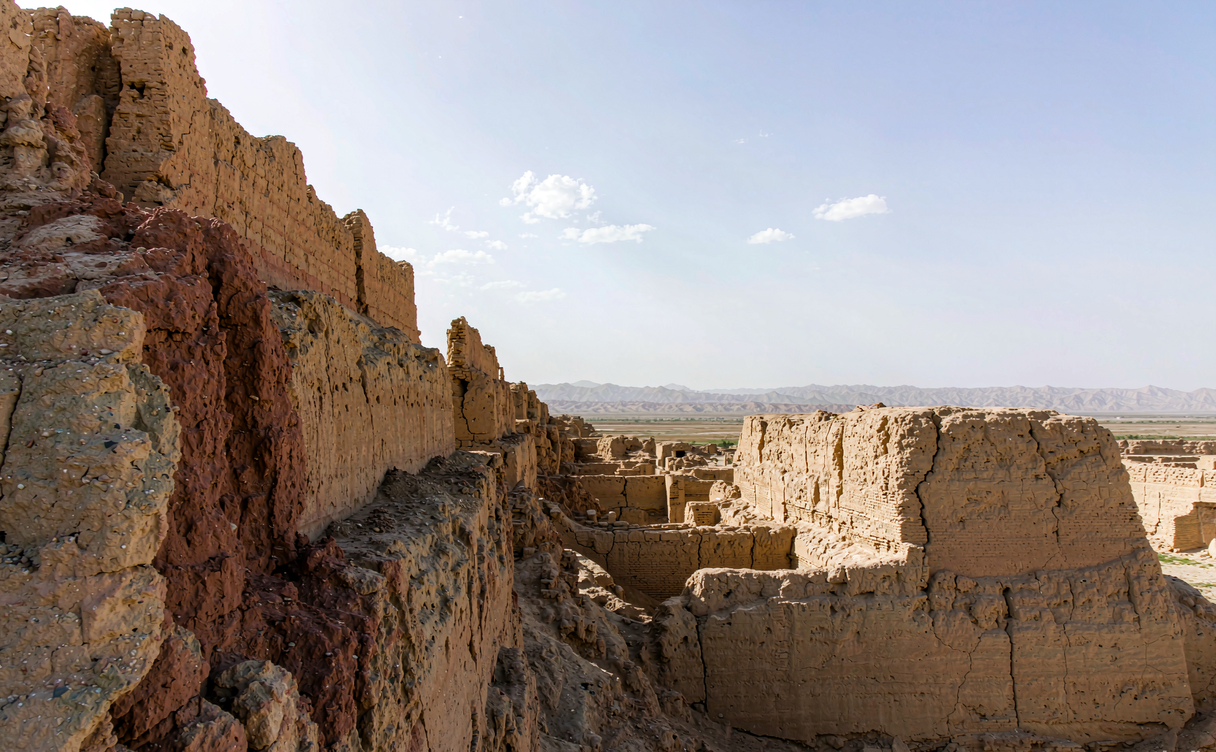
Suoyang (锁阳城) is an earthen fort city from the Han and Tang dynasties, and it is a UNESCO World Heritage component as part of the Silk Roads inscription. That single fact tells you what you are standing in: not a scenic park, but a fragment of the road itself. The walls are mud and straw brick, the colour of weak tea, and they survive here because the desert around them did the preserving. We have walked the ramparts at four different hours of the day and watched the light move across the same 1,000-metre rectangle three completely different ways. The encyclopaedic background on Guazhou County fills in the administrative history; nothing in it prepares you for the silence.
What Suoyang actually is
The site is a layered place. The outer city is roughly square — call it 500 metres on each side of surviving wall — with a gap where the river once cut through the southern face. Inside, the ground is pitted with collapsed room blocks and roofless structures that were probably granaries and barracks. Attached to the northwest corner is a smaller, U-shaped enclosure that locals call the swallow nest city, and beyond that a squat five-storey beacon tower that reads from the highway like a chimney.
The name is botanical. 锁阳 (Cynomorium songaricum) is a desert parasite plant that grows in the sand around the ruins and has been used in traditional medicine for centuries; the fort took its name from the herb, not the other way round. Travel writers sometimes describe the whole site as a “Gansu desert fortress” and that is fair — it is a frontier military machine, built to watch a caravan road, and the shape of it still says so.
Best time to visit Suoyang
The best time to visit Suoyang is May, June, and September. The site sits at roughly 1,300 metres, so it runs cooler than the towns, but the Gobi has no shade and no shelter. May and September average 15–25°C and the wind is manageable. June is hotter, pushing 30°C at midday, and it is also when the desert plants along the walls are greenest in the photograph sense.
July and August are brutal past noon — we have done the circuit at 2pm in August and do not recommend repeating it. Winter is not impossible: the walls against snow are spectacular and the site is completely empty, but the access road and the visitor centre operate on reduced hours. Avoid the May Day and October National Day holidays if you hate company; the small car park fills by 10am and the guard posts get busy.
For the wider seasonal picture across the country, our best time to visit China guide maps the trade-offs north to south.
How to get to Suoyang
Here is the honest answer: there is no bus to Suoyang. The ruins are off the main road, and the road in is a two-lane asphalt strip with a truck or a sheep now and then. So:
- Charter a car from Dunhuang — about 100 km, roughly 1.5 hours each way. This is what we do. A sedan with a driver costs ¥400–600 for the day from Dunhuang; an SUV with more ground clearance, ¥600–800. Agree the waiting time, because you will want two hours on site.
- Train to Guazhou, then taxi — Jiuquan’s network serves Guazhou, and the station is about 20 km from the town centre. From there a taxi to the ruins runs ¥60–90 one way. The China high-speed train guide for foreigners covers how to book these legs.
- Loop it with Jiayuguan — Jiayuguan is 130–160 km northwest, so a Jiayuguan–Suoyang–Dunhuang day is a long but doable triangle if you split the driving with anyone.
Admission is modest. Entry is around ¥30 per person, plus a shuttle bus fee of roughly ¥20 if you take it from the car park to the gate instead of walking in — which takes 25 minutes along the wall base and is genuinely the better option in the evening light.
Things to do at Suoyang Ruins
The core of things to do at Suoyang Ruins is simply walking the circuit. Start at the south gate in the morning. The path runs east along the inside face of the wall, and after about 200 metres the mud brick starts to thin into painted plaster — Tang-era fragments, worth slowing down for. At the northeast corner, climb the low rampart to the viewpoint over the dry riverbed, which is where the whole site reads as a defence system rather than a pile of dirt.
Then loop back through the inner compound, out to the swallow nest city and the beacon tower. The tower has an interior staircase and a small platform; go up. From there you can see the Han-dynasty Great Wall ridges to the north and the modern road to the south, which is a weird and useful thing to have both in one frame.
Inside the walls: what to look for
Two things reward patience. First, the brickwork. Much of what stands is Han construction — hard, grey, stratified mud, laid in courses so tight that a finger barely fits between them. The Tang rebuild above it is looser and browner. You can read the two dynasties with your eyes if you know the colour difference, and it is the best free geology lesson in Gansu.
Second, the water. The dry channel through the south wall is not always dry. In spring snowmelt there is standing water in the lower basin, and the reflection of the beacon tower in it is the single photograph we come here for. Ask the guard at the gate whether there is water; nobody up there publishes it.
We also like the walk out along the outer edge of the city, on the slope below the wall, where the wind has sculpted the erosion into small waves. Twenty minutes, no facilities, no other visitors.
Where to stay near the ruins
Stay in Guazhou town, not out at the site. There is one guesthouse near the ruins with four rooms and no restaurant, which is a beautiful place to fail to sleep. Guazhou town has the proper options: mid-range hotels at ¥250–400 a night, a handful of business hotels at ¥150–220, and a new crop of desert-flavoured boutique properties around ¥500.
If you are coming from Dunhuang, the other honest option is to day-trip and sleep in Dunhuang where the food and the night market are far better. Guazhou’s own draw is the night it is not — a small town where you can hear the railway.
The food in Guazhou is better than its reputation. 驴肉黄面 (donkey meat with yellow noodles) is the house specialty here, not in Dunhuang, and a bowl runs ¥18–25. 羊肉粉汤 (mutton soup with noodles) is the breakfast. Dinner for two, ¥70–110.
Book the car from Dunhuang for a full eight-hour day rather than a return trip — the Yulin Grottoes and the Guazhou beacon towers are both twenty minutes away and most people miss them entirely.
Practical tips before you go
Few tips, all of them learned the hard way. Bring more water than you think — one litre per person minimum, and there is nothing at the site. Wear shoes with grip: the rampart paths are gravel and loose sand, and they are slick when the wind has blown dust across them. Take a hat and a windbreaker; the wind here arrives in gusts and it does not care what temperature it is. Signal drops in the washboard of the road behind the ruin, so screenshot your driver’s number.
And go early. Nobody else is here at 8am. By 11am, weekend tours from Dunhuang start arriving.
Leave Dunhuang at first light and get to the south gate before 8am — the walls are empty, the light is low, and the whole circuit takes a calm two hours instead of a rushed one.
Pairing Suoyang with the rest of the corridor
Suoyang is a half-day, so it belongs inside a bigger loop. Our Qinghai–Gansu loop itinerary is how we normally fit it in, because the route runs Dunhuang–Guazhou–Jiayuguan in a shape that avoids backtracking. The Dunhuang Mogao Caves guide is the natural companion reading before you go, particularly if you want to understand why this corridor mattered.
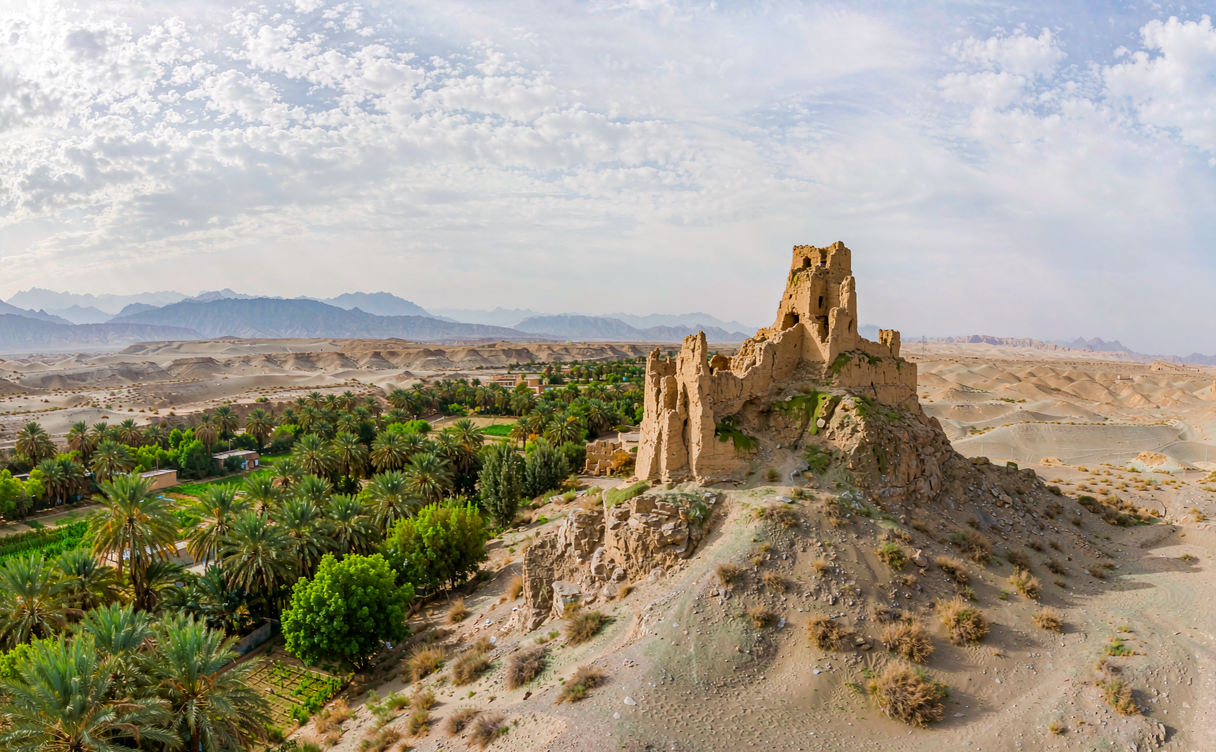
A 20-minute detour from the ruins takes you to the Yulin Grottoes (榆林窟), the Caves of the Friendship, with far fewer people than Mogao and a comparable painted interior. The Ming-era beacon towers known as the Guazhou beacons are another short hop, and they are the best surviving example of the signalling system the Tang garrison at Suoyang would have used.
If you have a spare afternoon between Dunhuang and Jiayuguan, spend it at Suoyang rather than another viewpoint — it is the only place on the corridor where you can walk a real Silk Road garrison city with almost nobody else there.
Final thoughts
Suoyang is not a polished attraction. There are no rope bridges, no glass walkways, no light show. There is a square of mud in the middle of nowhere, a tower you can climb, and a road in that takes twenty minutes longer than the map promised. We keep sending readers here precisely because of that. On the Hexi Corridor, every famous site has been staged for you; Suoyang has not been staged at all.
For the broad ranking of what is worth crossing a desert for, see our best things to do in China. And if this is your first visit to the region, our China travel guide for first-timers handles the payment apps, the SIM card, and the train booking that make a place this remote straightforwardly easy.