

Xining is the kind of city where you feel the meeting of cultures the moment you step out of the station, and nowhere is that clearer than at Dongguan Mosque. This is the largest and most important mosque in Qinghai, a walled island of green-tiled domes and red pillars in the middle of the city’s old Hui quarter. We’ve walked travelers through it on their first afternoon in Xining, and it tends to be the moment the trip stops feeling like “just another Chinese city” and starts feeling like the edge of the plateau.
This Dongguan Mosque guide covers what the building is, how to visit it respectfully, when to go, and how to fold it into a Xining stay that also takes in Qinghai Lake and the city’s halal food scene.
A Bit of History
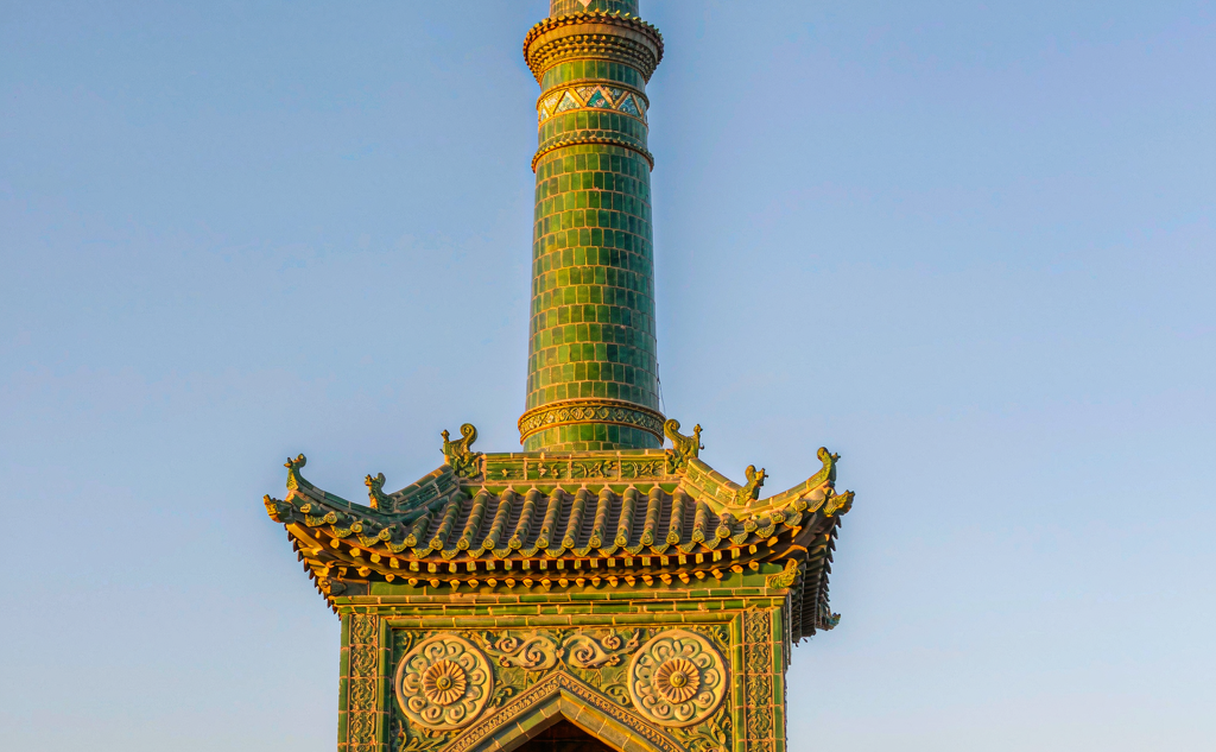
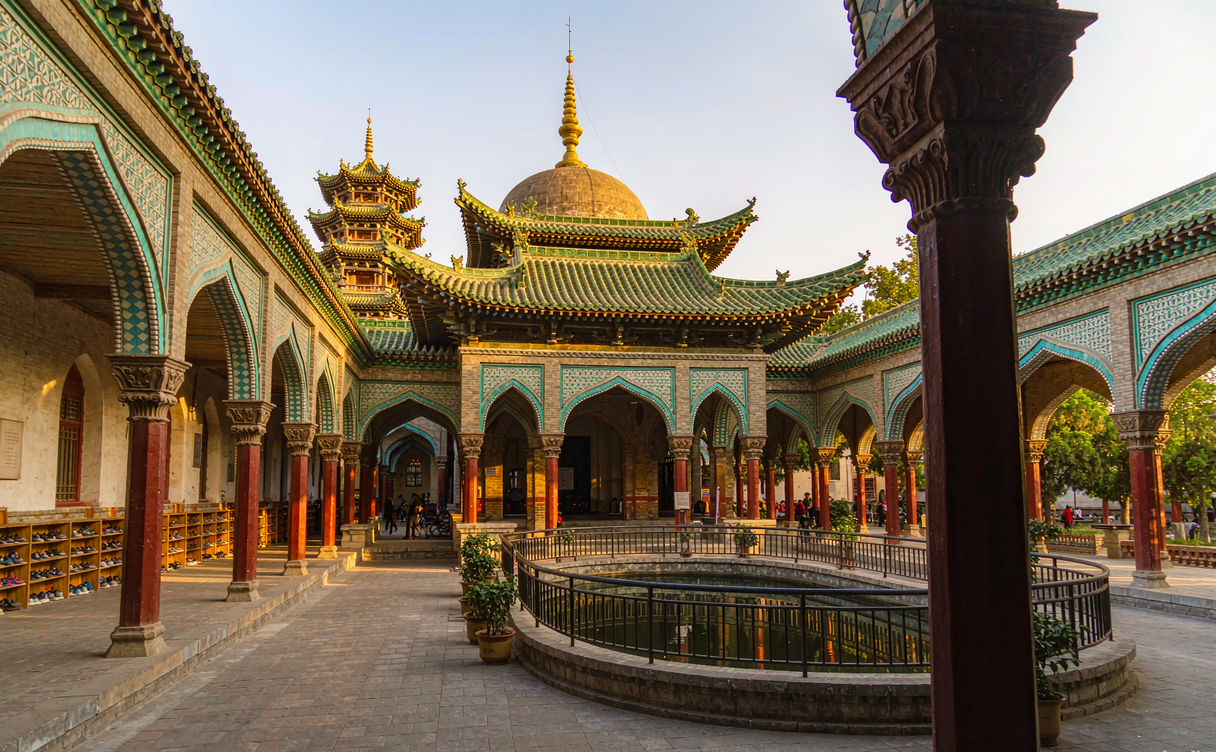
The mosque’s roots go back to the late 14th century, the early Ming dynasty, when a place of worship was first established in the Dongguan area of Xining. Over the centuries it was damaged and rebuilt several times — the current structures largely date from 20th-century reconstruction, with the most recent major rebuilding completed in the 1990s. What stands today is a confident blend of two architectural languages: the symmetry and column work of a traditional Chinese palace hall on one side, and the domes, archways, and minaret lines of Islamic design on the other.
The prayer hall faces west, toward Mecca, as it must. On a normal day the complex can hold a large congregation; during the major festivals — Eid al-Fitr and Eid al-Adha — the crowds spill out into the surrounding streets, and the whole neighborhood turns festive.
In our experience, understanding that the building is both a working house of worship and a piece of living city history is the key to enjoying it. This isn’t a museum with quiet ropes and glass cases; it’s a place where, five times a day, the call to prayer still shapes the rhythm of the block.
Things to Do at Dongguan Mosque
Even a short visit rewards attention:
- Walk the outer courtyard. The gate, the reflecting green tiles, and the minaret make for strong photos from the street, and you don’t need to enter to appreciate the silhouette.
- Visit the prayer hall (when open to visitors). Non-Muslim visitors are usually welcomed outside the main prayer times. Shoes come off, voices drop, and you’ll see the carpeted floor built to seat thousands.
- Time a Friday visit. The Friday noon congregation (Jumu’ah) is the most atmospheric moment to be nearby — though as a visitor you’ll watch from the perimeter rather than join.
- Explore the surrounding quarter. The lanes around the mosque are the heart of Xining’s Hui food culture, and they practically demand a slow wander. Pair the visit with our halal food China guide for what to order.
We always tell travelers to ask before photographing people, especially during prayer. A smile and a gesture go further than a long explanation.
How to Get to Dongguan Mosque
The mosque sits in the Dongguan area, close to the center of Xining, so reaching it is easy:
- Within Xining. A taxi or ride-hail from anywhere in the city center costs only a few dozen yuan and takes 10–20 minutes depending on traffic.
- By bus. Numerous city buses stop at or near “Dongguan Dasi” (东关大寺); ask your hotel to name the right line for your direction.
- On foot or by bike. If you’re staying in the old city, the walk is part of the pleasure, threading through markets and noodle stalls.
Because it’s central, the mosque slots neatly into a Xining day: morning at Xining travel guide highlights, lunch in the Hui quarter, and the mosque as a late-afternoon stop when the light is good on the tiles.
Best Time to Visit
Xining sits at around 2,300 meters, which gives it a short, cool summer and a long, cold winter. The best time to visit Dongguan Mosque is the same window that makes Xining worth the trip at all: roughly May through September, when days are mild (often 18–26°C), the sky is reliably blue, and the highland sun lights the green domes. July and August are the peak escape season for domestic travelers fleeing the heat, so expect more people and higher hotel rates.
If your trip overlaps with Eid, lean into it — the festival atmosphere around the mosque is genuinely memorable. Winter visits are fine for the building itself, but the city is cold and many side activities shrink. For broader planning, weigh the plateau’s short summer against the rest of the country before you commit to dates.
Respect and Dress
This is a working mosque, so a few habits matter. Cover shoulders and knees; women may be asked to wear a head covering inside the prayer hall (carry a scarf). Remove shoes before entering carpeted areas. Keep noise down, especially near the hall. And don’t walk in front of people who are praying.
We’ve found that a little visible effort at respect opens doors — literally. Attendants who see you observing the customs are far more likely to let you peek into areas that are otherwise closed.
Where to Eat and Stay
The Hui quarter around the mosque is one of the best cheap-eating zones in the city. Expect hand-pulled beef noodles (niurou mian), mutton skewers (yangrou chuan), crispy fried dough (yougao), and sweet milk tea. Most plates run ¥10–30, and a full street feast for two rarely tops ¥80–100. It’s also where you’ll find the best things to do in China list’s favorite Xining bites concentrated in a few blocks.
For stays, Xining has everything from hostels to international-chain hotels near the center; book early in summer. The mosque is an easy taxi ride from most of them.
If you’re flying or training into Xining for the plateau, read our China travel guide for first-timers first — it covers arrival logistics, altitude notes, and the paperwork you’ll want sorted before you land.
Pairing It With Qinghai Lake
Dongguan Mosque works best as the cultural bookend to a Qinghai trip. Most travelers spend a day or two in Xining — mosque, markets, maybe the Qinghai Museum — and then head out to the Qinghai Lake travel guide circuit. The contrast is the point: one morning among green domes and noon calls to prayer, the next among Tibetan prayer flags and high-altitude water.
Build your Xining days around the prayer schedule rather than against it — arrive mid-morning or late afternoon, and leave the midday congregation to the regular worshippers.
Getting There From Afar
Reaching Xining is straightforward by Chinese standards. The city is on the rail network and has a growing list of flight connections; our China high-speed train guide for foreigners explains how to book and ride the lines that feed the city. From the station, the mosque is a short, cheap ride.
For a neutral overview of the mosque’s background and design, the encyclopedic entry at Wikipedia’s Dongguan Mosque page is a reasonable pre-visit read.
When Xining is done, keep exploring our China guides for the next stop — plateau lakes, old towns, and Silk Road routes all branch out from here.