

Most travelers who come to Qinghai head straight for the high-altitude drama of Qinghai Lake and never learn that, tucked into a quiet valley 80 kilometers east of Xining, there is a Ming-dynasty monastery that locals call the “Forbidden City of the Plateau.” We’ve sent travelers here as a half-day detour from the Xining travel guide route, and almost every one of them comes back surprised: a walled, symmetrical complex of courtyards, halls, and glazed-tile roofs that looks far more like a Han Chinese imperial palace than the Tibetan monasteries most people expect in this part of China.
This is the Qutan Temple guide you actually need before you go — what the place is, why it matters, what you’ll see inside, how to get there without overpaying, and when the light and the weather make the trip worthwhile.
What Qutan Temple Actually Is
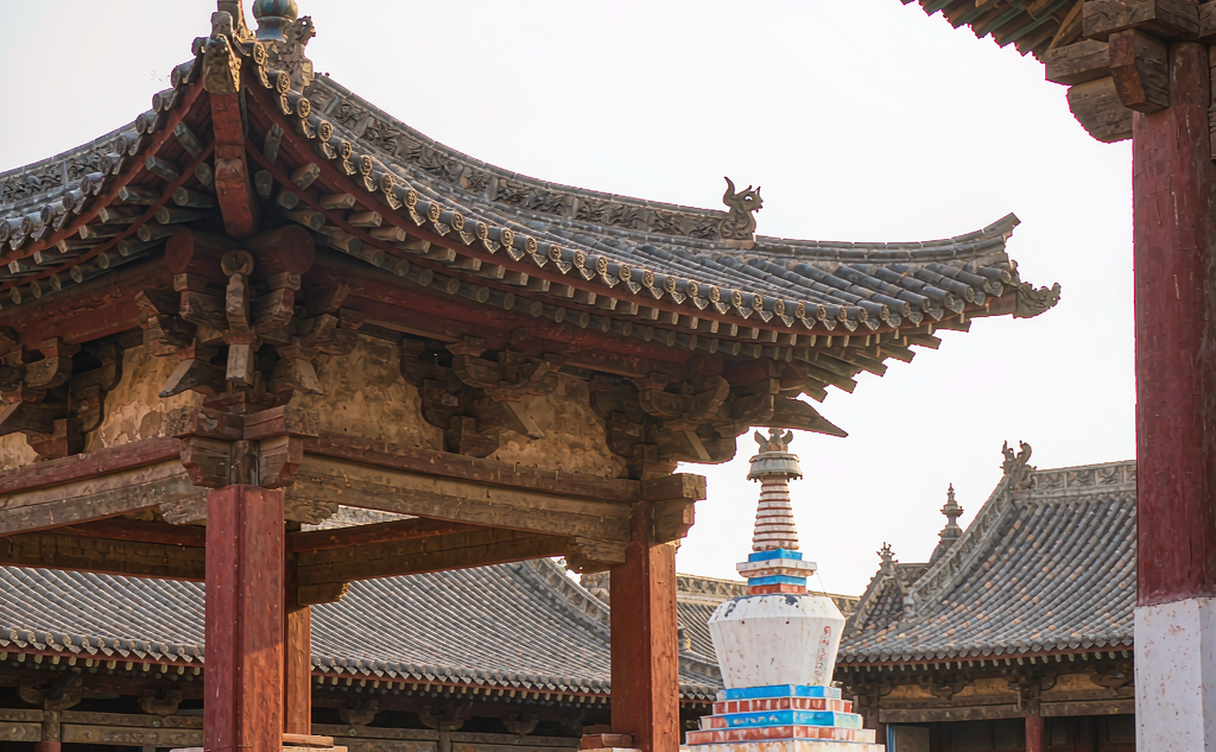
Qutan Temple (瞿昙寺) sits in the town of Qutan, in Ledu District of Haidong City, Qinghai Province. It was founded in 1392, the 25th year of the Hongwu reign, early in the Ming dynasty, when the founding emperor granted land and a name to a local Tibetan Buddhist monk. The name “Qutan” itself was bestowed by imperial order. What makes it unusual is that, while it has always been a Tibetan Buddhist institution (today affiliated with the Gelugpa school), its buildings were laid out and constructed in the formal, axial style of a Han Chinese palace.
The result is a 700-year-old complex that runs along a strict north–south axis: three main courtyards — Qutan, Baoguang, and Longguo — one behind the other, framed by red walls and watched over by yellow glazed-tile roofs. The scale is modest compared with the Forbidden City in Beijing, but the proportions, the ceremonial gates, and the sense of procession from one courtyard to the next are unmistakably imperial. That is exactly why it earned its nickname.
In our experience the comparison is the hook that makes the visit click for first-time visitors. Once you understand you are walking a miniature, plateau version of a Ming palace, the whole place reads differently.
The Murals and Why People Make the Trip
If the architecture is the frame, the murals are the reason serious visitors come. The halls of Qutan Temple hold more than 400 square meters of Ming-dynasty murals, much of it still vivid after six centuries. The subjects are Buddhist iconography — protective deities, celestial musicians, scenes from the life of the Buddha — but the painting style blends Tibetan thangka conventions with Chinese line work and pigment. Art historians regularly describe the cycle as one of the best-preserved examples of early Ming religious painting outside the great cave sites.
The murals line the long covered corridors (the “huilang”) that run along the sides of the main courtyards. Stand in the corridor in the morning, when the angled light falls across the plaster, and you can make out details that are easy to miss on a bright midday glare. Photography inside the halls is generally restricted, and the attendants are protective of the walls — respect that, and you’ll find the staff far more willing to point things out.
Beyond the murals, look for the stone stele from the Yongle era, the carved “Qutan Temple” plaque said to carry an imperial hand, and the colored clay sculptures in the main halls. None of it is flashy by the standards of a restored tourist site, which is precisely the appeal for travelers who are tired of over-produced attractions.
Things to Do at Qutan Temple
A visit here is slow by design. Plan to:
- Walk the axis. Move from the front gate through Qutan Courtyard, Baoguang Courtyard, and Longguo Courtyard, pausing at each hall. The sense of depth is the whole point.
- Read the corridors. The mural corridors take time. Bring a zoom lens if you photograph the exterior, but expect to leave the interior images to memory.
- Climb behind the complex. A short walk up the hillside behind the temple gives you the classic overview shot of the walled compound against the valley — this is where the “Forbidden City of the plateau” line really lands.
- Time your visit with the temple fair. The annual Qutan Temple fair (usually in the sixth lunar month) draws surrounding Hui, Tibetan, and Han communities for several days of performances, horse racing, and market stalls. It is crowded and a little chaotic, but it is also the one time the site feels fully alive.
For travelers building a longer Qinghai itinerary, the temple pairs naturally with a few days on the Qinghai Lake travel guide circuit, since both sit on a logical east–west line out of Xining.
How to Get to Qutan Temple
The practical question is always transport, and this is where a little planning saves money. The temple is not on a train line, so you go via Ledu and then transfer.
- Xining to Ledu. Frequent coaches leave Xining’s main bus stations for Ledu District (roughly 1.5–2 hours, around ¥25–35). A Didi or taxi for the whole run costs more but is comfortable if you are traveling as a small group.
- Ledu to the temple. From Ledu town it is another 20-plus kilometers. Local buses and share-taxis run when full; a private taxi for the round trip should cost in the range of ¥80–120 including waiting time. Agree on the price before you get in.
- Guided day trip. Several Xining operators run combined Qinghai Valley day trips that include Qutan Temple. These are the easiest option if you don’t want to orchestrate the two transfers yourself, though they trade flexibility for convenience.
We normally tell independent travelers to take the morning coach to Ledu, hire a taxi at the station, and return by mid-afternoon — it keeps the day relaxed and avoids the last-bus scramble.
Best Time to Visit Qutan Temple
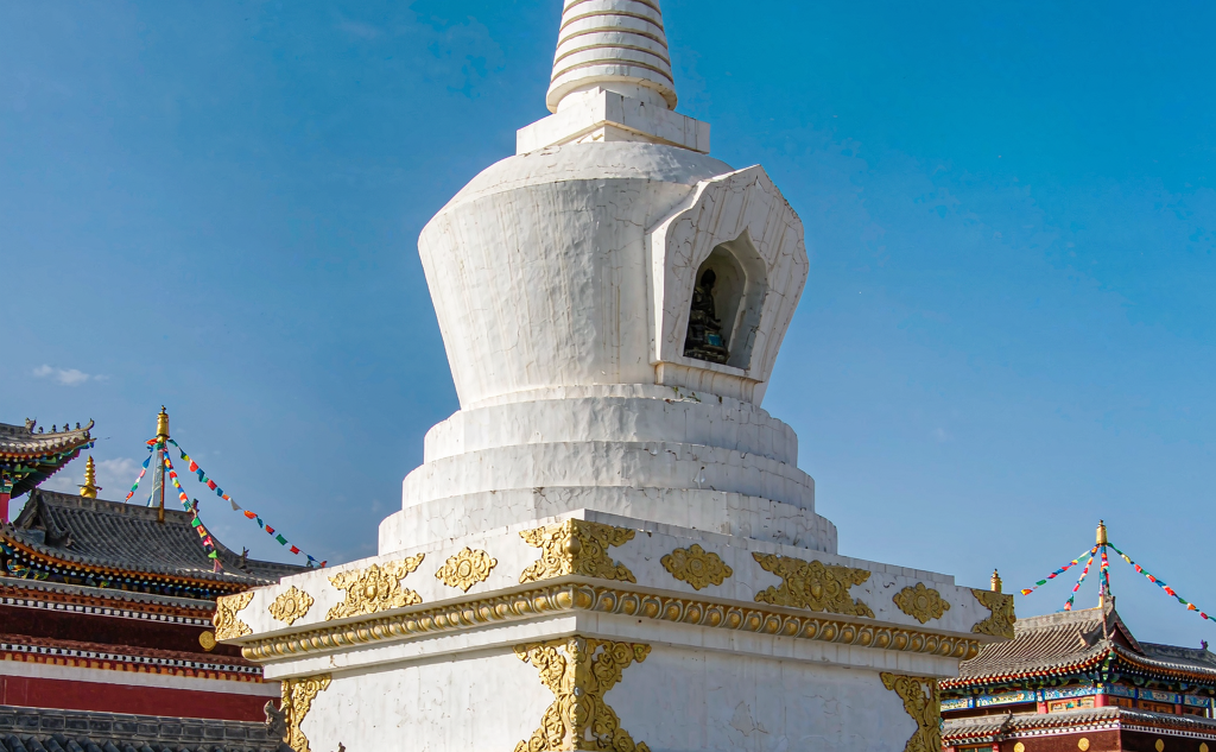
This is high, dry, northern Qinghai, so the season matters. The best time to visit Qutan Temple is late May through early October, when the valley is green, the roads are clear, and daytime temperatures sit in a comfortable 15–25°C range. Autumn, in particular — late September into October — gives you clear skies and warm-side light on the red walls that photographers will appreciate.
Winter is cold and quiet, with sub-zero nights and little going on, but if you happen to be in Xining off-season the temple is still open and you may have the courtyards nearly to yourself. Spring can bring dust and the occasional late snow. If you want the cultural peak, aim for the sixth-lunar-month fair; if you want the photos and the calm, aim for an autumn weekday.
Where to Eat and Stay
Ledu town has modest hotels and noodle shops if you want to break the trip, but most travelers base themselves in Xining and do Qutan as a day out. In Xining you’ll find the full range of stays and a strong best things to do in China spread of food, from hand-pulled beef noodles to Tibetan tsampa and butter tea. Around the temple itself, expect only basic stalls selling water, snacks, and the occasional grill — bring what you need, and carry cash, because card and phone payment can be unreliable in the small shops.
Plan your Qinghai leg around the season: check our best time to visit China overview before you lock in dates, and book Xining accommodation early if you’re traveling in July and August, when the summer escape crowd fills the city.
Practical Tips We Give Travelers
A few things that smooth the visit. Dress in layers — the valley warms fast but the halls and the hilltop breeze are cool. Wear shoes with grip if you plan to climb behind the complex. Carry small cash for the taxi top-up and snacks. And give yourself at least two hours on site; rushed visitors miss the murals entirely.
If you are coming from farther afield and arriving by rail, our China high-speed train guide for foreigners covers how to reach Xining efficiently, and our China travel guide for first-timers lays out the routing and paperwork basics for a smooth trip.
If you’re combining Qutan Temple with a longer Qinghai loop, sketch the route backward from Qinghai Lake so the temple becomes a logical stop on the way east rather than a separate out-and-back drive.
Why the Detour Is Worth It
Qutan Temple will not appear on most packaged Qinghai tours, and that is exactly its strength. It is a place where the imperial grammar of the Ming meets the devotional world of the Tibetan plateau, preserved in paint and timber rather than rebuilt for spectacle. We’ve watched travelers who expected a quick photo stop end up sitting on a courtyard bench for an hour, just taking in the quiet.
For background on the site’s history and layout, the encyclopedic entry at Wikipedia’s Qutan Temple page is a useful pre-read, though nothing replaces standing in the corridor when the morning light hits the frescoes.
When you’ve finished with Qinghai, browse the rest of our China destination guides to build the next leg — from plateau monasteries to old towns and river cruises, there’s a route waiting to be planned.