

There is a moment, somewhere in late March, when the whole of China seems to exhale after winter. I first felt it standing on the causeway at Hangzhou’s West Lake, watching a light rain turn the willow tips neon green and a single boat drift through the mist. That is the magic of China spring travel: the crowds of summer have not arrived, the air is soft, and the country puts on its most photogenic face. This guide pulls together everything I have learned across a dozen spring trips, from the rapeseed seas of Jiangxi to the peony courts of Luoyang, so you can plan a trip that is beautiful, comfortable, and genuinely memorable.
Why spring is the best shoulder season
Spring in China roughly runs from mid-March to late May. It is the sweet spot between the freezing north of January and the humid, school-holiday crush of July and August. For China spring travel tips, the single most important one is this: book your hotels and high-speed train tickets two to four weeks ahead, because the Qingming Festival (usually April 4–6) triggers a short but intense domestic travel spike. Prices do not jump as hard as during National Day in October, but popular spots like West Lake and the Li River fill up fast.
Temperatures are pleasant: Hangzhou and Suzhou sit around 15–24°C (59–75°F), Guilin 18–26°C (64–79°F), and Beijing 12–22°C (54–72°F). You will want a light jacket for evenings and an umbrella for the occasional spring shower. When I visited Chengdu in April, the jianbing stalls and tea houses were buzzing but never packed, and a hostel bed cost me about 90 RMB while a four-star hotel ran 400–600 RMB.
Best places to visit in China spring
If you ask me for the best places to visit in China spring, I would start with a short list that balances flowers, comfortable weather, and easy logistics.
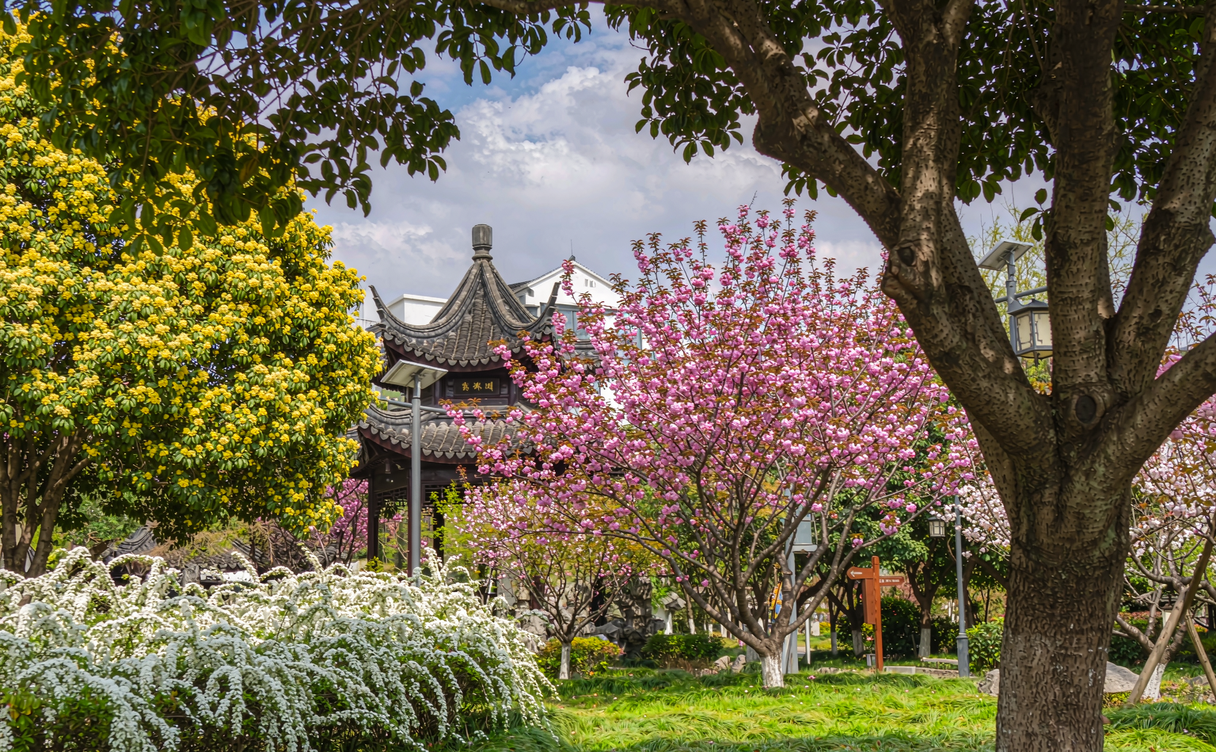
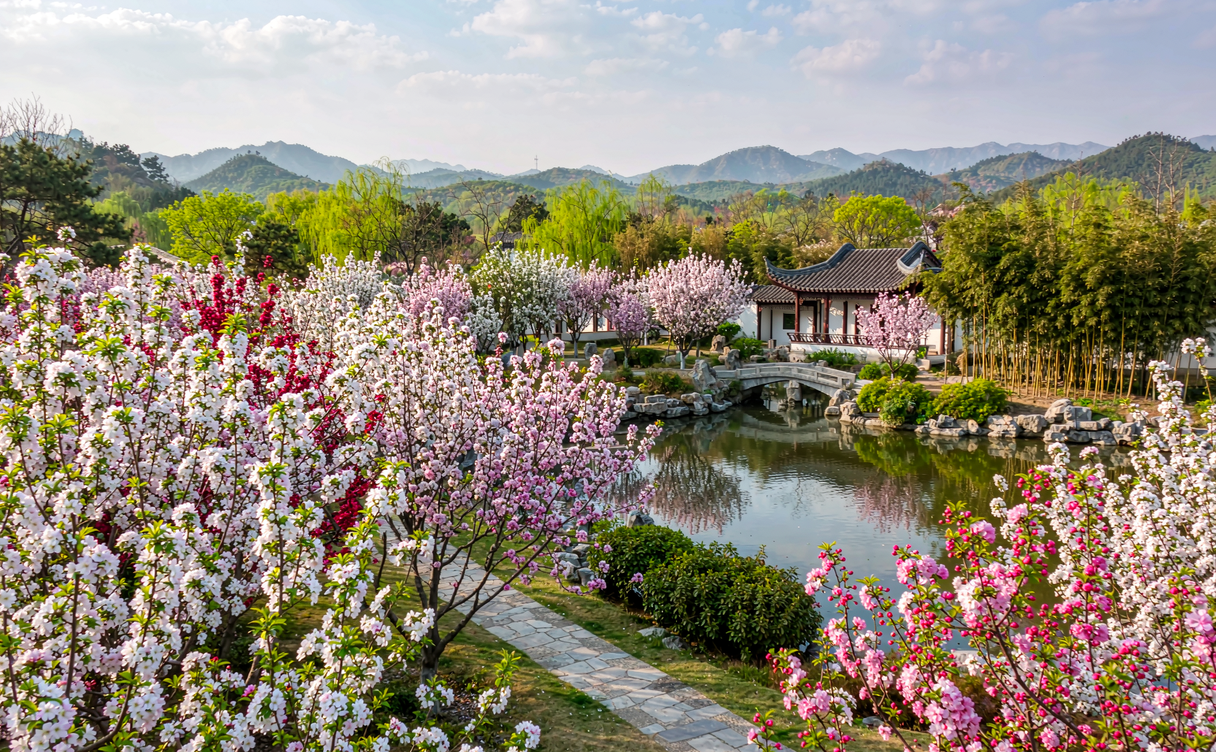
Hangzhou and the West Lake are the obvious first stop. The lake’s willows and peach trees are timed by centuries of gardening, and a 40 RMB boat ride gets you onto the water without the summer queues. Nearby Wuzhen and Xitang, two of the finest water towns, are quieter in April than in any other month. Our best ancient towns China guide breaks down which ones are worth an overnight stay versus a half-day stroll.
Guilin and Yangshuo deliver the postcard karst peaks reflected in green rice paddies. I cycled the Ten-Mile Gallery outside Yangshuo in April and had whole stretches of road to myself. A river cruise from Guilin to Yangshuo costs 210–360 RMB depending on the boat class, and bike rental is a trivial 20–40 RMB per day.
Wuyuan, in Jiangxi province, is the secret I wish more foreigners knew. Its terraced rapeseed flowers blaze yellow across white-washed Hui-style villages for about three weeks from late March. Entrance to the county’s linked scenic villages is bundled into a 210 RMB pass valid for several days.
Luoyang, Henan hosts the National Peony Festival in April, when millions of blooms cover the city’s parks. A combined ticket to the Wangcheng Park peony gardens runs about 50 RMB. And if you love mountain air, Huangshan (Yellow Mountain) in Anhui shakes off its winter ice by late March, offering cloud seas and new-green pines with far fewer climbers than autumn.
For the wider planning picture, our best time to visit China article explains how spring compares month by month with the other seasons.
A realistic China spring itinerary
A good China spring itinerary needs to respect the geography. China is huge, and trying to cram Beijing, Chengdu, and Guilin into ten days in spring will leave you on trains more than trails. Here is the route I recommend and have personally ridden.
Days 1–3: Hangzhou and Suzhou. Fly into Shanghai (PVG or Hongqiao), then take the high-speed train — about 50 minutes to Hangzhou (73 RMB second class) or 25 minutes to Suzhou (40 RMB). Spend two nights in Hangzhou, one in Suzhou for the Humble Administrator’s Garden, then an overnight in a water town.
Days 4–6: Guilin and Yangshuo. An overnight sleeper train or a 90-minute flight gets you south. Base yourself in Yangshuo, not Guilin city, for the landscape. This is where spring flowers in China meet dramatic limestone peaks, and the combo is unbeatable.
Days 7–9: Chengdu and Mount Emei. Fly Chengdu, eat your weight in Sichuan food, then train an hour and a half to Emei for cooler mountain air and the chance of seeing monkeys along the lower trails.
Days 10–12: Xi’an for a half-day at the Terracotta Army and a night walk on the city wall, then fly home.
This loop is the backbone of many first visits, and our China travel guide for first-timers fills in the visa, payment, and SIM-card details you will need before you board.
Getting around by train
Spring is when China’s high-speed rail really shines, because the weather is good for the walk from the station to your hotel. Our China high-speed train guide for foreigners walks you through buying tickets on the 12306 app and on Trip.com. As a rule of thumb, second-class fares run about 0.45 RMB per kilometer, so a 1,000 km hop costs roughly 450 RMB — a fraction of a last-minute flight. Booking opens 15 days ahead, and for Qingming weekend you should grab seats the minute they release.
What to eat and pack
China spring weather is mild but changeable, so layer. A packable rain shell, one warm layer, and comfortable walking shoes are enough. The seasonal food is a highlight: spring bamboo shoots (春笋) in Hangzhou, cold tossed wild vegetables in Yunnan, and the first green tea of the year, Longjing, picked around West Lake in early April. I paid 120 RMB for a small tin at a lakeside teahouse and it tasted like cut grass and sunshine.
Festivals worth timing your trip around
Spring carries two festivals that change the rhythm of the country. Qingming (Tomb-Sweeping Day) in early April is when families visit ancestral graves and then picnic — it is a moving cultural window, though domestic transport is busy. The Water-Splashing Festival of the Dai people in Xishuangbanna, Yunnan, falls in mid-April and is one of the most joyful parties in the country. Our China festivals guide maps the full calendar so you can build a trip around a single event.
My honest take after many springs
If I could send one message to a first-time spring traveler, it is this: slow down. The temptation is to chase every flower field, but the best China spring travel memories I have are small — a quiet tea by the lake, a bicycle ride with no plan, a peony I did not expect. West Lake, for the record, is protected as a UNESCO World Heritage Site, and that status is part of why the setting feels so carefully preserved.
For a deeper menu of activities beyond flowers, our best things to do in China page lists experiences from cooking classes to night-market crawls that pair perfectly with a spring route.
Practical bookability notes
Most spring attractions sell tickets through WeChat mini-programs or携程 (Trip.com), and foreign cards now work on Trip.com for the big sights. West Lake itself is free to walk, which is rare and wonderful. For paid sites, budget 50–210 RMB per attraction, and consider the official tourist-pass bundles some cities offer in spring. Accommodation in tier-two cities runs 250–500 RMB for a comfortable hotel, while Shanghai and Beijing push 600–1,200 RMB for the same standard in peak weeks.