

Most travelers race through Eryuan on the highway between Dali and Lijiang without realizing the county they’re crossing is the very place that feeds the famous lake ahead of them. Eryuan — the name means “source of Erhai” — sits at the headwaters of Erhai Lake in the Dali Bai Autonomous Prefecture, and it’s a quiet, steamy, flower-strewn corner of Yunnan that rewards anyone willing to slow down. On our last visit we soaked in a hillside hot spring at dusk while plum blossoms drifted past, and that single evening is why we keep sending people here. This Eryuan travel guide is the briefing we give them.
The county’s identity rests on two things: water and warmth. Eryuan Erhai source is no single spring but a web of streams, wetlands and a small lake — Cibi Lake (茘碧湖) — that together form the headwaters feeding Erhai a few valleys downstream. The Bai people here have farmed this watershed for a thousand years, and the rhythm is gentle: rice, plum orchards, and a famous local pear blossom that turns the fields white in February and March. The other draw is heat, literally — Eryuan sits over a geothermal field, and the Eryuan hot springs are the reason most visitors actually stop.
The flagship soak is Dali Geothermal Country (大理地热国), a large hot-spring resort built around dozens of pools of varying temperature and mineral content, some shaped like fish or lotus, others tucked into gardens. Day tickets run about ¥168–268 depending on season and which pool zones you want, and you can also book a room and soak through the evening. For a more local feel, the villages of Niujie and Xiaoshankou have smaller spring hotels where a soak and a night together cost ¥400–900. We usually steer first-timers to Geothermal Country for the variety, then to a village spring for the quiet.
The best time to visit Eryuan splits into two good windows. Winter (November to March) is prime hot-spring season — cool, dry days and warm water make the contrast delicious, and the skies are usually clear. Late winter into early spring (February to March) adds the plum and pear blossoms across the fields, which is our personal favorite. Avoid the monsoon, roughly June to August, when the watershed swells, the light goes flat, and the outdoor springs feel less inviting. Even in dry season, bring a layer for the cool evenings at 2,000 m.
How to get to Eryuan is straightforward once you’re in Yunnan. There’s no high-speed rail station in the county, so the practical move is to take the train to Dali Station (on the Kunming–Dali line) and then a bus or taxi northwest for about 1.5–2 hours (¥30–45 by bus, ¥200–300 by car). From Lijiang it’s the reverse direction, about two hours by road. The nearest airport is Dali (DLU), with flights from Kunming and a few other hubs; from there it’s the same bus run. We book a driver for clients who want to combine Eryuan with the Erhai lakeshore in one loop, because the hot-spring villages are spread along the valley and buses stop often. The Dali Yunnan travel guide is the obvious base for planning that wider loop.
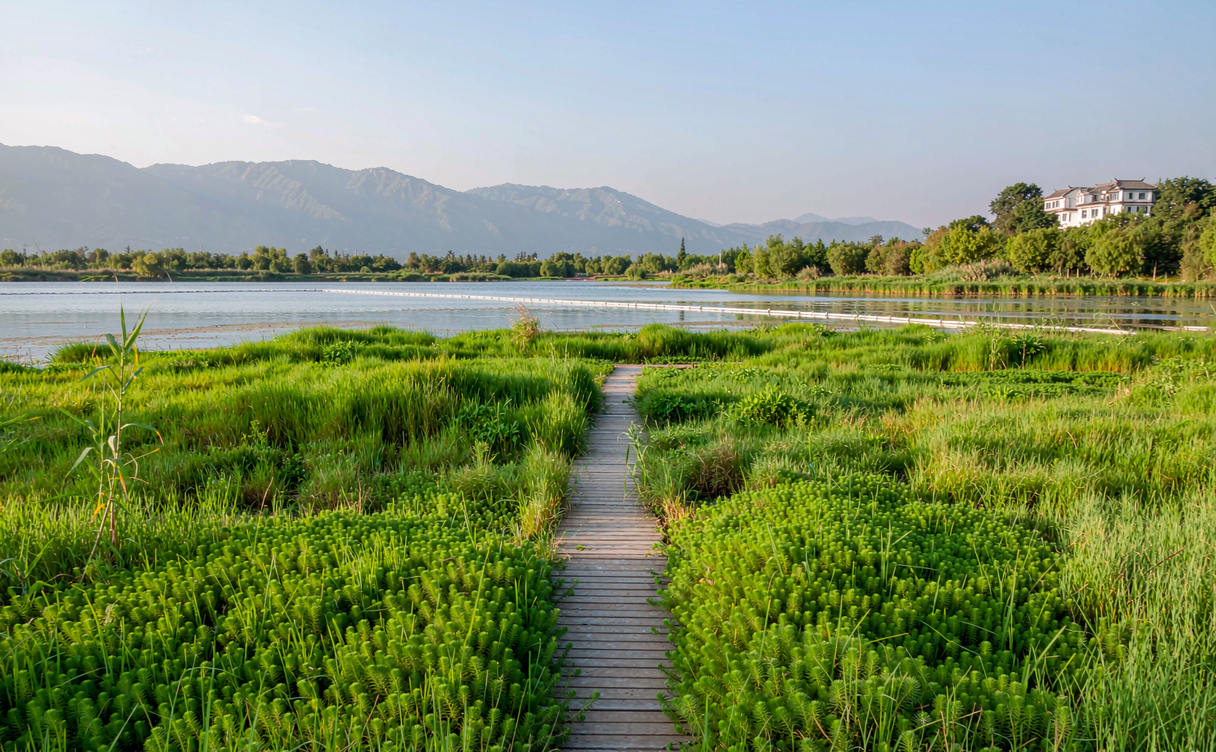
Things to do in Eryuan go well past soaking. The Cibi Lake is a pretty, less-commercial cousin of Erhai where you can paddle or walk the shore and watch Bai fishermen. The Eryuan West Lake (西湖) is a plateau wetland threaded by canals and Bai villages — rent a bicycle and you’ll have the paths largely to yourself. For something higher and wilder, Niaodiao Mountain (鸟吊山) is a seasonal bird-migration pass where, in autumn, thousands of raptors ride the thermals; we’ve stood there on a September afternoon and counted dozens in a single sweep. The historic town of Fengyu (凤羽), a short drive away, is a rustic Bai market town increasingly loved by painters and writers for its old lanes and surrounding farmland.
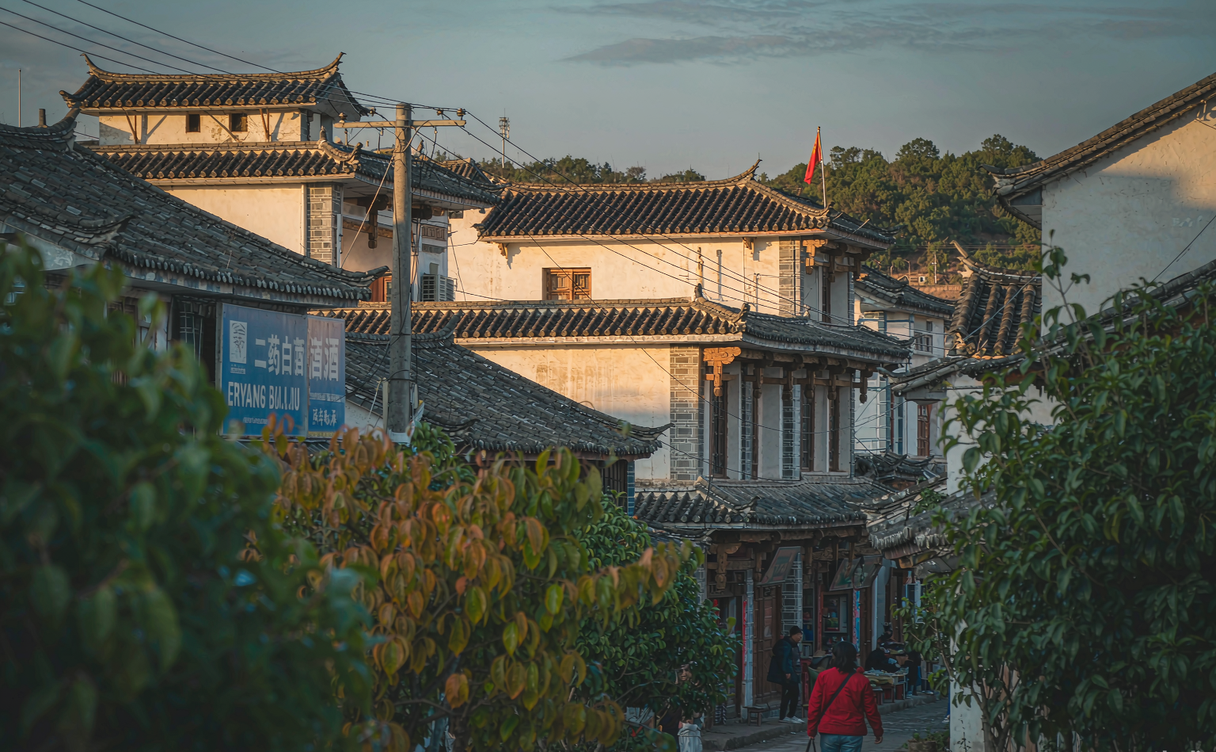
A realistic Eryuan travel itinerary is two days. Day 1: arrive from Dali, check into a spring resort, and soak through the afternoon and evening. Day 2: a morning bicycle loop around the West Lake wetland or a walk at Cibi, lunch on Bai cuisine, then a visit to Fengyu town before the drive back toward Dali or onward to Lijiang. Daily spend for two runs about ¥200–350 transport, ¥400–900 lodging (spring resorts cost more), ¥200–300 food and tickets.
Where to stay is dominated by the hot-spring properties, which our China hot springs resorts guide covers in detail — book a pool-view room in winter, because that’s when they sell out. The county town has cheaper standard hotels (¥250–400) if you’d rather soak by day and sleep cheap. We prefer a room with a private outdoor tub so you can soak under the stars after dinner, and we book it for two nights rather than one, because a single evening never feels like enough once the steam loosens the road out of you.
For a fuller Yunnan plan, the Erhai Lake guide explains the lake Eryuan feeds and the lakeshore towns to pair with it, the Kunming travel guide is your flight hub, and the Lijiang travel guide anchors the northern end of the same corridor. If you want mountain water instead of warm water, the Lugu Lake Yunnan guide is a longer drive north but worth the detour.
Eryuan eats from its water and orchards. Bai cooks steam Erhai fish with ginger and local ham, braise free-range chicken with mountain yam, and pickle plums into a sweet-sour condiment that cuts the richness. A lakeside dinner for two runs ¥100–180, and the West Lake wetland villages sell fresh water greens and river shrimp by the bowl for under ¥40 a head. We tell clients to try the plum-blossom honey sold at roadside stalls in February — it is the one edible souvenir worth carrying home.
A practical note for soakers: the big resorts take cards and apps, but the village springs often want cash, and their changing rooms are basic, so bring your own towel and slippers. The valley gets cool after dark even in spring, so pack a light jacket for the walk back to your room. If you are driving yourself, fill up in Dali, because Eryuan’s fuel stations keep limited hours and the spring villages have none. A half-day side trip we like is the short drive to the higher meadows above Fengyu, where in March the pear and plum blossoms form a white sea above the Bai rooftops — a quiet, free rival to the more famous terrace scenes, best enjoyed on a slow walk through lanes still ploughed by water buffalo.
A straight-talk note: some smaller village springs are loosely maintained, so check recent reviews before you book, and don’t expect international-standard changing rooms at the rustic ones. Also, the headwater wetlands are environmentally sensitive — stay on marked paths and don’t wade the source streams. For the bigger picture, the lake system Eryuan feeds is described on Wikipedia’s Erhai Lake page, useful context before you go.
In the end, Eryuan is the warm, slow exhale between Dali’s lake and Lijiang’s mountains — a place to trade sightseeing for steam, blossoms and a quiet Bai village. Build it into your corridor and you’ll remember the soak as much as the summits.