

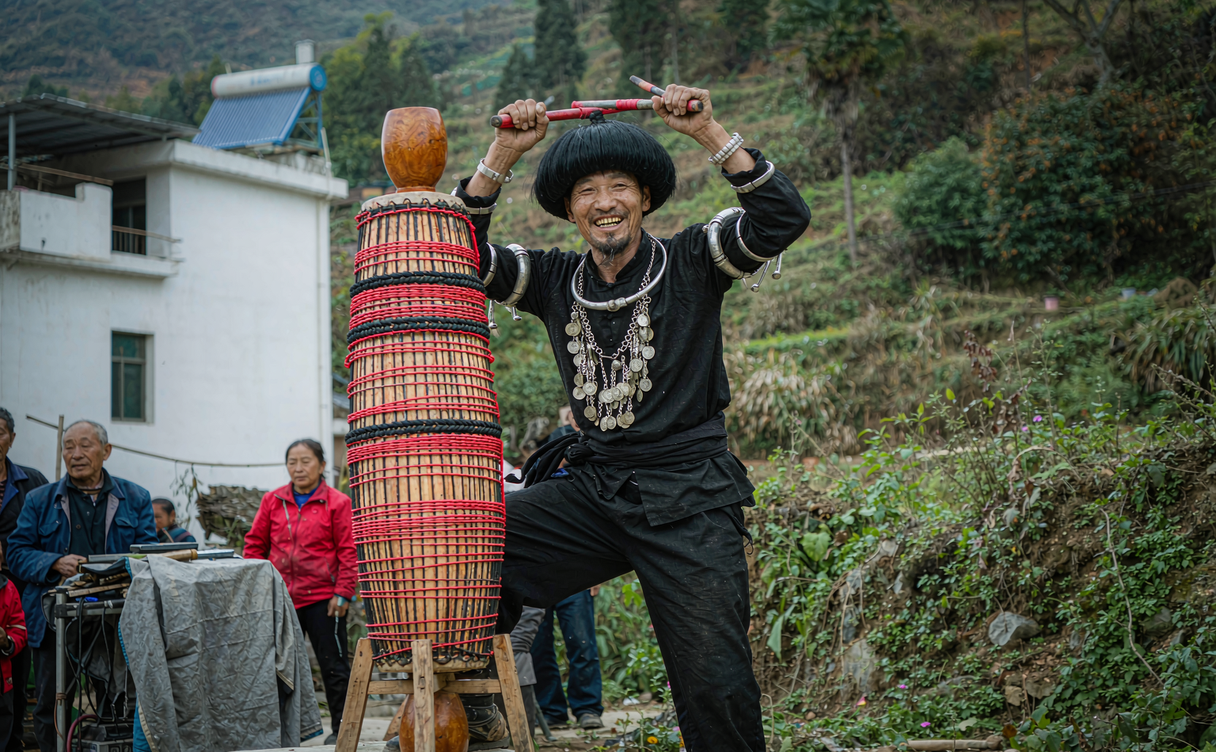
The first time we drove into Cangyuan, a Wa elder greeted us at a village gate with a wooden drum beat that seemed to come out of the ground itself. This remote county in Lincang City, pressed against the border with Myanmar, is the heartland of the Wa people, and it feels like a different China from the Yunnan most tourists see. If you’re the kind of traveler who wants living minority culture rather than a staged show, this Cangyuan travel guide is the field note we wish we’d had before our first trip.
Cangyuan is, above all, about Cangyuan Wa culture. The Wa (佤族) are one of Yunnan’s oldest ethnic groups, and here they are the majority in their own county — something you feel the moment you arrive. Their mythology centers on “Sigangli,” the place of human origin, and their social life has long revolved around the wooden drum (木鼓), once believed to speak to the gods. On our last visit, a village put on a drum-and-dance welcome that went on for an hour, and not one move looked rehearsed for tourists. The big public celebration is the “Moyouni” (摸你黑) festival in May, where everyone smears each other with a black herbal paste for luck and laughter — messy, joyous, and the best single reason to time a spring trip.
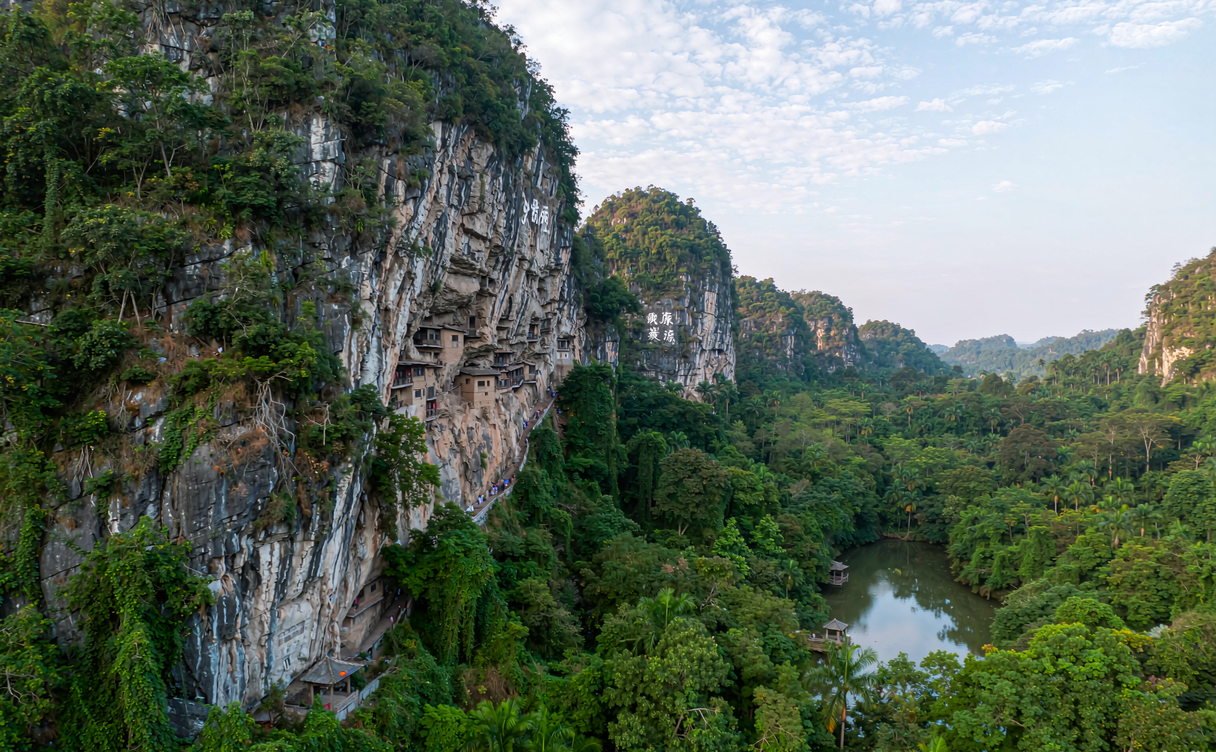
The most important ancient sight is the Cangyuan cliff paintings (沧源崖画), a series of red-ochre rock art sites scattered through Menglai Gorge. Archaeologists date them to roughly 3,000 years old, and the stylized figures — hunters, dancers, animals — are among the finest Neolithic art in southwest China. They’re a protected national relic, not a theme park; you view them from platforms, and a local guide will explain the legends behind each panel. We tell clients to go in the soft morning light, when the pigment reads strongest against the rock.
Cangyuan Wengding village deserves a careful, honest mention. For years Wengding was famous as “China’s last primitive tribe,” a cluster of thatched stilt houses where Wa life looked frozen in time, and it drew big crowds. Then, in February 2021, a fire swept through the original old village and destroyed most of those historic structures. What you visit today is a rebuilt version on the same site, neat and photogenic but no longer the centuries-old original. We say this plainly because some older blogs still describe the pre-fire village — don’t expect the untouched original, but the surrounding hills, the drum square and the daily cultural demonstrations are real and worth seeing. Treat it as a cultural showcase rather than a living museum, and you won’t be disappointed.
The best time to visit Cangyuan is the dry season, roughly November through March, when days are cool and clear and the mountain roads are reliable. April and May bring the Moyouni festival and warmer weather, still good. We strongly advise against June to August, the monsoon, when heavy rain triggers landslides on the mountain routes and the cliff-painting sites can be closed for safety. Even in dry season, pack a layer — nights at 1,200 m dip into the low teens.
How to get to Cangyuan is easier than its remoteness suggests. Cangyuan Washan Airport (沧源佤山机场) opened in 2016 and now has daily flights from Kunming (about one hour, ¥400–900 depending on season) plus short hops from Lincang. On the ground, the drive from Lincang city takes about three hours of winding mountain road, and from Xishuangbanna it’s four to five hours. There is no high-speed rail here, so flying in or basing from Lincang and hiring a car are the realistic options; we book the airport transfer plus a driver because the sights are spread across a large, hilly county. For a wider Yunnan frame, the Lincang travel guide covers the tea city that serves as Cangyuan’s gateway.
Things to do in Cangyuan fill three or four unhurried days. Beyond the cliff paintings and Wengding, the Menglai Grand Canyon offers red-rock walls and a river walk, and the Hulu (gourd) Town near the county seat is a tidy new cultural district built around Wa gourd symbolism, good for an evening stroll and a cheap dinner of sour bamboo shoot and grilled river fish. We’ve taken clients to a small village where women still weave on back-strap looms, and the purchases there go straight to the maker. Admission to the cliff-painting sites and canyon runs about ¥50–80 each; Wengding’s rebuilt area charges around ¥50–80 as well.
A sensible Cangyuan travel itinerary is three days. Day 1: fly in from Kunming, settle in the county town, and walk Hulu Town at dusk. Day 2: the cliff paintings and Menglai Canyon in the morning, Wengding village and a drum performance in the afternoon. Day 3: a village weaving or tea stop, then fly out or drive toward Xishuangbanna. Daily spend for two runs about ¥300–500 transport, ¥300–600 lodging, ¥200–300 food and tickets.
Where to stay is simple: the county town has decent hotels (¥250–450) and a couple of characterful guesthouses; we avoid the farthest villages for overnight because services are thin. We prefer the county town for first-timers, because the restaurants, the ATM and the morning market are all within a short walk, and a driver can still reach every sight in under an hour. The China ethnic minorities travel guide has more on Wa etiquette — for example, ask before photographing elders, and never touch a ceremonial drum without invitation.
For a broader Yunnan plan, the Xishuangbanna travel guide is the tropical Dai counterpart two days east, the Kunming travel guide is your flight hub, and the Dali Yunnan travel guide plus the Lijiang travel guide anchor the classic northwest loop if you’re stringing the province together.
Cangyuan’s table is bold and sour. Wa and Dai cooks pound chili, lemongrass and fermented soy into dips for grilled river fish, smoke pork over tea wood, and serve sour bamboo-shoot soup that wakes up any palate. A village meal for two is ¥80–140, and the county town’s evening market adds sticky rice, roasted corn and grilled meat for under ¥40 a head. We always warn first-timers about the heat — the local broth can be fiercer than it looks, so ask for “wei la” (mild) if you are unsure.
Getting around the county needs planning. Public buses connect the town to the main sites but run infrequently and stop by mid-afternoon, so a hired car with a local driver is the realistic way to see the cliff paintings, the canyon and Wengding in one day. Roads are paved but narrow, and a few village approaches are rough after rain. At 1,200 m the air is thin enough that some visitors feel light-headed on the first day, so drink water and keep the first evening easy. Carry small cash, because guesthouses and stalls outside town do not take cards, and fill the tank in Lincang before the final mountain leg.
One honest caution: cell coverage thins out past the county town, and some village guesthouses take only cash, so carry ¥300–500 in small bills. The background on the people and the paintings is well summarized on Wikipedia’s Cangyuan County page, a good read before you fly in.
Cangyuan won’t flatter you with polished scenery, but it will give you something rarer: a culture you can hear, taste and join. Go in the dry season, go with respect, and it may be the most memorable stop on your Yunnan journey.