

A Huangguoshu Waterfall guide has to start with scale, because numbers fail. At its summer peak this is the widest waterfall in China — about 80 meters high and more than 100 meters wide — and the roar arrives before the view does. Huangguoshu sits in Anshun, Guizhou, southwest China, and on our last trip we felt the spray from a viewing platform a hundred meters back, then walked straight behind the falling wall through a carved-out cave. That behind-the-water moment is the reason the name stays with people.
We’ve sent clients here as the wet, loud counterpoint to Guizhou’s quiet villages, and it works as a half-day block or a full-day sprawl. If you only see one waterfall in China, make it this one.
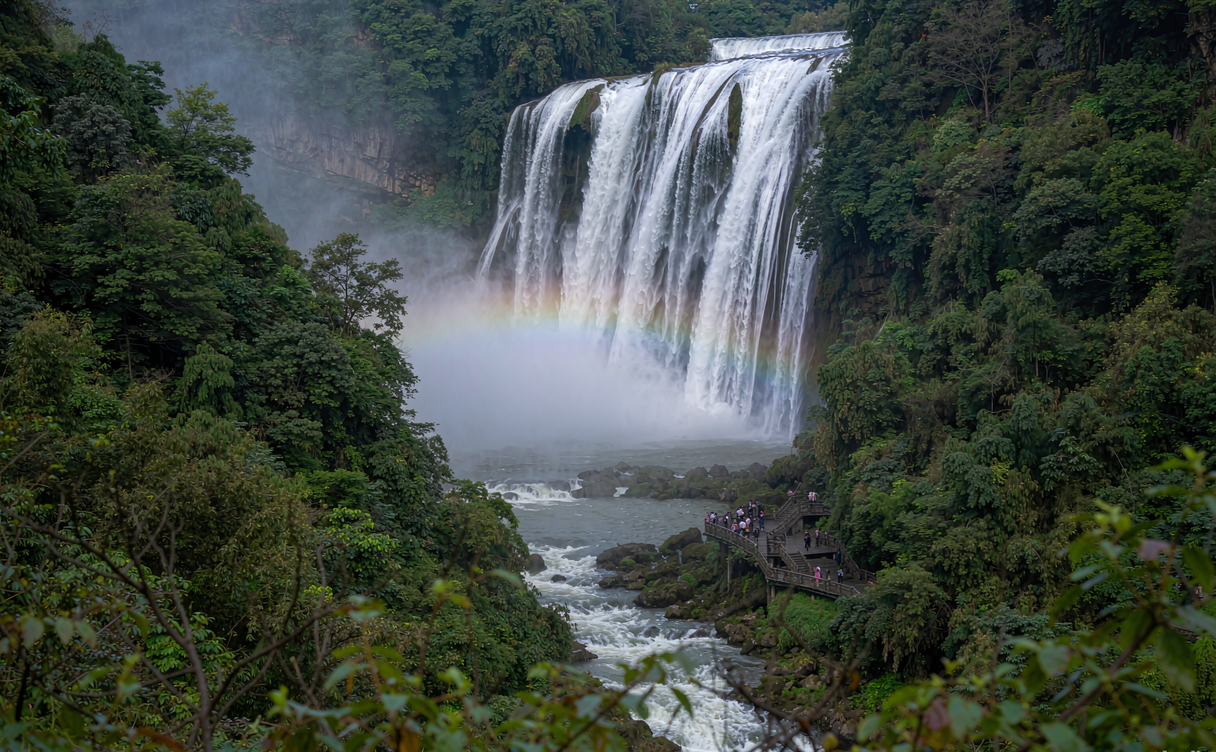
Why Huangguoshu is Guizhou’s headline cascade
Huangguoshu is not a single drop but the centerpiece of a whole karst river system — the Baishui River steps down through more than a dozen falls inside one scenic area. The main fall is the star, but the real magic is the Water Curtain Cave (Shuilian Dong), a tunnel carved behind the cascade where you stand with the river thundering inches from your face. Walk it once and you understand why the old TV adaptation of “Journey to the West” filmed here.
Entry runs about 160 RMB in peak season, plus a 50 RMB sightseeing bus that you will want because the three sections are spread out. A one-way escalator beside the main fall is another 30 RMB and saves a hot climb. Our China travel guide for first-timers covers the booking apps and payment setup that make reserving the timed ticket straightforward from anywhere.
Best time to visit Huangguoshu
The waterfall lives on rain. The wet season (June to September) delivers the full roar — sometimes too full, when the viewing platforms close in heavy flood — and the surrounding hills go green. We like May–June and September–October best: strong flow, fewer crowds than July–August, and clearer mornings. Winter (November to April) is the lean season; the fall shrinks to a thin silver thread and the magic dims, so we rarely send people then unless they specifically want quiet.
For the national context, the best time to visit China page maps the climate bands, but Guizhou’s karst runs on its own monsoon clock. Aim for a clear morning after a few rainy days — that is when you get both volume and a rainbow in the mist.
How to get to Huangguoshu
The fast route is the train to Anshun West (安顺西) station. From Guiyang North it’s about 30–40 minutes by high-speed rail (second class 45–65 RMB); from Kunming roughly 2–2.5 hours. From Anshun West, the scenic-area shuttle runs about 40 minutes and costs 20–30 RMB, or a private car is 80–120 RMB and drops you at the gate.
Flights land at Guiyang Longdongbao (KWE); from there it is a train to Anshun or a direct car transfer of about 1.5–2 hours. We usually book the train plus a pre-arranged car from Anshun West, because the last leg has few English signs and ride apps thin out at the park lot.
If you are building a Guizhou circuit, pair the falls with our Guizhou Libo Xiaoqikong karst lakes a few hours south, and the Guizhou Zhaoxing Dong village guide for Dong culture to the southeast. The Wanfenglin Guizhou guide adds the “forest of ten thousand peaks” near Xingyi if you want raw landscape after the water.
Things to do at Huangguoshu
The main fall and front platform. The classic view, with the full width and the mist rainbow. Arrive before 10am to beat the tour buses; the spray soaks the front row, so bring a jacket.
Water Curtain Cave. The behind-the-falls tunnel, included with entry. It is narrow, wet, and unforgettable — flip-flops or quick-dry shoes help.
Tianxingqiao (Star Bridge) area. Downstream, this section is calmer karst: stone forests, small falls, and the “Silver Chain Falling onto a Piano” cascade, a thin ribbon threading the rocks. Allow 2 hours; the far end is the prettiest and least visited.
Doupotang Waterfall. The broad, gentle upper fall where “Journey to the West” opened each episode. It is quieter and good for a picnic stop. Reachable on the same bus loop.
Food. Anshun does the Guizhou sour thing proud. Try the local “bo bo” rice cakes and sour fish; a casual meal is 40–70 RMB. For the flavor background, our Guizhou sour soup guide explains the fermented soup that defines the region’s table.
A Huangguoshu itinerary
Day 1: train to Anshun, transfer to the park, half-day at the main fall and Water Curtain Cave, overnight in Anshun or at a gate hotel. Day 2: Tianxingqiao and Doupotang, lunch, return to Guiyang or onward to Libo. We’ve run this as a relaxed two-day block, and clients who only have one day still see the headline fall plus the cave by arriving at opening.
Practical tips for the falls
Huangguoshu is a wet day by design, and a little prep turns a soaked slog into a highlight. We tell clients to bring a packable rain jacket and shoes with grip — the Water Curtain Cave floor is slick and the mist soaks the front viewing platform within minutes. A small dry bag for the phone and passport is worth its weight; the spray reaches the upper walkways too. The park is huge and the three sections share one one-way bus loop, so once you pass a stop you cannot double back without riding the full circuit — plan the order before you start. We send people clockwise: main fall, cave, then Tianxingqiao last, because the far end of Tianxingqiao is the prettiest and you want energy and light for it. A full loop on foot plus waits runs 5–6 hours, so arrive at the 7:30am opening if you can. Buy the combined ticket online rather than at the gate — it is the same price but skips the worst of the queue, and the timed slot protects you from peak-day caps. Midweek beats weekend by a wide margin, and a rainy-morning arrival actually improves the cave, because the flow is up and the crowds are down.
Where to stay and what’s bookable today
Anshun has reliable hotels at 200–450 RMB a night, and a few properties sit right at the park gate at 400–700 RMB for a sunrise start. The timed ticket is sold online and caps daily entry in peak season, so book a day or two ahead in July and August. The sightseeing bus is mandatory and bundled at the gate; the escalator is optional but worth it in the heat.
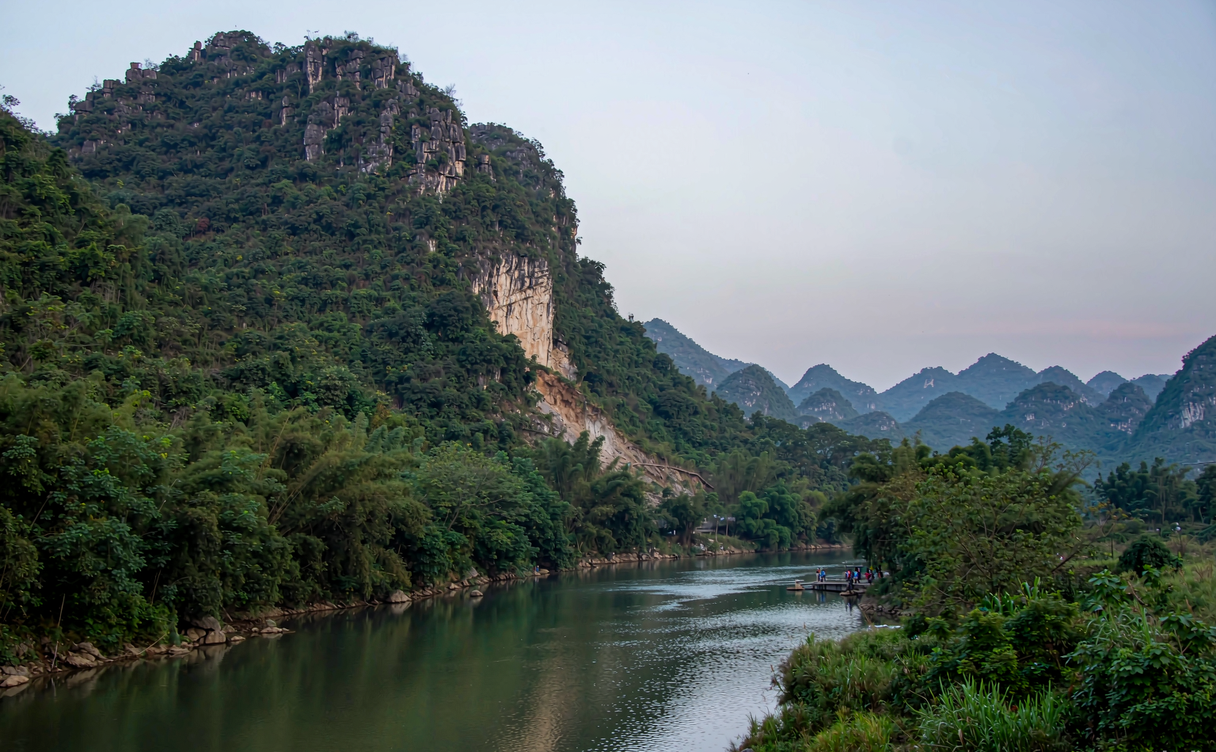
The one tip we repeat: do the main fall first, the cave while it is still dry-ish in the morning, then Tianxingqiao after lunch when the light softens. Reverse it and you fight both the crowds and the wet.
Before you go / References
Huangguoshu is a wet, energetic day — pack a light rain jacket, grip-sole shoes, and a dry bag for the phone, because the mist finds everyone. For the geology and scale, see the Huangguoshu Waterfall entry on Wikipedia, which notes its place among Asia’s largest falls and the cave system behind it.