

A Xitang travel guide has to make one point up front: the town you see at 3pm is not the town you see at 9pm. Xitang is a Jiangnan water town in Jiashan County, Jiaxing, Zhejiang, barely 80 kilometers from Shanghai, and it is built for the after-dark hours. On our last trip we watched the day-tripper buses roll out at five, the red lanterns flick on along the canals, and the whole place shift from a postcard into a low-key riverside party.
We’ve sent clients here as a half-day escape from Shanghai’s noise, and the ones who stay overnight are the ones who write us thank-you notes. Xitang rewards the traveler who lingers, and that is exactly what this guide is built to help you do.
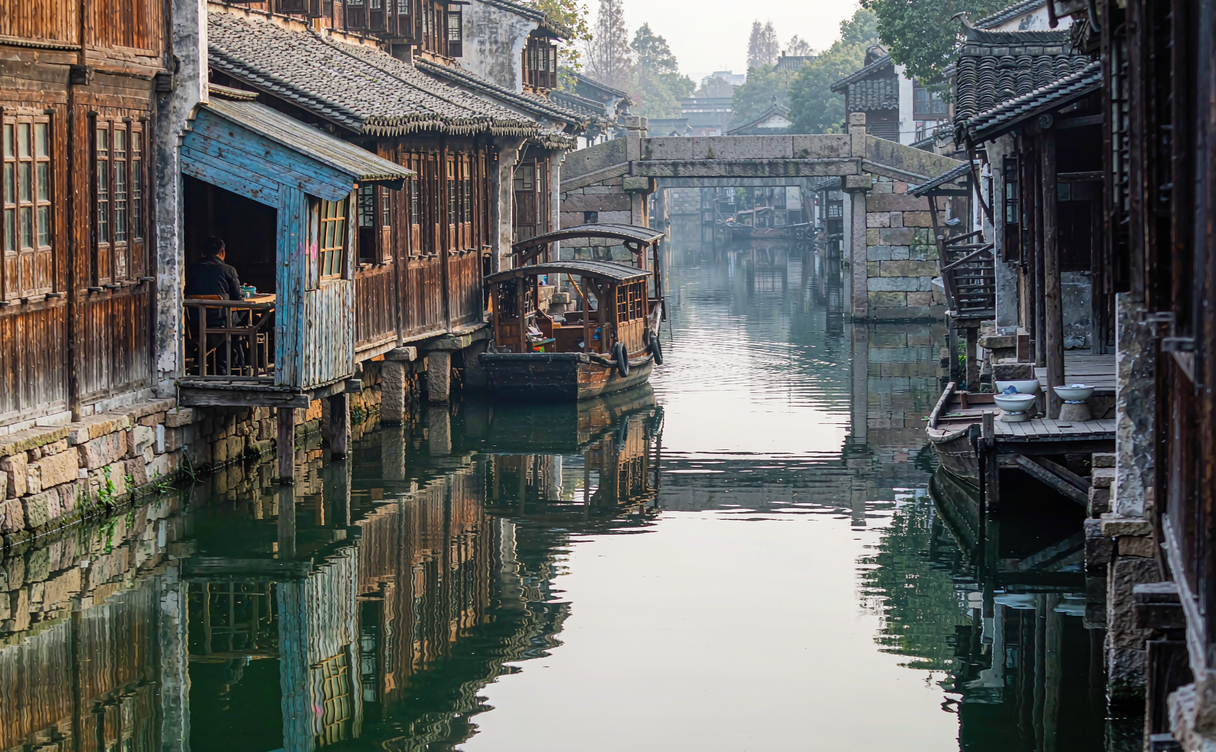
Why Xitang punches above its size
Xitang is one of the classic Jiangnan water towns, but it is less polished — and more fun — than its fame suggests. Its signature is the langpeng, a continuous covered corridor along the water that lets you walk the whole old town in rain or shine without an umbrella. There are a dozen-odd stone bridges, a warren of lanes, and a handful of small museums: the Wine Culture Museum, the Button Museum (Xitang was once a button-making hub), and the modest house where the film “Mission: Impossible III” shot a chase.
Entry is around 95–100 RMB for a day pass, but here is the trick we always tell clients: if you stay inside the old town, the overnight wristband lets you wander freely after the day-trippers leave and again before they return. A riverside guesthouse runs 250–500 RMB a night, and the atmosphere is the real amenity.
If this is your first China trip and you are nervous about small-town logistics, our China travel guide for first-timers covers the apps, payments, and train-booking steps that make a side trip like this frictionless. Xitang is easy, but the last mile from the station is where a little prep pays off.
Best time to visit Xitang
Spring (March to May) and autumn (September to November) are the sweet spots — mild, occasionally misty mornings that photograph beautifully, and comfortable evenings for the lantern stroll. We steer clear of midsummer (July–August), when the Yangtze Delta turns hot and sticky, and we warn clients off the first week of October (National Day), when every water town within reach of Shanghai is packed shoulder-to-shoulder.
The best time to visit China page gives the national view, but Xitang’s microclimate is pure Jiangnan: wet springs, hot summers, soft autumns. A weekday in April or October is the gold standard. Rain is not a dealbreaker — the covered corridors were built for it, and a drizzle on the canal is half the romance.
How to get to Xitang
The fast way is the train. From Shanghai Hongqiao, high-speed services reach Jiashan South (嘉善南) station in about 25–35 minutes (second class 30–45 RMB). From there it is a 20-minute taxi or the local K215 bus to the Xitang gate, roughly 25–40 RMB by car. Hangzhou and Suzhou are also within an hour by rail plus a short transfer.
Buses run too: Shanghai’s South Station and Hongqiao both have direct coaches to Xitang in around 1.5 hours (40–60 RMB), and they drop you closer to the entrance than the train does. We usually book the train for speed and a private car from Jiashan South for door-to-door ease — about 50 RMB and no confusion at the bus stop.
For a broader Zhejiang plan, pair Xitang with our Xitang water town overview for practical maps, or extend inland to the Tiantai Mountain Zhejiang guide for temples and waterfalls two hours southwest. The Taizhou Zhejiang travel guide covers the coastal city that anchors that corner of the province if you want city energy after the small-town calm.
Things to do in Xitang
Walk the langpeng corridor. The covered walkway is free to roam with an overnight pass and is the town’s defining photo. Go at 7am for empty lanes and reflections.
Cross the stone bridges. The Ring Dragon Bridge (Huanlong Qiao) is the postcard span; the Wufu and Luzhong bridges give quieter angles. All included in the entry pass.
Visit the small museums. The Wine Culture Museum (20 RMB) and the Button Museum (included) are quick, quirky, and a good rainy-hour backup. The former residence of poet Liu Yazi rounds out the history.
Eat by the water. Xitang’s food is classic Jiangnan river-town: steamed white fish, river shrimp, and the local “Guanlao” braised pork wrapped in lotus leaf. A riverside dinner for two is 120–220 RMB. For the wider menu, our Zhejiang cuisine guide explains the sweet-savory balance and the dishes worth ordering across the province.
Night lantern stroll and bars. After dark the canals light up and a row of low-key bars opens along the water. A beer is 25–40 RMB; the people-watching is free. This is the Xitang most day-trippers never see.
A sample Xitang itinerary
Day 1: train from Shanghai to Jiashan South, transfer in, check into a riverside guesthouse, and spend the late afternoon and evening on the lantern walk. Day 2: early corridor stroll, museums, a lazy lunch, then a 3pm departure back to the city. We’ve run this as a one-night reset for clients mid-Shanghai-trip, and it works as a pressure valve. If you have more time, add a second night and a day trip toward Tiantai or Taizhou.
Practical tips for the old town
A few things we tell every client. First, the wristband is everything — without an overnight stay you are herded onto a timed day ticket and out by 5pm, so the lantern evening is lost. Second, the lanes flood after heavy rain; pack sandals you don’t mind getting wet, because the stone slabs pool ankle-deep in spots and there are no drains worth the name. Third, bargain gently at the craft stalls — embroidered pouches run 20–50 RMB and a paper lantern 15–30 RMB, but the riverside bars’ drink prices are fixed. Finally, the town quiets by 10:30pm; if you want live music, aim for the earlier bars near the south gate, and if you want silence, book a room on the north canal where the boats stop running at dusk and the only sound is water against the hull.
Where to stay and what’s bookable today
Riverside guesthouses inside the old town run 250–500 RMB, with a few boutique options at 600–900 RMB. Booking the room through a major platform gets you the overnight wristband automatically; day-trippers pay the 95–100 RMB gate and must leave by 5pm. Trains to Jiashan South are frequent but sell out on Friday evenings, so we reserve seats ahead.
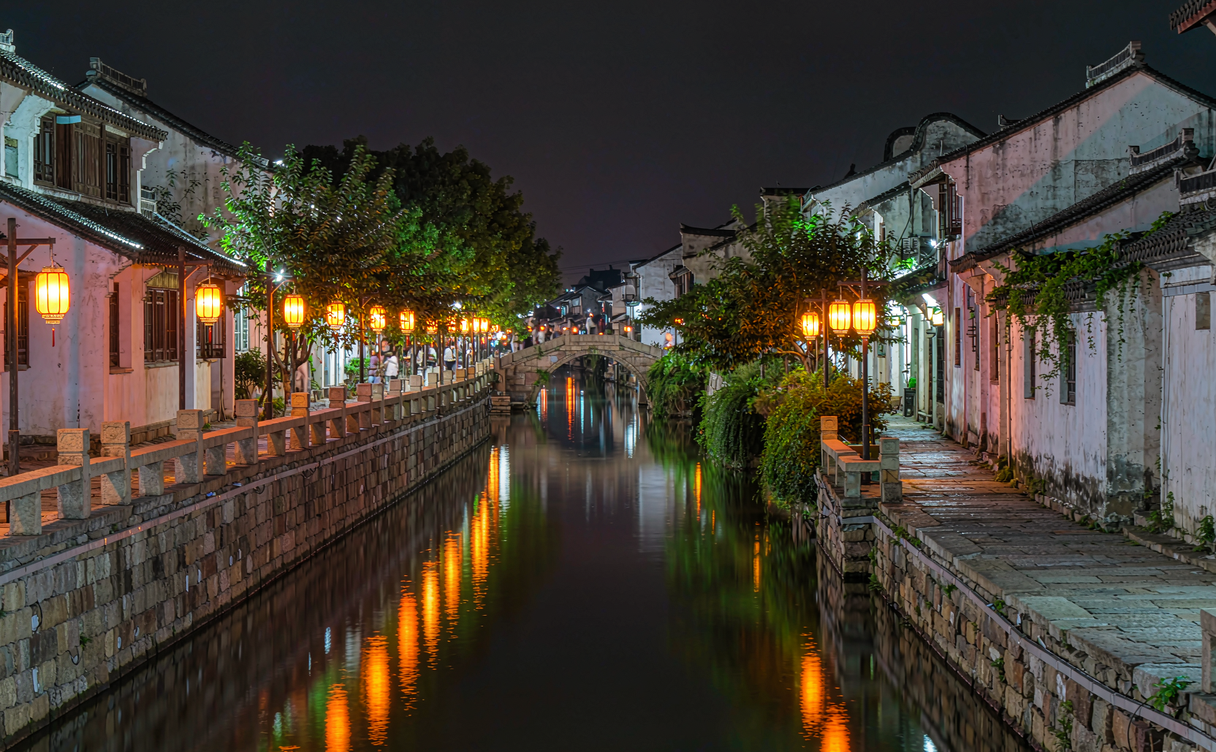
The single best tip we give: arrive before 2pm, check in, then treat the afternoon as a reconnaissance walk and the night as the main event. You will have seen two different towns for the price of one.
Before you go / References
Xitang is best taken slowly and after dark — pack comfortable shoes for the stone lanes and a light jacket for the cool canal evenings. For the history of these Jiangnan towns, see the Canals of China overview on Wikipedia, which sets Xitang among its sister water towns of the Yangtze Delta.