

This Huangping travel guide comes from our own trips through the northern folds of Qiandongnan in Guizhou, where Huangping County spreads a quieter, less-marketed version of Miao culture across green valleys and old stone towns. Most travelers race from Kaili to the famous Miao villages farther west, but Huangping rewards those who slow down with a WWII-era airfield town, a cliffside temple complex, and Miao hamlets where the embroidery and lusheng music are still everyday life. If you want Guizhou beyond the tour-bus circuit, this is the stop we keep recommending.
Why Huangping earns a visit
We first routed a client through Huangping as a calm buffer between Kaili and the Libo karst, and it became the cultural heart of the week. The county sits in Miao heartland, but unlike the headline villages it has not been rebuilt for coaches. Jiuzhou, the old town, keeps Ming-and-Qing lanes and a former wartime airfield that still shows its runways. Feiyun Cliff, just east of the county seat, is a hillside temple complex the locals call the first cave-heaven of southern Guizhou.
On our last visit, a Miao grandmother in a roadside hamlet pulled out a length of batik cloth she had dyed herself and explained the bee-wax technique. That kind of unstaged moment is the Huangping signature. For the wider picture, our China ethnic minorities travel guide explains how the Miao fit among the region’s many hill peoples.
Best time to visit Huangping
The best time to visit Huangping is March through May, when the valley azaleas bloom and the weather is mild, and again in September through October, when the rice turns gold and the Miao harvest festivals begin. We avoid the deep summer rains of July and August, when mountain roads get slick and the cliff paths at Feiyun can be slippery.
Winter is cold but clear and very quiet, with hotel rates down by about a third. If you are building a longer loop, our best time to visit China planner lines up the provincial windows so Huangping can sit beside Kaili or the Libo karst without a weather clash.
How to get to Huangping
How to get to Huangping runs through Kaili, the Qiandongnan capital. A high-speed train from Guiyang North to Kaili South takes about 35 to 50 minutes and costs RMB 58 to 78 in second class. From Kaili, buses run to Huangping county town in about 1.5 hours for RMB 30 to 45. A private car from Guiyang direct runs RMB 600 to 800 and saves the transfer for small groups.
For train newcomers, our China high-speed train guide for foreigners explains ticketing and station navigation so the Kaili hop is easy. Huangping is spread out, so we usually pre-arrange a local car (about RMB 200 to 300 per day) to reach the scattered villages and the cliff site without waiting on rural buses.
Things to do in Huangping
The things to do in Huangping spread across an old town, a cliff temple, and a scatter of Miao hamlets. We list the stops our travelers actually enjoyed.
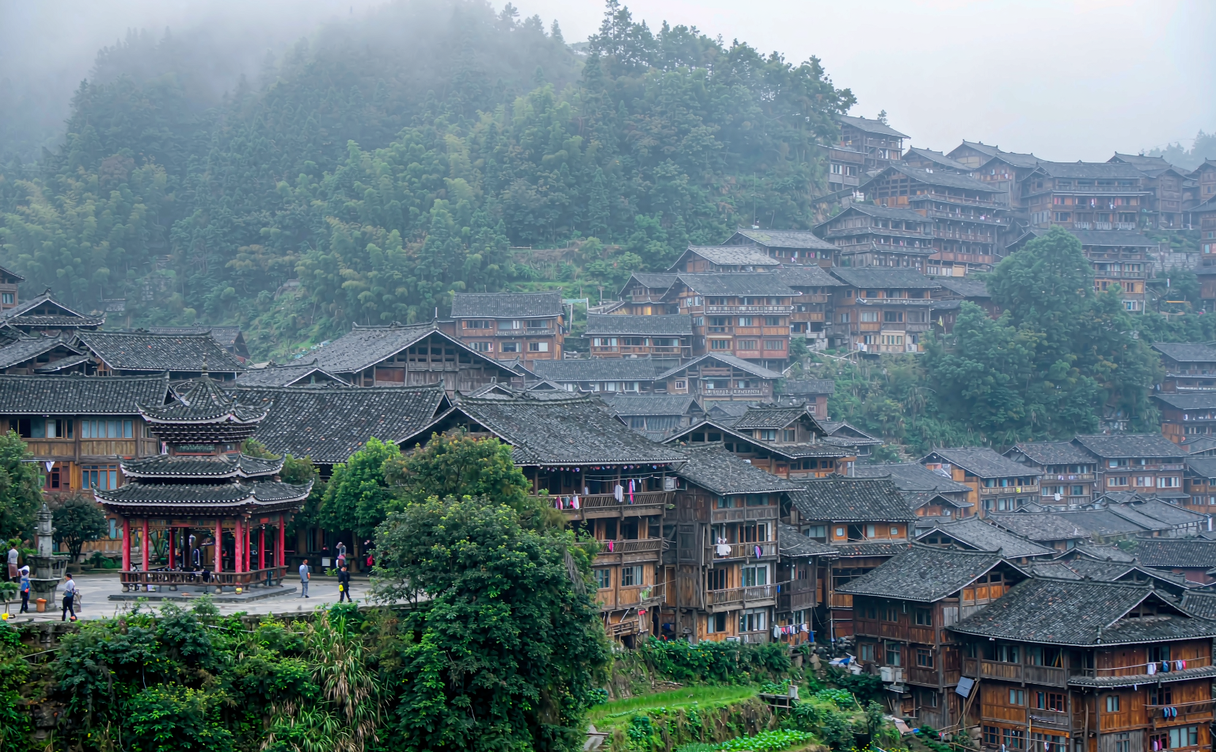
Jiuzhou Ancient Town is the anchor. Entry to the old core is free or a small RMB 20 to 30 upkeep fee, and the lanes of grey stone, the riverside walls, and the old airfield strip make a relaxed half day. Allow time to just walk; the best bits are the untouristed corners. A town lunch of rice noodles and cured pork runs RMB 20 to 35.
Feiyun Cliff (Flying Cloud Cliff) is the other must. This temple-and-pavilion complex clings to a red cliff and has been a stop for travelers for six centuries. Entry is about RMB 40 to 50, and the walk through the grottoes and halls takes 1 to 2 hours. On our last visit the morning mist sat in the valley below the eaves, and we had the upper terrace to ourselves.
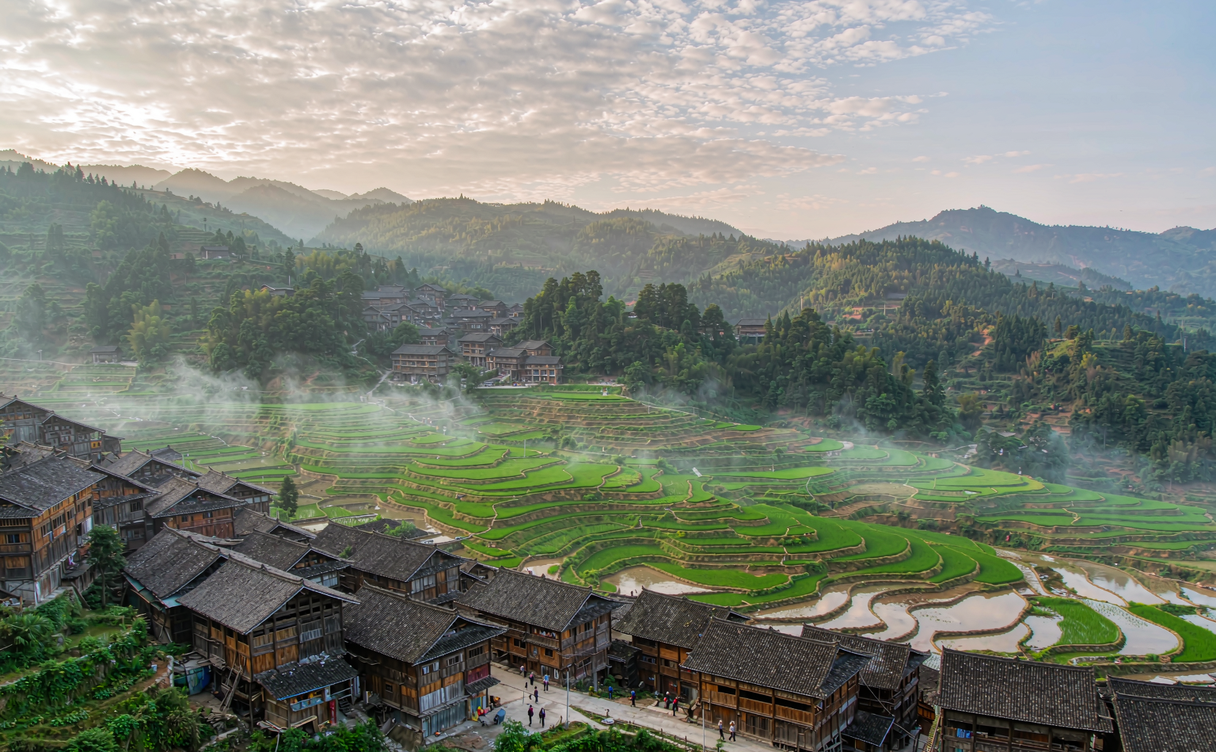
For Miao culture, the villages around Wengping and the smaller hamlets west of the county offer batik workshops, lusheng dances on festival days, and terraced fields that glow in October. If you want the bigger Miao picture, our Kaili travel guide covers the prefecture capital and its famous surrounding villages.
Food and where to stay
Huangping eats with classic Qiandongnan sour-hot logic: sour fish soup, pickled vegetables, and the Miao love of glutinous rice. Before you go, our Guizhou food guide explains the sour-hot staples you will meet here, plus the fermented dishes that define the region. Expect village meals at RMB 30 to 55 and a county-town noodle breakfast for RMB 8 to 12.
Lodging runs from RMB 140 to 240 for a clean county room and RMB 160 to 280 for a village guesthouse. On our last visit we stayed in a timber room near Jiuzhou for RMB 190 and walked the old lanes at first light before the few day-trippers arrived. Book ahead in October, when the gold-rice photos and the festival weekends fill the beds.
Getting around Huangping locally
The sites are scattered, so local transport is the key detail. Share taxis from the county seat to Jiuzhou run about RMB 15 to 25 per seat, and a private car for the day costs RMB 200 to 300. We tell travelers to confirm the return pickup when they arrive, because the old town and the cliff temple have few evening rides once the last tour bus leaves. For the outlying Miao hamlets, a booked car is the only practical option, and we arrange it as part of the day plan.
A note on the people
The Miao are one of China’s largest minority groups, spread across Guizhou, Hunan, Yunnan, and across the borders into Southeast Asia, with a rich textile and silver tradition. Knowing a little background makes the embroidery and the festival dress far more meaningful when you meet them. Useful reading: Miao people on Wikipedia.
Budget and booking reality
A realistic daily budget in Huangping runs RMB 320 to 500 per person with a mid-range room, two meals, local transport, and one paid site. The cliff temple is the main ticket; the old town and the villages are free or nearly so. Most guesthouses can be booked on arrival except during the October holiday and the spring Miao festivals, when we lock rooms 2 to 3 weeks ahead. For a fuller regional shape, our Guizhou 7-day itinerary shows how Huangping can sit inside a longer loop.
Ready to plan your trip? Send us your Guiyang or Kaili dates and we will add Huangping as a two-day Miao-valley pause.
Sample 2-day Huangping itinerary
Day one: train to Kaili, bus to Huangping, check in, and a sunset walk on the Jiuzhou lanes. Day two: morning at Feiyun Cliff, afternoon in a Miao hamlet for batik and terraces, and return via Kaili. If you have a third day, add a second village or push south toward the Libo karst. This is the Huangping itinerary we hand most first-timers because it flows without backtracking.
Want the festivals live? Tell us your dates and we will time the visit to a Miao lusheng dance or harvest fair.
Responsible travel in Miao country
Huangping works because the valleys are still home. Ask before photographing elders, buy batik and silver directly from the makers rather than bargaining hard, and keep voices low in the cliff temples. We brief every group we send on these small courtesies, and it turns a look into a welcome.
Planning a Guizhou loop with Huangping included? Reach out and we will check train times, festival dates, and village-room availability for your window.
Huangping will not make the glossy China covers, and that is exactly why it works. It gives you an old town with a wartime story, a cliff temple above the mist, and Miao villages where the cloth is still dyed by hand. We have sent photographers, families, and slow-travel couples here, and all of them left saying they finally found the Guizhou they came for.