

Our Weixi travel guide climbs into the Lisu highlands of northwest Yunnan, where the Lancang, the upper Mekong, carves a deep green trench between Tibetan-style ridges. If you are looking for a Weixi travel guide, the short version is this: Weixi is the quiet Diqing county most travelers skip on the way to Shangri-La, and that is precisely why it rewards those who stop. We have sent travelers here who wanted Yunnan’s highlands without the resort prices, and Weixi gave them snub-nosed monkeys, wooden Lisu villages, and a cliff temple that took our breath away.
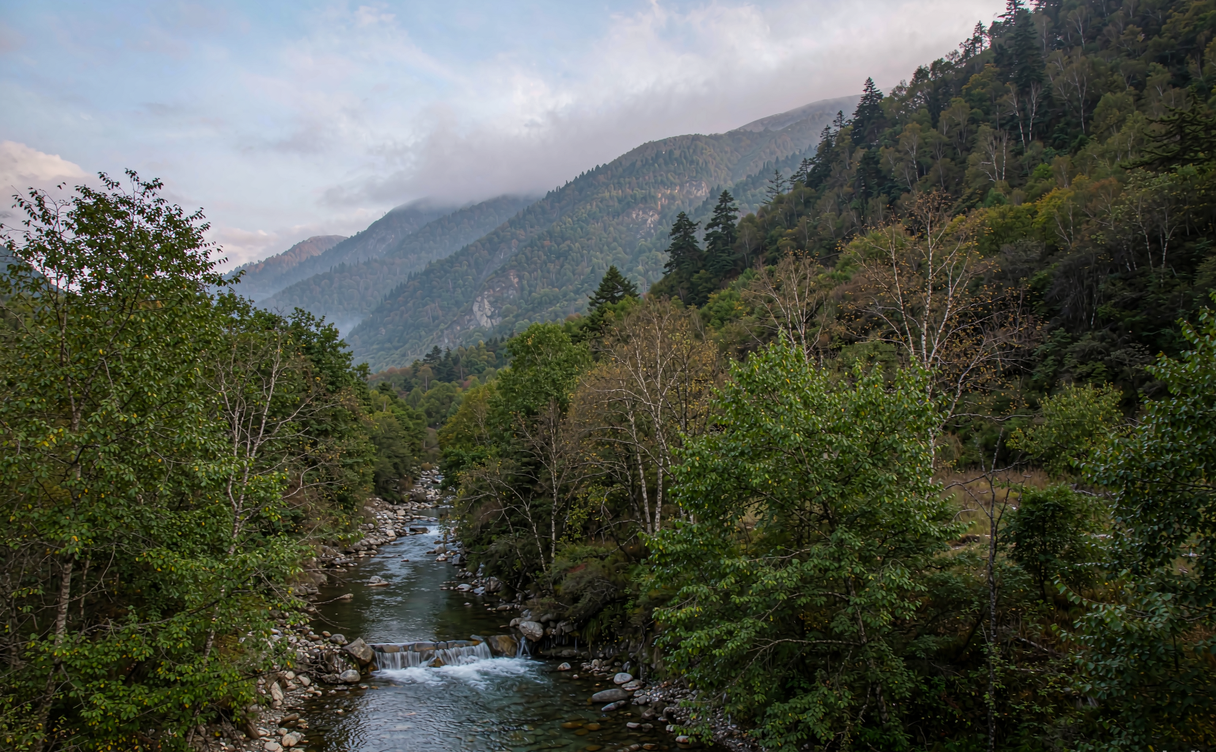
Weixi is a Lisu autonomous county in the Diqing Tibetan Autonomous Prefecture, strung along the Lancang between Shangri-La to the north and the Lijiang basin to the east. The valley floor sits around 1,500 meters, but the surrounding ranges climb past snow line, so a single day can move you from warm river terraces to cold rhododendron forest. On our last visit a light snow had dusted the high ridge, the Lisu were threshing corn in the lower fields, and the only sign of tourism was a single parked coach at the monkey reserve gate.
Why Weixi is the Diqing nobody talks about
The headline draw is the Yunnan snub-nosed monkey, one of the world’s rarest primates, which survives only in these cold forests. The Tacheng reserve, an hour’s drive north of the county town, lets you walk a forest boardwalk at dawn and watch a troop move through the canopy. Entry is around 100 RMB and a guide adds 80 to 120 RMB, and we strongly advise the guide, because the monkeys are shy and the timing is everything. The species itself, Rhinopithecus bieti, is documented in the encyclopedic Yunnan snub-nosed monkey entry, and reading it beforehand makes the sighting feel like a privilege rather than a photo op.
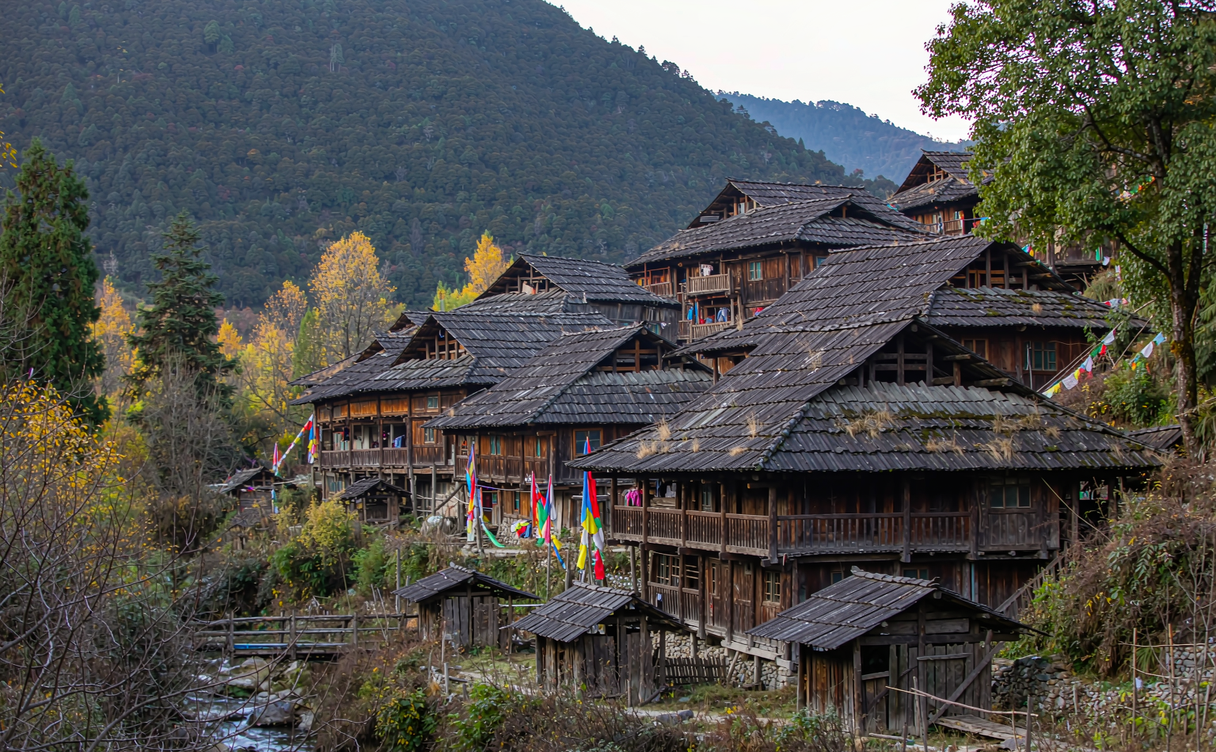
The second treasure is Tongle, a traditional Lisu village of timber houses with shingle roofs stacked up a hillside, still lived in and largely unchanged. It is free to wander, and a family may invite you to sit by the hearth with barley wine. Nearby, the Yezhi chieftain’s mansion is a rare surviving Tusi palace, a wood-and-stone compound where Tibetan and Han building styles meet, with entry about 30 RMB and few visitors.
The third is the Damu cliff shrine, a Tibetan Buddhist cave temple reached by a long stone stairway. Pilgrims still circumambulate it, and the view back down the valley is the kind you remember for years. It is free, though a donation is welcome.
Best time to visit Weixi
The best time to visit Weixi is April to May, when the high rhododendrons bloom and the monkeys are active, and again in September to November for clear skies and harvest festivals. Summer is green and mild but prone to afternoon storms. Winter is cold, with snow on the passes, yet the valley stays open and the light is extraordinary for photography.
This county fits a wider northwest Yunnan plan. Our best time to visit China page helps you time the region against the festival calendar, and our China ethnic minorities travel guide frames the Lisu, Tibetan, and Naxi cultures you will meet. Weixi is the cultural deep cut between the headline towns.
How to get to Weixi
How to get to Weixi takes some planning, because there is no airport and no railway in the county. The practical route is to reach Shangri-La first by flight or by bus from Lijiang or Kunming, then take a long-distance bus south to Weixi. The mountain road runs about three to four hours and costs 60 to 90 RMB, with departures through the morning. From Lijiang, buses run a longer five to six hour route via the rebuilt cross-range road, typically 80 to 120 RMB.
Within the county, transport is local and slow: shared vans reach Tacheng and Tongle for 20 to 40 RMB per seat, and a hired driver for a full day of villages costs 300 to 500 RMB. For the longer picture, our China high-speed train guide for foreigners explains how to reach Lijiang and Kunming by rail, and our Kunming travel guide covers the gateway city where most journeys start.
Where to stay and what it costs
Weixi is easy on the budget. A county-town hotel runs 100 to 200 RMB a night, a village guesthouse in Tacheng or Tongle costs 120 to 250 RMB with simple meals, and there is no luxury tier to speak of. Food is highland hearty: a bowl of Lisu buckwheat noodles is 10 to 15 RMB, and a shared dinner of cured pork, wild greens, and barley cakes for two is 60 to 100 RMB. With modest entrance fees, a couple can cover the monkey reserve, Tongle, and the cliff temple for under 400 RMB a day.
We usually book the Tacheng guesthouse over the town hotel, because the dawn walk to the monkeys starts early and the forest is right outside. Reserve ahead only for the October holiday, when Yunnan residents fill the few rooms.
Things to do in Weixi beyond the headlines
Things to do in Weixi extend past the famous stops. The Lancang riverbanks below the county town are good for a slow evening walk where old women wash corn and children fish with nets. The Shouguo Tibetan monastery, a short drive out, keeps fine murals and a quiet courtyard worth an hour. And the weekly market draws Lisu and Tibetan vendors from the surrounding ridges with dried mushrooms, wool, and the kind of spontaneous food tasting no paid tour provides.
A day we like starts before 7:00 at the Tacheng boardwalk, a long late breakfast in the village, then an afternoon at Tongle and the Yezhi mansion, and a sunset at the cliff temple. Travelers who try to bolt Weixi onto a single pass-through see none of it; give it a night and the highlands open.
If your route covers the region, our Yunnan 10-day itinerary shows how Weixi slots between the basin and the Tibetan north, and our Shangri-La Yunnan travel guide adds the headline town just up the road. We often place Weixi as the quiet counterweight to Shangri-La’s crowds, and travelers leave it as their favorite surprise.
Our honest take
We rate Weixi as a two-night stop for travelers who like wildlife, living villages, and monasteries without the selfie lines. On our last visit the high point was not the monkeys but a Lisu grandfather at Tongle who walked us through his granary and explained the carved symbols above the door, none of which appears in any brochure. That is Weixi’s real offer: access, not spectacle.
Ready to plan your trip? Tell us your Yunnan dates and we will build Weixi around the monkey breeding season and festivals.
Practical notes before you go
Carry cash for village guesthouses and the smaller gates, since rural payment terminals fail often. Mobile pay works in the county town. The tourist desk near the bridge hands out a basic map, and the bus station is signed in both scripts. If you go to the monkey reserve, start before 8:00 and keep quiet; the troop moves fast and a noisy group loses it.
Want a custom Yunnan itinerary? Share your pace and we will balance Weixi’s quiet with Shangri-La and the north.
A final word on rhythm
The mistake is treating Weixi as a detour. It rewards travelers who stay, who listen, and who let the highlands set the pace. Build in a buffer day for weather on the passes, and you will likely call Weixi the best decision of the trip.
Book your Weixi stay with us and we will pre-arrange the Tacheng guesthouse and a monkey-reserve guide.