

This Songyang travel guide is for travelers who want the old Jiangnan countryside before the tour buses found it. Songyang County (see Songyang County for background) sits in the green mountains of southwest Zhejiang, and it has been called the last unscathed stretch of traditional village life in the region — a scatter of earthen and stone hamlets above terraced tea fields, where old women still sun-dry chilies on the lanes and the mist rolls in before breakfast. On our last visit we based ourselves among the villages for three nights and barely left the county; every morning brought a different “sea of clouds” over a different rooftop. If that’s your kind of slow travel, this Songyang travel guide covers timing, trains, and the villages worth the detour.
Why Songyang, and why now
Zhejiang’s famous water towns are lovely but polished; Songyang is the opposite. The county has protected more than a hundred surviving villages, many of them still lived-in rather than restored as museums. The provincial government has leaned into “rural rejuvenation” here, bringing in quiet design — a cliffside bookstore, a teahouse in an old granary — without bulldozing the bones. That balance is why we send photographers and walkers rather than resort crowds.
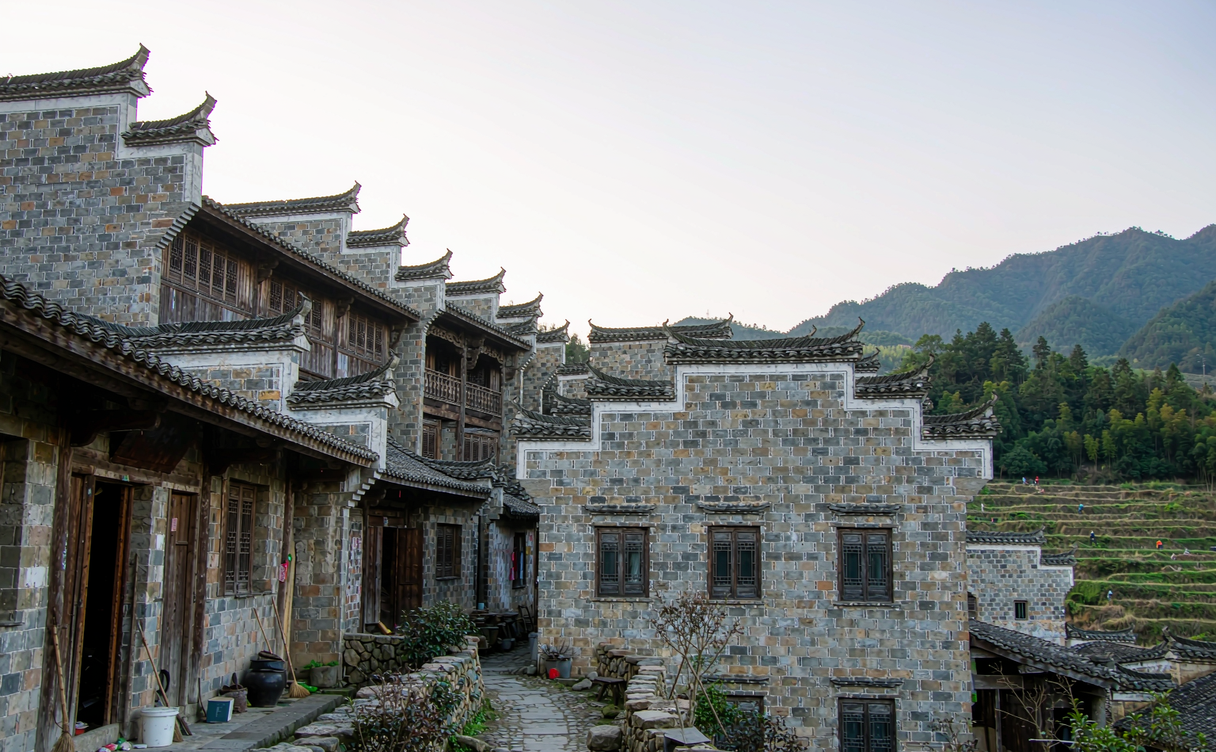
The headline sight is Yangjiatang, a cluster of yellow earth-walled houses stepped up a ridge so neatly that it’s nicknamed the “Potala Palace of the south.” Entry is free; parking is about 10 RMB. Go at dawn — by 09:00 the tour vans from the cities arrive and the lane fills. We’ve stood there at 06:30 with only a few photographers and a farmer feeding his geese, and it was the quietest beautiful hour of the trip.
Best time to visit Songyang
The best time to visit Songyang is spring (March to May) and autumn (September to November). Spring brings rapeseed flowers across the terraces and the tea-picking season, when the hills smell of fresh leaf; autumn brings harvest gold and, crucially, the clearest “sea of clouds” mornings over the high villages like Xikeng and Yangjiatang. Summer is hot and prone to afternoon storms; winter is cold and damp but empty, and the villages dusted with frost are a photographer’s reward. Avoid the May and October golden weeks, when the lanes get busy and the design-hotel rooms jump 40–60%.
For the country-wide picture, the best-time-to-visit-china overview lines up with Songyang’s spring-and-autumn sweet spot.
Things to do in Songyang
The Songyang ancient villages deserve two or three days on their own. Beyond Yangjiatang, don’t miss Chenjiapu, a cliff-edge hamlet that now holds a branch of the well-known Pioneer Bookstore — shelves built into an old village house, with a terrace over the valley. Songzhuang is the one with the arched stone bridge over a green stream, perfect for a long lunch. Xikeng sits high and turns ghostly in the morning cloud; Jingzhuang keeps the best-preserved clan hall. A village-hopping driver costs about 300–400 RMB for a full day and knows the sunrise spots.
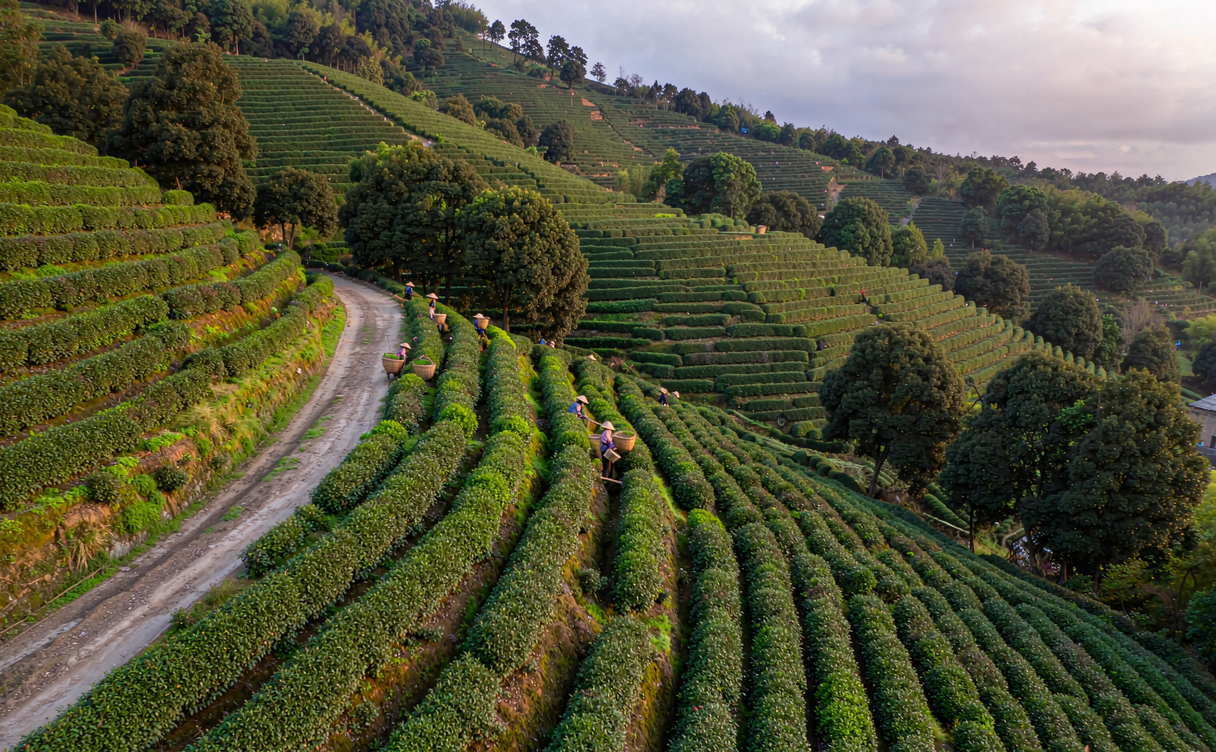
Tea is the county’s lifeblood. Songyang Zhejiang is one of the province’s top green-tea producers, famous for “Songyang Silver Monkey” (Yinshun) leaf. March to April you can join a plucking session in the terraces (about 50–80 RMB including a tasting), and the county tea museum in Songyang town explains the craft for free. We’ve sent travelers home with vacuum-sealed packs of Silver Monkey from the cooperative shop for 80–200 RMB per 100 g — better and cheaper than the city shops.
The Songyin River valley below the county seat is flat and lovely for a bike ride (rental 30 RMB/half day), and the old Tongqing Bridge and riverside laneways make an easy evening stroll. For a longer walk, the trail up Liyu Mountain (Liyu Shan) above town gives a county panorama in under an hour.
How to get to Songyang
The how to get to Songyang question is easier than it used to be. Songyang has its own station on the regional railway line, with high-speed services from Hangzhou (about 2.5–3 hours, 110–160 RMB second class) and connections via Lishui or Quzhou. From Shanghai, plan 4–5 hours with a change, typically 220–300 RMB. If you’d rather start from the provincial capital, our hangzhou-travel-guide covers the gateway; trains and buses from Hangzhou to Songyang run frequently.
Inside the county there’s no ride-hail worth relying on outside the seat, so for the villages you’ll want a local driver or a rental car (from Lishui, 200–280 RMB/day). We book village drivers through the design hotels, who quote fairly and know the sunrise pull-offs. For foreigners navigating the rail system, the china-high-speed-train-guide-foreigners walks through booking and the real-ID rules.
A Songyang itinerary
A good Songyang itinerary is three days, two or three nights:
- Day 1 — Train to Songyang, settle in a village guesthouse, sunset walk in Songzhuang, dinner of stream fish and pickles (50–80 RMB per head).
- Day 2 — Dawn at Yangjiatang, late-morning Chenjiapu bookstore and cliff tea, afternoon tea-terrace plucking, Xikeng for the cloud at dusk.
- Day 3 — Songyin River bike or Liyu Mountain climb, lunch, train out.
Budget travelers do this for 700–1,000 RMB per person; those who book the design hotels (the county’s famous “ninety-sheet” and cliff inns) should plan 1,500–2,500 RMB with rooms at 600–1,200 RMB per night.
Food is humble and good. Beyond the zhejiang-cuisine-guide staples — beggar’s chicken, river shrimp, dried bamboo — Songyang adds mountain fare: tofu pudding with fermented greens, cured pork with winter bamboo, and the sweet “Shanfen” dumplings. A village lunch is 40–70 RMB; the county-town night market does noodles for 12–20 RMB.
Fitting Songyang into a route
Songyang is the rustic counterweight to the canals. It pairs beautifully with a jiangnan-7-day-itinerary as the deep-country chapter, and with a stop at xitang-water-town it lets you contrast a living village with a restored one in a single trip. We often send travelers Hangzhou → Songyang → a water town, which balances city, countryside, and canal.
Where to stay
The draw is the village guesthouses and the design hotels. A simple earthen-house room runs 250–450 RMB; the headline design inns (Yangjiatang’s “nine-one” and Chenjiapu’s cliff hotel) run 800–1,400 RMB with breakfast and a view. Book these weeks ahead in spring and autumn — they sell out. In Songyang town itself, clean hotels start at 180 RMB if you’d rather commute.
Practical notes
Carry cash for the small village stalls; the design hotels take cards but the grannies selling dried chilies don’t. Mornings are everything — be at a viewpoint by 06:30 for the cloud. And tell your guesthouse your plans; the best sunrise spots aren’t signed.
Songyang won’t entertain you with shows. It will give you rooftops in the mist, tea in the terraces, and a quiet that the famous towns lost years ago.
Ready to plan your trip? Tell us your dates and we’ll book a Songyang village guesthouse, a sunrise driver, and a tea-terrace tasting.
Why the villages matter
We keep sending people to Songyang because the alternative — another polished canal town — is easy to get anywhere. Here the villages are still homes. The woman hanging chilies is not performing; the tea is not for the tour. That authenticity is fragile, and the county’s careful design touches (a bookstore, a teahouse) show one way to keep it without killing it. Travelers who come slowly help that balance hold.
The dawn at Yangjiatang, though, is the thing. Stand on the lane as the light hits the yellow walls and the cloud lifts off the valley, and you’ll understand why people call this the last real Jiangnan.
Want Songyang built into a finished Zhejiang route? We’ll connect the villages, the tea, and the trains with 2026 prices and a driver sorted.
Last tips before you go
Pack layers — mountain mornings are cool even in spring. Wear decent shoes for the terrace paths. And resist the urge to cram; one good village at dawn beats five rushed ones.
Songyang is the slow China that most itineraries skip, and for many of our travelers it becomes the trip they talk about longest.
Reach out and we’ll reserve your Songyang village stay and sunrise driver, and fold the whole county into a day-by-day Zhejiang plan.