

Xi’an was the eastern terminus of the Silk Road and the capital of more Chinese dynasties than any other city, and its food carries that history in every bowl. This is the gateway to the northwest: wheat over rice, lamb over pork, and flavors shaped by the trade routes that once ran through the city gates. On a Xi’an food guide trip we ran last spring, clients who came for the Terracotta Army stayed for the midnight noodle alleys inside the old city wall. This article covers what to eat in Xi’an, where to find it, what it costs, and how to plan around it as of 2026.
Why Xi’an Eats Differently
Most first-time visitors arrive from the rice-eating south and are surprised by the menu. Shaanxi cuisine is built on wheat — noodles in a dozen widths, flatbreads, steamed buns — and on the lamb and cumin carried in from the Silk Road. Xi’an cuisine is hearty and savory rather than sweet or sour, and the street food is a serious, all-day affair. For the wider city picture, our Xi’an travel guide covers the sights that pair naturally with the eating.
Biangbiang Noodles and the Wide-Belt Family
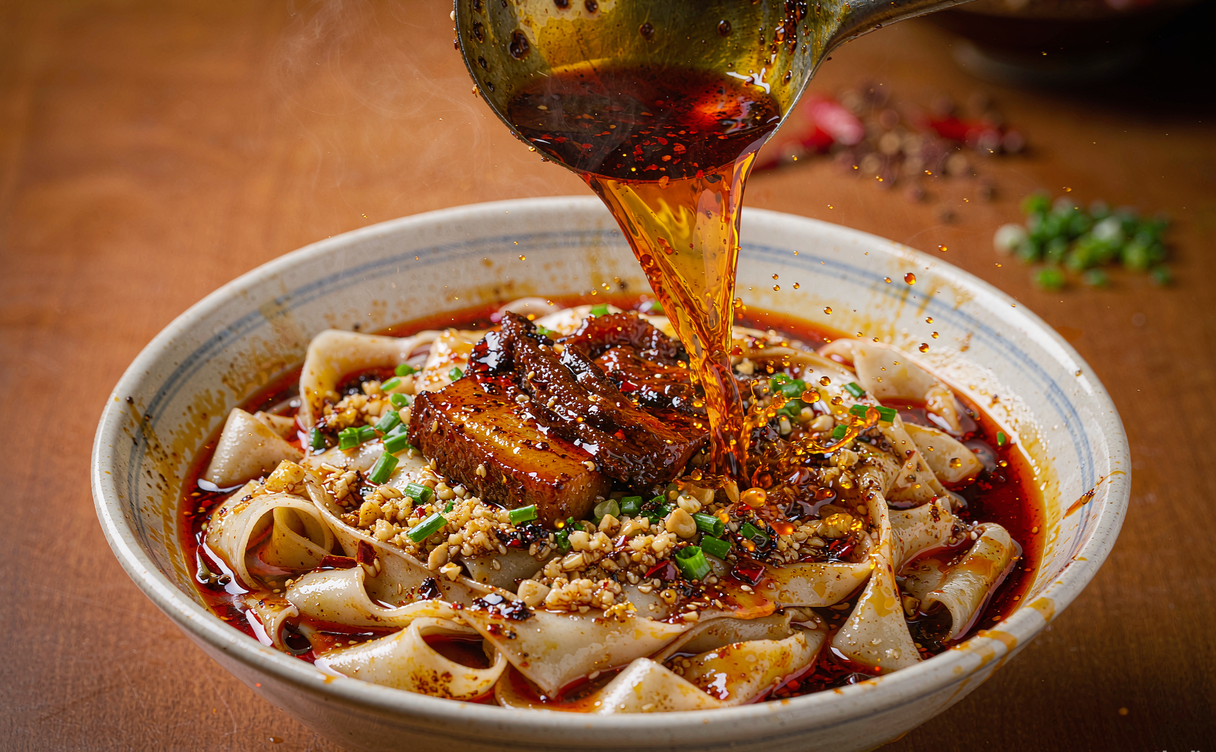
The city’s most famous dish is biangbiang noodles — thick, belt-wide wheat noodles named for the “biang” sound the dough makes when slapped on the counter. They are served tossed in chili oil, garlic, scallion and often a topping of braised pork or tomato-egg, with a final sizzle of hot oil poured over the top. A generous bowl runs ¥16–28.
Biangbiang is the headline, but the family is large: Xi’an noodles come in more widths than most travelers expect, from you po (oil-splashed noodles) to qishan minced-pork noodles in a sour vinegar broth, and the knife-shaved mian (dao xiao mian) that curls into the pot in ribbons. Our Xi’an street food biangbiang guide names the specific variants and the shops we trust. As of 2026, the best counters still take no bookings — go at an off-hour or queue with the locals.
Roujiamo and the Sandwich That Predates the Burger
The snack that defines a Xi’an stroll is roujiamo — often called a Chinese hamburger, though the comparison undersells it. A round, slightly chewy flatbread (mo) is split and stuffed with braised, hand-shredded pork or, in the Muslim Quarter version, spiced lamb. The meat is slow-cooked with star anise, fennel and pepper until it falls apart. A pork roujiamo runs ¥10–18; the lamb version a touch more.
We send every client to the Muslim Quarter for this, where the stalls have been refining the recipe for generations. Eat it standing, warm, with the juices running — it is the city’s perfect walking food and a cheap, repeatable joy at any hour.
The Muslim Quarter and Silk Road Flavors
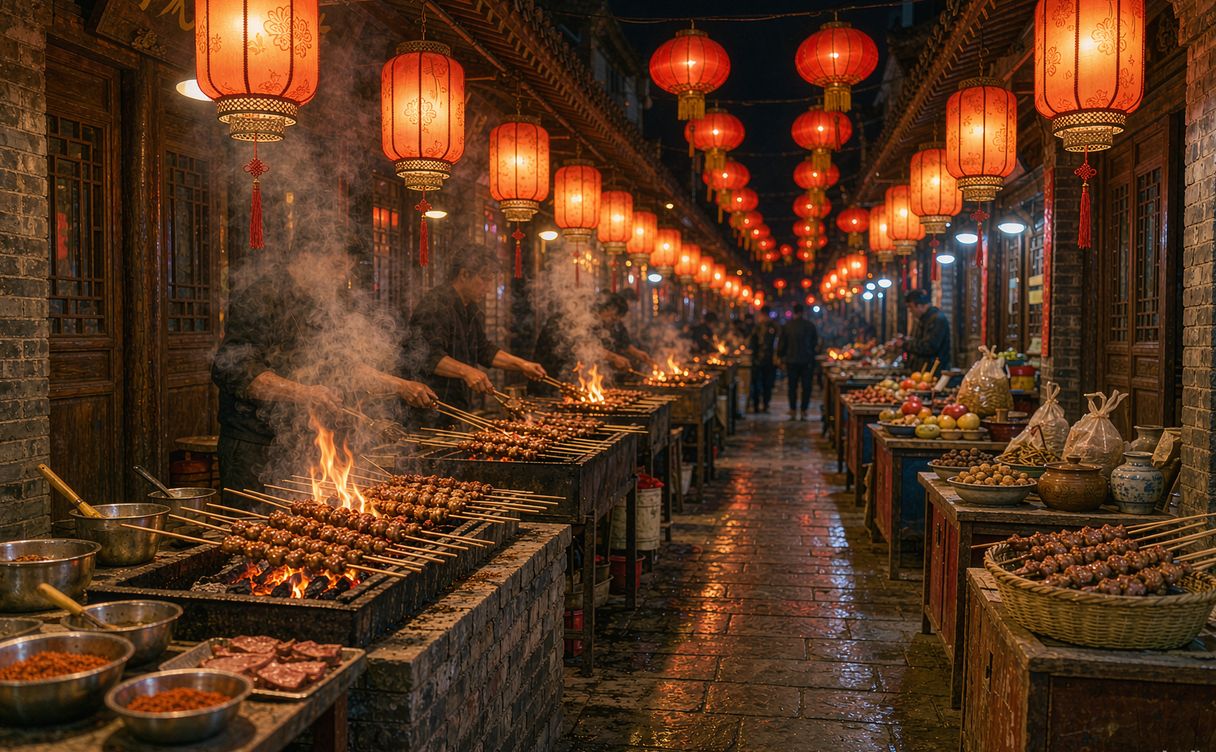
Xi’an’s Hui Muslim community gives the city a flavor profile you will not find in eastern China. Beyond roujiamo, the lane behind the Drum Tower is a graze of mutton stews (yang rou pao mo — torn bread simmered in lamb broth, ¥25–45), grilled lamb skewers dusted with cumin and chili (¥3–6 a stick), and the cold noodle salad (liang pi) that cools the heat.
The pao mo is a ritual worth slowing down for: you tear the flatbread yourself, hand it to the cook, and wait for the broth to come back rich and fragrant. We build a Muslim Quarter walk we run with first-timers through these lanes.
Save room for the sweet street endings, because the Quarter closes on sugar. The persimmon cake (shizi bing) — mashed local persimmon fried to a crisp shell with a molten center — is a late-autumn specialty at ¥6–10. The eight-treasure porridge (ba bao zhou), a warm glutinous rice gruel studded with dates, lotus seed and goji, is the calming full stop after a lamb-and-chili evening. Both are cash-only and best eaten standing, watching the lane’s lanterns flicker.
Best Restaurants in Xi’an
When clients ask for the best restaurants in Xi’an, we split by experience:
- The Muslim Quarter stalls: The city’s signature snacks, lamb-forward, cash-friendly. ¥30–70 per person across a grazing evening.
- The noodle houses inside the wall: Belt-wide biangbiang and oil-splashed noodles at their source. ¥20–45 per person.
- The old-brand banquet rooms: Shaanxi cold plates, dumpling banquets and yang rou pao mo seated properly. ¥80–160 per person.
- The night alley near the South Gate: A younger, livelier scene mixing noodles, skewers and craft drinks. ¥50–100 per person.
We almost always recommend grazing the first two tiers. Xi’an rewards the walker more than the sitter.
How to Get There and When to Go
Xi’an is a major high-speed hub. Trains from Beijing run about 4.5–5.5 hours, from Chengdu around 3–4 hours, and the network reaches most big cities; our China high-speed train guide for foreigners explains booking. Xi’an Xianyang International Airport (XIY) handles domestic and some international flights.
Timing: spring (April–May) and autumn (September–October) are ideal — mild and good for walking the wall and the food alleys. Winters are cold but the hot noodle broth hits harder; summers are hot. For the wider regional timing, our best time to visit China guide helps you plan. First-timers should also see our China travel guide for first-timers for the bigger picture.
Want Xi’an’s noodle alleys and Muslim Quarter mapped by a local? Our China food tour guide turns a stopover into a proper Shaanxi eating tour.
A Two-Day Eating Plan
Day 1 — Inside the wall. A biangbiang noodle lunch near the South Gate. An evening Muslim Quarter graze: roujiamo, lamb skewers, pao mo, liang pi.
Day 2 — The deeper cut. A morning oil-splashed noodle counter, a seated Shaanxi dumpling banquet, and a night-alley walk for a second pass at the skewers.
That pace covers the range without rushing, and leaves room for the snacks you did not plan.
Prefer a guide to handle the ordering and the language? See our Xi’an itineraries with a local food expert.
Where to Stay for Easy Eating
Stay inside or just outside the city wall — the Muslim Quarter, the South Gate and the Bell Tower area put the food within walking distance. Mid-range rooms run ¥300–600 per night as of 2026, with wall-side boutique options closer to ¥600–1,000. Staying inside the wall means you can graze late without a long metro ride home.
Practical Notes for 2026
A few things we flag to every client. Mobile payment dominates; Alipay and WeChat Pay now accept foreign cards, but carry ¥200–300 cash for the smaller stalls. English menus are rare outside the hotels, so save the Chinese dish names to your phone. The Muslim Quarter is busiest from 6 p.m. to 10 p.m.; arrive early for shorter lines at the famous roujiamo stalls.
Xi’an rewards the hungry walker. The best meal on our last trip was a ¥22 bowl of biangbiang noodles from a counter with no sign in English and a line out the door. The city wall is lit after dark, which makes the food alleys easy to find on foot. For the cultural backdrop, the Xi’an entry on Wikipedia is a useful reference on the city behind the food.
Planning a Silk Road or northwest China food trip? Combine Xi’an with Lanzhou and beyond and we’ll sequence the trains and the tables for you.