

Sitting on the southern tip of Liaoning’s Liaodong Peninsula, Dalian is the kind of Chinese port city where the day’s catch still dictates the menu. I’ve spent a few unhurried days here chasing breakfasts of shrimp dumplings and late nights of sizzling skewers, and the thing that sticks with you is the freshness: a coastal kitchen that treats seafood less as a delicacy and more as a daily staple. If you’re building a Dalian food guide for a first trip, start with the assumption that everything on ice was probably swimming that morning.
Dalian’s food culture is shaped by geography and history. The Bohai and Yellow Seas meet just offshore, and that cold-water confluence produces a harvest that’s sweeter and firmer than what you’ll find in the warmer south. At the same time, the city’s early-20th-century layout under Russian and Japanese influence left behind bakeries, lighter broths, and a café culture you won’t find in most northern Chinese ports. The result is a table that feels both deeply Chinese and quietly cosmopolitan.
What to Eat in Dalian
What to eat in Dalian is, at its core, a question about the sea. Sea cucumber (海参, haishen) is the headline ingredient — Dalian’s spiny variety is prized across China for its density and clean flavor. Order it braised with scallions (葱烧海参, cong shao haishen), a dish where a glossy, gelatinous texture soaks up a savory soy-brown sauce. A small restaurant portion runs ¥88–¥168; a finer hotel version climbs past ¥300. Abalone (鲍鱼, baoyu) and sea urchin (海胆, haidan) appear in the same luxury tier, often steamed with egg custard or folded into rice.
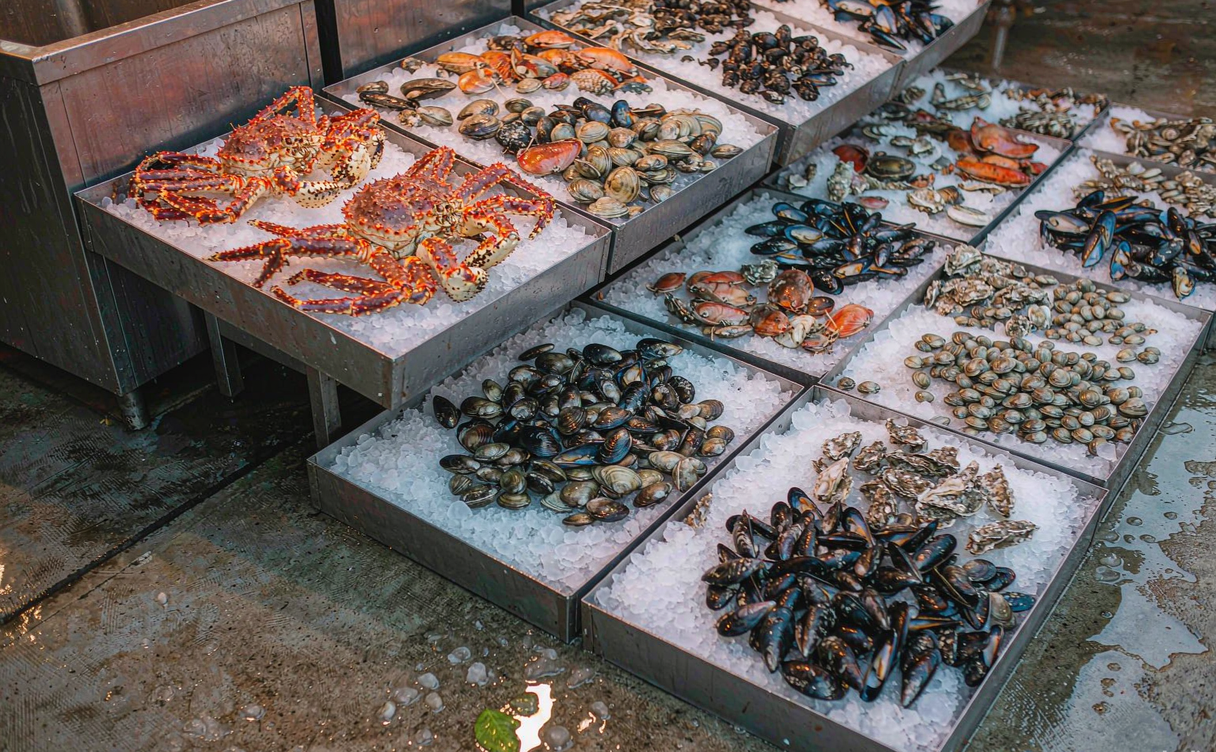
Shellfish dominates the casual side of the table. Clams (蚬子, xianzi) steamed with a little garlic and local beer, fat oysters grilled or eaten raw with a squeeze of lemon, and Dalian seafood staples like razor clams, mussels, and sea snails show up everywhere from banquet halls to street corners. A plate of steamed clams is ¥28–¥45; a dozen grilled oysters rarely tops ¥60. The local “Dalian wart oyster” has a clean, mineral finish that pairs perfectly with the city’s cheap draught beer, which sells for ¥6–¥10 a glass in most casual spots.
Don’t overlook the humbler catches. Sea intestine (海肠, haichang) — a chewy, savory strip often stir-fried with leeks or tossed through noodles — is a local obsession you won’t see on many menus outside Liaoning. Squid and cuttlefish, both caught close to shore, turn up grilled, braised, or dried as a beer snack.
Dalian BBQ and Street Food
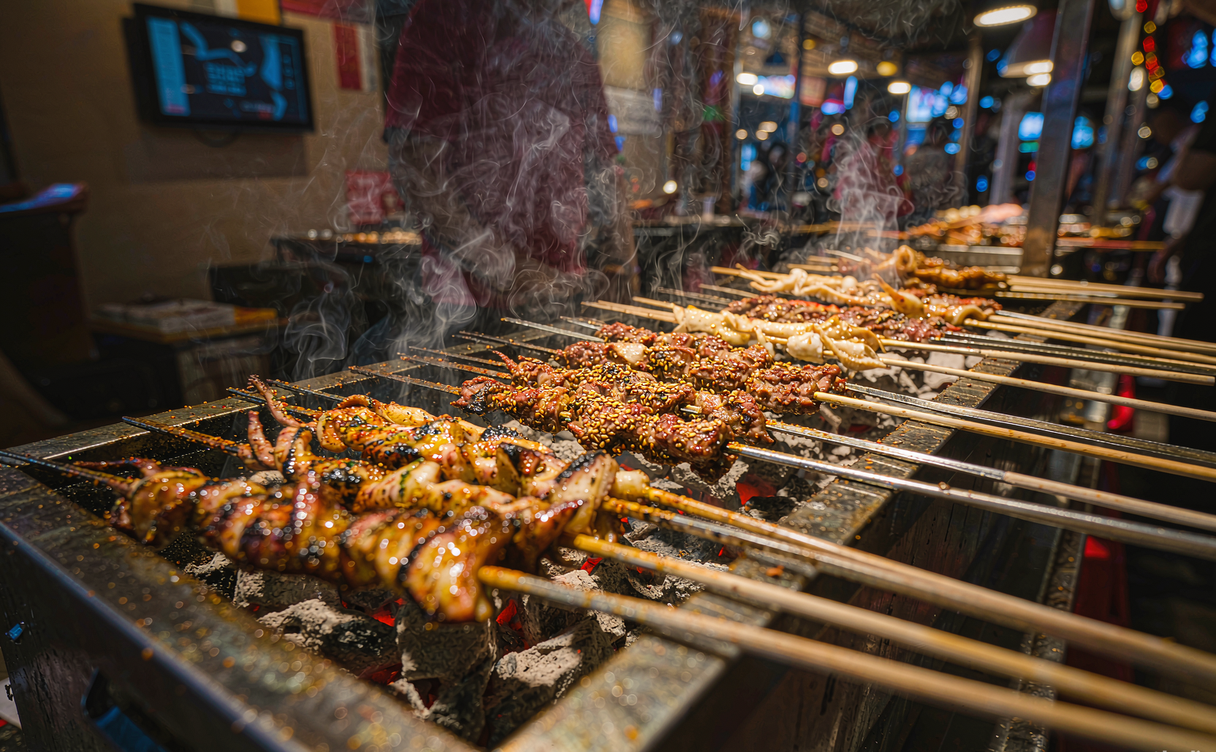
When the sun drops, the city shifts to charcoal. Dalian BBQ is its own subculture — part of the Northeast’s broader 烧烤 (shaokao) tradition but tuned hard to the coast. Stalls thread fresh squid, octopus, and large shrimp onto skewers alongside the usual lamb, beef, and chicken wings. A mixed plate of ten skewers is ¥30–¥50, and a full belly with beer for two rarely costs more than ¥150. The trick I learned from a vendor near Ershiwu Street: ask for your seafood grilled with cumin and chili, not just salt, and don’t skip the grilled corn and flatbread that soak up the drippings.
Beyond the grill, Dalian snacks lean Russian and Japanese. Russian bread (列巴, lieba) — a dense, sour round loaf — and whipped-cream cakes survive in old bakeries around Russian Street, while the Japanese influence lingers in lighter, cleaner broths and a fondness for fresh, sashimi-style preparations of local fish. Walking the waterfront at night, you’ll pass vendors selling roasted sweet potatoes, candied hawthorn (糖葫芦, tanghulu), and paper cones of fried squid — a snack crawl that costs almost nothing and tells you more about the city than any restaurant review.
Signature Dishes You Shouldn’t Miss
The dumpling is the city’s quiet icon. Shrimp jiaozi — here more often a plump boiled dumpling stuffed with whole small shrimp and a little pork — cost ¥18–¥30 for a basket at a neighborhood shop, and they’re best eaten the moment they come off the boil. Sea urchin rice (海胆饭, haidan fan) is the sleeper hit: a bowl of short-grain rice capped with fresh urchin roe, steamed until the ocean flavor melts into every grain. Expect ¥35–¥60 a bowl at a specialist shop.
For a true banquet experience, look for steamed whole fish dressed simply with scallion and soy, or a clay-pot of sea cucumber and scallops simmered until the broth turns silky. These are dishes meant for groups, and prices scale with the size of your party — budget ¥200–¥400 per person for a proper seafood feast, less if you stick to noodles and skewers.
Best Restaurants in Dalian
The best restaurants in Dalian split cleanly into two tiers. Upscale seafood kitchens cluster in Zhongshan District and along the Xinghai Square fringe, where you pay for view and polish — think ¥400–¥800 for two with a few signature plates. For value and atmosphere, the alley hotpot-and-BBQ joints in Ganjingzi and Shahekou feed locals nightly and rarely disappoint; ¥120–¥180 buys a feast for two.
Market halls are the real secret. The morning fish markets near the port let you point at a live catch and have it cooked at an adjoining eatery for a small prep fee — the freshest meal in town for maybe ¥100 a head. If you’d rather not negotiate, the food courts inside the bigger malls (and the snack rows around Qingniwaqiao) offer single-portion versions of every local specialty under one roof.
Dalian cuisine sits in the Lu (鲁菜) family of Shandong cooking, but with a coastal remix. The Shandong roots show in the emphasis on braising, clear stocks, and gentle seasoning that lets the ingredient speak; the Dalian twist is simply more ocean. If you want to understand that lineage before you fly, the Shandong Lu cuisine guide breaks down the techniques Dalian’s chefs inherit and adapt.
Planning Your Dalian Food Trip
Timing matters for eating well. Summer (July–August) is peak for tourists but also peak for certain shellfish, and the waterfront night markets are at full roar. I’d argue the best time to visit China’s northeast coast for food is actually September and October, when the sea is calm, the catch is heavy, and the humidity finally breaks. Daytime highs sit around 20–24°C — comfortable for market-hopping without sweating through dinner.
Getting there is easy. The China high-speed train guide for foreigners covers the practicalities, but in short: Beijing to Dalian is roughly 4.5–6 hours on the G trains (¥340–¥550 second class), and Shenyang is under 2 hours. Dalian Zhoushuizi International Airport also connects to most major hubs if you’re arriving from farther afield.
A few operator tips from having done this route: eat your big seafood meal at lunch, when the markets are freshest and prices dip slightly; carry some cash for tiny BBQ stalls even though Alipay and WeChat Pay are widespread; and if you want a second coastal city for comparison, the Qingdao seafood guide makes a natural pairing, since Qingdao’s Shandong baseline is the sibling of Dalian’s. For a broader regional eating tour, the China food tour guide maps out multi-stop routes that combine Liaoning with Shandong and beyond.
Travelers curious about the city’s layout, neighborhoods, and non-food sights should bookmark the Dalian travel guide alongside this one. According to Wikipedia’s overview of Dalian, the city’s planned waterfront and foreign-concession history are part of what gives its food scene its particular mix of influences.
Hungry to plan the trip around the plate? Start with our Dalian travel guide for neighborhoods, markets, and a day-by-day eating plan.
Want a coast-to-coast eating strategy? Our China food tour guide links Dalian with other seafood regions and inland capitals of cuisine.
Lock in your travel window with the best time to visit China breakdown before you book trains and dinner tables.