

Chongqing sits where the Yangtze and Jialing rivers collide, a vertical, fog-wrapped megacity built on hills and bridges. Its food matches the terrain: loud, oily, peppery and unapologetic. The signature note is mala — the numbing tingle of Sichuan peppercorn layered over chili heat — and nowhere in China dials it up like Chongqing. On a Chongqing food guide trip we ran last autumn, clients who thought they “liked spicy” met the local hotpot and quietly reached for the yogurt. This article covers what to eat in Chongqing, where to find it, what it costs, and how to plan around it as of 2026.
Why Chongqing Heat Is Its Own Thing
Travelers often lump Chongqing and Chengdu together under “Sichuan food,” but the two cities cook differently. Chengdu leans aromatic and mellow; Chongqing leans aggressive and direct. The local pepper-and-chili base is heavier on the oil, the peppercorn is used with a freer hand, and the cooking favors quick, high-heat methods — the dry-fried dishes, the grilled fish, the fast noodles. For the regional context, our Sichuan cuisine guide explains the divide in detail, but Chongqing’s version is the one that leaves a mark.
Chongqing Hotpot, Built for the Brave
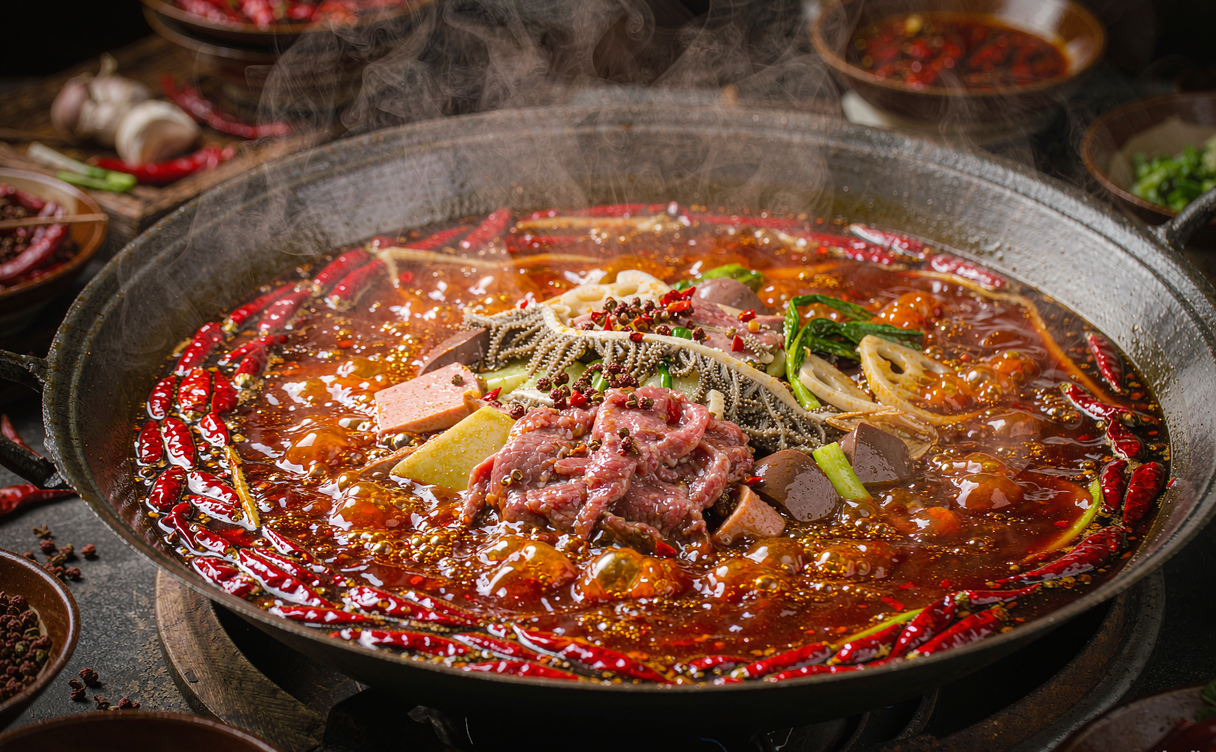
The dish the city is famous for is Chongqing hotpot. The classic broth is a deep-red, beef-tallow base loaded with douban chili paste, Sichuan peppercorn, dried chilies and a dozen aromatics. You cook your own selections — tripe, duck intestine, beef slices, lotus root, potato — in the bubbling pot and dip them in a sesame-and-garlic sauce. A full hotpot for two with drinks runs ¥100–180 as of 2026.
The local ritual is to eat it in a cavernous, noisy hall with the exhaust fans roaring, often late at night. The old riverside spots and the labyrinthine pedestrian basements in the center are the real deal; the polished mall branches are tamer for timid palates. We send clients to the no-frills houses where the waiters assume you know what you are doing. For a focused deep-dive, our Chongqing hotpot guide names the cuts and the broth styles worth ordering.
Chongqing Noodles and the Fast Breakfast
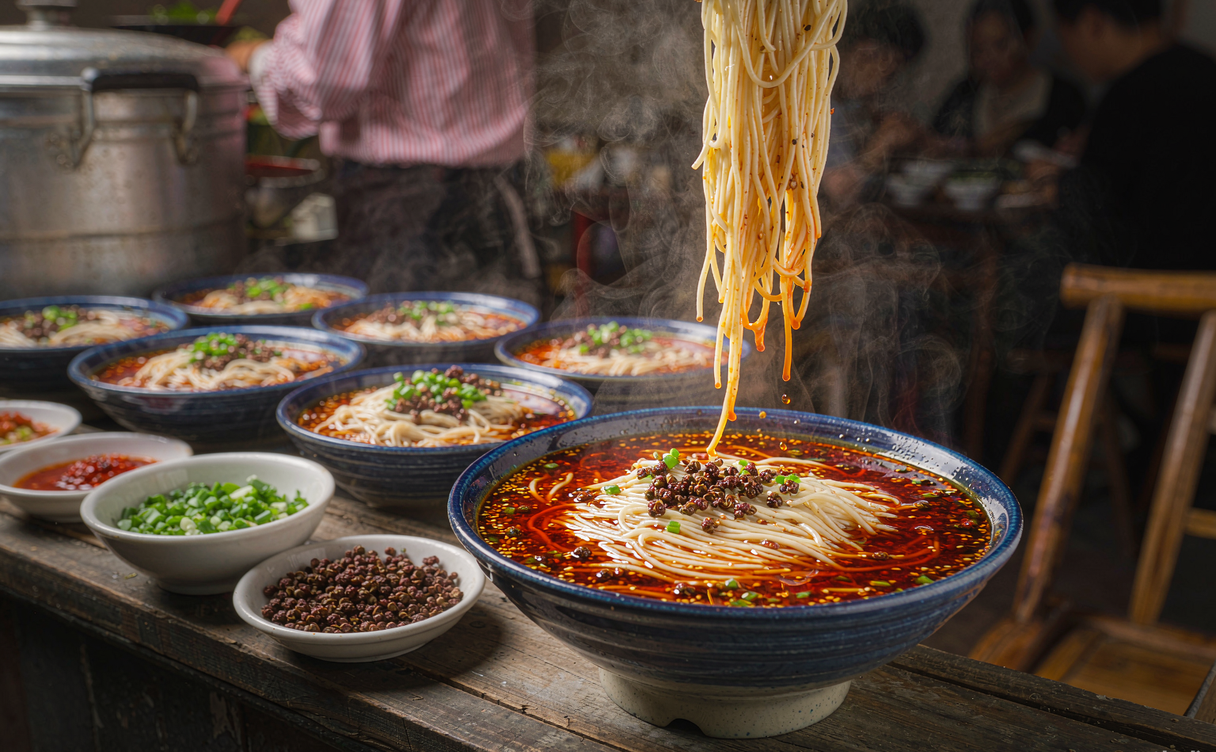
If hotpot is the city’s night, Chongqing noodles are its morning. The iconic bowl is xiao mian — a thin wheat noodle in a savory, chili-oil broth punched up with Sichuan peppercorn, pickled greens, sesame and scallion. A street bowl costs ¥10–18 and eats in five minutes standing at the counter. There are endless variants: the dry-tossed ban mian, the sour-and-hot suan la mian, the soybean-paste version.
We tell clients to start every Chongqing day with a bowl, because the noodle shops double as the city’s social pulse — office workers, students and retirees all queue at the same steaming windows by 8 a.m. This is Chongqing cuisine at its most everyday, and its most addictive.
Beyond xiao mian there is a deeper noodle vocabulary worth learning. The sour-and-hot suan la mian balances black vinegar against the pepper, while the soybean-paste version is earthier and milder for cautious palates. In winter the shops switch to a richer beef-bone broth; in summer they push the cold, sesame-dressed noodles that barely need cooking at all.
Grilled Fish, Dry-Fried and the Night Stalls
Beyond the two headline dishes, Chongqing’s repertoire runs hot and fast. The grilled fish (kao yu) — a whole fish scored, spiced and roasted with chili and cumin, served sizzling — is a group dinner staple at ¥60–120 depending on size. The dry-fried green beans with preserved vegetable, the twice-cooked pork, and the cumin-spiced lamb ribs are staples we order without looking at the menu.
After dark, the riverside night stalls and the lanes behind the Liberation Monument turn into a graze of skewers, fried sausages, and the cold jelly (liang fen) that cools the burn. A casual evening of small plates and beers per person runs ¥50–90. We build these into an evening walk we run with first-timers.
Best Restaurants in Chongqing
When clients ask for the best restaurants in Chongqing, we split by mood:
- The heritage hotpot houses: Noisy, tallow-rich, and proud of it. ¥80–160 per person including drinks.
- The neighborhood noodle counters: No seats, no English, maximum flavor. ¥10–25 per person.
- The riverview grilled-fish joints: Group-friendly and scenic. ¥70–140 per person.
- The mall restaurants in Jiangbei: Tamer broths and English menus for cautious eaters. ¥90–160 per person.
We almost always steer visitors toward the first two tiers. The flavor-per-yuan gap between a ¥15 noodle counter and a ¥150 hotel room is enormous, and Chongqing’s soul lives in the cheap places.
How to Get There and When to Go
Chongqing is a major rail and air hub. The high-speed network connects it to Chengdu in about an hour and to most big cities beyond; our China high-speed train guide for foreigners covers ticketing. Jiangbei International Airport (CKG) handles domestic and some international flights. For the wider city picture — districts, river cruises and sightseeing — our Chongqing travel guide pairs naturally with a food-focused stay.
Timing matters more here than in the south. The best window is March to May and September to November, when the fog lifts and the heat is bearable. Summer is famously brutal — 35°C-plus with humidity — though the hotpot crowds barely thin. For the wider regional timing, our best time to visit China guide helps you plan.
Want Chongqing’s hotpot and noodle circuit mapped by a local who knows the mild-broth options too? Our China food tour guide builds a Sichuan-heat itinerary that fits your spice tolerance.
A Two-Day Eating Plan
Day 1 — The fire. A xiao mian breakfast. A midday dry-fried lunch. An evening hotpot in a classic hall, with yogurt standing by.
Day 2 — The spread. Grilled fish dinner by the river, a morning noodle crawl through a different district, and a night-stall graze near the Liberation Monument to close.
That pace lets the heat build gradually instead of overwhelming on night one.
Prefer a guide to handle the ordering, the spice level and the translation? See our Chongqing itineraries with a local food expert.
Where to Stay for Easy Eating
Stay near the Liberation Monument (Jiefangbei) or Hongya Cave if you want the night-stall scene walkable; stay in Jiangbei for a modern hotel and easy rail access. Mid-range rooms run ¥300–600 per night as of 2026, with the riverside boutique options near Hongya Cave closer to ¥600–1,000.
Practical Notes for 2026
A few things we flag to every client. Spice here is real: ask for “wei la” (mild) at hotpot houses if you are unsure, though even mild carries a punch. Mobile payment dominates; Alipay and WeChat Pay now accept foreign cards, but carry ¥200 cash for the noodle counters and stalls. English menus appear only in the mall restaurants, so save the Chinese dish names to your phone.
Chongqing rewards the brave and punishes the timid gently — there is always yogurt. Ask for the milk-and-sugar yogurt drink (suanna) if the heat gets to you; it is sold at every hotpot hall. For the cultural backdrop, the Sichuan cuisine entry on Wikipedia is a useful reference on the mala flavor that defines the city’s table.
Planning a Sichuan-region food trip? Combine Chongqing with Chengdu and we’ll sequence the trains, the hotpot and the noodles for you.