

Shuidonggou (水洞沟) is the only place in China where you can stand on a 30,000-year-old Paleolithic living floor and then climb a Ming-dynasty Great Wall fortress within a ten-minute walk — and that combination is exactly why the Shuidonggou ruins deserve a spot on any Ningxia itinerary. This Shuidonggou ruins guide covers the seasonal timing, ticket prices in yuan, transport from Yinchuan, and the bookings you should lock in before you arrive, so you can spend your time on the cliffs rather than in a ticket queue.
The site sits about 19 km northeast of Yinchuan city center, tucked into a shallow loess gully where the Yellow River’s alluvial plain meets the Ordos plateau. French paleontologist Émile Licent first excavated here in 1923, and the finds — scrapers, arrowheads, and burned bone — pushed back the recorded timeline of human activity in north China by tens of thousands of years. What makes a visit compelling today is not the museum glass cases (though they are good) but the geography: you walk a boardwalk down into the gully, see the excavated living floors under shelter, then ride a small cable car or donkey cart up to the wall. If you are building a regional loop, pair this with the Western Xia tombs outside the city and an afternoon in Yinchuan, which makes the logical base for the whole area.
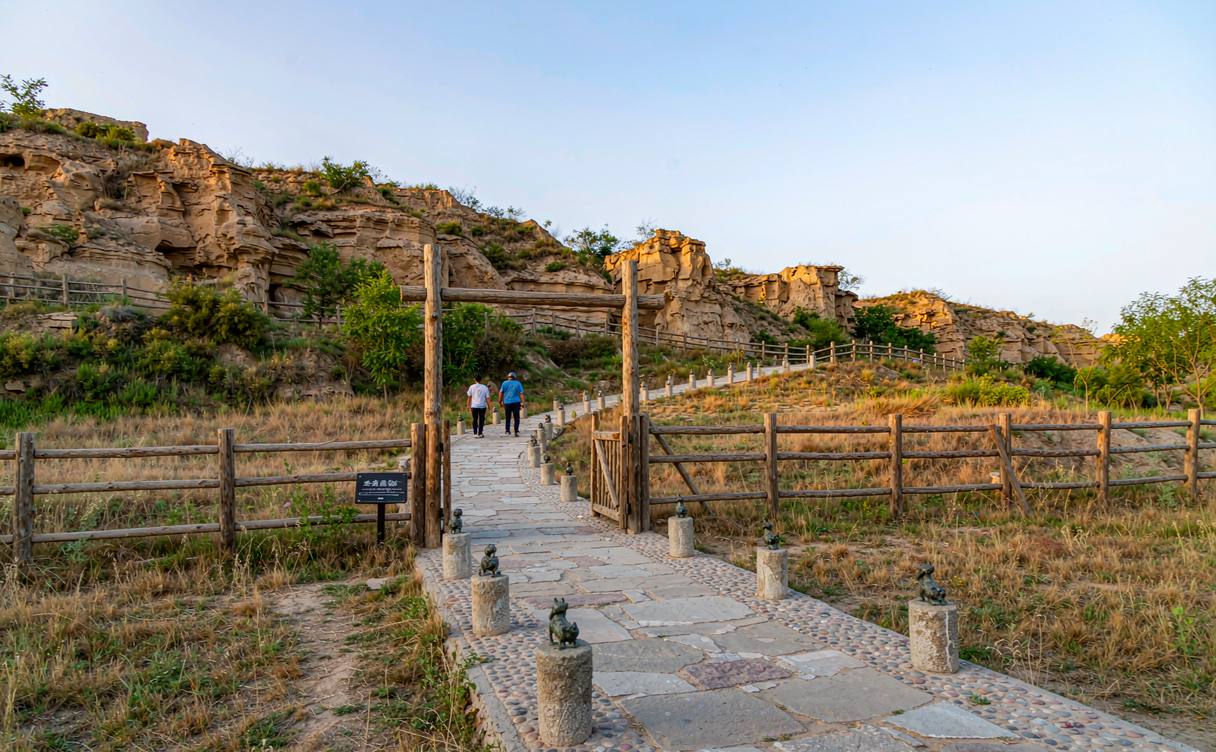
Things to do at Shuidonggou follow a clear core loop that takes roughly three to four hours. Start at the Paleolithic exhibition hall, where English and Chinese panels lay out the stratigraphy and the daily life of the site’s early inhabitants. Then descend to the open-air excavation pits, where interpretive signs explain each stratum and you can see the actual living floor under a protective shelter. The cave-dwelling cluster (yaodong) shows how later farmers lived in the same gully. From there the highlight for most visitors is the Great Wall fortress and the adjacent Red Mountain Fort (Hongshanbao) section, where restored battlements run along the gully rim and give you a clean sightline toward the river. A short jeep ride across the sand (part of the ticket) and a cable car bring you back to the entrance. Budget extra for the zip line if you want the aerial view — it is optional and not included in the base price.
Best time to visit Shuidonggou is late April through early June and again from September to mid-October. Ningxia winters are brutal: daytime highs near freezing with a wind that cuts through every layer you brought. July and August bring 35°C heat with almost no shade in the gully, so the boardwalk bake is real. Spring and autumn give you 18–26°C days, clear light for photography, and the lightest crowding. Avoid the first week of May (Labour Day) and the first week of October (National Day), when domestic tour groups flood the boardwalks and the jeep queue stretches past an hour. For a wider view of regional weather windows, our best time to visit China breakdown lines up Shuidonggou with other northern sites at peak conditions.
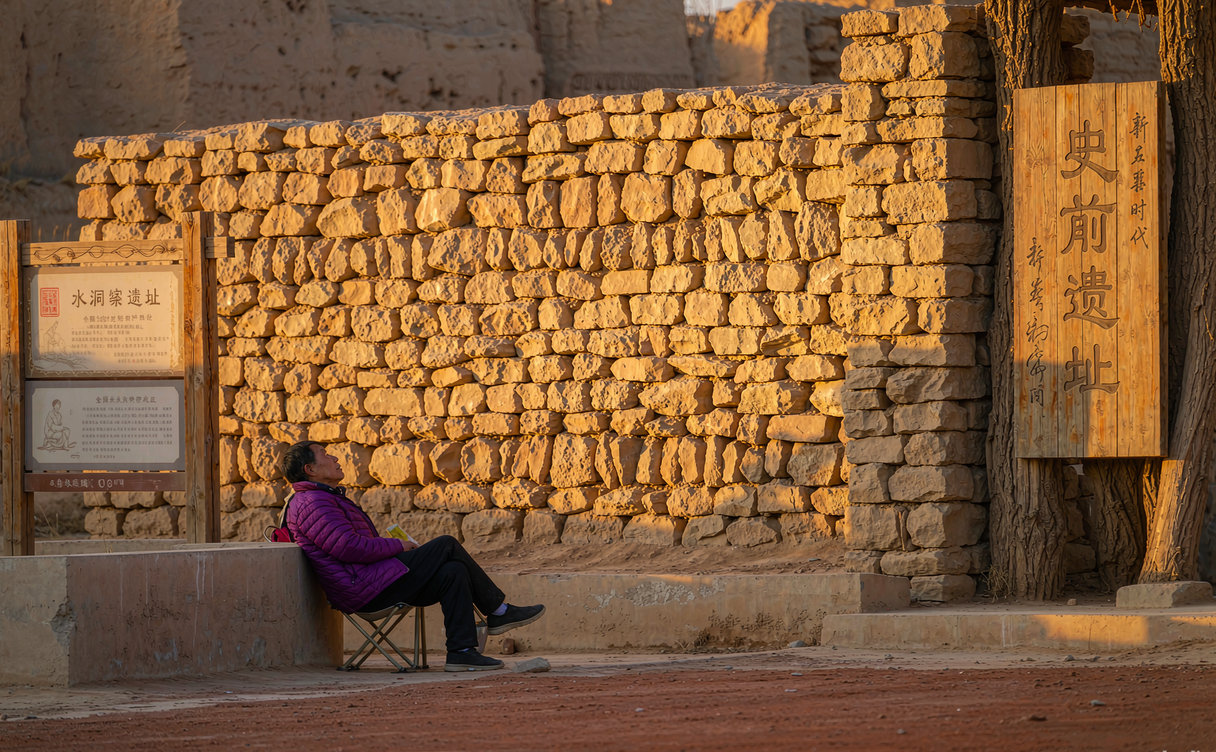
How to get to Shuidonggou is easiest by car. A Didi or taxi from Yinchuan costs about 40–60 yuan and takes 30–40 minutes, depending on the ring-road traffic. Public buses run from Yinchuan North Bus Station to the Shuidonggou stop but are infrequent, so confirm the return schedule the moment you arrive or you may be stranded at closing time. If you are arriving from another province, Yinchuan Hedong Airport is 30 minutes south and connects to the high-speed network; our high-speed train guide for foreigners explains how to book the Yinchuan link on 12306 with a passport. Once in the city, treat Shuidonggou as a half-day outing and keep the rest of your day for the capital’s museums.
Tickets and what to book: gate admission is 76 yuan (60 for the museum plus 16 for the shuttle loop), and the jeep, cable car, and boat are bundled into a 98-yuan “through ticket” that most visitors buy for the full experience. Buy the combined ticket at the gate kiosk; you do not need to pre-book online unless you visit on a holiday, when the lot can sell out by early afternoon. The excavation history is well summarized on Wikipedia’s Shuidonggou entry, which is worth a read before you go for the Licent background and the dating debates.
Food and stay are simple here. There is a basic canteen at the entrance selling noodles for 20–30 yuan, but nothing memorable — eat in Yinchuan before or after. For a smarter pairing, our Ningxia wine region guide maps the vineyards 40 minutes west of the city where you can taste Helan Mountain East reds the same day you do the ruins. First-time visitors should also skim our China travel guide for first-timers for payment-app and SIM basics, because card terminals at the gate are unreliable and you will need Alipay or WeChat Pay loaded with a foreign card.
What to photograph and pack: the gully faces east, so morning light rakes across the excavated living floor and makes the worked stone readable, while the wall photographs best in the warm low sun of late afternoon. Bring a wide lens for the gorge and a mid-telephoto if you want the watchtower compressed against the plain. Footwear matters more than gear — the descent is a steady gravel ramp, but the return cable car dumps you at a sandy apron where flats will sink, and trail shoes beat sneakers every time. Cash is useful even where Alipay works at the gate, because the canteen and the donkey-cart operators are cash-only and the terminal drops offline on windy days. If you are traveling with kids, note the site is stroller-hostile: there are steps and boardwalk gaps, and the jeep ride is bumpy enough that a car seat is awkward to manage. Allow the full half day and you will also catch the site’s quiet hour, around 16:00, when the tour buses have gone and the only sound is wind in the gully — that is when Shuidonggou reads as a genuine place rather than a checkbox on a bus route. The on-site museum shop sells inexpensive reprints of the excavation reports if you want something more substantial than postcards, and the staff will stamp your notebook with the site seal for free.
Want the full Ningxia picture before you commit? Download our Yinchuan base-camp planner and pair Shuidonggou with the Western Xia tombs in a single day loop.
The practical rhythm of a Shuidonggou day is straightforward: arrive by 9:30, walk the gully before the midday heat, climb the wall for the 11:00 light, and roll back to Yinchuan for lunch. Guides at the gate charge about 100 yuan for a Mandarin tour; English interpretation on site is thin, so load the Wikipedia background onto your phone beforehand and you will get far more out of the pits. Wear closed shoes — the gully floor is loose gravel and the boardwalk gets slippery after rain.
Planning a spring or autumn trip? Check our best time to visit China breakdown to stack Shuidonggou with other northern sites at peak weather.
One more tip worth flagging: the on-site “wild” rides (sand buggy, zip line) are fun but weather-dependent and close in high wind, which is common on this exposed plain. If those matter to you, call the site the morning of your visit. Shuidonggou rewards the unhurried — give it a half day, not a rushed hour, and the contrast between the Stone Age floor and the Ming wall will actually land. The silence down in the gully, with the river flats stretching east, is the kind of scene most travelers never expect from a desert province.
Ready to build your Ningxia route? Start from our Yinchuan travel guide and lock in Shuidonggou as your archaeological anchor stop.