

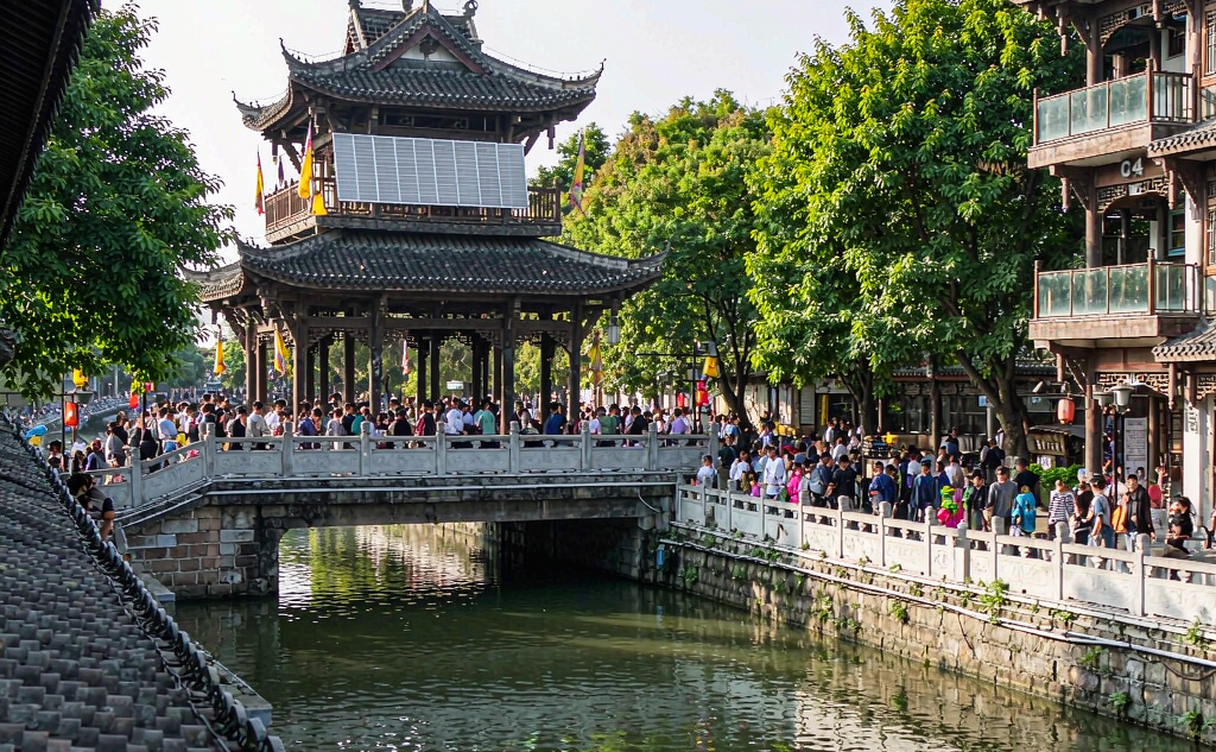
Pingle Ancient Town sits in the Qionglai hills about 90 km southwest of Chengdu, and it has been here since the Qin dynasty — more than 2,000 years. What draws people today is not a single monument but the whole scene: a clear river running through the old stone lanes, teahouses set right at the water’s edge, and Ming-Qing bridges where locals still sit and play cards. I used Pingle as a slow day trip out of Chengdu and wished I had stayed the night; the evening, when the tour buses leave and the lanterns come on, is the real town. This Pingle ancient town guide covers the day trip, the timing, the teahouses, and where to lay your head.
How to get to Pingle (Chengdu day trip)
From Chengdu, the practical route is bus or car via Qionglai. High-speed trains run from Chengdu to Qionglai (about 30–40 minutes, 20–35 yuan), then a local bus or taxi covers the last 20 km to Pingle (25–45 yuan, 30–40 minutes). Direct tourist buses also leave Chengdu’s Xinnanmen and Chadianzi stations for Pingle (about 2 hours, 25–40 yuan). A hired car from Chengdu runs 350–550 yuan round trip and is the easiest with luggage. Our China high-speed train guide for foreigners covers the Chengdu–Qionglai leg. The Qionglai travel guide adds the wine and mountain sights just beyond Pingle, handy if you want to extend the loop by a day. The Chengdu–Qionglai train runs from both Chengdu East and Chengdu South, so pick the station closest to your hotel and buy the Qionglai ticket the same morning on the 12306 app to skip the queue.
Best time to visit Pingle
Spring (March–May) and autumn (September–November) are best: 16–24°C and the river is clear for wading and photos. Summer is green and lush but humid and busy on weekends; winter is quiet and cold, with the teahouses’ braziers the coziest spot in town. For a Pingle Chengdu day trip, aim for a weekday — weekends and holidays bring coach loads that fill the lanes by 11 am. Align multi-city plans with our best time to visit China page, and if you overnight, book the river-view room early because those sell out first on summer weekends.
Things to do in Pingle
- The riverside teahouses: the signature. Pull up a bamboo chair at a teahouse on the Baimo River bank, order a pot of green tea (15–30 yuan), and watch the water — this is the Pingle ancient town teahouses experience everyone comes for. Spend an hour; it is the best value in town and the only “activity” you actually need.
- The old bridges: the Qing-era stone bridges cross the river at several points; the main one near the lane junction is the classic photo, best shot in the flat morning light.
- Baimo River edge: in summer kids and some visitors wade; water shoes help, and watch the current after rain because the mountain runoff rises fast.
- Guangyan Temple and the ancient cypresses: a short walk or shuttle uphill to a quiet temple among thousand-year trees; free or small donation, and the giant cypresses are the oldest living things in town.
- Paper-making and craft lanes: Pingle has a long paper-making tradition; a couple of workshops show the process (20–40 yuan to try pulling a sheet yourself).
- Night lane stroll: after the day-trippers leave (around 5–6 pm), the lanterns and empty lanes are the town at its best, and the riverside music stops by 9 pm.

Food and the Sichuan table
Pingle eats like the Chengdu hinterland: run-of-the-river fish (60–100 yuan for two), cold noodles and bangbang chicken (15–25 yuan), and the local cured pork. A riverside teahouse meal with tea runs 50–90 yuan for two. For the flavor grammar of the region, our Sichuan cuisine guide explains the peppercorn-and-chili logic you will taste here. Also try the Qionglai smoked sausage (20–30 yuan) and the river snails in chili (15–25 yuan) if you want the snackier end of the table, and ask the teahouse for the house pickles — they are usually free with a pot and sharper than anything in a Chengdu supermarket. The Qionglai area also produces wine and is worth a half-day if you like vineyards, with a couple of cellars offering tastings for 50–100 yuan.
Train to Qionglai then taxi to Pingle for a relaxed day — open our Chengdu travel guide for the station, bus, and timing out of the city.
Where to stay (and why overnight beats a day trip)
Pingle has riverside guesthouses and courtyard inns (160–320 yuan/night) that come alive after dark when the coaches leave. Staying over is the single best upgrade to this trip; book a lane-side room midweek and a river-view room ahead for weekends. Our China ancient town stays guide has tips on picking the right room and avoiding the loud bars, and warns that the cheapest laneside rooms can echo with evening karaoke.
Make it an overnight and wake to an empty town — read our China ancient town stays guide before you book the room.
A Pingle half-day and full-day plan
Half-day: train to Qionglai, taxi to Pingle, teahouse on the river, bridge photos, back by 6 pm. Full-day or overnight: add Guangyan Temple, a paper-making workshop, and the evening lane stroll after the buses leave. The overnight version is the one I recommend — the town only shows its real face after dark, when the lanterns come on and the last coach has gone.
Guangyan Temple and the craft lanes
The temple shuttle runs every 30 minutes from the upper lane (15 yuan return) or you can walk the shaded path in 40 minutes. Inside, the thousand-year cypresses are roped off but visible, and the quiet is a relief from the riverside buzz. Back in town, the paper-making workshops let you pull a sheet for 20–40 yuan; it is a messy, fun 20 minutes and you leave with a souvenir that is actually local rather than a mass-produced fridge magnet.
Side trips: Qionglai wine country
Qionglai, 20 km north, is one of Sichuan’s small wine regions, with a couple of cellars offering tastings (50–100 yuan). If you like vineyards, add a half-day between Pingle and Chengdu — the Qionglai travel guide covers which cellar to visit and how to book a tasting without a tour. This also breaks up the Chengdu–Pingle run with something most visitors skip entirely.
Costs at a glance
Pingle is good value: 200–360 yuan covers a riverside room, two meals, and local transit. The teahouse pot (15–30 yuan) is the main indulgence and the best one; temple and workshop fees are small. A day-tripper from Chengdu spends 100–180 yuan all-in if they take the bus both ways and eat at the market. The riverside rooms cost more on summer weekends, so book the lane-side ones midweek to save. Eat at the stalls, not the terrace restaurants, and a full day of food stays under 60 yuan.
Practical notes
Pingle is an easy, safe, English-light stop. Carry some cash for teahouses and stalls (many are card-only at the bigger places but the small ones prefer cash), download offline maps, and wear shoes with grip for the wet stone lanes. A translation app covers menu gaps. If you want the full Chengdu anchor, our Chengdu travel guide handles the pandas, the food, and the airport. One last tip: the last bus back to Chengdu leaves Pingle around 6 pm, so an overnight saves you a pinned taxi at dusk.
Build Pingle into a Chengdu–Qionglai loop and stay the night — start with our Chengdu travel guide and let the river do the rest.