

Chengdu travelers usually head west to Mount Qingcheng or Dujiangyan. I went a different way—southwest to Qionglai, a county-level city in Sichuan where a preserved Ming-and-Qing river town meets a forested mountain with waterfalls. A Qionglai travel guide is really two trips in one: the lantern-lit lanes of Pingle Ancient Town and the misty trails of Mount Tiantai (Tiantai Mountain, Qionglai). Both sit within 90 minutes of Chengdu, making this one of the easiest cultural-nature combos in the province, and a perfect antidote to the capital’s bustle.
Why Qionglai Belongs on Your Sichuan List
Qionglai has been a trade town for over 2,000 years, sitting on the southern branch of the ancient Tea-Horse Road that carried brick tea from Sichuan into Tibet, China. Today it is best known for Pingle, one of Sichuan’s tidier restored water towns, and for Mount Tiantai, a national forest park famous for summer fireflies and spring streams. I based myself in Pingle and did a day climb on the mountain—perfect pacing, and no need to repack between the two. For a bigger picture, our Chengdu travel guide explains how to use the capital as your hub and where Qionglai fits into a wider Sichuan plan.
How to Get to Qionglai
From Chengdu, the simplest route is the high-speed train to Qionglai Station (about 30–50 minutes, ¥18–¥33), then a bus or DiDi 30 minutes to Pingle (¥40–¥60). Driving takes about 1.5 hours via the Chengdu–Wenjiang–Qionglai expressway; car rental or DiDi both work and cost roughly ¥200–¥300 round trip from the city. If you are new to the rail network, our China high-speed train guide for foreigners covers tickets, real-name ID, and seat classes.
Within Qionglai, local buses to Pingle run every 20–30 minutes for ¥7–¥10. The mountain and town are close enough that a single base in Pingle covers both, with the Mount Tiantai shuttle leaving from the town’s east gate.
Things to Do in Qionglai Sichuan
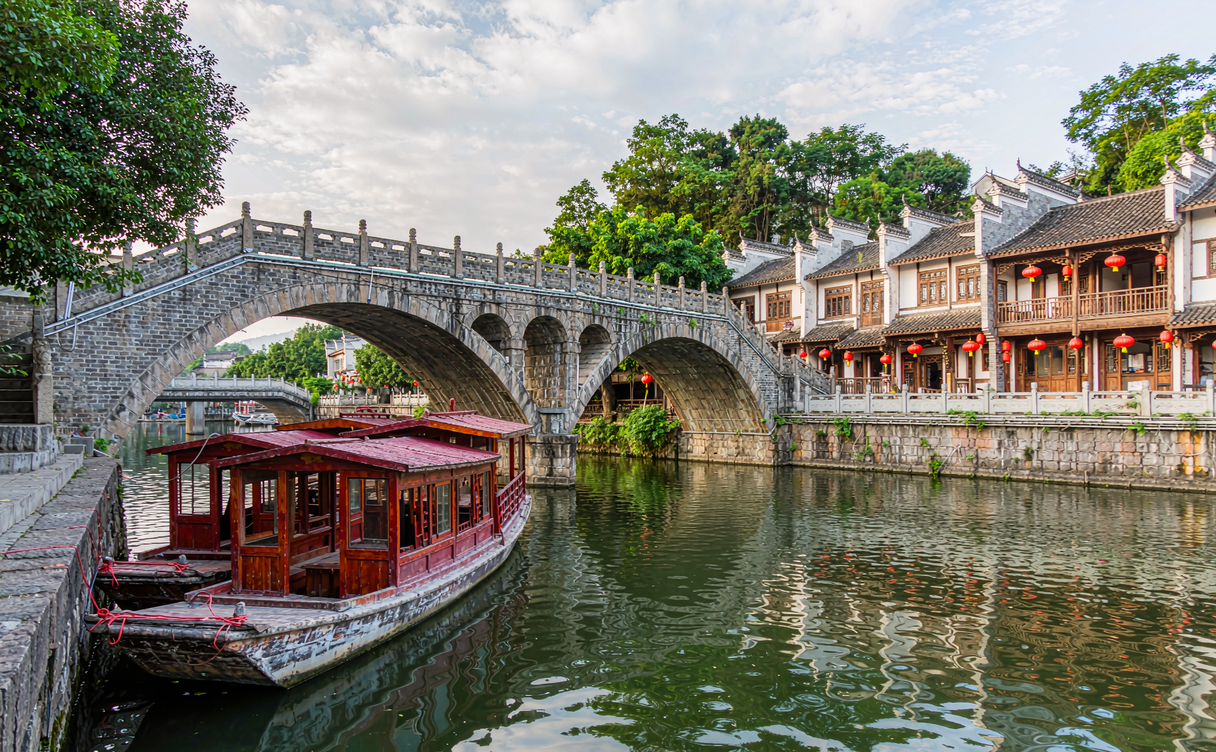
Pingle Ancient Town. Free to enter, with paid side attractions like the Zhuxi River bamboo raft (¥40) and the old paper-making workshop (¥20) where you can pull a sheet of mulberry-bark paper yourself. The Baimo River runs through town; I rented a bike (¥20/hour) and rode the riverside path to the quieter upstream lanes where few tourists venture. Evening is when the lanterns glow and the riverside teahouses fill—my favorite hour, with old men playing mahjong under the lamps.
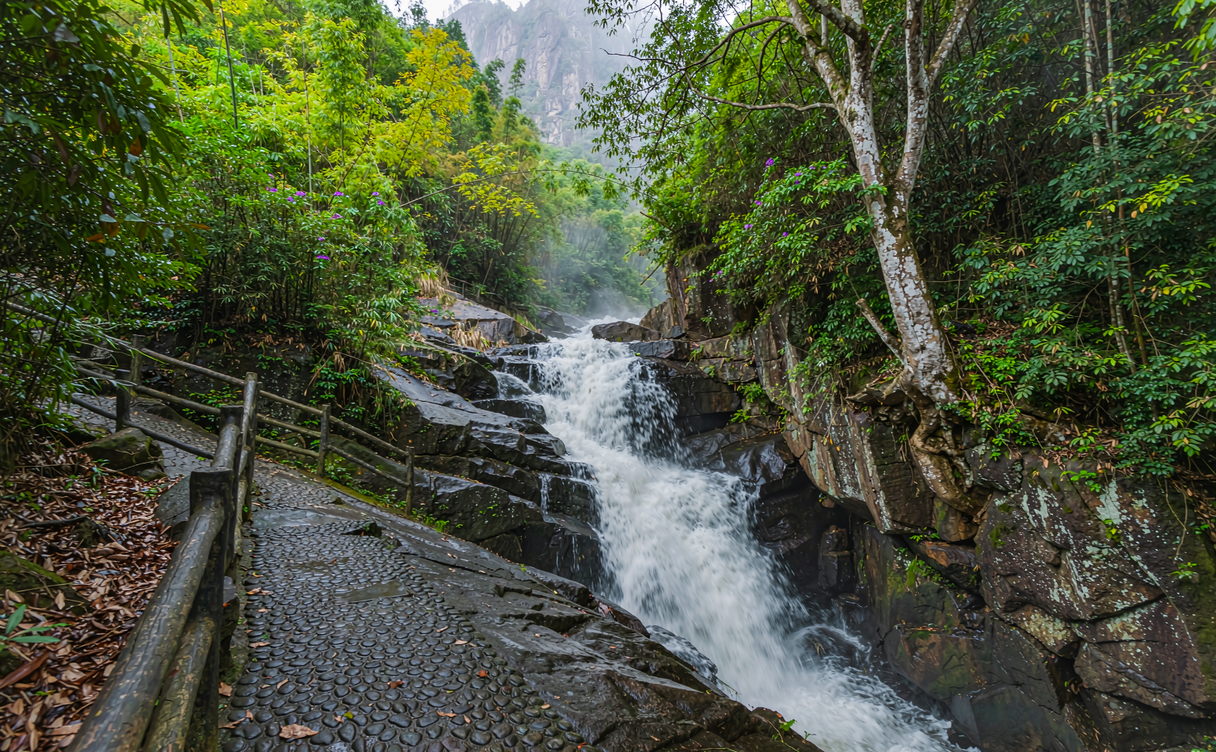
Mount Tiantai (Qionglai). Note this is the Sichuan peak, not the famous Tiantai Mountain in Zhejiang province—a different mountain entirely, so do not confuse the two when booking, or you may end up 1,500 kilometers off. The Qionglai park charges about ¥65 in peak season (¥30 off-season) plus a shuttle bus (¥15–¥25). Trails climb past the Xiangshui Waterfall and the Moon Bay pools; a full loop is 5–7 hours, or take the cable car (¥50 one way) partway to save your legs. I went in late May and counted dozens of butterflies along the stream, and not another hiker for an hour at a time.
Qionglai Winery and Tea-Horse Road relics. The area produces baijiu and has small museums on the Tea-Horse Road; entry is usually ¥20–¥40. The Dujiangyan irrigation system guide pairs well if you want to understand the water engineering that made this Sichuan plain fertile and fed the trade that built towns like Pingle.
Mapping a longer Sichuan journey? Our Sichuan 7-day itinerary slots Qionglai in as a relaxed day-trip from Chengdu between bigger mountain stops. Save it and you will see exactly where Pingle fits without crowding your schedule.
Best Time to Visit Qionglai
The best time to visit Qionglai is spring (April–June) and autumn (September–November). April–May brings green rice terraces and active streams on Mount Tiantai; October shows clear air and fewer crowds. Summer (July–August) is the firefly season on the mountain and pleasantly cool at altitude, though afternoons can rain. Winter is quiet and some mountain facilities close, but Pingle stays open and festive near Spring Festival.
For nationwide timing, our best time to visit China overview helps you line Qionglai up with other regions. I visited in late May and the waterfalls were at their fullest, with the forest floor carpeted in ferns.
Where to Stay and Eat
Pingle has riverside guesthouses from ¥200–¥450 per night; the lantern-view rooms book out on weekends, so reserve midweek. In Qionglai city, chain hotels run ¥180–¥300. I stayed in a restored courtyard inn for ¥320 with a riverside breakfast of congee and pickles, and the owner lent me a bamboo hat for the mountain.
Food is classic Sichuan but milder than Chengdu’s hit-you-back heat. Try Pingle’s river fish hotpot (¥88–¥138 for two), the local cured bacon, and sweet glutinous cakes from street stalls (¥5–¥10). Teahouses charge ¥15–¥30 for a pot by the water—the best ¥20 you will spend, and a front-row seat to small-town life.
A Two-Day Sample Plan
- Day 1: Train from Chengdu to Qionglai, transfer to Pingle, wander lanes, riverside bike, lantern evening, overnight in town.
- Day 2: Morning shuttle to Mount Tiantai, hike waterfalls and pools, cable car down, return to Chengdu by evening.
This kept travel light and gave me both culture and nature without changing hotels twice.
Practical Tips and Budget
Pingle gets busy on weekends and May Day/National Day holidays; arrive Friday evening or Saturday dawn to beat day-trippers. Wear good shoes for Mount Tiantai’s wet stone steps, and bring a rain shell in summer. A daily budget: transport ¥50–¥120, food ¥80–¥150, lodging ¥200–¥450, entries ¥100 if you do the mountain plus a raft. Mobile pay works everywhere; the town’s ATMs are reliable but carry ¥100 cash for small stalls. For a concrete example, a couple sharing a room and a taxi from Chengdu can do a relaxed two-day Qionglai trip for about ¥900–¥1,200 total, while a solo traveler on buses and hostels should budget ¥500–¥700. The low cost is part of the appeal of a destination still under the radar.
Want Mount Qingcheng too? Our Mount Qingcheng guide is the natural add-on west of Chengdu, balancing Qionglai’s east-side ease with a Taoist mountain climb. Keep both open while you plan so the two halves of your Sichuan trip balance out.
A Note on Two Different “Tiantai” Mountains
To avoid a booking mistake I nearly made: this guide’s Mount Tiantai is in Qionglai, Sichuan—a forested water park with waterfalls and fireflies. It is not the nationally famous Tiantai Mountain in Zhejiang province, a Buddhist-Taoist peak hundreds of kilometers east with the same name. Both share the name but are separate destinations, and train tickets to the wrong one will cost you a day. The Wikipedia entry on Qionglai confirms the city’s location and history if you want a neutral reference before you travel.
Qionglai is the kind of place that surprises you: I expected a cute town and found a full mountain day as well. Build it as a slow two-day loop from Chengdu and you get old lanes, cold streams, and fireflies without leaving Sichuan’s easy rail reach—and without the altitude that comes with the province’s western peaks.
Sample 2-Day Qionglai Itinerary
Day 1 ran on a simple clock that worked perfectly for me. I caught the 08:20 high-speed train from Chengdu’s Chengdu West Station to Qionglai (¥28, 42 minutes), then a DiDi from the station forecourt straight to Pingle Ancient Town (¥52, 35 minutes), arriving around 10:00. I dropped my bag at a riverside guesthouse (¥320 a night, the lantern-view room) and walked the Baimo River lanes before lunch. At 12:30 I ate river fish hotpot at a waterside spot (¥108 for two) and then rented a bike (¥20 an hour) to ride upstream to the quiet Lugu Diyan weir, a 40-minute round trip with almost no other visitors. By 17:00 the lanterns were lit, so I paid ¥20 for a pot of tea at a riverside teahouse and watched the mahjong crowd. Dinner was cured bacon with glutinous cakes (¥45) and an early night.
Day 2 I took the 08:00 shuttle from Pingle’s east gate to Mount Tiantai (¥20, 25 minutes). I hiked the Xiangshui Waterfall loop for about four hours, counting dozens of butterflies in late May, then rode the cable car down (¥50) and was back in Pingle by 14:00. A 15:30 DiDi to Qionglai Station and the 16:20 train returned me to Chengdu before 17:30. Keeping Pingle Ancient Town as my single base meant zero hotel changes and roughly ¥450 total for transport, food, and entries — a tidy proof that a Qionglai travel guide’s two-in-one promise is real.
Ready to go? Book your Chengdu–Qionglai train ticket, reserve a Pingle riverside room for a weekday, and pack trail shoes for Mount Tiantai. The whole trip is under two hours from Chengdu—start your reservation tonight and the lanterns will be waiting when you arrive.