

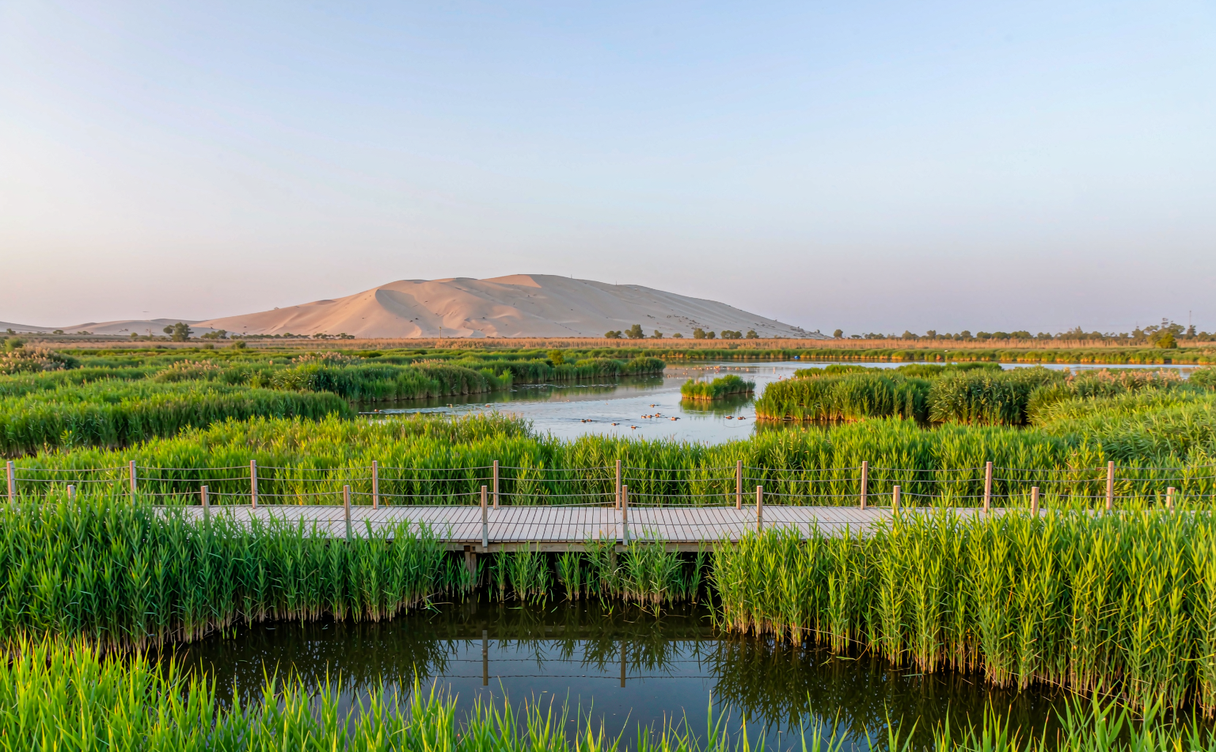
The first time I visited Ningxia Sand Lake, I’d been told it was “desert plus water” and assumed it would feel like a theme-park trick. It isn’t. About 56 km north of Yinchuan, the Gobi simply stops at the edge of a shallow freshwater lake, and a wall of sand dunes rises on the far shore while ten thousand reeds sway in the water between them. This Ningxia Sand Lake guide is the result of two trips there — once in late September for the birds, once in May for the weather — and the honest takeaway is that it’s one of the easiest half-day wonders in northwest China, especially if you’re already in Yinchuan for the Western Xia tombs and want a contrast of water and sand without driving to Qinghai.
Why Sand Lake is worth the trip
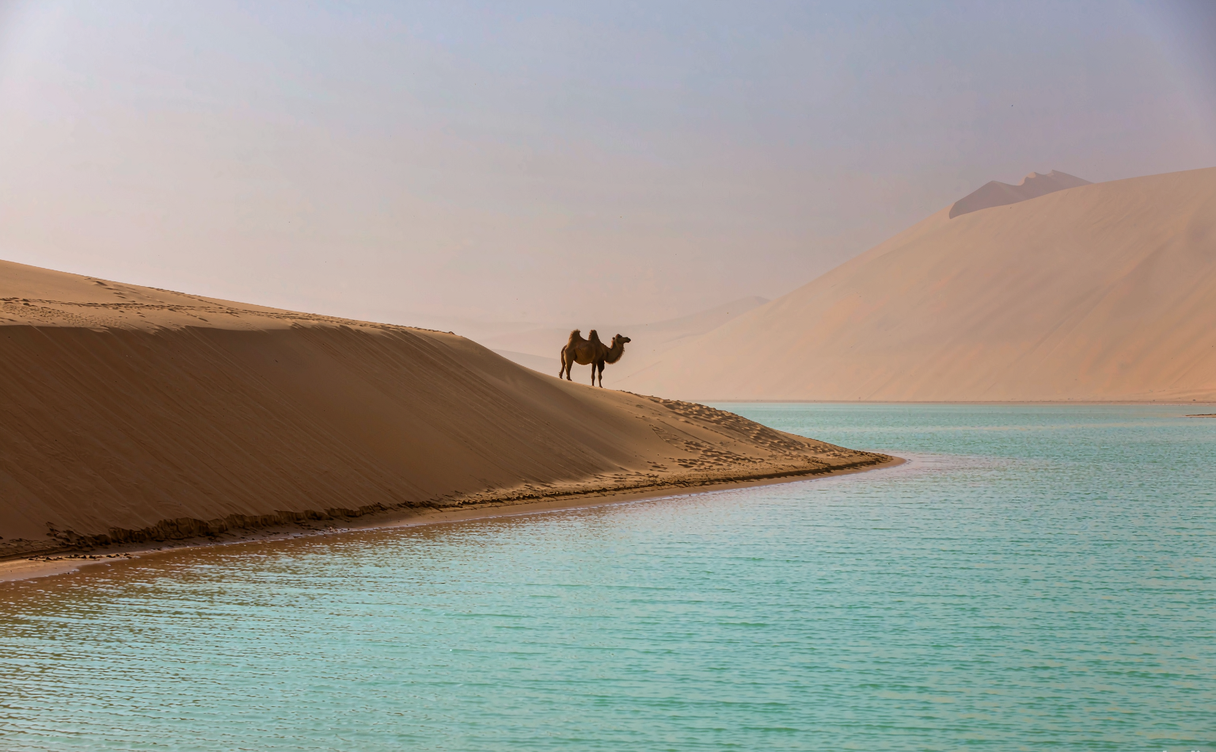
Sand Lake (沙湖, Shahu) is a national 5A scenic area in Pingluo County, and what makes it unusual is the meeting line. Most of China’s famous lakes are mountain or karst settings; here the shoreline is a beach of fine yellow sand that climbs into real dunes, and just a few meters of water separate them from a wetland thick with reeds. On a calm morning the reflection of the dunes in the lake is almost perfect, and the whole place reads like a mirage you can walk into. I’ve sent dozens of clients here as a relaxed counterpoint to the tomb-and-fortress circuit, and almost none regret the half day.
The lake itself covers roughly 22 square km and the desert around it another 12 square km, so it’s large enough that you never feel boxed in. What I like most is the pacing: you arrive, take a boat out, wander a dune, watch birds, eat fish, and leave — no temples to decode, no tickets to pre-book, just a strange and beautiful landscape doing the work.
Things to do at Ningxia Sand Lake
When travelers ask me for the things to do at Ningxia Sand Lake, I give them a list that fills about four hours without rushing:
1. Boat cruise across the lake — the standard shuttle boat from the south gate to the dune beach takes about 20 minutes and threads through the reed beds. Sit on the left side coming back; the light on the dunes is better in the afternoon.
2. Climb and slide the dunes — the sand slope on the north shore has a boardwalk and a sand-slide (¥30–¥50). It’s modest compared to Mingsha Shan, but for kids it’s a highlight, and the view back across the water is the postcard shot.
3. Camel and cart rides — short camel loops (¥50–¥80) run along the dune base. Negotiate at the gate; the “photo fee” some handlers ask is optional and you can decline.
4. Reed-boardwalk and wetland walk — a long wooden walkway lets you get close to the reeds and nesting birds without disturbing them. Bring binoculars; the birdlife is the quiet star of the place.
5. Cable car — a gondola (¥40–¥60) crosses the lake if you’d rather not take the boat, and it gives a hawk’s-eye view of where the desert and water kiss.
6. Fish feast — the lake is famous for fat-headed carp (胖头鱼), and the restaurants near the entrance serve it steamed or in soup for roughly ¥60–¥120 a dish. It’s the local meal to have.
Ningxia Sand Lake birds
The reason I came back in September was the Ningxia Sand Lake birds. The wetland sits on a major Central Asian migratory flyway, and more than 190 species have been recorded here, including swans, gray cranes, egrets, cormorants, and large flocks of wild geese that lift off the reeds in black clouds at dusk. The best windows are late April to May and September to October, when the migrants pause on the lake. I spent a full hour on the boardwalk at golden hour and counted eleven species without trying, including a pair of whooper swans that the warden said had been returning for three years.
If birding is your main goal, bring a real telephoto lens or decent binoculars and go early — by 11 am the crowds on the boardwalk scare the shy species back into the deep reeds. The park sells a printed bird checklist at the gate for ¥10, and the wardens are friendly if you show genuine interest rather than just wanting a selfie.
Best time to visit Ningxia Sand Lake
The best time to visit Ningxia Sand Lake is May through June and again September through October. Ningxia has a harsh continental climate: July and August are hot (often 33–37°C) and the reeds brown at the edges, while November through March is cold, with the lake partly frozen and the dunes biting in the wind. Spring (April–May) can be windy with the occasional sand-laden gust, but the birds are at their peak then, so I rate late May as the sweet spot — warm enough to enjoy the water, calm enough for photos, and full of migrants.
This dovetails with the seasonal advice in our best time to visit China guide, which flags the northwest as a shoulder-season destination: the months either side of summer give you the landscape without the oven. If you’re linking Sand Lake to a Qinghai or Gansu drive, September is ideal across all three provinces.
How to get to Ningxia Sand Lake
Working out how to get to Ningxia Sand Lake is straightforward because it sits right on the Yinchuan–Shizuishan corridor:
- Tourist shuttle bus — from Yinchuan’s Nanmenqiao area and the main bus station, direct tourist buses run in season for about ¥20–¥30 one way, taking roughly 70–90 minutes. They leave in the morning and return mid-afternoon; confirm the return time when you board.
- Train + taxi — a regional train from Yinchuan to Shizuishan stops near the lake area; from the station a taxi is ¥30–¥40 to the gate. This is the option I use when I want to control my own return time.
- Private car / tour — hotels in Yinchuan arrange half-day trips for ¥300–¥500 including the 56 km drive each way. Comfortable, and you can combine it with the Western Xia tombs on the same day.
- Self-drive — the G6 Beijing–Lhasa expressway has a Sand Lake exit; follow the signs 10 minutes to the parking lot.
Entry is about ¥60 for the gate, with boat and cable car adding ¥80–¥120 depending on the package; a full “all-in” ticket in peak season runs ¥150–¥180. Buy at the south gate; foreign passports scan fine and there’s an English map at the info desk.
If you’re basing in Yinchuan, pair Sand Lake with the tombs in one day using our Western Xia Tombs guide, which explains the drive, the ticket, and the on-site museum so you don’t waste the short autumn light. I’d do the tombs in the morning and Sand Lake for the late-afternoon boat.
Pairing Sand Lake with a wider northwest loop
Sand Lake is an easy add-on whether you arrive by air or rail. Most visitors reach Yinchuan on the high-speed train network from Lanzhou or Xining, and the lake slots neatly into a day before you head east. If you’re coming from Qinghai, the Xining travel guide covers the rail hub and the Qinghai Lake detour, while the Lanzhou travel guide is the natural gateway if you’re approaching from central China. For the big picture, our China Silk Road itinerary shows where Ningxia fits between Gansu and the Hexi Corridor.
How long to spend and what to bring
Plan 3–4 hours on site, or a relaxed half day if you include lunch. Wear layers even in summer — the lake breeze is cooler than Yinchuan city — and bring sunscreen, a hat, and binoculars. There are clean restrooms and a café at the south gate, and the fish restaurants are decent and fairly priced. Drones are technically allowed in places but the wind near the open water is brutal, so I leave mine in the bag.
A practical note for families: the sand-slide and camel rides are the kid favorites, and the boardwalk is stroller-friendly as far as the first viewing tower. I’ve taken a three-year-old around the loop in under two hours with plenty of stops, so it’s a low-stress outing compared with the bigger Gobi sites.
For a longer northwest route that includes Ningxia, the China Silk Road corridor maps a Yinchuan stop between Lanzhou and the Hexi Corridor, so you can fold Sand Lake and the Western Xia tombs into a single desert-and-water chapter without backtracking.
A note on the landscape
For the regional context, the Wikipedia page on Ningxia explains how this dry province sits in the Yellow River’s irrigated bend, which is exactly why a lake this size survives in the middle of the sand — the river feeds it. That farming-and-desert tension is the whole character of the place, and it’s worth knowing before you go so the “desert meets lake” line lands as geology, not gimmick.
If you’re short on time, treat Sand Lake as a half-day and skip the cable car in favor of the boat and the boardwalk — that’s where the birds and the reflection are, and the dunes will still be there for the photo on the way back.
Closing
Ningxia Sand Lake won’t challenge the Himalayas or outshine West Lake, and it isn’t trying to. What it gives you is a rare, photogenic line where dune and wetland share a shoreline, plus some of the easiest birdwatching in the northwest and a genuinely good fish lunch. If you’re already in Yinchuan, it’s a half-day well spent — and if you time it for late May or September, you’ll catch the migrants that turn a pretty lake into something a little unforgettable.