

I’ll admit I went to Zhenbeibu Film Studio expecting a faded tourist trap. Instead I spent four hours grinning like a kid, because this is the actual dirt-and-rammed-earth fortress where A Chinese Odyssey, Red Sorghum, and a hundred other Chinese films were shot — and you can walk straight into the sets. This Zhenbeibu film studio Yinchuan guide comes from two visits, the second with a filmmaker friend who kept pointing at walls and saying “that’s the one, that’s the shot.” If you like cinema, or you just want a playful half-day near Yinchuan that isn’t another tomb or mosque, this is the stop.
How Zhenbeibu became a film studio
The Zhenbeibu film history starts not with a studio but with two abandoned Ming- and Qing-era fort ruins in the foothills 35 km west of Yinchuan. In the 1980s the novelist and former political prisoner Zhang Xianliang, who had been sent to labor near here, saw the atmospheric ruins and persuaded filmmakers to use them. Chen Kaige shot Yellow Earth nearby; Zhang Yimou filmed Red Sorghum at the site in 1987; and the breakthrough was Stephen Chow’s A Chinese Odyssey (大话西游) in 1994–95, which turned Zhenbeibu into a pilgrimage site for a generation of Chinese movie fans. Today it’s billed as China’s “film from the loess” capital, and the Ming Castle (明城) and Qing Castle (清城) are preserved as working, walkable sets rather than a museum.
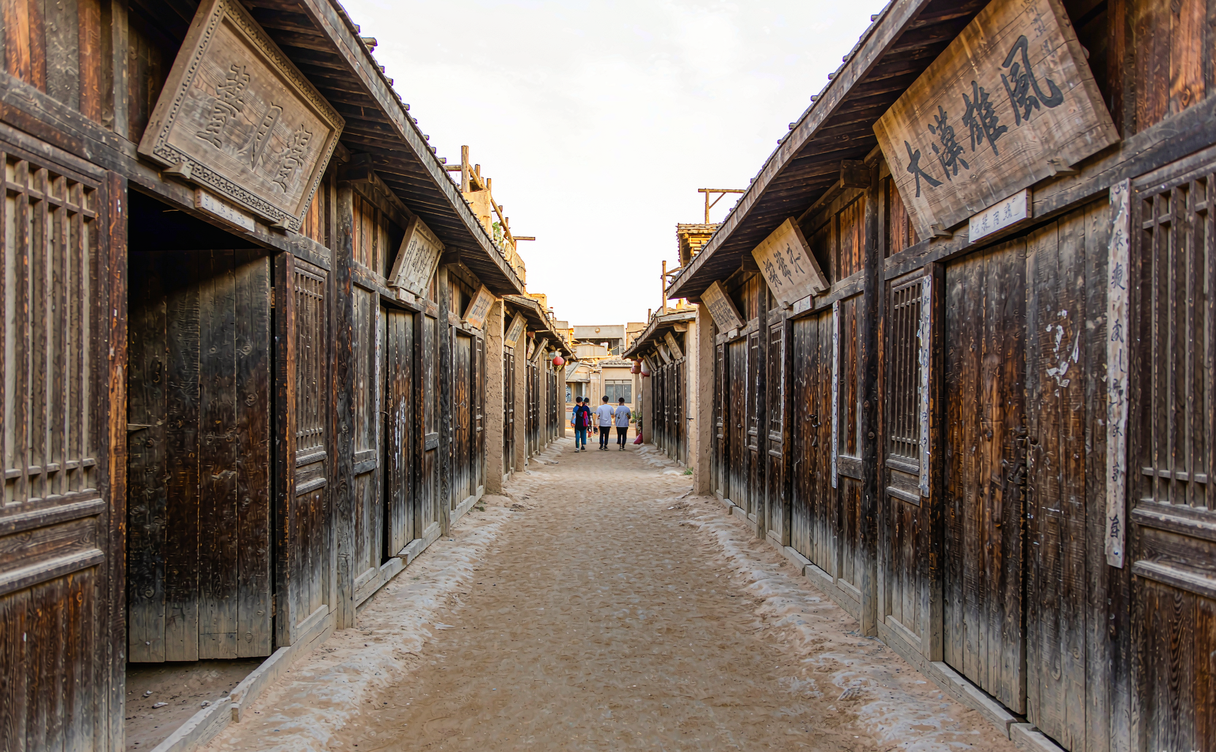
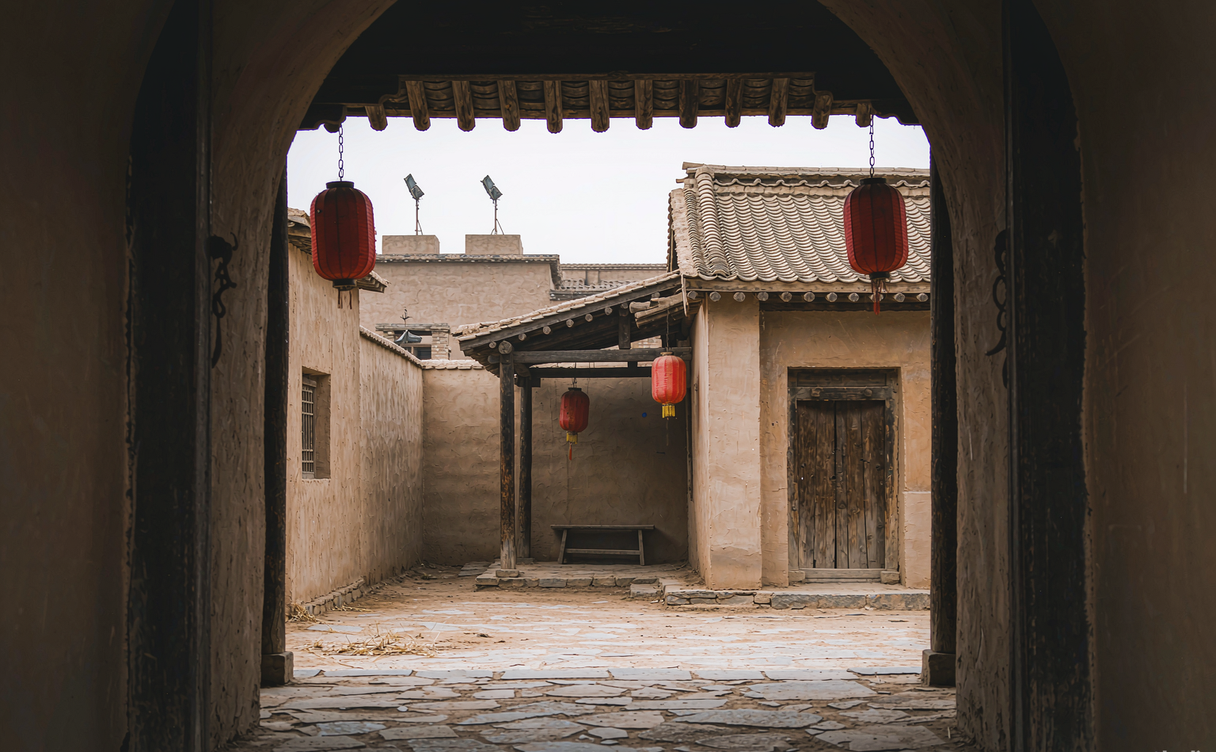
What I found moving on my second trip was the contrast: the forts look ancient and battered, but the plaques and screens inside explain exactly which scene was filmed where, so a crumbling wall becomes “the place where the Monkey King says goodbye.” It rewards viewers who know the films, but even without that knowledge the architecture alone — tamped earth, watchtowers, narrow lanes — is a great crash course in northwest fort design.
Things to see at Zhenbeibu
When people ask me about the things to see at Zhenbeibu, I point them at a loop that covers both castles and the connecting street:
1. The Ming Castle (明城) — the older, more ruined fort where Red Sorghum and parts of Yellow Earth were shot. It’s sparse and atmospheric, with the famous “Jiu’er” wine-distillery set and open courtyard spaces. Best in the soft morning light.
2. The Qing Castle (清城) — the larger, better-preserved fort and the heart of A Chinese Odyssey. You’ll recognize the gates, the battlements, and the lane where Stephen Chow’s characters banter. There’s a small cinema looping clips so you can match scene to stone.
3. The “A Chinese Odyssey” photo spots — the studio leans hard into this. You can rent costumes (¥30–¥80) and pose at the exact locations; I watched a Japanese tour group re-enact the “once upon a time” monologue and it was genuinely fun.
4. The Old Yinchuan street set — a reconstructed Republican-era street used for period dramas, with a teahouse, a pawnshop, and a working blacksmith demonstration. Good for kids and for understanding how a “city” gets built for camera.
5. The Zhang Xianliang exhibition — a hall on the founder’s life, writing, and the site’s making. It’s in Chinese, but the photos carry the story.
6. Live performances — in peak season there are short martial-arts and folk shows on the castle square; check the board at the entrance for times.
Best time to visit Zhenbeibu
The best time to visit Zhenbeibu is May through June and September through October, the same shoulder windows as the rest of Ningxia. The studio is exposed and has almost no shade, so July and August (often 33–37°C) are genuinely unpleasant for the long outdoor walks between castles, and winter is cold and windy with thin crowds. I rate late September best: cool, clear, and the light on the earthen walls is gorgeous for photos. Mornings are quietest; by 1 pm the tour buses arrive and the costume-queue at the Qing Castle gate backs up.
This timing also lines up with the regional advice in our best time to visit China guide, which treats Ningxia as a spring-and-autumn destination. If you’re combining Zhenbeibu with the Western Xia tombs, do both on a single mild day and save the summer for indoor museums.
How to get to Zhenbeibu
Figuring out how to get to Zhenbeibu is easy because it’s practically a suburb of Yinchuan:
- City bus — buses run from Yinchuan’s main stations to the studio gate for about ¥8–¥12, taking 60–80 minutes. Slow but cheap, and fine if you’re not on a clock.
- Taxi / ride app — a Didi or taxi from central Yinchuan is ¥70–¥110 each way, about 40 minutes. This is what I use; the 35 km is short and the driver can wait.
- Tour — hotels and hostels sell half-day trips at ¥120–¥200 per person including the Western Xia tombs. Good value if you want both sites in one go.
- Self-drive — the studio is signed off the main Yinchuan–Zhongying road; parking is large and free.
Entry is about ¥100 for the standard ticket, with the costume-rental and some shows extra. Buy at the gate; foreign passports scan fine. The site is open roughly 8 am to 6 pm in summer, 8:30 am to 5:30 pm in winter — arrive by 9:30 am to beat the heat and the buses.
If you’re basing in Yinchuan, fold this into a tombs-and-fort day using our Western Xia Tombs guide, which lays out the morning tomb visit and an afternoon at the studio so you use the cool hours wisely. I’d do the open-air studio while it’s still mild and save the shaded tomb museum for midday.
Pairing Zhenbeibu with a northwest route
Zhenbeibu is the playful bookend to a serious heritage trip. Most visitors reach Yinchuan by rail from the west; the high-speed train guide for foreigners covers the practicalities of arriving by bullet train, and I usually route people in from Xining or Lanzhou depending on whether they’re coming off the Qinghai Lake or Gansu legs. For the grand arc, our China Silk Road itinerary slots Yinchuan between the Hexi Corridor and the loess plateau, with Zhenbeibu as the lighthearted finale.
How long to spend and what to bring
Give it 3–4 hours to do both castles at a relaxed pace and catch a show. Wear a hat and sunscreen (the shade is thin), bring water, and wear shoes with grip — the earthen ramps are uneven. There are cafés and a noodle counter inside the Qing Castle, and the teahouse on the old street is a nice rest stop. Drones are not allowed over the sets, and costume rental closes about an hour before the gate, so rent early if you want the A Chinese Odyssey shots.
A note for film fans: download a few clips of A Chinese Odyssey and Red Sorghum before you go. Standing in the Qing Castle without the reference is fine; standing there with the scene in your pocket is something else. My friend spent twenty minutes at one gate just matching the angle, and it was the best part of his trip.
For a wider desert-and-culture loop that includes Yinchuan, the China Silk Road corridor threads Zhenbeibu, the Western Xia tombs, and Sand Lake into two or three days without wasting the short Ningxia autumn.
A note on the films and the founder
For background, the Wikipedia page on Zhenbeibu Western Film Studio has a clean list of the major productions shot here and the Zhang Xianliang story, which I read on the bus out and found made the ruins land harder. Knowing that a single writer’s vision turned two broken forts into China’s most-loved film set is the difference between “old walls” and “old walls with a plot.”
Download two or three clips of A Chinese Odyssey before you ride out to Zhenbeibu; standing in the Qing Castle with the scene in your pocket turns a weathered wall into a memory, and the costume queue is worth the wait only if you know the line you’re re-enacting.
Closing
Zhenbeibu Film Studio is not a polished Disney-style park, and that’s its charm. It’s a working, weathered, slightly chaotic place where real movies were made and where you’re allowed to climb the very walls the cameras loved. Bring a fan’s eye or a kid’s energy, go in the cool of a September morning, and you’ll leave with photos you actually want to keep. Pair it with the Western Xia tombs and you’ve got Yinchuan’s two best halves — the imagined and the ancient — in a single day.