

Two thousand years before tourists came chasing karst peaks, an engineer named Shi Lu stood on a low watershed north of Guilin and solved a problem that had stopped armies. Xing’an (兴安) is a small county town in northern Guangxi, about an hour by high-speed rail from Guilin, and it hides one of the oldest engineered waterways on the planet. We have walked its canal-side lanes with travelers who arrived because it sits on the way to Yangshuo and left convinced it was the quiet highlight of their Guangxi trip. This Xing’an travel guide explains how to see the Lingqu Canal, wander the water town, and time your visit so the stone embankments and willow-lined channels show at their best.
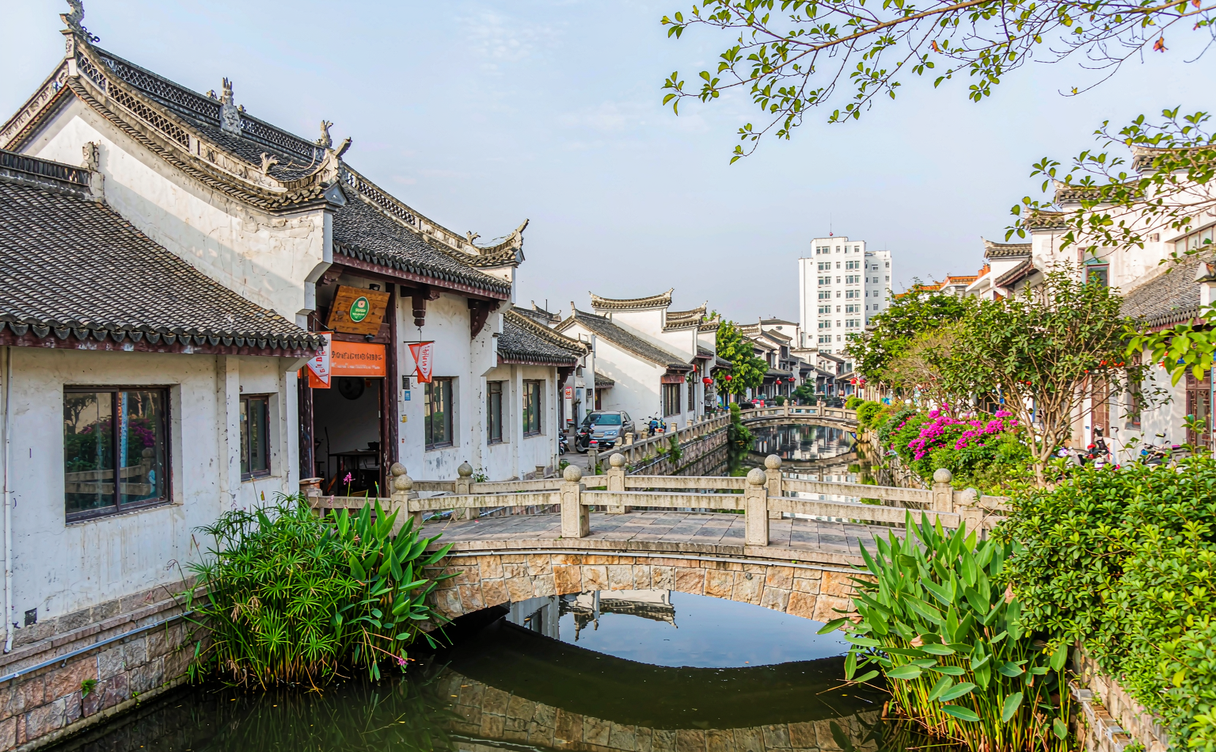
The county straddles the divide between two great river basins. To the north, water flows into the Xiang River and eventually the Yangtze; to the south, it feeds the Li River and the Pearl. In 214 BC, during the Qin unification, the Lingqu Canal was cut to haul grain and troops from the Yangtze heartland down into the south, linking those two basins by a channel barely thirty-three kilometers long. It is often called the “sister canal” to the Grand Canal and remains in use, which still baffles first-time visitors who expect a ruin and find a working, tree-shaded waterway threaded through a living town. The channel is so old that the stone “ploughshare” weir at its heart still splits the flow using nothing but graded rock and the natural slope of the land.
Walking the Lingqu Canal and the old town
The canal is the reason to come, and the easiest way to appreciate it is on foot. The water splits the compact old town into two halves joined by a series of humpback stone bridges, the most photographed being the Twin Marquis Bridge (双女桥) and the soaring Fubo Bridge. We tell travelers to start at the north gate of the scenic area, buy a ticket, and then simply follow the water south. The embankment paths are flat, shaded by planetary cypresses and willows, and dotted with small pavilions where old residents play cards and sketch the view. Allow two to three hours just to amble, longer if you stop for the tea houses that open onto the canal.
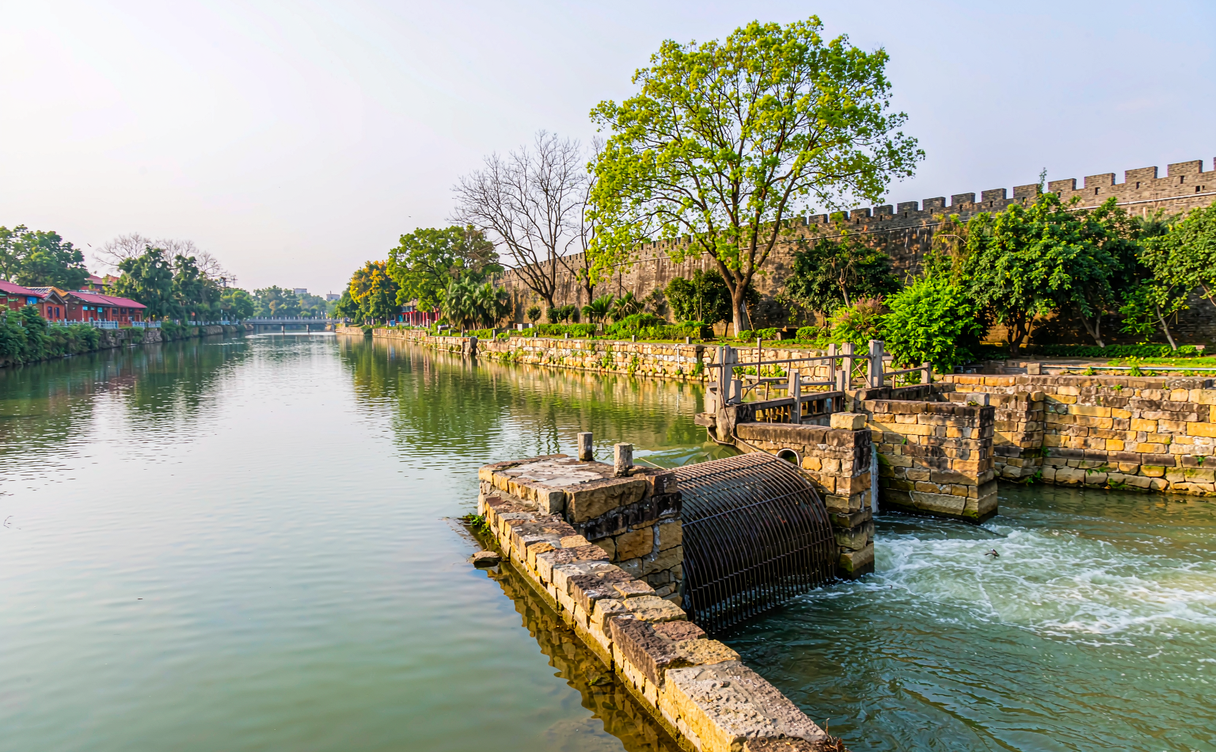
The main sight inside the paid zone is the Dragon Head Echo (龙头啸) and the precisely cut weir that still divides the flow between the Xiang and Li systems. Admission to the Lingqu Canal scenic area runs about ¥60 in peak season (April to November) and ¥30 in the winter off-season; children under 1.2 meters enter free, and the ticket includes the small museum near the south gate that explains the Qin hydraulics with models you can actually turn. Opening hours are 08:00 to 17:30, with the last entry at 17:00. Bring a wide-brim hat in summer — the embankment is only partly shaded and the midday sun on the water is fierce.
Things to do in Xing’an beyond the canal
A Xing’an trip can fill a relaxed day, and most visitors pair it with one or two side stops. North of town, Mao’er Mountain (猫儿山) rises to 2,142 meters as the source of the Li River and the highest peak in the Guangxi section of the Nanling range; we send keen hikers up for the sea of clouds at dawn, though it needs a separate half day and a local driver arranged through the guesthouses. Closer in, the village of Qinpi offers quieter canal stretches and rice-paper workshops where you can watch mulberry bark beaten into sheets. In town, the evening canal-side light show projects soft colored washes onto the water between 19:30 and 21:00 on weekends, free to watch from the bridges.
Food is part of the draw. Xing’an sits in the northern Guangxi culinary belt where the cooking turns hotter and sourer than in coastal Guangxi. Try the braised taro with pork (芋头扣肉), the sour bamboo-shoot fish hotpot, and the local “three-treasure” rice wine served warm in winter. A proper canal-side dinner for two runs ¥80–140, and the night market near the south gate sells grilled river snails and sticky-rice cakes for a few yuan each. We steer vegetarians toward the stir-fried mountain ferns and the tofu skin rolls, both staples of the local Hakka-influenced kitchens.
Buy your Lingqu Canal ticket at the north gate and walk the embankment south before the midday tour groups arrive.
Best time to visit and what to pack
The best time to visit Xing’an is April to May and September to early November. Spring brings warm 20–26°C days, green rice terraces in the surrounding hills, and manageable humidity; autumn is our favorite, with clear 18–25°C weather, low crowds, and the canal reflecting golden willows. Summer (June to August) is hot and sticky at 30–35°C with sudden afternoon downpours, though the canal breeze makes evenings pleasant. Winter is cold for Guangxi, sometimes dipping near freezing at night, but the off-season ticket and empty lanes are a fair trade for photographers. We always steer travelers away from the National Day week of October 1–7, when the canal paths get shoulder-to-shoulder.
For broader planning, our best time to visit China guide breaks down regional weather month by month, and the Guilin and Yangshuo travel guide shows how to combine the two into one karst-and-canal loop. Pack light layers even in spring, because the canal sits in a valley that cools fast after sunset, and comfortable walking shoes are essential for the stone paths.
How to get to Xing’an
Getting to Xing’an is easy because it sits on the main Guilin–Hengyang rail line. The high-speed Xing’an North Station (兴安北站) is served by trains from Guilin North in about 25–40 minutes, with second-class fares around ¥24–35; from Guilin Liangjiang Airport you can take a direct shuttle bus (about ¥35, 70 minutes) or a DiDi ride for roughly ¥160. Trains also run from Changsha and Guangzhou with a change at Guilin, and the China high-speed train guide for foreigners walks through booking with a passport step by step. From the station, a taxi to the old town takes ten minutes and costs about ¥15; local buses 1 and 2 connect the station to the canal gate for ¥2.
If you are driving, the G72 Quanzhou–Nanning expressway passes just east of town, and the canal-side parking lots charge ¥10 for the day. We usually advise against renting a car just for Xing’an, since the train is cheaper and drops you within walking distance of the water; save the car for a multi-stop Guangxi road trip. Ride-hailing apps work in Xing’an but surge during festival weekends, so build in a buffer if your train lands on a holiday.
Ride the high-speed train from Guilin to Xing’an North and taxi ten minutes to the canal gate for a relaxed day trip.
Where to stay and a sample day
Most travelers stay in Guilin or Yangshuo and day-trip, but if you want the canal at first light, the old town has guesthouses from ¥150–300 a night, many with balconies over the water. We like the lanes just east of Fubo Bridge for quiet, and the cluster near the south gate for restaurants. A workable plan: train up at 08:30, walk the canal from 09:30 to noon, lunch on taro pork, visit Mao’er Mountain foothills or the paper workshops in the afternoon, then catch the 17:00 train back. Build Xing’an into a wider swing through the province using our Guangxi 7-day itinerary, or extend north to the terraces with the Longji rice terraces guide before ending on the coast via the Beihai travel guide.
The canal’s engineering is detailed by the Wikipedia entry on the Lingqu Canal, which confirms the 214 BC date and the still-functioning link between the Xiang and Li river systems. If you want a slower pace than the big cities, Xing’an rewards the detour more than almost anywhere else in northern Guangxi, and the water town at dusk, with lanterns reflected in the channel, is the kind of quiet scene travelers write home about.
Spend the night in a canal-side guesthouse to catch the lantern reflections at dusk and the empty embankment at dawn.